An owner-builder permit is a legal authorisation issued by NSW Fair Trading that allows a homeowner to act as their own builder on residential construction or renovation work valued above $10,000. It puts you in charge of the project the planning, the trades, the compliance, and the liability.
Understanding this permit before you start isn’t optional. Get it wrong and you’re exposed to financial penalties, insurance gaps, and resale complications that can follow the property for years.
This guide covers what the permit is, who qualifies, how to apply, what work you can legally do, the costs involved, your legal obligations, council approvals, subcontractor management, common mistakes, and how to decide if it’s right for your situation.
What Is an Owner-Builder Permit?
An owner-builder permit is a formal licence that authorises a homeowner to supervise and carry out residential building work on their own property without engaging a licensed builder as the principal contractor. In NSW, it’s issued under the Home Building Act 1989 and sits within a tightly regulated framework designed to protect both the owner-builder and future buyers of the property.
Definition and Legal Standing
The permit grants you the legal standing to act as the principal contractor on your own home. That means you take on the responsibilities a licensed builder would normally carry coordinating trades, managing compliance, and ensuring the work meets the Building Code of Australia. It’s a significant legal position, not just a paperwork formality.
NSW Fair Trading administers the permit system. The permit is property-specific and project-specific, meaning it’s tied to a single address and a defined scope of work.
Who Qualifies as an Owner-Builder?
To qualify, you must own or have a relevant interest in the land where the work is being carried out. You must intend to live in the property owner-builder permits are not available for investment properties or properties you plan to sell immediately after construction.
The work must be residential in nature, and the project value must exceed $10,000 (inclusive of labour and materials). Below that threshold, no permit is required, though other approvals may still apply.
Owner-Builder Permit Requirements in NSW
NSW has specific eligibility and documentation requirements that every applicant must satisfy before a permit is issued. These aren’t suggestions they’re legal prerequisites, and missing any one of them will stall your application.
Eligibility Criteria
You must be at least 18 years old and hold a relevant interest in the land. A “relevant interest” includes being the registered proprietor, a purchaser under a contract of sale, or a person with a long-term lease. You cannot hold more than one owner-builder permit for separate properties at the same time, and you cannot obtain a new permit for the same property within five years of a previous permit being issued there.
Required Documentation
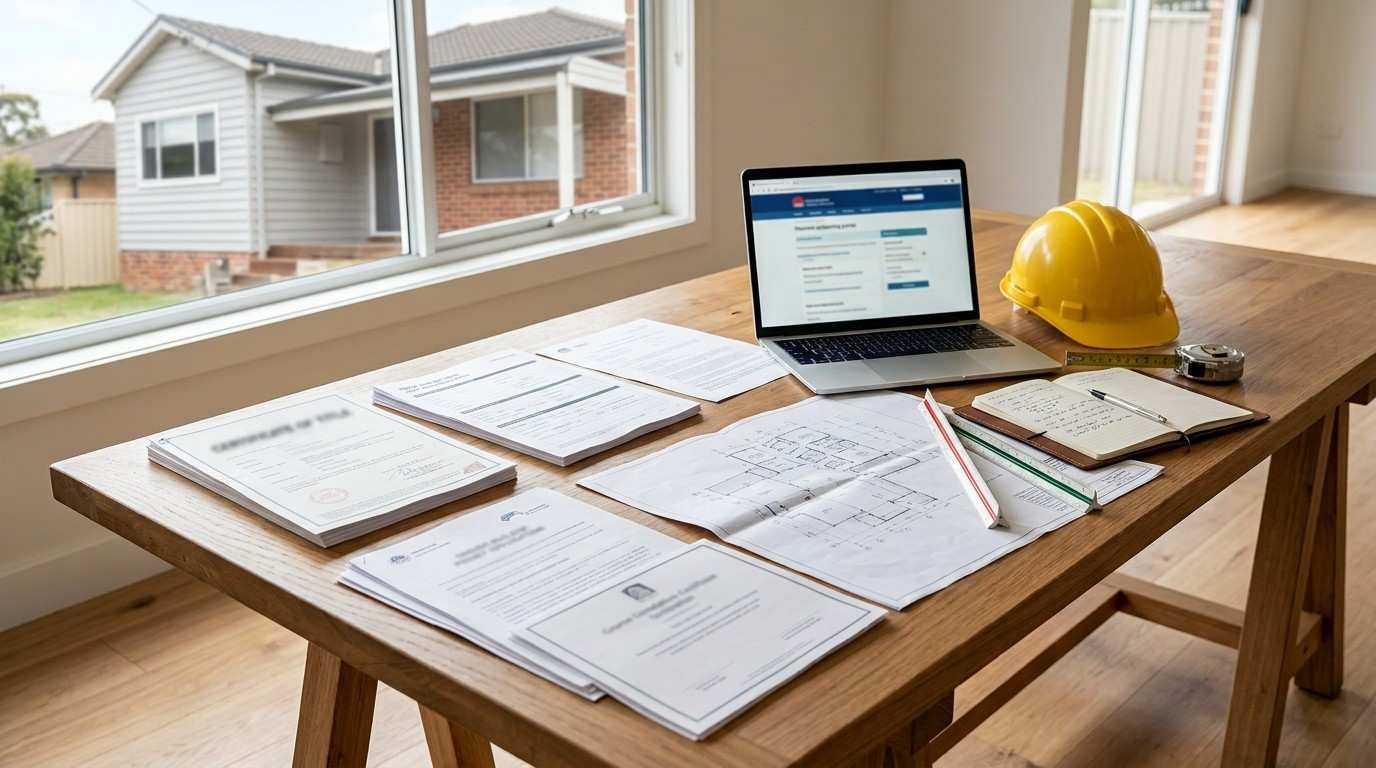
The application to NSW Fair Trading requires supporting documents that verify your identity, your interest in the land, and your completion of the mandatory course. You’ll need a current certificate of title or evidence of your interest in the property, a completed application form, proof of course completion (where required), and the applicable fee.
The Owner-Builder Course Requirement
If the proposed work is valued at $20,000 or more, you must complete an approved owner-builder course before your permit is issued. The course covers your legal obligations, WHS responsibilities, contract management, and the basics of construction supervision. It’s delivered by registered training organisations and is available online, typically taking one to two days to complete.
The course is not just a box-ticking exercise. It’s designed to give you a working understanding of what you’re legally taking on and the gaps it exposes are often the reason experienced renovators reconsider the owner-builder path.
How to Apply for an Owner-Builder Permit in Sydney
The application process is managed entirely through NSW Fair Trading. It’s straightforward when you’re prepared, but delays are common when documentation is incomplete or the course hasn’t been completed before lodgement.
Step-by-Step Application Process
Start by completing the owner-builder course if your project value is $20,000 or more. Once you have your course completion certificate, gather your supporting documents proof of land interest, identity documents, and your development consent or complying development certificate if council approval has already been granted.
Submit your application online through the NSW Fair Trading portal or by post. Include the correct fee. Fair Trading will assess your application and, if everything is in order, issue the permit. Keep the permit on site at all times during construction it’s a legal requirement.
NSW Fair Trading The Issuing Authority
NSW Fair Trading is the government body responsible for issuing owner-builder permits, investigating complaints, and enforcing compliance under the Home Building Act 1989. They also maintain the public register of owner-builder permits, which is accessible to prospective property buyers and their solicitors.
Application Fees and Processing Times
As of 2024, the owner-builder permit application fee is set by NSW Fair Trading and is subject to periodic review. Processing times vary but typically run between five and fifteen business days for complete applications. Incomplete applications are returned, which resets the clock so getting your documentation right the first time matters.
What Work Can an Owner-Builder Do?
The permit gives you broad authority over residential building work, but it doesn’t give you unlimited authority. There are clear boundaries around what you can do yourself and what must be carried out by licensed tradespeople regardless of your permit status.
Permitted Scope of Work
As an owner-builder, you can carry out or supervise a wide range of residential construction and renovation work structural alterations, extensions, new dwellings, roofing, framing, tiling, plastering, painting, and general building work. You can also engage and supervise subcontractors across all trades as the principal contractor on site.
The key distinction is between work you physically perform yourself and work you coordinate. Both are within scope, but the latter requires you to engage appropriately licensed contractors for regulated trades.
Work That Still Requires Licensed Trades
Electrical work, plumbing and drainage, gas fitting, and air conditioning installation must be carried out by licensed contractors regardless of your owner-builder status. These are regulated trades under NSW law, and no permit owner-builder or otherwise authorises an unlicensed person to perform them.
Asbestos removal above a certain threshold also requires a licensed removalist. And if your project involves structural engineering, you’ll need a certified practitioner to sign off on the design. The permit gives you control of the project it doesn’t replace the licensing requirements that protect public safety.
Owner-Builder Permit Cost Considerations
One of the most common misconceptions about the owner-builder path is that it’s automatically cheaper than hiring a licensed builder. The permit itself is low-cost. The real financial picture is more complex.
Permit Fees and Course Costs
The permit application fee is a minor line item. The owner-builder course, where required, typically costs between $200 and $500 depending on the registered training organisation. These are fixed, predictable costs they’re not where owner-builders run into financial trouble.
Hidden Costs Owner-Builders Often Miss
The costs that catch owner-builders off guard are the ones that licensed builders absorb through trade relationships, volume pricing, and project management experience. These include materials purchased at retail rather than trade rates, delays caused by subcontractor scheduling conflicts, rectification costs when work fails inspection, and the time cost of managing a project full-time while maintaining other commitments.
Research from the Australian Bureau of Statistics consistently shows that residential construction cost overruns are more common in owner-managed projects than in professionally managed ones. The savings on builder’s margin are real but so are the risks that erode them.
Comparing Owner-Builder vs. Licensed Builder Costs
A licensed builder typically charges a margin of 15–25% on top of construction costs. That margin covers their project management, trade coordination, warranty obligations, and insurance. As an owner-builder, you eliminate that margin but you absorb all of those functions yourself, along with the financial risk if something goes wrong.
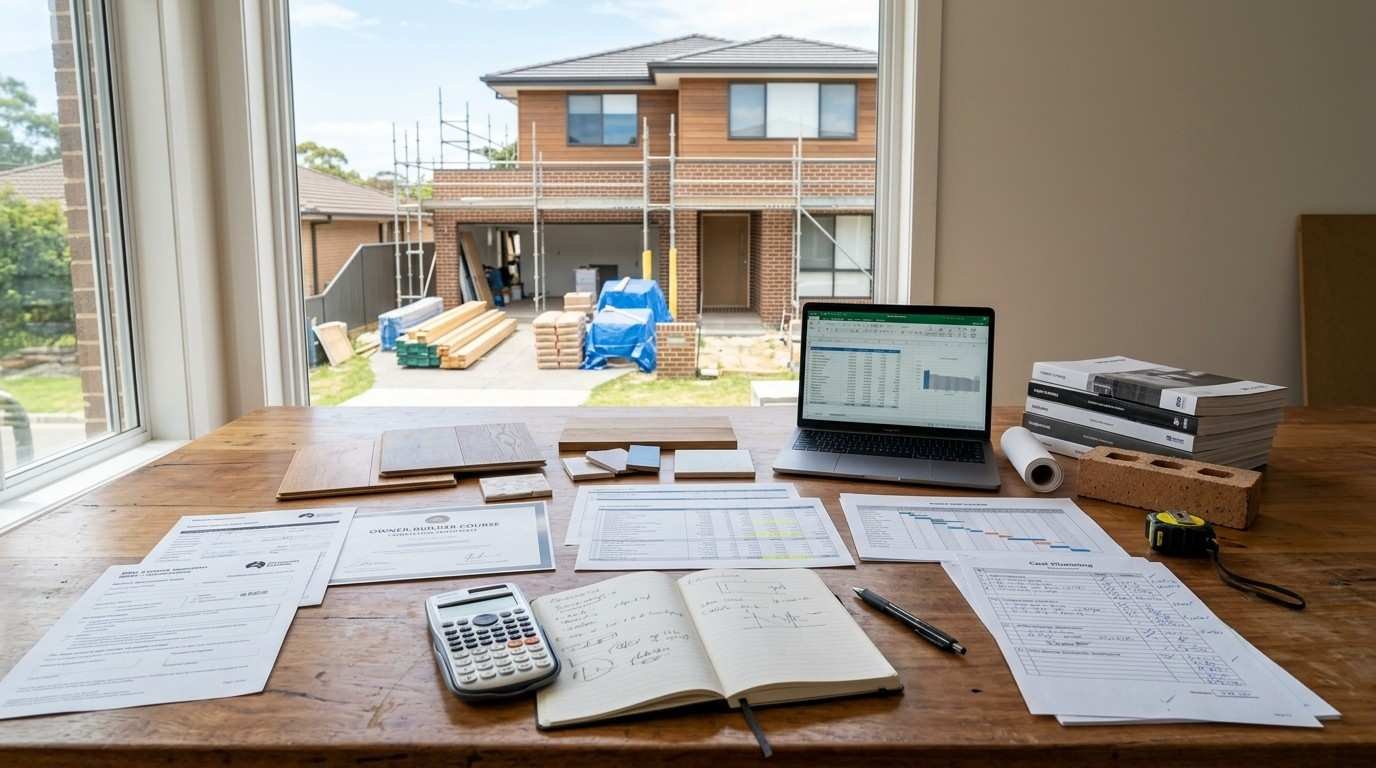
The honest comparison isn’t “permit cost vs. builder margin.” It’s total project cost including your time, your risk exposure, and the cost of any mistakes weighed against what a licensed builder would charge for the same outcome.
Legal Responsibilities and Risks
Taking on an owner-builder permit means taking on legal responsibilities that most homeowners underestimate. These obligations don’t end when the project does some follow the property for years.
Statutory Warranties and Defect Liability
Under the Home Building Act 1989, owner-builders are subject to statutory warranties covering defects in the work. These warranties run for two years for minor defects and six years for major defects from the date of completion. If you sell the property within those periods, the buyer can pursue a claim against you personally for defective work.
This is not a theoretical risk. NSW Fair Trading’s annual compliance data shows that building defect disputes are among the most common complaints received, and owner-builder work features disproportionately in post-sale disputes.
Home Warranty Insurance Obligations
If you sell your property within seven years and six months of completing owner-builder work valued at $20,000 or more, you are required to obtain home warranty insurance before the sale. This insurance protects the buyer against the risk of defective or incomplete work. It’s not optional and it’s not always easy to obtain, particularly if the work has defects or was carried out without proper approvals.
Penalties for Non-Compliance
Carrying out owner-builder work without a permit, or performing work outside the permitted scope, carries significant penalties under NSW law. Fines can reach tens of thousands of dollars, and the consequences extend beyond financial penalties unapproved work can trigger stop-work orders, demolition orders, and complications with council that affect the property’s legal status.
Owner-Builder Permit and Property Resale
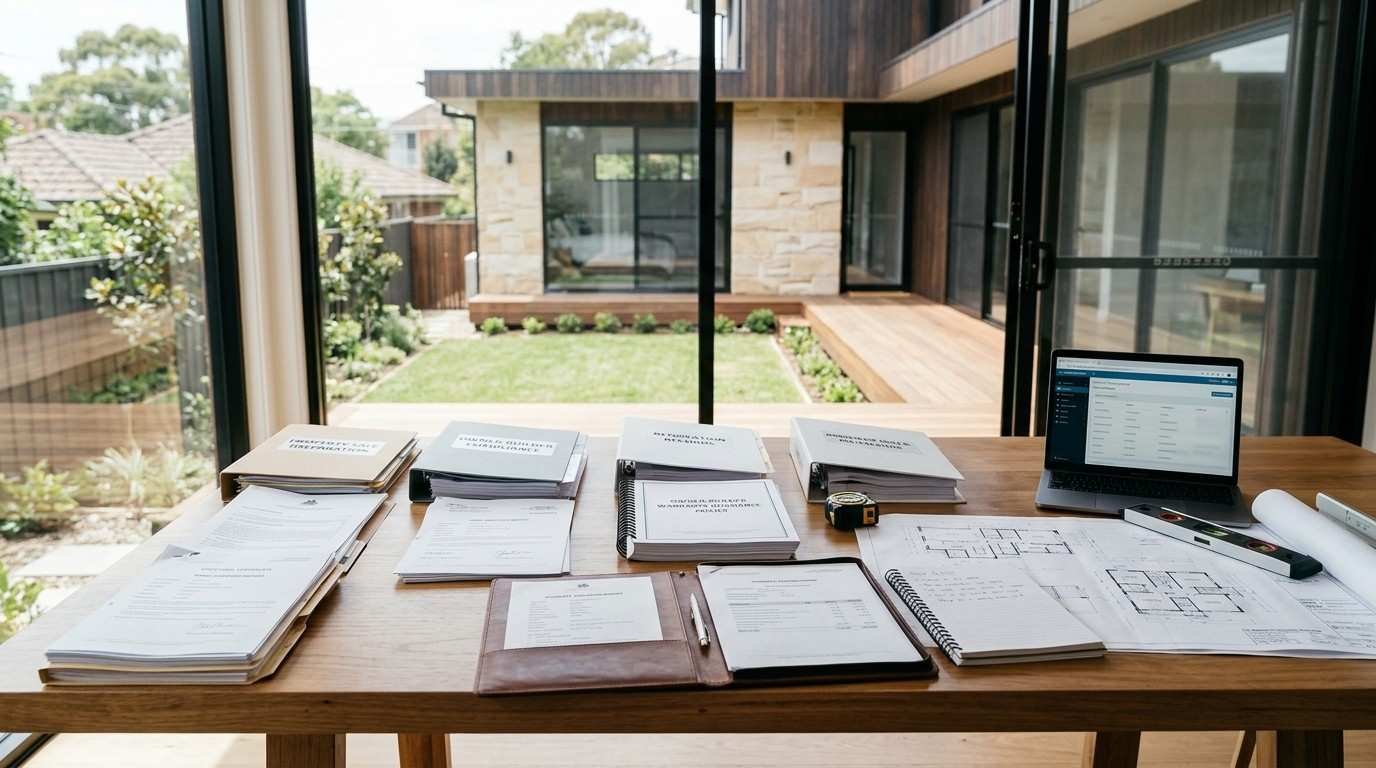
The owner-builder permit doesn’t just affect your project it affects your property’s future. Buyers, their solicitors, and their building inspectors are increasingly aware of owner-builder history, and the disclosure obligations are non-negotiable.
The 7-Year Disclosure Rule in NSW
Under NSW law, if you sell a property within seven years and six months of completing owner-builder work, you must disclose this in the contract of sale. The disclosure triggers the home warranty insurance requirement and puts the buyer on notice that the work was not carried out under a licensed builder’s warranty.
This disclosure is visible on the NSW Fair Trading public register. Solicitors conducting due diligence on a property routinely check it. There is no way to avoid it, and attempting to conceal it creates serious legal exposure.
Impact on Property Value and Buyer Confidence
Owner-builder history doesn’t automatically reduce a property’s value, but it does affect buyer confidence particularly when the work is recent, extensive, or visually inconsistent with professional standards. Buyers factor in the risk of defects, the cost of rectification, and the complexity of the warranty position.
Properties with clean owner-builder histories properly approved, well-executed, and fully documented sell without issue. Properties where approvals were skipped or work was done outside scope create complications that can delay settlement or reduce the final sale price.
Council Approvals and Development Applications
The owner-builder permit from NSW Fair Trading is separate from council approval. Many owner-builders conflate the two and that confusion leads to projects that are legally permitted but not council-approved, which creates a different set of problems entirely.
Development Consent vs. Complying Development
Most significant residential building work in Sydney requires either development consent (a DA approved by your local council) or a complying development certificate (CDC) issued by a private certifier or council. These approvals assess your project against planning controls zoning, setbacks, height limits, heritage overlays, and environmental constraints.
The owner-builder permit does not substitute for these approvals. You need both: the Fair Trading permit to act as owner-builder, and the relevant council or certifier approval to carry out the specific work.
Occupation Certificates and Final Sign-Off
When your project is complete, you need an occupation certificate before the building can be legally occupied or used. This is issued by your principal certifier either a private certifier or council after mandatory inspections confirm the work complies with the approved plans and the Building Code of Australia.
Skipping inspections or failing to obtain an occupation certificate creates a property with unapproved work. That status follows the title and complicates every future transaction, refinancing, or insurance claim involving the property.
Managing Subcontractors as an Owner-Builder
As the principal contractor on your project, you’re responsible for every trade on site their work quality, their licensing, their safety, and their compliance with the approved plans. This is one of the most demanding aspects of the owner-builder role, and it’s where projects most commonly run into trouble.
Hiring and Supervising Licensed Trades
Every subcontractor you engage for regulated trade work must hold a current NSW licence for their trade. Before work starts, verify their licence on the NSW Fair Trading licence check and keep a record of it. Get written quotes, confirm the scope in writing, and document variations.
Supervising trades effectively requires you to understand what good work looks like in each discipline or to engage someone who does. Defective subcontractor work that passes undetected until after completion becomes your liability, not theirs.
WHS Obligations on Site
As the principal contractor, you are the person conducting a business or undertaking (PCBU) under the Work Health and Safety Act 2011. That means you have a primary duty of care for everyone on your site subcontractors, visitors, and anyone else who might be affected by your construction activities.
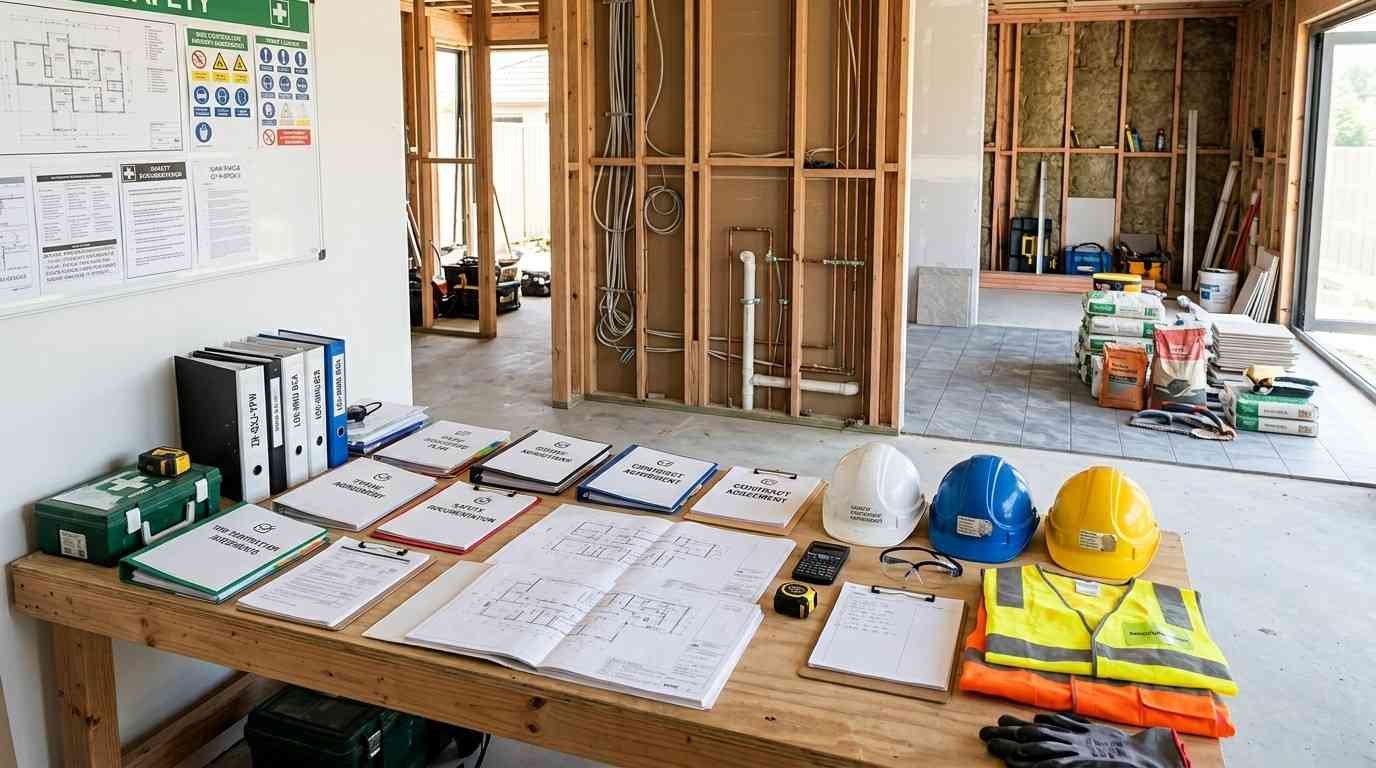
This includes maintaining a safe site, providing appropriate inductions, managing hazardous materials, and ensuring subcontractors have their own WHS systems in place. WHS obligations are not suspended because you’re an owner-builder they apply in full.
Common Mistakes Owner-Builders Make
Most owner-builder projects that go wrong don’t fail because of bad intentions. They fail because of predictable, avoidable mistakes that experienced builders know to watch for and first-time owner-builders don’t.
Underestimating Costs and Timelines
The most consistent mistake is entering a project with an optimistic budget and an unrealistic timeline. Materials cost more than online estimates suggest. Trades are harder to schedule than expected. Delays compound. And every week a project runs over schedule carries a cost whether that’s continued mortgage payments on a property you can’t occupy, temporary accommodation, or the opportunity cost of your own time.
Build a contingency of at least 15–20% into your budget before you start. If you don’t use it, you’ve had a successful project. If you do, you’ve avoided a crisis.
Skipping Inspections and Approvals
Mandatory inspections exist at specific stages of construction footings, framing, waterproofing, and final completion among them. Skipping them to save time or avoid scrutiny creates unapproved work that can’t be retrospectively certified without significant cost and, in some cases, demolition.
The same applies to development approvals. Starting work before consent is granted, or varying the approved plans without notifying your certifier, creates compliance problems that are expensive and time-consuming to resolve.
Taking On Work Beyond Legal Scope
Owner-builders who attempt electrical, plumbing, or gas work themselves believing the permit covers it create serious safety risks and legal exposure. Unlicensed trade work is illegal regardless of permit status, and it voids insurance coverage. It also creates defects that are difficult to detect and expensive to rectify when they eventually surface.
Is an Owner-Builder Permit Right for You?
The owner-builder path suits some people and projects very well. For others, it creates more risk and complexity than the savings justify. The decision deserves honest analysis, not optimism.
When It Makes Financial Sense
Owner-builder permits make the most financial sense when you have genuine construction knowledge or project management experience, when you have the time to dedicate to full-time site supervision, when your project is well-defined and unlikely to require significant variations, and when you have strong relationships with reliable licensed trades.
In those circumstances, eliminating the builder’s margin on a large project can represent a substantial saving and the project can be executed to a high standard with appropriate oversight.
When to Hire a Licensed Builder Instead
If you’re working full-time in another field, if your project involves complex structural work or heritage constraints, if you have no prior experience managing construction, or if your timeline is tight a licensed builder is almost certainly the better financial decision when total project cost and risk are factored in.
A licensed builder carries their own insurance, manages their own trades, provides statutory warranties, and takes on the compliance burden. For most homeowners, that’s worth the margin.
Frequently Asked Questions
What is the minimum project value requiring an owner-builder permit in NSW?
An owner-builder permit is required for residential building work valued at more than $10,000 in NSW. Below that threshold, no permit is needed, though other approvals may still apply depending on the nature of the work.
How long does an owner-builder permit last in NSW?
An owner-builder permit in NSW is valid for seven years and six months from the date of issue. The permit is tied to the specific property and project described in the application and cannot be transferred to another property.
Can I sell my home after completing owner-builder work?
Yes, but if you sell within seven years and six months of completing the work, you must disclose the owner-builder history in the contract of sale and obtain home warranty insurance for work valued at $20,000 or more. This is a legal requirement, not optional.
Do I need home warranty insurance as an owner-builder?
Home warranty insurance is required if you sell the property within seven years and six months of completing owner-builder work valued at $20,000 or more. The insurance must be in place before the contract of sale is exchanged with the buyer.
What happens if I build without an owner-builder permit?
Building without a required owner-builder permit is an offence under the Home Building Act 1989. Penalties include substantial fines, stop-work orders, and potential demolition orders for unapproved structures. The work also creates title complications that affect future sales and refinancing.
Can an owner-builder do their own electrical and plumbing work?
No. Electrical, plumbing, drainage, and gas fitting work must be carried out by licensed contractors regardless of your owner-builder permit status. These are regulated trades under NSW law, and performing them without a licence is illegal and voids insurance coverage.
How many owner-builder permits can I get in NSW?
You can only hold one owner-builder permit at a time, and you cannot obtain a new permit for the same property within five years of a previous permit being issued there. The system is designed to prevent the permit from being used as a commercial building mechanism.
Conclusion
The owner-builder permit is a powerful tool when used correctly giving homeowners direct control over their residential projects within a clear legal framework. We’ve covered the permit’s definition, eligibility, application process, permitted scope, costs, legal obligations, council approvals, subcontractor management, and the resale implications that follow the property for years.
The decision to take on an owner-builder permit is ultimately a risk and capability assessment. We’ve outlined where the path makes financial sense and where the complexity outweighs the savings so you can make that call with accurate information rather than assumptions.
At Sydney Home Renovation, we work with homeowners at every stage of this decision whether you’re exploring the owner-builder path or looking for a licensed team to take the project on. Reach out and let’s talk through what your project actually needs.