
A Complying Development Certificate or CDC is the faster, simpler approval pathway for eligible home renovation and building projects in NSW, and understanding how it works can save you weeks of waiting and thousands in unnecessary costs.
Getting the approval process wrong from the start is one of the most expensive mistakes Sydney homeowners make. The right pathway, prepared correctly, keeps your renovation on schedule and on budget.
In this guide, I walk through every stage of the CDC process from eligibility and lodgement to timelines, costs, and the most common rejection traps to avoid.
What Types of Projects Qualify for CDC Approval?
Not every renovation or building project qualifies for the CDC pathway. The project must comply with the development standards set out in the State Environmental Planning Policy (Housing) 2021, which replaced the former Codes SEPP. If your project meets those standards in full, a CDC is available. If it doesn’t, a Development Application (DA) through your local council is the required route.
The distinction matters because CDC is a private certification pathway it bypasses council entirely and is assessed by an accredited certifier. That means faster decisions and more predictable timelines, but only when the project genuinely qualifies.
Residential Alterations and Additions
Internal alterations, bathroom renovations, kitchen upgrades, and single-storey additions commonly qualify for CDC approval in Sydney. The key tests are floor area limits, height restrictions, setbacks from boundaries, and site coverage percentages all defined in the SEPP Housing standards.
A bathroom renovation, for example, typically qualifies as complying development when it involves internal works only and doesn’t alter the building’s footprint or external envelope beyond permitted limits. I always confirm this at the design stage before any documentation is prepared.
New Dwellings and Secondary Structures
New single dwellings, secondary dwellings (commonly called granny flats), and detached studios can also be approved via CDC when they meet the SEPP Housing standards for lot size, setbacks, height, and floor area. Secondary dwellings in particular are a common CDC pathway for Sydney property investors looking to add rental income without a lengthy council process.
The NSW Department of Planning confirms that secondary dwellings up to 60 square metres on lots of 450 square metres or more are generally eligible for complying development approval. That’s a significant opportunity for the right property.
What Falls Outside CDC Eligibility
Heritage-listed properties, land in flood planning areas, bushfire-prone land, and properties with certain biodiversity overlays are typically excluded from the CDC pathway. These sites require a DA, regardless of how straightforward the proposed works appear.
Some projects also fall into the exempt development category works so minor they require no approval at all. Knowing which category your project sits in is the first decision to get right.
The CDC Approval Process Step by Step
The CDC process follows a clear sequence. Each step builds on the last, and skipping or rushing any stage is the most reliable way to cause delays or a rejection.
Step 1 Confirm Your Project Meets the SEPP Codes
Before any documentation is prepared, the proposed design must be checked against the development standards in the SEPP Housing 2021. This means verifying setbacks, height, floor area, site coverage, and any other applicable controls for your specific property and project type.
This is not a quick scan. It requires reading the standards against your site’s actual dimensions and constraints. A certifier or experienced contractor does this at the outset not after the drawings are finished.
Step 2 Engage an Accredited Certifier
A CDC can only be issued by an accredited certifier registered with NSW Fair Trading. The certifier assesses your application against the SEPP standards and issues the certificate if the project complies. They are not a council officer they are a private professional operating under a statutory framework.
Choosing the right certifier matters. Look for someone with direct experience in residential projects similar to yours, and confirm their current accreditation status on the NSW Fair Trading register before engaging them.
Step 3 Prepare and Lodge Your Application
A CDC application requires a specific set of documents. The exact list depends on the project type, but for most residential renovations and additions it includes a completed application form, site plan, floor plans and elevations, a BASIX certificate, shadow diagrams where required, and a statement of compliance with the SEPP standards.
Incomplete or inconsistent documentation is the single biggest cause of delays. Every document must be current, accurate, and internally consistent before lodgement. I review every document set before it goes to the certifier not after.
Step 4 Assessment and Determination
Once lodged, the certifier has 10 business days to assess and determine a CDC application under the Environmental Planning and Assessment Act 1979. This is a statutory timeframe it is not a guideline. If the application is complete and compliant, determination happens within that window.
The certifier may issue conditions of consent alongside the CDC. These are requirements that must be met during or after construction things like specific materials, drainage requirements, or landscaping obligations. Read every condition carefully before work begins.
Step 5 Construction Certificate and Inspections
A CDC does not authorise construction on its own. A Construction Certificate (CC) must also be obtained before work starts this confirms the detailed construction plans comply with the Building Code of Australia. In many cases, the same certifier who issued the CDC also issues the CC, which streamlines the process.
Mandatory critical stage inspections are required throughout construction. The certifier must inspect the work at specified stages footings, framing, waterproofing, and final before an Occupation Certificate (OC) can be issued at completion. Missing an inspection is a serious compliance failure.
CDC vs DA Which Approval Path Is Right for You?
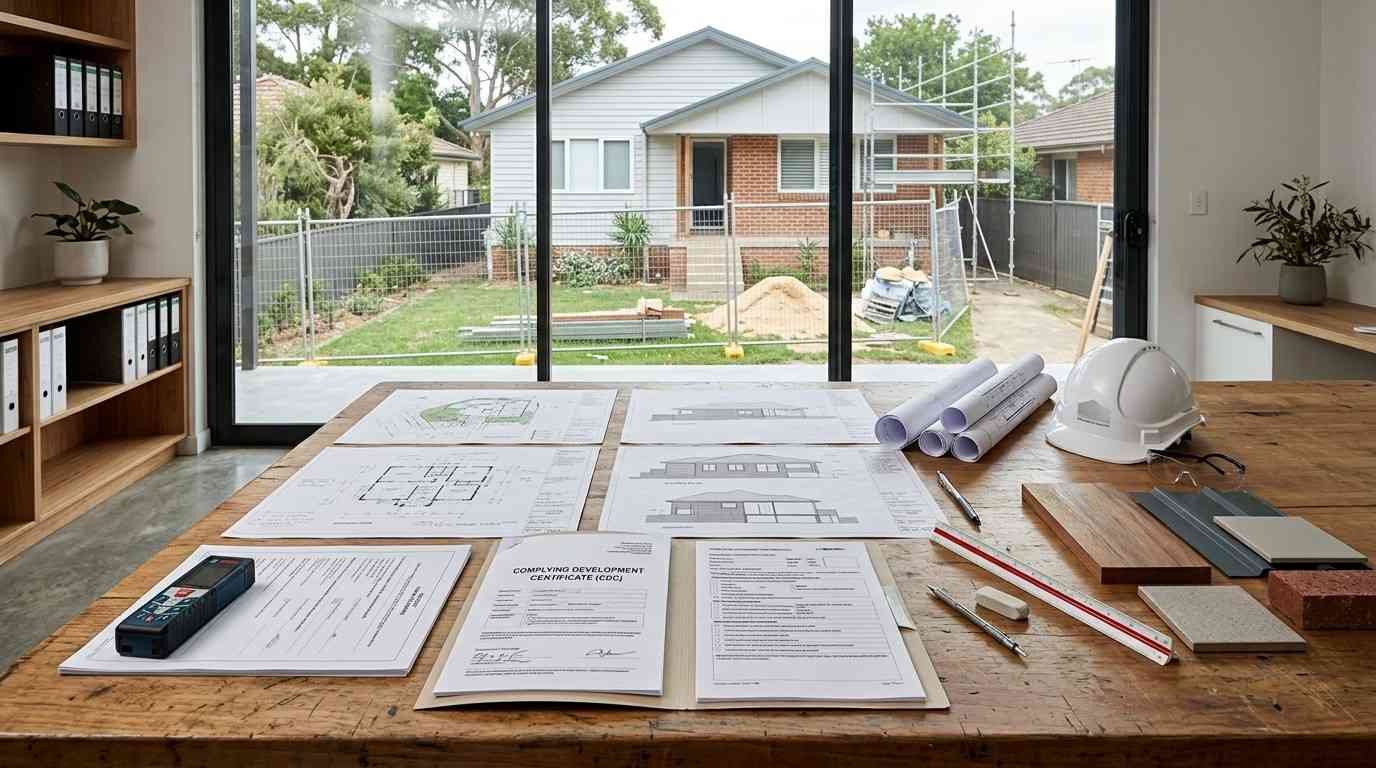
The choice between a CDC and a Development Application is not always obvious, and getting it wrong costs time and money. The right answer depends on your project, your site, and your timeline.
Key Differences in Timeline and Cost
A CDC is determined within 10 business days by a private certifier. A DA goes to your local council and can take anywhere from 40 to 100+ days depending on the council, the complexity of the application, and whether the proposal attracts objections from neighbours.
Cost-wise, CDC certifier fees are generally lower than the combined cost of council DA fees, planning consultant fees, and the extended holding costs that come with a longer approval timeline. For straightforward projects that clearly qualify, the CDC pathway is almost always the better financial decision.
When a DA Is the Better Choice
A DA is the right pathway when your project doesn’t meet the SEPP standards for example, when you need a variation to setbacks, height, or site coverage that the CDC pathway doesn’t allow. It’s also required for heritage properties, complex sites, and projects that involve merit-based assessment rather than code compliance.
Some homeowners assume a DA gives them more flexibility. It does but that flexibility comes with a longer, less predictable process and the genuine possibility of refusal or conditions that reshape the project significantly.
How Long Does CDC Approval Take in Sydney?
A CDC is legally required to be determined within 10 business days of a complete application being lodged. In practice, most straightforward residential CDC applications in Sydney are determined within that window when the documentation is complete and compliant from day one.
That 10-business-day clock only starts when the certifier accepts the application as complete. An incomplete application gets returned, the clock resets, and the delay is entirely avoidable.
Factors That Can Delay Your CDC
Incomplete documentation is the most common delay trigger. Missing a BASIX certificate, submitting inconsistent plans, or failing to include a required shadow diagram sends the application back before assessment even begins.
Other delay factors include referrals to external agencies (required for some sites near waterways or infrastructure corridors), requests for additional information from the certifier, and design changes made after lodgement that require a resubmission. Preparing the full documentation set correctly the first time is the only reliable way to hit the 10-business-day target.
How Much Does a CDC Cost in Sydney?
CDC costs in Sydney vary based on project type, project value, and the certifier engaged. There is no single fixed fee but understanding the typical cost components helps homeowners budget accurately from the start.
Certifier Fees and Application Costs
Accredited certifier fees for a residential CDC in Sydney typically range from $1,500 to $5,000+ depending on project complexity and value. Simpler projects internal alterations, bathroom renovations, small additions sit at the lower end. New dwellings and secondary structures attract higher fees reflecting the greater assessment workload.
Some certifiers charge a flat fee; others charge based on a percentage of the construction value. Always request a detailed fee proposal before engaging, and confirm exactly what is and isn’t included.
Hidden Costs Homeowners Often Miss
The certifier fee is only one part of the total CDC cost. A BASIX certificate costs between $50 and $200 depending on the project type and is a mandatory lodgement requirement for most residential projects. A registered surveyor’s report required to confirm setbacks and site dimensions typically adds $800 to $1,500.
Engineering reports, shadow diagrams prepared by a draftsperson or architect, and the NSW Long Service Levy (currently 0.35% of construction costs for projects over $25,000, as confirmed by the NSW Long Service Corporation) are additional costs that catch homeowners off guard. Budget for all of them upfront.
Common Reasons CDC Applications Are Rejected
A CDC application is not refused in the same way a DA can be refused on planning merit. Instead, a certifier cannot issue a CDC if the project does not comply with the SEPP standards. The result is the same no approval but the reason is always a compliance failure, not a judgment call.
The most common compliance failures involve setbacks from side and rear boundaries, building height exceeding the permitted limit, site coverage exceeding the maximum percentage, and floor area calculations that don’t account for all included spaces correctly. These are not obscure technicalities they are the core standards the CDC pathway is built around.
How to Avoid the Most Frequent Mistakes
The most effective prevention strategy is a pre-lodgement review with the certifier before the final documentation is prepared. Most accredited certifiers offer this service, and it costs far less than a resubmission or a redesign after rejection.
Design compliance must be confirmed at the concept stage not after working drawings are complete. Changing a design to fix a setback or height issue after full documentation is prepared wastes significant time and money. Get the compliance check done early, and build the design around the standards from the start.
Working With Your Contractor Through the CDC Process
The CDC process doesn’t sit in isolation from the construction project it runs alongside it, and the contractor’s involvement in the pre-lodgement stage directly affects how smoothly the approval goes.
A contractor who understands the CDC pathway helps avoid the most common documentation failures before they happen. We review the proposed design against the SEPP standards before drawings are finalised, coordinate with the certifier on documentation requirements, and flag potential compliance issues at the concept stage rather than after lodgement.
What a Good Renovation Contractor Does Before Lodgement
Before a CDC application is lodged, we confirm the design complies with all applicable SEPP standards, identify any site-specific constraints that could affect eligibility, and coordinate the full documentation set plans, BASIX, survey, engineering so everything is consistent and complete before it reaches the certifier.
We also brief the homeowner on the conditions of consent before construction starts, so there are no surprises mid-project. The CDC process works best when the contractor and certifier are working from the same information from day one. That coordination is part of what we do at Sydney Home Renovation and it’s one of the clearest ways we keep renovations on schedule and on budget.
Conclusion
The CDC pathway is one of the most practical tools available to Sydney homeowners and property investors but only when it’s used correctly, with the right project, the right documentation, and the right team behind it.
Understanding the process from eligibility through to inspections puts you in control of your renovation timeline and budget. The difference between a smooth CDC and a delayed one almost always comes down to preparation.
At Sydney Home Renovation, we guide our clients through the entire approval process from confirming CDC eligibility to coordinating with your certifier and managing documentation. Reach out to us today and let’s plan your renovation the right way from the start.
Frequently Asked Questions
Can I start work before CDC approval is granted?
No. Construction cannot legally begin until both the CDC and the Construction Certificate are issued. Starting work without approval exposes you to stop-work orders, fines, and potential demolition orders for non-compliant structures.
Do I need a CDC for a bathroom renovation in Sydney?
Most internal bathroom renovations in Sydney qualify as complying development and require a CDC. Some very minor works may qualify as exempt development, requiring no approval at all. Confirm which category applies to your specific project before any work begins.
Who can issue a CDC in NSW?
Only an accredited certifier registered with NSW Fair Trading can issue a CDC. Council cannot issue a CDC that is the key distinction between the CDC and DA pathways. Check the NSW Fair Trading register to confirm your certifier’s current accreditation status.
What happens if I build without a CDC?
Building without required approval is an offence under the Environmental Planning and Assessment Act 1979. Consequences include stop-work orders, substantial fines, and orders to demolish or modify non-compliant work at the owner’s expense. Unauthorised structures also create serious complications when selling the property.
Can a CDC be refused?
A certifier cannot refuse a CDC on planning merit but they cannot issue one if the project does not comply with the SEPP standards. If your project doesn’t meet the standards, the certifier will advise you that a CDC cannot be issued, and a DA through council becomes the required pathway.
How is a CDC different from a construction certificate?
A CDC is the planning approval confirming your project complies with the SEPP development standards. A Construction Certificate is a separate approval confirming the detailed construction plans comply with the Building Code of Australia. Both are required before construction begins the CDC first, then the CC.


