
Complying development approval in NSW is a fast-track planning pathway that allows eligible homeowners, renovators, and property investors to get building approval without lodging a full Development Application. It is governed by the State Environmental Planning Policy and administered by accredited certifiers or council.
Understanding this pathway matters now more than ever. Miss the eligibility rules or skip the certificate process, and you risk unapproved work, stop-work orders, and costly rectification.
This guide covers what complying development is, how to check eligibility, the CDC process, development standards, costs, common pitfalls, and how it compares to a DA.
What Is Complying Development in NSW?
Complying development is a combined planning and construction approval pathway available under the Environmental Planning and Assessment Act 1979. It allows straightforward, low-impact residential and commercial projects to be approved quickly without the need for a full council Development Application.
The core idea is simple. If your project meets a pre-set list of development standards, it complies by definition. There is no merit assessment, no neighbour notification period, and no council discretion involved. Approval is issued as a Complying Development Certificate, and work can begin within days of receiving it.
We see this pathway used constantly across Sydney for projects like single-storey additions, granny flats, carports, and swimming pools. It is one of the most practical tools available to homeowners who want to move quickly and avoid the delays that come with a traditional DA.
How It Differs from a Development Application (DA)
A Development Application goes through council’s merit assessment process. Council planners review the proposal against local planning controls, notify neighbours, and exercise discretion in their decision. That process typically takes anywhere from 40 to over 100 days depending on the council and the complexity of the project.
Complying development skips all of that. Because the project meets pre-defined standards, the certifier simply checks compliance and issues the certificate. There is no subjective assessment, no public exhibition, and no council vote.
The trade-off is that complying development only works within strict parameters. If your project falls outside those parameters even slightly you are back to the DA pathway.
The Role of the State Environmental Planning Policy (SEPP)
The State Environmental Planning Policy (Housing) 2021 is the primary instrument that governs complying development for residential projects in NSW. It replaced the former Exempt and Complying Development Codes SEPP and consolidated the rules into a single, clearer framework.
The Housing SEPP sets out exactly which project types qualify, what development standards apply, and what conditions must be met. It is the document your certifier works from when assessing your application.
Understanding that the SEPP not your local council’s LEP controls complying development is one of the most important things a first-time applicant can grasp. Council’s local controls are largely bypassed under this pathway.
Who Administers Complying Development Approvals?
Complying development certificates are issued by either an accredited private certifier or a council certifier. The NSW Building Commission oversees the accreditation of private certifiers under the Building and Development Certifiers Act 2018.
Council is not the decision-maker here. Even if you use a council certifier, the assessment is a compliance check not a discretionary planning decision. That distinction matters because it means the process is objective and time-bound.
Is Your Project Eligible for Complying Development?
Eligibility is the first and most critical question. Not every project and not every property qualifies, and getting this wrong early wastes time and money.
The eligibility assessment happens at two levels: the land itself must be eligible, and the proposed works must meet the development standards set out in the Housing SEPP. Both must be satisfied simultaneously.
We always recommend running an eligibility check before engaging a designer or preparing any plans. It takes a fraction of the time and can save thousands in abortive design costs.
Land and Zone Eligibility Requirements
Your land must be zoned in a way that permits complying development under the Housing SEPP. Most residential zones across NSW including R1, R2, R3, and R4 are covered. However, land in certain heritage conservation areas, foreshore scenic protection areas, or land subject to specific local environmental plan provisions may be excluded.
The NSW Planning Portal is the starting point for checking your property’s zoning and any overlays that might affect eligibility. A search of your property will surface flood, bushfire, and heritage constraints that could disqualify the complying development pathway.
Lot size also matters. Many complying development provisions require a minimum lot size typically 450 square metres for standard residential projects, though this varies by project type.
Property Constraints That Can Disqualify a Project
Several property-specific constraints can remove a site from the complying development pathway entirely. These include:
Heritage listing or location within a heritage conservation area removes most projects from the CDC pathway. State-listed heritage items are excluded outright. Locally listed items may still qualify for minor works, but this requires careful checking.
Flood planning areas introduce additional complexity. Properties mapped as flood-prone under a council’s flood planning map may face restrictions or additional requirements that push the project outside complying development standards.
Bushfire-prone land is another common disqualifier. Properties mapped as bushfire-prone under the NSW Rural Fire Service mapping may still qualify for complying development, but only if the project meets the requirements of Planning for Bush Fire Protection 2019.
Contaminated land, acid sulfate soils, and certain biodiversity overlays can also affect eligibility. A thorough site check before lodging is non-negotiable.
Common Project Types Approved Under CDC
The Housing SEPP covers a wide range of residential project types. Single-storey additions and alterations to existing dwellings are among the most common. New dwelling houses on eligible lots, secondary dwellings (granny flats), swimming pools, carports, garages, and outbuildings are all regularly approved through the complying development pathway.
Demolition of structures is also covered under specific provisions. And in recent years, the NSW Government has expanded the pathway to include two-storey additions and certain multi-dwelling housing types in eligible zones.
The key is that each project type has its own set of development standards within the SEPP. Meeting the standards for one project type does not mean you meet the standards for another.
The Complying Development Certificate (CDC) Explained
The Complying Development Certificate is the formal approval document that authorises your project to proceed. It is both a planning approval and a construction approval which is one of the key advantages of the complying development pathway over the DA route, where a separate Construction Certificate is always required.
A CDC is issued by your certifier once they have confirmed that your proposed works comply with all applicable development standards. It is a legal document, and work cannot lawfully commence until it has been issued and the required pre-construction conditions have been met.
What a CDC Covers and What It Authorises
A CDC authorises the specific works described in the application no more, no less. It sets out the approved plans, the conditions of approval, and the inspection requirements that must be met during construction.
The certificate also triggers the appointment of a Principal Certifier, who is responsible for overseeing the construction phase and issuing the Occupation Certificate at the end. In most cases, the certifier who issues the CDC also acts as the Principal Certifier, though this is not mandatory.
It is important to understand that a CDC does not authorise works that deviate from the approved plans. Any changes during construction that affect compliance with the development standards require a new or amended certificate.
CDC vs. Construction Certificate: What’s the Difference?
Under the DA pathway, two separate approvals are required: the Development Consent (issued by council) and the Construction Certificate (issued by a certifier). The Construction Certificate confirms that the detailed construction plans comply with the Building Code of Australia and the conditions of the Development Consent.
Under the complying development pathway, the CDC replaces both. It is a single, combined approval that covers both the planning and construction dimensions of the project. This is one of the primary reasons the CDC pathway is faster and simpler for eligible projects.
How Long Does a CDC Last?
A CDC is typically valid for five years from the date of issue, though the specific validity period is set out in the certificate itself. Work must commence within that period, and the project must be completed within the timeframe specified.
If work does not commence or the project is not completed within the validity period, the certificate lapses. A new application would then be required, and the project would need to comply with the development standards in force at that time which may have changed.
Who Can Issue a Complying Development Certificate in NSW?
Only two categories of certifier can issue a CDC in NSW: an accredited private certifier or a council certifier. Both must hold the appropriate accreditation under the Building and Development Certifiers Act 2018.
The NSW Building Commission maintains the public register of accredited certifiers. You can search the register to verify a certifier’s accreditation status and the classes of work they are authorised to certify.
Accredited Certifiers vs. Council Certifiers
Private accredited certifiers operate independently of council. They are engaged directly by the applicant and are bound by the same legislative framework as council certifiers. The advantage of a private certifier is typically speed they can often assess and issue a CDC faster than council’s certification team, and they offer more flexibility around scheduling inspections.
Council certifiers are employed by the local council and offer the same service through council’s certification unit. Some applicants prefer council certifiers for straightforward projects, particularly where they have an existing relationship with the council or where the project is in a sensitive area.
Both are equally valid. The choice comes down to cost, availability, and the specific requirements of your project.
How to Choose the Right Certifier for Your Project
Experience with your project type matters more than price. A certifier who regularly handles secondary dwellings, for example, will move through the assessment faster and flag issues earlier than one who rarely sees them.
Ask for references, check their accreditation class against your project type, and confirm their familiarity with the Housing SEPP provisions that apply to your works. A good certifier will identify eligibility issues before you spend money on detailed plans not after.
The CDC Application Process Step by Step
The CDC process is more straightforward than a DA, but it still requires careful preparation. Incomplete applications are the single biggest cause of delays, and most of those delays are avoidable.
We walk our clients through this process from the start, because the quality of the documentation you submit directly determines how quickly your certificate is issued.
Documents and Plans You Need to Prepare
A CDC application typically requires a site plan showing the property boundaries, existing structures, and proposed works in relation to those boundaries. Architectural plans including floor plans, elevations, and sections must be prepared to a standard sufficient for the certifier to assess compliance with the development standards.
A Statement of Environmental Effects (SEE) is required for most applications. This document explains the nature of the proposed works, confirms compliance with the relevant SEPP provisions, and addresses any site-specific constraints.
Depending on your project and site, you may also need a BASIX certificate (for energy and water efficiency), a structural engineer’s report, a stormwater management plan, and evidence of compliance with bushfire or flood requirements. Your certifier will provide a specific list of required documents at the pre-lodgement stage.
Timeframes: How Long Does CDC Approval Take?
Under the Environmental Planning and Assessment Regulation 2021, a certifier must determine a CDC application within 20 days of receiving a complete application. In practice, many private certifiers turn around straightforward applications in 10 to 15 days.
The 20-day clock starts only once the application is complete. If the certifier requests additional information, the clock pauses until that information is provided. This is why submitting a complete, well-prepared application from the outset is so important.
Compare that to a DA, where the statutory timeframe is 40 days for straightforward applications and that clock rarely starts on the day of lodgement.
What Happens After Your CDC Is Issued?
Once the CDC is issued, you must satisfy any pre-construction conditions before work begins. These commonly include notifying the certifier of the construction start date, erecting a site sign with the certifier’s details, and installing erosion and sediment controls.
During construction, your Principal Certifier will conduct mandatory inspections at specified stages typically footings, framing, waterproofing, and final. You cannot proceed past each stage without the relevant inspection being completed and signed off.
At the end of the project, the Principal Certifier issues an Occupation Certificate, which confirms that the building is suitable for occupation and that the works comply with the CDC. This document is essential without it, the building is not legally approved for use.
Development Standards Under the Housing SEPP
The development standards in the Housing SEPP are the technical rules your project must meet to qualify for complying development. They are non-negotiable. Unlike a DA, where council can exercise discretion and approve variations, complying development standards are binary you either comply or you do not.
This is the section of the process where most projects either succeed or fail. Understanding the key standards before you engage a designer saves significant time and cost.
Setbacks, Height Limits, and Site Coverage Rules
Setback requirements specify the minimum distance between your proposed structure and the property boundaries. Under the Housing SEPP, front setbacks for additions to existing dwellings are typically required to match the existing setback or meet a minimum distance, whichever is greater. Side and rear setbacks vary by structure height and lot width.
Height limits for complying development are measured to the topmost point of the roof structure. For single-storey additions, the limit is typically 8.5 metres to the ridge. Two-storey additions have specific height controls that vary by zone and lot type.
Site coverage the proportion of the lot covered by buildings and structures is capped under the SEPP. Exceeding the site coverage limit is one of the most common reasons a project cannot proceed as complying development.
Landscaped Area and Stormwater Requirements
The Housing SEPP requires a minimum area of the lot to be maintained as landscaped area typically soft landscaping that can absorb rainfall. This requirement exists to manage stormwater runoff and maintain amenity. The minimum landscaped area percentage varies by lot size and zone.
Stormwater management is a condition of most CDC approvals. New impervious surfaces driveways, patios, roofed structures must be connected to an approved stormwater system. In many cases, this means connecting to the council’s stormwater network or installing an on-site detention system.
Your stormwater engineer or hydraulic consultant will prepare the stormwater management plan as part of your application documentation.
Bushfire, Flood, and Contamination Overlays
Properties mapped as bushfire-prone must comply with the construction requirements set out in Planning for Bush Fire Protection 2019. This typically means using bushfire-resistant materials and construction methods, and meeting specific setback requirements from vegetation. A bushfire attack level (BAL) assessment is usually required.
Flood-affected properties face additional constraints. The finished floor level of new habitable rooms must meet the flood planning level set by council. In some cases, the flood overlay makes complying development impossible, and a DA is the only pathway.
Contaminated land and acid sulfate soil overlays require investigation and, in some cases, remediation before development can proceed. These are site-specific issues that must be identified early in the planning process.
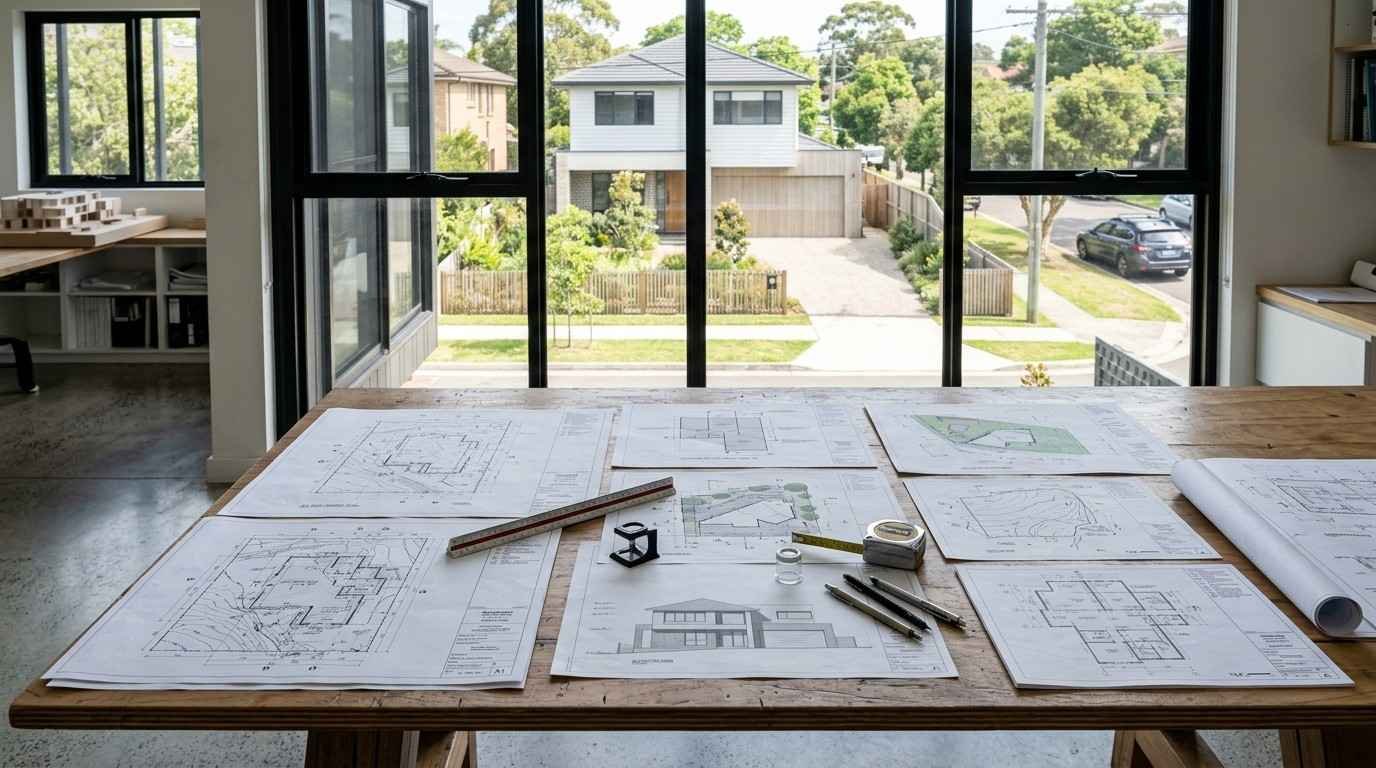
Costs Involved in Getting a Complying Development Certificate
The cost of a CDC varies depending on the complexity of the project, the certifier you engage, and the documentation required. For a straightforward single-storey addition in Sydney, total certification costs including the certifier’s fee, council notification charges, and mandatory inspections typically range from $2,000 to $5,000.
That figure does not include the cost of preparing the application documents. Architectural plans, a BASIX certificate, a structural engineer’s report, and a stormwater plan each carry their own fees. Budget an additional $3,000 to $8,000 for documentation depending on project scope.
Certifier Fees and Council Lodgement Charges
Private certifier fees are not regulated and vary between providers. Most certifiers charge a base fee for the CDC assessment plus separate fees for each mandatory inspection. Get at least two or three quotes and compare what is included some certifiers bundle inspections into their base fee, others charge per visit.
Council notification charges apply even when you use a private certifier. Under the Environmental Planning and Assessment Regulation 2021, certifiers are required to notify council of CDC applications for certain project types. Council charges a fee for this notification, typically between $150 and $500.
Hidden Costs First-Time Applicants Often Miss
The most common hidden cost is abortive design work plans prepared before an eligibility check confirms the project qualifies for complying development. We see this regularly, and it is entirely avoidable.
Long service levy charges apply to construction projects with a value above $25,000 in NSW. The levy is currently 0.35% of the cost of work, and it must be paid before the CDC is issued. On a $200,000 addition, that is $700 not a huge amount, but one that catches first-timers off guard.
Occupation Certificate fees, re-inspection fees for failed inspections, and the cost of rectifying non-compliant work discovered during construction are other costs that are rarely budgeted for upfront.
What Can Go Wrong and How to Avoid It
The complying development pathway is designed to be straightforward, but there are several points where things go wrong usually because of incomplete preparation or a misunderstanding of the eligibility rules.
We have seen projects stall at every stage of this process, and the pattern is almost always the same: the problem was identifiable before the application was lodged, but nobody looked.
Common Reasons CDC Applications Are Rejected
Incomplete documentation is the most common reason for delays and rejections. Missing plans, an unsigned BASIX certificate, or a stormwater plan that does not address all impervious surfaces will result in the certifier requesting additional information pausing the assessment clock and delaying approval.
Non-compliance with development standards is the second most common issue. Setback encroachments, height limit exceedances, and site coverage breaches are the most frequent. These are design issues, not application issues they need to be resolved before lodgement, not after.
Ineligible land is the third category. A property that appears straightforward may have a heritage overlay, a flood planning area designation, or a bushfire mapping that removes it from the complying development pathway. A thorough site check before design work begins eliminates this risk.
Non-Compliant Work and the Risks of Skipping Approval
Building without a CDC or proceeding with works that deviate from the approved plans carries serious consequences. The NSW Building Commission and local councils have enforcement powers that include stop-work orders, penalty notices, and orders to demolish or rectify non-compliant work.
Non-compliant work also creates significant problems at the point of sale. Conveyancers and solicitors conduct building certificate searches as part of the standard conveyancing process. Unapproved structures are disclosed and can affect the sale price, delay settlement, or require rectification as a condition of sale.
Insurance is another risk. Home and contents insurance policies typically exclude damage to or caused by unapproved structures. If an unapproved addition is involved in a fire or flood event, the insurer may decline the claim.
What to Do If Your Project Doesn’t Qualify for CDC
If your project does not qualify for complying development, the DA pathway is the alternative. A DA gives council the opportunity to assess your proposal on its merits, consider variations to development standards, and impose conditions that address site-specific issues.
The DA process is longer and more expensive, but it is not a dead end. Many projects that cannot proceed as complying development are approved through the DA pathway sometimes with modifications that make them more appropriate for the site.
In some cases, a project can be redesigned to meet the complying development standards. A small reduction in floor area, a setback adjustment, or a change in roof pitch can bring a project back within the CDC parameters. This is worth exploring with your designer before committing to the DA pathway.
Complying Development for Specific Project Types
The Housing SEPP covers a wide range of project types, each with its own set of development standards. Understanding which provisions apply to your specific project is essential before you begin the design process.
We work across all of these project types regularly, and the eligibility rules for each are distinct enough that experience with one does not automatically transfer to another.
Granny Flats and Secondary Dwellings
Secondary dwellings commonly called granny flats are one of the most popular complying development project types in NSW. Under the Housing SEPP, a secondary dwelling of up to 60 square metres can be approved as complying development on lots of 450 square metres or more in eligible residential zones.
The secondary dwelling must be on the same lot as the principal dwelling, and the lot must not be a strata or community title lot. Setback, height, and site coverage standards apply in the same way as for other complying development projects.
The NSW Government’s secondary dwellings policy has been progressively expanded to make it easier for homeowners to add a granny flat, and the complying development pathway is the fastest route to approval for eligible sites.
Home Additions, Alterations, and Renovations
Single-storey additions to existing dwellings are among the most common complying development projects. The addition must comply with the setback, height, site coverage, and landscaped area standards in the Housing SEPP, and the existing dwelling must be a lawfully erected structure.
Two-storey additions are also covered under the SEPP for eligible lots, though the development standards are more stringent particularly around setbacks and privacy screening for windows and balconies overlooking neighbouring properties.
Internal alterations that do not affect the external envelope of the building typically do not require a CDC. However, structural alterations, changes to the building’s footprint, or works that affect fire safety systems will require certification.
Demolition, Pools, and Outbuildings
Demolition of a dwelling house or ancillary structure can be approved as complying development under the Housing SEPP, provided the site is not heritage-listed and the demolition meets the relevant standards, including asbestos management requirements.
Swimming pools and spas are covered under the complying development pathway for eligible residential lots. The pool must comply with setback requirements, and pool fencing must meet the requirements of the Swimming Pools Act 1992 and the Swimming Pools Regulation 2018.
Outbuildings including sheds, garages, and carports are among the most straightforward complying development projects. Size, height, and setback limits apply, and the structure must not be used as a habitable room.
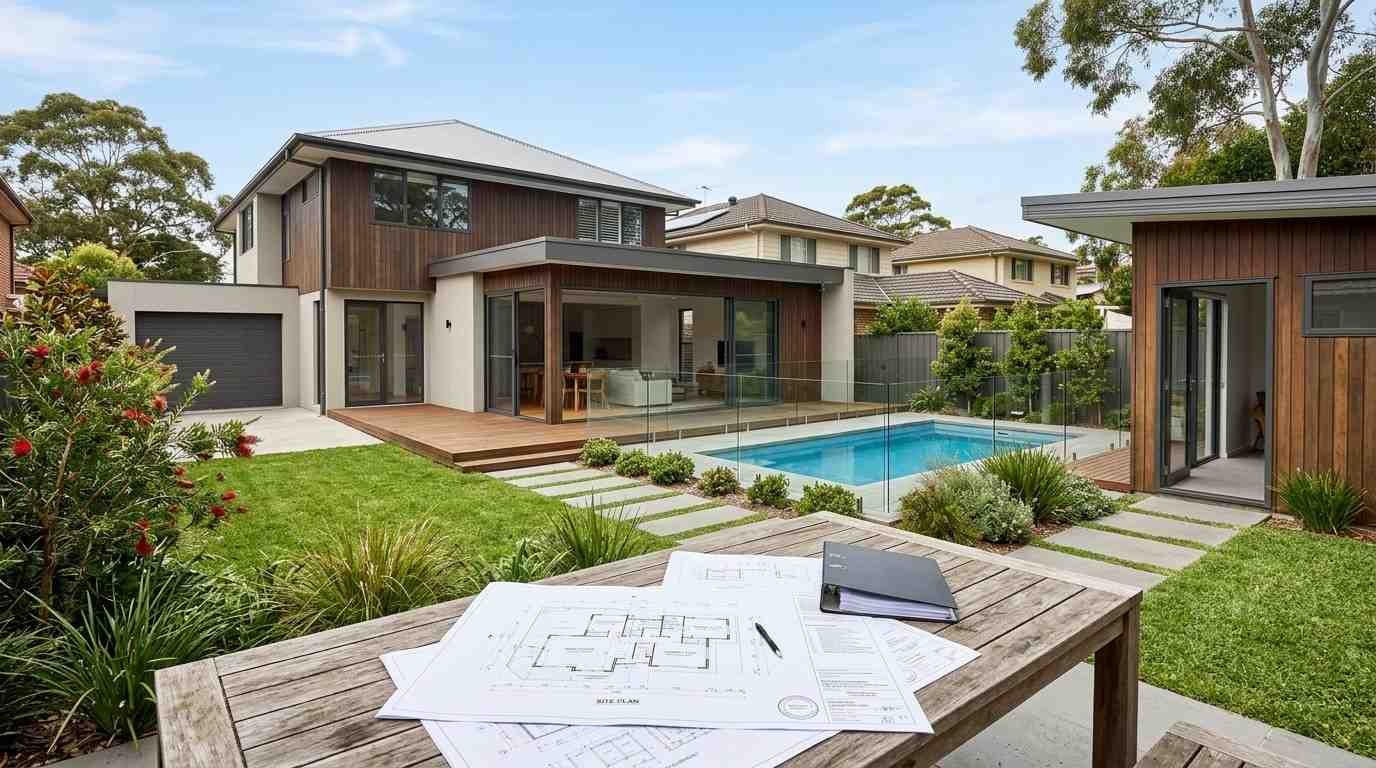
Complying Development vs. Development Application: Which Path Is Right?
The choice between complying development and a Development Application is not always obvious, and the right answer depends on your specific project, your site, and your timeline.
Both pathways lead to the same outcome a lawful approval to build but they get there very differently. Understanding the trade-offs helps you make the right decision from the start.
Decision Framework: CDC or DA?
Start with eligibility. If your project and your site meet the complying development standards, the CDC pathway is almost always the better choice. It is faster, cheaper, and more predictable. The absence of council discretion means you know exactly what you are getting before you lodge.
If your project does not meet the standards or if your site has constraints that remove it from the pathway the DA is your only option. The DA process gives council the ability to consider your proposal on its merits and approve variations that complying development cannot accommodate.
There are also cases where a project technically qualifies for complying development but where the DA pathway is strategically preferable. If your project is at the boundary of the development standards and you want the flexibility to negotiate conditions, or if you are in a sensitive area where community consultation might actually support your proposal, a DA can be the smarter choice.
The decision framework is straightforward: check eligibility first, assess your timeline and budget, and then choose the pathway that gives your project the best chance of a successful outcome.
Frequently Asked Questions
What is the difference between complying development and exempt development in NSW?
Exempt development requires no approval at all it is pre-approved by the SEPP for very minor works like small garden sheds and minor landscaping. Complying development requires a certificate but bypasses the full DA process. Both are faster than a DA, but exempt development has no formal approval step.
Can I use complying development for a heritage-listed property?
Generally, no. Properties on the State Heritage Register are excluded from the complying development pathway for most works. Locally heritage-listed properties may qualify for minor works under specific provisions, but this requires careful checking with your certifier before any design work begins.
How do I know if my land is eligible for complying development?
Start with the NSW Planning Portal to check your zoning and any overlays flood, bushfire, heritage, and contamination that may affect eligibility. Then engage an accredited certifier for a pre-lodgement eligibility assessment before committing to design costs.
What happens if I build without a CDC?
Building without a CDC is unlawful. Council and the NSW Building Commission can issue stop-work orders, penalty notices, and orders to demolish or rectify non-compliant work. Unapproved structures also create problems at the point of sale and may void your home insurance for related claims.
Can a neighbour object to a complying development application?
No. Because complying development is assessed against pre-set standards not on merit there is no neighbour notification or objection process. If the project complies with the development standards, the certificate must be issued. This is one of the key advantages of the CDC pathway over a DA.
How long does it take to get a CDC in NSW?
A certifier must determine a complete CDC application within 20 days under the Environmental Planning and Assessment Regulation 2021. In practice, many private certifiers issue straightforward CDCs in 10 to 15 days. The clock starts only once the application is complete, so submitting thorough documentation upfront is critical.
Do I need a CDC for internal renovations?
Not always. Internal alterations that do not affect the building’s external envelope, structural elements, or fire safety systems typically do not require a CDC. However, structural changes, bathroom or kitchen renovations that involve moving walls, or any work affecting the building’s footprint will likely require certification. Check with an accredited certifier before starting work.
Conclusion
Complying development approval in NSW gives homeowners and investors a faster, more predictable path to building approval when the project and site meet the Housing SEPP standards.
Understanding the CDC pathway, eligibility rules, development standards, and certifier process puts you in control of your project timeline and budget from day one.
At Sydney Home Renovation, we help you navigate the approval process with confidence connecting you with the right certifiers, preparing thorough documentation, and keeping your project moving from approval to completion.


