Yes, you can renovate a bathroom for $10,000 in Australia, but only with strategic planning and a clear understanding of where your money goes. A budget of $10,000 covers a basic-to-mid-range renovation for a standard-sized bathroom in Sydney, including new tiles, fixtures, vanity, and essential labour.
Structural changes, premium finishes, or unexpected repairs push you past this limit fast. This guide breaks down realistic costs, shows you where to save without sacrificing quality, and reveals the hidden expenses that catch most renovators off guard. You will finish knowing exactly what $10,000 buys and how to make every dollar count.
The Short Answer: Yes, But Here’s What $10,000 Actually Gets You
A $10,000 bathroom renovation in Australia is achievable. It is not a myth, but it demands clear expectations about scope, finishes, and the compromises you accept before demolition starts.
At this price point, you are looking at a cosmetic-to-moderate renovation. Think new tiles, a replacement vanity, updated tapware, fresh paint, and basic plumbing adjustments. You are not relocating fixtures, knocking down walls, or installing heated floors.
We quote projects in this bracket every week. The ones that succeed all share the same trait: the layout stays exactly where it is.
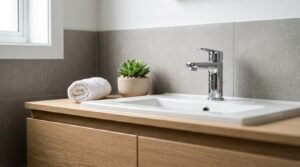
What a $10K Budget Realistically Covers in Sydney
For $10,000 in Sydney, expect a renovation scope that includes:
- Demolition and removal of existing tiles, vanity, and fixtures
- Waterproofing, mandatory under Australian standards
- New floor and wall tiles in mid-range ceramic or porcelain
- Standard vanity unit with basin and mixer
- Toilet replacement, close-coupled or wall-faced
- Shower screen, semi-frameless or framed
- Basic tapware and accessories
- Painting of the ceiling and any non-tiled walls
- Labour for tiling, plumbing, and minor electrical works
This covers a bathroom of roughly 4 to 6 square metres, which describes most main bathrooms and ensuites in Sydney housing stock.
Size bands matter more than people expect. A compact 3 to 4 square metre ensuite leaves genuine headroom for better tiles or a nicer vanity. A standard 5 to 6 square metre main bathroom lands squarely on budget with mid-range selections throughout.
Anything past 7 square metres stretches tiling and waterproofing costs to the point where $10,000 stops being realistic without visible compromises.
When $10,000 Works, and When It Doesn’t
The budget works well under these conditions:
- Your bathroom layout stays the same, with no plumbing relocation
- No water damage, mould, or structural problems sit behind the walls
- You choose mid-range materials and standard fixtures
- You are renovating a single, standard-sized bathroom
The budget falls short in these situations:
- You want to relocate the toilet, shower, or vanity
- The subfloor needs replacement or levelling
- You are chasing premium finishes such as natural stone or custom joinery
- Asbestos removal is required, which is common in pre-1990 Sydney homes
- Your project scope extends beyond a single bathroom
Understanding these boundaries upfront prevents budget blowouts and mid-project disappointment.
Complete Cost Breakdown for a $10,000 Bathroom Renovation
Knowing where your $10,000 goes separates a successful renovation from a financial headache. Here is how a typical budget-conscious bathroom renovation breaks down in Sydney.
Labour Costs ($4,000–$5,500)
Labour represents 40 to 55 percent of your total budget. Sydney trade rates run higher than regional NSW, and you need multiple licensed specialists across the job.
| Trade | Estimated Cost | What’s Included |
| Demolition | $500–$800 | Strip-out of tiles, fixtures, vanity |
| Waterproofing | $600–$900 | Membrane application, compliance certificate |
| Tiling | $1,200–$1,800 | Floor and wall tiling, labour only |
| Plumbing | $800–$1,200 | Fixture installation, minor pipework |
| Electrical | $400–$700 | Light fitting, exhaust fan, power point |
| Painting | $300–$500 | Ceiling and non-tiled surfaces |
These figures assume a straightforward renovation. Complications such as corroded pipes, faulty wiring, or damaged framing add to the bill immediately.
Materials and Fixtures ($3,000–$4,500)
Materials consume 30 to 45 percent of your budget. Smart selections here make or break your $10,000 goal.
| Item | Budget Range | Notes |
| Floor tiles | $300–$500 | Ceramic or porcelain, 4–6m² |
| Wall tiles | $400–$700 | Standard format, feature wall optional |
| Vanity and basin | $400–$800 | Flat-pack or entry-level freestanding |
| Toilet | $250–$450 | Close-coupled, WELS-rated |
| Shower screen | $350–$600 | Semi-frameless, standard size |
| Tapware | $200–$400 | Basin mixer, shower mixer, accessories |
| Mirror or cabinet | $100–$250 | Basic mirror or mirrored cabinet |
| Paint | $50–$100 | Wet-area specific |
Buying from trade suppliers or during sales saves 10 to 15 percent off material costs. Avoid the temptation to upgrade everything. One premium item cascades into budget overruns across the rest of the job.
What $10,000 Works Out To Per Square Metre
Most quotes you receive are expressed as a total, which makes them almost impossible to compare. Converting to a rate per square metre fixes that instantly.
At 4 to 6 square metres, a $10,000 budget equals roughly $1,650 to $2,500 per square metre for a complete renovation including labour, materials, and compliance. That figure sits at the entry end of the Sydney market.
| Bathroom Size | Budget per m² at $10,000 | Realistic Finish Level |
| 3–4 m² (ensuite) | $2,500–$3,300 | Mid-range with some upgrades |
| 5–6 m² (standard main) | $1,650–$2,000 | Solid mid-range throughout |
| 7 m²+ (large) | Under $1,450 | Entry-level, visible compromises |
We use this rate as our first sanity check on any enquiry. When someone describes an 8 square metre family bathroom and a $10,000 ceiling, the maths answers the question before we visit the site.
A Worked $10,000 Budget: Where Every Dollar Lands
Ranges are useful for planning, but they let everyone hedge. Here is a committed allocation for a 5 square metre Sydney main bathroom, same layout, shower only, with every dollar accounted for.
| Line Item | Allocated | Selection |
| Demolition and rubbish removal | $650 | Full strip-out, skip bin included |
| Waterproofing | $750 | Compliant membrane plus certificate |
| Tiling labour | $1,500 | Floor plus full-height shower walls |
| Plumbing labour | $950 | Same-position fixture installation |
| Electrical | $550 | LED light, exhaust fan, one GPO |
| Painting | $400 | Ceiling and upper walls |
| Floor and wall tiles | $900 | Large-format porcelain, mid-range |
| Vanity, basin, mirror | $750 | Quality flat-pack, soft-close |
| Toilet suite | $350 | Close-coupled, WELS 4-star |
| Tapware | $350 | Recognised brand mixers |
| Shower screen | $500 | Semi-frameless |
| Contingency | $1,350 | Held until strip-out is clear |
| Total | $9,000 committed + $1,350 held |
Notice what this budget does not contain: no bath, no niche, no heated towel rail, no stone. Those exclusions are what make the numbers work.
Plumbing and Electrical Allowances ($1,000–$2,000)
Beyond installation labour, expect costs for hot water connections, minor drainage modifications, electrical compliance items such as safety switches and exhaust fan wiring, and fixture rough-ins when configurations change.
Homes with sound plumbing and electrical in unchanged fixture positions land at the lower end of this range. Older Sydney homes routinely need more, and we allow for that in every quote on a pre-1990 property.
Contingency Buffer ($500–$1,000)
Never renovate without a contingency. The industry standard sits at 10 percent of total budget, and we treat it as non-optional.
Your contingency covers unexpected water damage behind tiles, subfloor repairs, material price variations, and minor scope adjustments. A $10,000 budget with no contingency is really a $10,000 gamble. Build in $500 to $1,000 for peace of mind.
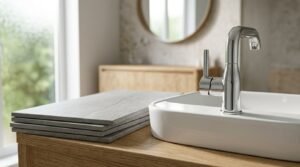
Where to Spend and Where to Save on a Budget Bathroom Reno
Strategic spending separates a bathroom that looks cheap from one that looks considered. Here is how we allocate $10,000 when the goal is a result that still looks good in five years.
High-Impact Upgrades Worth the Investment
Tapware and mixers deserve real budget. Cheap tapware fails fast and looks dated within two years. Spend $250 to $400 on quality mixers from established brands such as Caroma, Methven, or Phoenix to avoid replacements and leaks.
Waterproofing is not optional. It is mandated by the National Construction Code and governed by AS 3740 for wet areas. Going beyond the minimum standard protects the entire renovation.
Tiles in wet areas absorb daily abuse. Mid-range porcelain at $40 to $60 per square metre outperforms budget ceramic on both durability and appearance.
A shower screen at $400 to $600 for a semi-frameless option looks significantly better than a framed alternative and cleans far more easily.
Smart Savings That Won’t Compromise Quality
Flat-pack vanities from major suppliers deliver solid quality at $300 to $600. Custom joinery at this budget is unrealistic, and we say so upfront.
Large-format tiles at 300x600mm or 600x600mm reduce grout lines and cut labour time. Standard formats cost far less than intricate mosaics.
For walls above the splash zone, wet-area paint is a legitimate and budget-friendly alternative to full tiling.
Keeping the layout is the single biggest budget saver available to you. Moving a toilet costs $1,500 to $3,000 in plumbing alone, and relocating a shower or vanity costs much the same.
End-of-line tiles, clearance fixtures, and trade discounts cut material costs by 15 to 25 percent.
Can You Fit a Bath Into a $10,000 Budget?
This is the question we field most often at this price point, and the honest answer is usually no.
A basic drop-in acrylic bath costs $400 to $700 for the unit alone. Installation adds tiled hobs or a surround, extra waterproofing area, additional plumbing, and a bath spout, which together push the total impact to $1,200 to $2,000. That consumes your entire contingency and then some.
A freestanding bath sits further out of reach at $1,000 to $3,000 for the unit before any plumbing relocation. Retaining an existing bath in its current position is the one workable path, since we simply re-tile around it and resurface where needed.
Removing the last bath in a single-bathroom family home does affect resale, so that decision deserves more thought than the budget alone suggests.
Costs You Should Never Cut
Skimping on Waterproofing leads to structural damage, mould, and insurance disputes. It is non-negotiable, without exception.
Unlicensed plumbing and electrical work is illegal in NSW and voids insurance. Verify licences through NSW Fair Trading before anyone starts.
A quality exhaust fan at $150 to $300 installed prevents moisture damage and mould growth, which makes it essential rather than optional.
Rushing demolition or skipping substrate preparation produces tile failures and rework costs that dwarf the time saved.
Hidden Costs That Blow $10K Bathroom Budgets
Most bathroom renovation blowouts have nothing to do with overspending on tiles. They come from what sits behind the walls, and we only find it once the strip-out is done.
Structural and Water Damage Surprises
Once demolition starts, these discoveries are common. Water damage to framing means rotted studs or joists need replacement before new work proceeds, at $500 to $2,000 or more.
Subfloor deterioration is another frequent find. Particleboard subfloors in wet areas often require replacement with cement sheet, at $400 to $1,000.
Extensive mould demands professional treatment, at $500 to $1,500. Termite damage is common in older Sydney homes and requires specialist assessment before repair.
A pre-renovation inspection identifies some of these issues. Many only surface during strip-out, which is precisely why the contingency exists.
Permit and Compliance Fees in NSW
Not every bathroom renovation needs council approval, though many do, and the distinction matters before you commit to a timeline.
Approval becomes likely when you change the building’s footprint, alter structural elements, or modify plumbing stacks and drainage.
Standard compliance costs include a waterproofing certificate at $150–$300, required for all wet area renovations, a plumbing compliance certificate at $100–$200, and building approval where required at $500–$1,500 or more.
Check with your local council or a licensed builder before work begins. Retrospective approval costs far more than the original application.
Scope Creep and Mid-Project Changes
“While we’re at it” is the most expensive phrase in renovation. Changing tile selections mid-project, adding a heated towel rail, or upgrading the vanity after demolition generates restocking fees, labour delays, additional trade call-outs, and material wastage.
Lock in every selection before demolition begins. Changes made after that point cost 20 to 50 percent more than the same choices made upfront.
How to Keep Your Bathroom Renovation on Budget
Staying at $10,000 requires discipline, planning, and the right contractor relationship. We have watched all three factors decide the outcome.
Get Detailed Quotes Before You Start
A single-line quote reading “Bathroom renovation: $10,000” tells you nothing at all.
Request itemised quotes that break down labour by trade, material allowances with specific named products, clear inclusions and exclusions, contingency provisions, and a payment schedule.
We recommend a deposit of no more than 10 percent of contract value, the maximum permitted in NSW for residential work under $20,000. Progress payments should follow completed stages such as strip-out, waterproofing, tiling, and fit-off, with a final payment on practical completion.
Compare at least three quotes. The cheapest is rarely the best, so look for clarity and completeness instead.
Lock In Your Design and Selections Early
Before any work begins, finalise tile selections with backup options in case of discontinuation, your vanity, toilet, and tapware models, the colour scheme and finishes, and confirmation of the layout.
Visit showrooms, order samples, and make decisions under proper lighting. Rushed selections produce regrets and costly changes.
What You Can Legally DIY in NSW
DIY saves real money, but only in the right places, and the boundaries in NSW are legal rather than advisory.
Work requiring a licensed professional includes all plumbing and drainage, all electrical work, and waterproofing, since the certificate must come from a competent person.
Work you can genuinely do yourself includes demolition and strip-out, rubbish removal to a transfer station, painting of ceilings and non-tiled walls, and installing accessories such as towel rails and mirrors.
Realistic savings from DIY demolition and painting run $800 to $1,200, meaningful at this budget. Just be honest about your timeline, since a slow strip-out delays every trade behind it.
Realistic Timeline for a $10,000 Bathroom Renovation
A straightforward renovation at this budget runs two to three weeks from strip-out to handover.
| Stage | Duration | Notes |
| Demolition and strip-out | 1–2 days | Full removal, site protection |
| Repairs and preparation | 1–2 days | Only where damage is found |
| Waterproofing and curing | 2–3 days | Curing time is not negotiable |
| Tiling and grouting | 3–5 days | Depends on format and area |
| Plumbing and electrical fit-off | 2–3 days | Fixtures, screen, accessories |
| Painting and final clean | 1–2 days | Handover inspection |
Delays cluster around two causes: hidden damage found at strip-out, and back-ordered materials. Ordering all materials before demolition removes the second cause entirely.
Work With a Contractor Who Offers Transparent Pricing
The right contractor provides detailed written quotes, explains inclusions and exclusions without prompting, flags potential hidden costs before work starts, communicates proactively throughout the project, and applies no pressure toward unnecessary upgrades.
Avoid contractors who give vague estimates or refuse to itemise costs. Transparency protects both parties, and we build our quotes on that basis.
$10,000 Bathroom Renovation: What’s Included vs. What’s Extra
Understanding the line between standard inclusions and add-ons prevents budget surprises late in the job.
Standard Inclusions at This Price Point
| Included | Details |
| Demolition | Removal of existing tiles, vanity, toilet, fixtures |
| Waterproofing | Full wet area membrane with certificate |
| Tiling | Floor and wall tiles, mid-range, standard format |
| Vanity and toilet | Entry to mid-range vanity with basin, standard toilet suite |
| Tapware | Basin mixer, shower mixer, basic accessories |
| Shower screen | Semi-frameless or framed |
| Plumbing and electrical | Fixture installation, light, exhaust fan, one power point |
| Painting and rubbish removal | Ceiling, non-tiled walls, disposal of old materials |
Common Add-Ons That Push You Over Budget
| Add-On | Typical Cost | Impact |
| Heated towel rail | $300–$600 | Electrical work plus unit |
| Underfloor heating | $800–$1,500 | Significant electrical addition |
| Niche in shower | $200–$400 | Extra tiling and waterproofing |
| Freestanding bath | $1,000–$3,000+ | Plumbing relocation plus unit |
| Custom vanity | $1,500–$4,000+ | Joinery costs |
| Natural stone tiles | $100–$200/m² | Material premium |
| Frameless shower screen | $800–$1,500 | Premium over semi-frameless |
| Relocation of fixtures | $1,500–$3,000+ | Plumbing and structural |
Each add-on seems minor in isolation. Combined, they push a $10,000 budget to $15,000 or beyond, the most common way these projects go wrong.
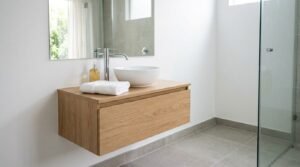
Is a $10K Bathroom Reno Worth It for Property Value?
Bathroom renovations rank consistently among the higher-return home improvements, though the actual return depends heavily on your situation and your market.
ROI for Owner-Occupiers vs. Investors
Owner-occupiers gain daily enjoyment of an improved space, reduced maintenance on ageing fixtures, and a potential value add at sale that resists precise quantification. For this group, the return is partly lifestyle and partly financial.
Property investors weigh a different set of factors: rental yield improvement, since updated bathrooms attract better tenants, shorter vacancy periods, lower maintenance costs on new fixtures, and a contribution to capital growth at sale.
Well-executed bathroom renovations generally return a solid portion of their cost in favourable markets. Over-capitalising destroys that advantage, and spending $30,000 on a bathroom in a $600,000 property rarely pays off.
Budget Renovations That Add Genuine Value
At $10,000, four priorities determine whether the money translates into value.
Functionality comes first. A working, modern bathroom beats a dated one with premium finishes every time. Confirm that drainage falls correctly, the exhaust fan actually clears steam, and every tap and mixer operates smoothly before handover.
Neutral aesthetics matter more than personal taste. White, grey, and natural tones appeal broadly and photograph well, which matters more than personal preference when resale is part of the equation.
Quality in the basics beats designer labels. Sound waterproofing, reliable plumbing, and durable tiles matter far more than brand names. Buyers and building inspectors notice failures long before they notice brands.
Presentation seals the result. A fresh, well-sealed, spotlessly clean bathroom photographs well and performs at inspections. Clean silicone lines and consistent grout colour signal careful work to anyone paying attention.
A $10,000 renovation that ticks these boxes adds genuine value. The same budget spent on cheap shortcuts creates future problems that cost far more to fix.
Conclusion
Renovating a bathroom for $10,000 in Australia is realistic once you understand the cost breakdown, prioritise wisely, and plan for hidden expenses. Labour, materials, compliance, and contingency all compete for the same budget.
The key is a contractor who provides transparent pricing, detailed quotes, and honest advice about what this budget genuinely achieves. Cutting corners on waterproofing or licensed trades creates long-term costs that far exceed any short-term savings.
At Sydney Home Renovation, we help homeowners and investors plan and complete bathroom renovations that stay on budget and deliver lasting value. Contact us today for a detailed, no-obligation quote and see exactly what your $10,000 can achieve.
Frequently Asked Questions
Can you renovate a small bathroom for $10,000 in Sydney?
Yes. A bathroom under 5 square metres suits this budget well, since less tiling, fewer materials, and reduced labour time leave room for a genuine mid-range finish throughout.
What is the cheapest way to renovate a bathroom in Australia?
Keep the existing layout, choose mid-range materials, and avoid structural changes. Replacing fixtures in place and selecting flat-pack vanities delivers the largest savings available.
How much does labour cost for a bathroom renovation in NSW?
Labour represents 40 to 55 percent of the budget. Expect $4,000 to $5,500 covering demolition, waterproofing, tiling, plumbing, electrical, and painting, with Sydney rates above regional NSW.
What should I prioritise in a budget bathroom renovation?
Prioritise waterproofing, quality tapware, and durable tiles in wet areas, since these determine longevity. A good exhaust fan prevents moisture damage. Decorative items upgrade easily later.
Do I need council approval for a bathroom renovation in Sydney?
Most cosmetic renovations need no council approval. Altering structural elements, changing the footprint, or modifying drainage stacks triggers it. Waterproofing and plumbing certificates remain mandatory regardless.
How long does a $10,000 bathroom renovation take?
Two to three weeks from strip-out to handover. That covers demolition, waterproofing and curing, tiling, and fixture installation, with hidden damage and back-ordered materials the usual sources of delay.
Should I hire a contractor or DIY to save money?
Plumbing, electrical, and waterproofing require licensed professionals in NSW. Demolition, painting, and accessory installation suit capable DIYers, and that hybrid approach saves $800 to $1,200.