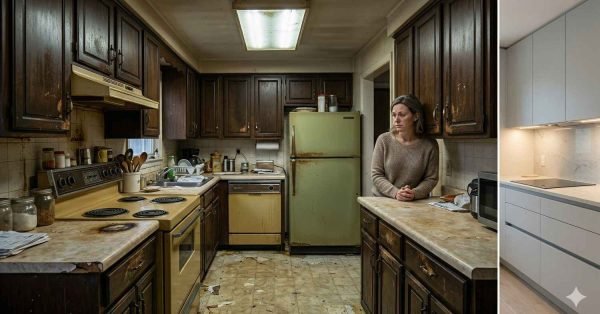
Every Sydney homeowner has a renovation story that starts with confidence and ends with a contractor on speed dial. Whether it was ripping out tiles before checking what was underneath, or ordering a custom benchtop before confirming the cabinet dimensions, kitchen fails are rarely small, and they are almost never cheap.
These moments matter beyond the embarrassment. They reveal the exact gaps in renovation planning that cause budget blowouts, project delays, and costly rework across every room in the house, including your bathroom.
This guide unpacks the most common kitchen renovation mistakes Sydney homeowners make, why they happen, and how the same planning principles that prevent kitchen disasters will protect your bathroom renovation budget from day one.
The Kitchen Fails That Cost Sydney Homeowners the Most
Kitchen renovations in Sydney are among the most emotionally driven projects homeowners undertake. The excitement of a new layout, fresh finishes, and modern appliances can override the discipline of structured budgeting, and that is where the real fails begin. Understanding which mistakes carry the heaviest financial consequences is the first step toward avoiding them entirely.
Skipping the Budget Plan Before Demolition Starts
The single most expensive kitchen fail is also the most preventable: starting demolition without a confirmed, itemised budget. Once walls come down and old cabinetry is removed, you are committed. There is no pausing mid-project to reconsider your financial position without incurring holding costs, contractor downtime fees, and the very real risk of an unfinished kitchen sitting open for weeks.
Sydney renovation contractors consistently report that homeowners who skip the pre-demolition budget phase spend an average of 20 to 35 percent more than those who complete detailed cost planning before a single tile is lifted. The reason is straightforward: without a budget framework, every decision becomes reactive rather than strategic. You choose materials based on what looks good in the showroom rather than what fits your confirmed allowance. You approve variations without understanding their cumulative cost impact.
A proper pre-demolition budget covers labour by trade, material allowances by category, fixture and fitting selections with confirmed pricing, council or strata approval costs where applicable, and a contingency buffer of at least 10 to 15 percent. Skipping any one of these line items is not saving time. It is borrowing trouble.
Underestimating Labour Costs in Sydney Renovations
Labour is consistently the most underestimated line item in Sydney kitchen and bathroom renovations. Homeowners researching renovation costs online often encounter national averages that bear little resemblance to what licensed tradespeople charge in the Sydney metro area, where demand is high, travel costs are real, and compliance requirements add legitimate time to every job.
In Sydney, licensed plumbers typically charge between $120 and $180 per hour. Electricians range from $110 to $160 per hour. Tilers working on complex layouts or large-format tiles can charge $60 to $100 per square metre for labour alone, separate from material costs. A kitchen renovation requiring coordination across four or five trades can accumulate $15,000 to $30,000 in labour costs before a single fixture is purchased.
The fail here is not that labour is expensive. The fail is treating labour as an afterthought rather than the foundation of your budget. When you build your renovation budget starting with confirmed labour costs, every other decision, including which materials you can afford, which fixtures make financial sense, and where you have genuine flexibility, becomes clearer and more controlled.
Choosing Finishes Before Locking In a Realistic Budget
Walking through a tile showroom or a kitchen design studio before you have a confirmed budget is one of the most reliable ways to derail a renovation before it begins. The problem is not that the products are overpriced. The problem is that selections made without a budget anchor have no financial context, and by the time you receive a quote, you are emotionally committed to finishes you may not be able to afford without cutting corners elsewhere.
This pattern plays out in bathroom renovations just as frequently as in kitchens. A homeowner falls in love with a freestanding bath, a specific tapware range, or a large-format stone tile, then discovers that accommodating those selections requires reducing the labour budget, skipping waterproofing upgrades, or eliminating the contingency buffer entirely. Each of those trade-offs creates a different kind of fail, one that may not surface until months after the renovation is complete.
The correct sequence is always budget first, selections second. Confirm your total renovation budget, allocate realistic allowances to each category, then shop within those allowances. This approach does not limit your renovation. It protects it.
Why Kitchen Renovation Mistakes Mirror Bathroom Budget Blowouts
The structural reasons behind kitchen renovation fails are not unique to kitchens. They reflect universal patterns in how homeowners approach renovation budgeting, and those same patterns appear in bathroom renovations with equal frequency and equal financial consequence. Recognising the connection between kitchen mistakes and bathroom budget blowouts is what separates reactive renovators from strategic ones.
The Hidden Costs Nobody Warns You About
Hidden costs are not hidden because contractors are concealing them. They are hidden because they are genuinely difficult to identify without opening walls, lifting floors, or conducting a pre-renovation inspection. In both kitchens and bathrooms, the most common hidden costs include waterproofing deficiencies in existing structures, subfloor damage from years of moisture exposure, outdated or non-compliant plumbing that must be upgraded to meet current Australian Standards, and electrical circuits that cannot support modern appliance or lighting loads.
In Sydney bathrooms specifically, asbestos-containing materials in homes built before 1990 represent a significant hidden cost that requires licensed removal and disposal. The cost of asbestos remediation in a standard Sydney bathroom can range from $2,000 to $8,000 depending on the extent of contamination, and it is a cost that cannot be avoided once identified. Budgeting a contingency that accounts for this possibility is not pessimism. It is responsible financial planning.
Other commonly overlooked costs include waterproofing membrane upgrades, which are mandatory under the National Construction Code for wet areas, structural repairs to wall framing damaged by long-term moisture, and the cost of temporary accommodation if the renovation extends beyond the planned timeline. Each of these costs is foreseeable with proper pre-renovation assessment, even if the exact amount cannot be confirmed until work begins.
How Scope Creep Silently Destroys Your Renovation Budget
Scope creep is the renovation industry’s most polite term for a genuinely destructive process. It begins with a small, reasonable-sounding addition: “While you’re in there, can you also move the vanity 300mm to the left?” or “Can we add a heated towel rail while the electrician is on site?” Each individual request seems minor. Cumulatively, they can add 15 to 25 percent to the final project cost.
The mechanism behind scope creep is not contractor opportunism. It is the absence of a clearly defined and contractually confirmed scope of works at the project outset. When the scope is vague, every conversation about changes lacks a reference point. There is no baseline to measure additions against, no approved variation process to follow, and no clear understanding of what each change costs before it is approved.
Preventing scope creep requires a detailed scope of works document before any work begins, a formal variation approval process where every change is priced and signed off before execution, and the discipline to distinguish between changes that genuinely improve the renovation outcome and changes that simply feel appealing in the moment. The best contractors make this process straightforward by providing clear documentation and transparent variation pricing from day one.
When DIY Decisions Become Expensive Professional Fixes
The appeal of DIY in a renovation budget is understandable. Labour costs in Sydney are significant, and the idea of saving $3,000 to $5,000 by tiling a bathroom yourself or installing a vanity without a licensed plumber feels financially sensible. In practice, unlicensed plumbing and electrical work in NSW is illegal, and the consequences extend well beyond a fine.
Insurance policies for home and contents, as well as building insurance, typically exclude damage caused by unlicensed trade work. If a DIY plumbing connection fails and causes water damage to a neighbouring apartment or the floor below, the homeowner bears full financial liability. In a Sydney apartment building, that liability can reach tens of thousands of dollars. The cost of the original licensed plumber suddenly looks very reasonable.
Even in areas where DIY is technically permitted, such as painting or basic tiling in non-wet areas, the quality gap between experienced tradespeople and first-time renovators is often visible in the finished result. Poor tile alignment, uneven grout lines, and inadequate surface preparation are not just aesthetic problems. They affect the longevity of the renovation and can reduce the perceived value of the property at resale or rental assessment.
What Sydney Renovators Get Wrong About Material Allowances
Material allowances are one of the most misunderstood elements of renovation budgeting. An allowance is not a vague placeholder. It is a confirmed financial limit for a specific category of materials, and when it is set without reference to real market pricing, it becomes the source of some of the most frustrating renovation fails Sydney homeowners experience.
Setting Realistic Allowances for Tiles, Fixtures, and Fittings
A realistic material allowance is built from actual product pricing, not aspirational estimates. In Sydney’s current market, floor tiles for a standard bathroom range from $40 to $120 per square metre for mid-range options, with premium large-format tiles reaching $200 per square metre or more. Wall tiles follow a similar range. A bathroom requiring 25 square metres of tiling can therefore carry a material cost of $1,000 to $5,000 for tiles alone, before adhesive, grout, and installation.
Vanity units in Sydney retail from approximately $600 for a basic freestanding option to $3,500 or more for a wall-hung unit with integrated storage and a quality basin. Tapware ranges from $150 for entry-level sets to $800 or more for premium European brands. A shower screen starts at around $400 for a basic framed option and can reach $2,500 for a frameless glass installation.
When these figures are added together with realistic labour costs, the total for a mid-range Sydney bathroom renovation typically falls between $18,000 and $35,000. Allowances set below these benchmarks do not reduce the cost of the renovation. They simply create a gap between the budget and reality that surfaces as a shock during the quoting process.
The Difference Between Supply Cost and Installed Cost
One of the most consistent sources of renovation budget confusion is the failure to distinguish between supply cost and installed cost. Supply cost is what you pay for a product at a retailer or supplier. Installed cost is what you pay for that product to be delivered, positioned, connected, and finished to a compliant standard by a licensed tradesperson.
The gap between these two figures is often significant. A toilet suite that retails for $400 may carry an installed cost of $750 to $950 once plumber labour, connection fittings, and waste adjustment are included. A bathroom exhaust fan priced at $120 at a hardware retailer may cost $350 to $450 installed by a licensed electrician who must also ensure the ducting meets building code requirements.
Renovation budgets that account only for supply costs consistently run over budget because the installed cost is where the real financial commitment lies. Every fixture, fitting, and appliance in a renovation budget should be costed at its installed price, not its retail price. This single adjustment can prevent thousands of dollars in budget shortfalls during the construction phase.
How to Avoid the Upgrade Trap Mid-Renovation
The upgrade trap is a specific and very common renovation fail. It occurs when a homeowner, having committed to a renovation at a confirmed budget, begins making upgrade decisions during the construction phase without reassessing the cumulative financial impact. The trigger is usually visual: seeing the space take shape makes it easy to imagine how much better it would look with a slightly more expensive tile, a premium tapware set, or an additional feature like a niche shelf or heated floor.
Each individual upgrade may seem affordable in isolation. A $200 upgrade to a better tapware set, a $300 upgrade to a larger format tile, and a $500 addition of a heated towel rail each feel manageable. Together, they represent $1,000 in unplanned expenditure, and in a renovation where the contingency buffer is already allocated to genuine risk items, that $1,000 has to come from somewhere.
The most effective way to avoid the upgrade trap is to make all finish selections before the renovation begins, confirm the total cost of those selections against your budget, and then treat the selection list as fixed for the duration of the project. If you genuinely want to upgrade something mid-renovation, the correct process is to formally assess the cost impact, identify what will be reduced or removed to offset it, and make a conscious, informed decision rather than an emotional one.
The Renovation Fails That Are Completely Avoidable With Proper Planning
Not every renovation fail is the result of bad luck or unforeseen circumstances. The majority of the most costly mistakes Sydney homeowners make are entirely preventable with structured planning, accurate quoting, and a contractor relationship built on transparency. Understanding which fails fall into this category is empowering, because it means the outcome of your renovation is largely within your control.
Getting Accurate Quotes Before Committing to a Scope
An accurate renovation quote is not a ballpark figure provided after a 20-minute site visit. It is a detailed, itemised document that breaks down labour costs by trade, material allowances by category, fixture and fitting costs at installed prices, and any known or anticipated additional costs such as waterproofing upgrades or structural repairs. Accepting a vague quote to save time in the planning phase is one of the most reliable ways to create a budget fail later in the project.
In Sydney’s renovation market, the gap between the lowest and highest quotes for an identical scope of works can be substantial. A bathroom renovation quoted at $14,000 by one contractor and $28,000 by another is not necessarily evidence that one is overcharging. It may reflect entirely different assumptions about scope, material quality, compliance requirements, and contingency. Without an itemised breakdown, you cannot compare quotes meaningfully, and you cannot make an informed decision about which contractor to engage.
Request itemised quotes from at least two or three licensed contractors before committing to a scope. Ask each contractor to explain their assumptions about material allowances, labour hours by trade, and how they handle variations. The contractor who provides the most transparent and detailed quote is almost always the one who will deliver the most predictable financial outcome.
Building a Contingency Buffer Into Every Renovation Budget
A contingency buffer is not optional. It is a structural component of every responsible renovation budget, and the homeowners who treat it as optional are the ones who end up in financial difficulty when the unexpected occurs. In Sydney renovations, a contingency of 10 to 15 percent of the total project cost is the standard recommendation for projects in existing homes where the condition of concealed structures cannot be fully assessed before work begins.
For a $25,000 bathroom renovation, a 10 percent contingency represents $2,500. That amount covers a single unexpected plumbing issue, a section of damaged subfloor, or a waterproofing deficiency that requires remediation before tiling can proceed. Without it, any one of these common occurrences forces a choice between borrowing additional funds, reducing the scope of the renovation, or delaying completion while finances are reorganised.
The contingency buffer should be held separately from the main renovation budget and accessed only for genuine unforeseen costs, not for upgrade decisions or scope additions. If the contingency is not required, it remains available for a finishing touch or simply stays in your account. If it is required, it is the difference between a manageable renovation and a stressful financial crisis.
Why Transparent Contractor Pricing Prevents the Biggest Fails
The relationship between a homeowner and a renovation contractor is fundamentally a financial relationship, and like all financial relationships, it functions best when both parties have access to the same information. Contractors who provide transparent, itemised pricing from the outset create the conditions for a renovation that stays on budget, because the homeowner understands exactly what they are paying for and why.
Transparent pricing means more than a total project cost. It means a breakdown of labour by trade with estimated hours, material allowances confirmed against actual product selections, a clear variation process with agreed pricing methodology, and honest communication about risks and contingencies before work begins. When this level of transparency is present, the homeowner is equipped to make informed decisions at every stage of the project.
Contractors who resist providing itemised breakdowns, who quote in round numbers without supporting detail, or who are vague about how variations will be priced are not necessarily dishonest. But the absence of transparency creates the conditions for the biggest renovation fails: budget surprises, disputed variations, and a loss of financial control that is very difficult to recover from once the project is underway.
Knowing what went wrong in your kitchen renovation, or in someone else’s, is genuinely useful information. But the real value comes from applying those lessons before your next project begins.
How to Turn Your Renovation Fail Into a Smarter Budget Strategy
Every renovation fail contains a lesson, and the homeowners who extract that lesson and apply it to their next project are the ones who renovate with increasing confidence and decreasing financial stress. The transition from reactive renovator to strategic one is not complicated. It requires a shift in sequencing, a commitment to transparency, and a clear understanding of what actually adds value to a Sydney property.
Prioritising Value-Adding Upgrades Over Cosmetic Fixes
Not all renovation spending delivers equal return. In Sydney’s property market, certain upgrades consistently add measurable value to a property’s sale price or rental yield, while others improve the aesthetic without meaningfully affecting financial outcomes. Understanding this distinction is what separates a renovation strategy from a renovation wish list.
In bathrooms, the upgrades that consistently deliver strong return on investment include full waterproofing to current standards, quality tapware and fixtures from recognised brands, frameless or semi-frameless shower screens, wall-hung vanities with integrated storage, and energy-efficient lighting. These elements are visible to buyers and tenants, they signal quality construction, and they reduce the likelihood of maintenance issues that erode rental returns or complicate property sales.
Cosmetic upgrades that carry lower financial return include decorative accessories, feature walls in non-primary bathrooms, and premium finishes in investment properties where the rental market does not support a corresponding increase in yield. The discipline of distinguishing between value-adding upgrades and cosmetic preferences is one of the most financially significant skills a renovator can develop.
Understanding What Adds Long-Term Property Value in Sydney
Sydney’s property market rewards renovation quality in specific and measurable ways. Properties with recently renovated bathrooms and kitchens consistently achieve higher sale prices and shorter days on market than comparable properties with dated or poorly executed renovations. The premium associated with a quality renovation is not simply aesthetic. It reflects the buyer’s or tenant’s assessment of the property’s maintenance status, compliance, and livability.
For investment property owners in Sydney, a well-executed bathroom renovation can support a rental increase of $50 to $150 per week depending on the property type, location, and the quality of the renovation relative to comparable properties in the area. Over a 12-month period, that represents $2,600 to $7,800 in additional rental income, which can offset a significant portion of the renovation cost within the first year.
For owner-occupiers, the value calculation is different but equally important. A bathroom renovation that is planned and executed to a high standard adds to the property’s market value, reduces the likelihood of costly maintenance issues, and improves the daily experience of living in the home. When the renovation is eventually reflected in a sale price, the return on a well-planned project is typically positive.
Working With a Contractor Who Gives You Honest Pricing Upfront
The single most effective way to avoid renovation fails, in the kitchen, the bathroom, or anywhere else in the home, is to work with a contractor whose pricing is transparent, whose communication is clear, and whose track record demonstrates consistent delivery within agreed budgets and timelines. In Sydney’s renovation market, these contractors exist, and finding them is worth the additional time spent in the selection process.
When evaluating contractors, ask specifically how they handle variations, how they communicate cost changes during the project, and whether they can provide references from clients whose projects were completed within the original budget. Ask to see an example of their quote format before engaging them. A contractor who is comfortable showing you how they structure their pricing is a contractor who has nothing to hide about their methodology.
Sydney Home Renovation provides fully itemised quotes, transparent variation processes, and honest pre-renovation assessments that identify potential hidden costs before work begins. The goal is not to present the lowest number. It is to present the most accurate number, so that your renovation proceeds with financial clarity from the first conversation to the final inspection.
Conclusion
Kitchen fails and bathroom budget blowouts share the same root causes: inadequate planning, unrealistic allowances, and a lack of transparent contractor communication. Recognising these patterns before your renovation begins is the most valuable thing you can take from someone else’s costly mistake.
Every dollar spent on pre-renovation planning, accurate quoting, and a properly structured contingency buffer returns multiple times over in reduced stress, avoided rework, and a finished result that genuinely adds value to your Sydney property.
At Sydney Home Renovation, we help homeowners and property investors renovate with confidence by combining honest pricing, detailed budgeting, and skilled workmanship. Contact us today to start your bathroom renovation with a clear plan and a budget you can trust.
Frequently Asked Questions
What is the most common kitchen renovation mistake homeowners make?
The most common mistake is starting demolition before confirming a detailed, itemised budget. Without a financial framework in place, every decision becomes reactive, and costs accumulate quickly beyond the original expectation.
How much should I budget for unexpected costs in a renovation?
A contingency buffer of 10 to 15 percent of the total project cost is the standard recommendation for Sydney renovations in existing homes. This covers unforeseen structural issues, waterproofing deficiencies, and compliance upgrades that cannot be confirmed until walls are opened.
Why do renovation costs go over budget in Sydney?
Budget overruns in Sydney renovations most commonly result from underestimated labour costs, vague material allowances, scope creep during construction, and hidden structural or compliance issues discovered after demolition begins. Detailed pre-renovation planning addresses all of these risks.
What is a realistic labour cost for a bathroom renovation in Sydney?
Labour costs for a standard Sydney bathroom renovation typically range from $8,000 to $18,000 depending on the scope, the number of trades required, and the complexity of the work. Plumbers charge $120 to $180 per hour, electricians $110 to $160 per hour, and tilers $60 to $100 per square metre for labour.
How do I set a material allowance for a bathroom renovation?
Set material allowances by researching actual product pricing in your preferred style and quality range, then confirming those prices with your contractor before the renovation begins. Mid-range Sydney bathroom materials typically require $6,000 to $12,000 for tiles, vanity, tapware, shower screen, and toilet combined.
What hidden costs should I plan for in a bathroom renovation?
Common hidden costs in Sydney bathroom renovations include waterproofing membrane upgrades, subfloor repairs from moisture damage, asbestos removal in pre-1990 homes, non-compliant plumbing upgrades, and electrical circuit upgrades for modern lighting or exhaust fan requirements.
How do I find a trustworthy renovation contractor in Sydney?
Look for contractors who provide fully itemised quotes, have a clear variation approval process, and can supply references from clients whose projects were completed within the agreed budget. Transparency in pricing and communication before the project begins is the most reliable indicator of a contractor who will deliver a predictable financial outcome.