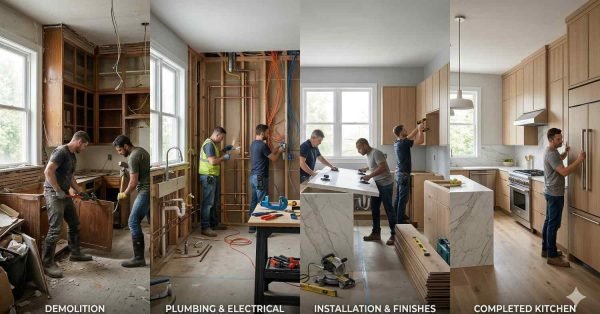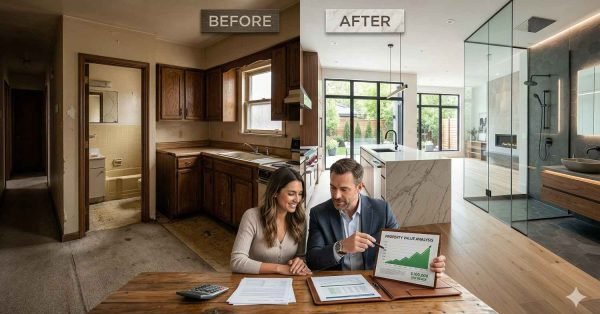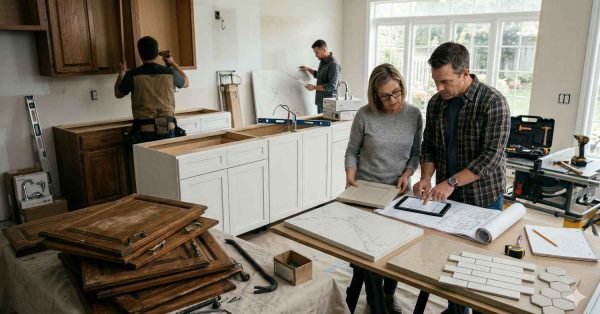
Not every renovation pays for itself. In Sydney’s competitive property market, the renovations that add the most value share one common trait: they address what buyers, tenants, and valuers actually prioritise — functional spaces, quality finishes, and modern infrastructure.
Choosing the wrong upgrade can cost tens of thousands with little return. Choosing the right one can add significantly more than it costs, improving both liveability and long-term asset value.
This guide breaks down which renovations deliver the strongest return in Sydney, what they realistically cost, and how to prioritise your spend based on your goals — whether you’re selling, renting, or staying put.
Which Home Renovations Deliver the Best Return on Investment in Sydney?
Return on investment in home renovation is not simply about spending more to gain more. It is about understanding which upgrades the market rewards — and which ones buyers and tenants overlook entirely.
In Sydney, where property values are among the highest in Australia, the renovations that consistently deliver strong ROI are those that improve functionality, modernise dated spaces, and meet the expectations of today’s buyers and renters. Cosmetic upgrades in isolation rarely move the needle. Structural and functional improvements almost always do.
How ROI Is Measured for Home Renovations
Renovation ROI is calculated by comparing the increase in property value — or rental yield — against the total cost of the renovation, including labour, materials, and associated fees. A renovation that costs $20,000 and adds $40,000 in property value delivers a 100% return. One that costs $50,000 and adds $30,000 in value is a net loss.
The challenge is that ROI is not fixed. It varies based on your suburb, your property type, the current market conditions, and how well the renovation is executed. A bathroom renovation in Mosman will have a different cost-to-value ratio than the same project in Penrith. Understanding your local market before committing to a renovation budget is essential.
Valuers and buyers assess renovations based on quality of finish, functional improvement, and how well the upgrade suits the property’s price bracket. Over-specifying finishes in a mid-range suburb, or under-delivering in a premium one, both erode ROI.
High-ROI vs. Low-ROI Renovation Categories at a Glance
| Renovation Type | Typical Cost Range (Sydney) | Estimated Value Add | ROI Potential |
| Bathroom renovation | $15,000 – $35,000+ | $20,000 – $60,000+ | High |
| Kitchen renovation | $20,000 – $50,000+ | $25,000 – $70,000+ | High |
| Exterior / curb appeal | $5,000 – $20,000 | $10,000 – $40,000 | High |
| Open-plan conversion | $15,000 – $40,000 | $20,000 – $50,000 | Moderate–High |
| Additional bedroom | $30,000 – $80,000+ | $30,000 – $80,000+ | Moderate |
| Energy efficiency upgrades | $5,000 – $25,000 | $5,000 – $20,000 | Moderate |
| Swimming pool | $50,000 – $100,000+ | $10,000 – $30,000 | Low |
| Luxury landscaping | $20,000 – $60,000 | $5,000 – $15,000 | Low |
The table above reflects general Sydney market conditions. Actual figures depend on property type, suburb, and renovation quality.
Bathroom Renovations — The Highest-Value Upgrade for Sydney Homes
Of all the renovations available to Sydney homeowners, bathroom renovations consistently rank among the highest for return on investment. They are one of the first spaces buyers inspect, one of the most scrutinised by property valuers, and one of the most impactful on rental yield for investors.
A dated, poorly functioning bathroom signals deferred maintenance to buyers. A clean, modern, well-executed bathroom signals quality, care, and move-in readiness — all of which translate directly into price.
Why Bathrooms Consistently Top the ROI Charts
Bathrooms are used multiple times daily by every occupant. Unlike a formal dining room or a study, there is no way to avoid or overlook a bathroom. Its condition is immediately apparent, and its quality — or lack thereof — shapes the emotional response buyers and tenants have to a property.
In Sydney’s rental market, updated bathrooms are among the top factors tenants cite when choosing between comparable properties. For owner-occupiers purchasing a home, a bathroom that needs immediate work is often used as a negotiating tool to reduce the purchase price — sometimes by more than the actual renovation cost.
From a valuation perspective, bathrooms are assessed as part of the property’s overall condition and presentation. A well-renovated bathroom in a property that is otherwise dated can still lift the overall valuation by improving the perceived quality of the home.
What a Value-Adding Bathroom Renovation Includes
Not every bathroom renovation adds equal value. The upgrades that consistently deliver return are those that improve function, modernise the aesthetic, and use durable, quality materials appropriate for the property’s price point.
A value-adding bathroom renovation in Sydney typically includes:
- Full waterproofing to current Australian Standards (AS 3740)
- New floor and wall tiling with rectified or large-format tiles
- Freestanding or wall-hung vanity with stone or engineered stone benchtop
- Frameless or semi-frameless shower screen
- Concealed cistern toilet suite
- Heated towel rail and updated lighting
- New tapware and fixtures in a consistent finish (matte black, brushed nickel, or chrome)
- Proper ventilation with a quality exhaust fan
What does not add value: excessive luxury finishes in a mid-range suburb, spa baths that most buyers will not use, or cosmetic updates applied over structural problems like inadequate waterproofing or poor drainage.
Typical Bathroom Renovation Costs in Sydney and What You Get
Bathroom renovation costs in Sydney vary significantly based on the size of the space, the scope of work, and the quality of materials and fittings selected.
| Budget Tier | Typical Cost Range | What It Delivers |
| Entry-level | $12,000 – $18,000 | Basic fixtures, standard tiles, functional upgrade |
| Mid-range | $18,000 – $28,000 | Quality tiles, stone vanity top, frameless screen, quality tapware |
| Premium | $28,000 – $45,000+ | Designer tiles, custom joinery, premium fixtures, full layout change |
Labour typically accounts for 40–50% of the total bathroom renovation cost in Sydney. This includes tiling, waterproofing, plumbing, electrical, and project coordination. Material and fixture allowances make up the remainder, with significant variation depending on brand and specification choices.
Hidden costs that are frequently underestimated include waterproofing rectification on older homes, asbestos removal in pre-1990 properties, structural changes required for layout modifications, and council approval fees where applicable.
Kitchen Renovations and Their Impact on Property Value
The kitchen is the second most impactful renovation for property value in Sydney. It is the social and functional hub of the home, and buyers consistently rank it alongside the bathroom as a primary decision-making factor.
A kitchen renovation that modernises the layout, improves storage, and upgrades appliances and surfaces can add substantial value — particularly in family homes and investment properties where the kitchen is used intensively.
What Kitchen Upgrades Add the Most Value
Not all kitchen upgrades deliver equal return. The improvements that consistently add value are those that address function, storage, and visual appeal without over-specifying for the property’s price bracket.
The highest-value kitchen upgrades in Sydney include:
- New cabinetry with soft-close hinges and drawer systems
- Stone or engineered stone benchtops (40mm thickness is the current market standard)
- Integrated or quality freestanding appliances (dishwasher, oven, rangehood)
- Updated splashback — subway tiles, stone, or glass
- Improved task lighting and under-cabinet lighting
- New sink and tapware in a consistent finish
- Improved layout where the existing configuration is inefficient
Repainting existing cabinetry and replacing handles is a cost-effective option for properties where the cabinet structure is sound and the renovation budget is limited. However, it is a cosmetic fix, not a structural improvement, and buyers will recognise the difference.
Kitchen Renovation Costs vs. Value Added in Sydney
| Budget Tier | Typical Cost Range | Estimated Value Add |
| Cosmetic refresh | $5,000 – $12,000 | $8,000 – $20,000 |
| Mid-range full renovation | $20,000 – $40,000 | $25,000 – $55,000 |
| Premium full renovation | $40,000 – $80,000+ | $40,000 – $80,000+ |
The strongest ROI in kitchen renovations is typically found in the mid-range tier — where functional improvements are significant, quality is evident, but costs have not escalated into diminishing returns territory.
Over-specifying a kitchen — installing $15,000 appliances and custom joinery in a property valued at $700,000 — rarely recovers its cost at sale. The market sets a ceiling on what buyers will pay for a property in a given suburb, regardless of the quality of individual finishes.
Curb Appeal and Exterior Upgrades That Increase Home Value
First impressions in real estate are formed before a buyer steps through the front door. The exterior of a property — its facade, landscaping, driveway, and entry — shapes the buyer’s emotional response and sets expectations for what they will find inside.
In Sydney’s competitive sales market, properties with strong curb appeal consistently attract more enquiries, more inspection attendees, and stronger offers. Exterior upgrades are among the most cost-effective value-adding renovations available.
Landscaping, Facades, and First Impressions
The elements that contribute most to curb appeal value in Sydney include:
- Fresh exterior paint in a contemporary, suburb-appropriate colour palette
- Updated front fencing or boundary definition
- Resurfaced or replaced driveway (exposed aggregate, concrete, or pavers)
- Landscaped front garden with low-maintenance planting
- Updated front door, hardware, and entry lighting
- Rendered or re-clad facade where the existing material is dated or damaged
A freshly painted exterior alone can transform the perceived value of a property. In Sydney’s inner suburbs, where terrace homes and federation-era properties are common, a well-executed exterior paint job with appropriate colour selection can add $20,000 to $40,000 in perceived value for a cost of $5,000 to $12,000.
Cost-Effective Exterior Renovations for Sydney Properties
The most cost-effective exterior renovations — those with the highest ratio of value added to cost — are typically:
- Exterior painting: $5,000 – $12,000 cost, $15,000 – $40,000 value add
- Landscaping and garden refresh: $3,000 – $10,000 cost, $8,000 – $20,000 value add
- Driveway resurfacing: $5,000 – $15,000 cost, $10,000 – $25,000 value add
- Front fence replacement: $3,000 – $8,000 cost, $5,000 – $15,000 value add
These figures are indicative and vary by suburb, property type, and the condition of the existing exterior. The key principle is that exterior upgrades are visible, immediate, and emotionally impactful — making them disproportionately effective relative to their cost.
Indoor Living Space Improvements That Buyers and Tenants Value
Beyond bathrooms and kitchens, the quality and configuration of indoor living spaces significantly influences property value. Buyers and tenants in Sydney increasingly prioritise open, light-filled spaces with quality finishes and flexible layouts.
Renovations that improve the flow, light, and functionality of living areas can add meaningful value — particularly in older homes where the original layout no longer reflects how people live today.
Open-Plan Living, Flooring, and Lighting Upgrades
The indoor improvements that consistently add value in Sydney include:
- Removing non-structural walls to create open-plan kitchen and living areas
- Installing or refinishing hardwood timber floors (buyers consistently prefer timber over carpet)
- Upgrading lighting from dated fluorescent fittings to LED downlights and feature lighting
- Replacing dated window treatments with plantation shutters or quality blinds
- Painting interior walls and ceilings in a neutral, contemporary palette
Flooring is particularly impactful. Replacing worn carpet with engineered timber or quality hybrid flooring throughout a home can cost $8,000 to $20,000 and add $15,000 to $35,000 in perceived value — particularly in properties targeting the owner-occupier market.
Open-plan conversions require structural assessment before proceeding. Not all walls are non-structural, and the cost of removing a load-bearing wall — including engineering, temporary support, and structural beams — can range from $15,000 to $40,000 depending on the scope.
Adding a Bedroom or Functional Space — Is It Worth It?
Adding a bedroom to a Sydney property can be one of the highest-value renovations available — but only when the conversion is genuine, functional, and meets building code requirements.
A property that moves from two bedrooms to three, or from three to four, crosses a significant pricing threshold in most Sydney suburbs. The value uplift can be substantial, often exceeding the cost of the conversion.
However, bedroom additions must meet minimum size requirements, have adequate natural light and ventilation, and include appropriate storage to be counted as a genuine bedroom by valuers and buyers. Converting a garage or study into a bedroom that does not meet these standards will not deliver the expected value uplift.
The cost of a genuine bedroom addition in Sydney ranges from $30,000 to $80,000 depending on whether it involves an extension, a conversion, or a reconfiguration of existing space. The value added depends entirely on the suburb and the property’s existing bedroom count.
Energy Efficiency Upgrades That Add Long-Term Value
Energy efficiency has moved from a niche consideration to a mainstream property value driver in Sydney. Rising energy costs, increasing environmental awareness, and the growing influence of NatHERS energy ratings on property valuations have made energy upgrades a legitimate value-adding renovation category.
Solar, Insulation, and Double Glazing in Sydney Homes
The energy efficiency upgrades that add the most value in Sydney include:
- Solar panel systems (6.6kW to 10kW systems are the current market standard for family homes)
- Roof and wall insulation upgrades, particularly in older homes with minimal existing insulation
- Double-glazed windows, which improve thermal comfort and reduce energy costs
- Ducted reverse-cycle air conditioning, which buyers increasingly expect in Sydney’s climate
- LED lighting throughout the property
Solar panel systems are particularly effective in Sydney, where high solar irradiance makes the technology highly productive. A quality 6.6kW solar system costs approximately $5,000 to $8,000 after government rebates and can reduce electricity bills by $1,500 to $2,500 annually — a tangible, quantifiable benefit that buyers and tenants recognise.
How Energy Ratings Affect Property Valuation
Australia’s NatHERS (Nationwide House Energy Rating Scheme) star rating system is increasingly referenced in property listings and valuations. Properties with higher energy ratings — achieved through insulation, glazing, and efficient heating and cooling systems — are beginning to attract premium pricing in Sydney’s market.
While energy ratings are not yet as influential in Australia as they are in European markets, the trajectory is clear. Properties that are energy-efficient are cheaper to run, more comfortable to live in, and increasingly preferred by buyers and tenants who are conscious of ongoing costs.
For investors, energy-efficient properties also tend to attract and retain quality tenants — reducing vacancy rates and improving long-term rental yield.
Renovations That Rarely Add Value — What to Avoid
Understanding which renovations do not add value is as important as knowing which ones do. Spending money on the wrong upgrades is one of the most common and costly mistakes Sydney homeowners and investors make.
Over-Capitalising: When Renovation Costs Exceed Value Gained
Over-capitalising occurs when the total cost of a renovation exceeds the value it adds to the property. It is most common when:
- Renovation specifications are too high for the property’s price bracket or suburb
- The renovation addresses personal preference rather than market demand
- The property has already reached the ceiling price for its street or suburb
- Multiple high-cost renovations are undertaken simultaneously without a clear ROI strategy
The ceiling price problem is particularly relevant in Sydney’s established suburbs. Every street has a price ceiling — the maximum a buyer will pay regardless of the quality of the property. Renovating beyond that ceiling means spending money that cannot be recovered at sale.
Before committing to any significant renovation, research recent comparable sales in your suburb. If the best properties on your street are selling for $1.2 million, spending $200,000 on renovations to a property currently worth $900,000 may not deliver a $1.4 million result.
Renovation Mistakes That Hurt Resale Value
Beyond over-capitalising, certain renovation decisions actively reduce property value or make a property harder to sell:
- Removing bedrooms to create larger living spaces (reduces the property’s bedroom count and pricing tier)
- Installing a swimming pool in a small backyard (eliminates usable outdoor space and adds ongoing maintenance costs)
- Highly personalised or unusual design choices (bold colour schemes, unconventional layouts, niche finishes)
- Unpermitted structural work (creates legal and insurance complications that buyers and their solicitors will identify)
- Cheap materials and poor workmanship (buyers and building inspectors will identify quality issues)
Unpermitted work is a particularly serious issue in Sydney. Work carried out without the required council approvals or building permits can result in orders to rectify or demolish, and must be disclosed to buyers. It can derail a sale entirely.
How to Prioritise Renovations Based on Your Goals
The right renovation strategy depends entirely on why you are renovating. A homeowner planning to sell in 12 months has different priorities to an investor seeking to maximise rental yield, who in turn has different priorities to an owner-occupier renovating for long-term liveability.
Renovating to Sell vs. Renovating to Rent vs. Renovating to Live
Renovating to sell: Focus on high-visibility, high-impact upgrades that appeal to the broadest possible buyer pool. Bathrooms, kitchens, exterior presentation, and flooring deliver the strongest results. Avoid personalised choices. Prioritise neutral, contemporary finishes that allow buyers to project their own vision onto the space.
Renovating to rent: Focus on durability, functionality, and low maintenance. Tenants value clean, functional bathrooms and kitchens, reliable heating and cooling, and quality flooring. Avoid high-end finishes that increase cost without proportionally increasing rental yield. Prioritise upgrades that reduce maintenance callouts and attract quality long-term tenants.
Renovating to live: Balance personal preference with long-term value. Invest in the spaces you use most — kitchen, bathroom, and living areas. Choose quality materials that will last, and avoid trends that date quickly. Consider how your choices will be perceived by future buyers, even if selling is not an immediate priority.
Building a Renovation Priority List That Matches Your Budget
A structured renovation priority list prevents budget overruns and ensures spend is directed toward the highest-value upgrades first.
A practical framework for prioritising renovations:
- Address structural and compliance issues first (roof, waterproofing, electrical, plumbing)
- Renovate the bathroom — highest ROI, most scrutinised by buyers and tenants
- Renovate or refresh the kitchen — second highest impact on value and liveability
- Improve exterior presentation — high impact, often lower cost
- Upgrade flooring and interior paint — broad visual impact, strong perceived value
- Consider energy efficiency upgrades — growing value driver, quantifiable cost savings
- Evaluate additional space or bedroom additions based on specific property and suburb analysis
This sequence ensures that foundational issues are resolved before cosmetic upgrades are applied, and that the highest-ROI renovations are prioritised when budget is limited.
How Much Should You Budget for Value-Adding Renovations in Sydney?
Renovation budgeting in Sydney requires realistic cost expectations, a clear understanding of what drives price variation, and a contingency allowance for the unexpected. Underbudgeting is one of the primary causes of renovation stress, project delays, and incomplete work.
Renovation Budget Benchmarks by Project Type
| Renovation Type | Entry-Level Budget | Mid-Range Budget | Premium Budget |
| Bathroom renovation | $12,000 – $18,000 | $18,000 – $28,000 | $28,000 – $45,000+ |
| Kitchen renovation | $15,000 – $25,000 | $25,000 – $45,000 | $45,000 – $80,000+ |
| Exterior paint and landscaping | $8,000 – $15,000 | $15,000 – $30,000 | $30,000 – $60,000+ |
| Flooring (whole home) | $8,000 – $15,000 | $15,000 – $25,000 | $25,000 – $45,000+ |
| Open-plan conversion | $15,000 – $25,000 | $25,000 – $45,000 | $45,000 – $80,000+ |
| Bedroom addition | $30,000 – $50,000 | $50,000 – $80,000 | $80,000 – $150,000+ |
These benchmarks reflect Sydney market conditions and include labour, materials, and standard project management. They do not include council fees, engineering reports, or remediation of pre-existing structural issues.
Hidden Costs That Erode Renovation ROI
The most common hidden costs in Sydney renovation projects include:
- Waterproofing rectification: Older bathrooms frequently have inadequate or failed waterproofing that must be fully remediated before new tiling can proceed. Cost: $2,000 – $8,000 depending on extent.
- Asbestos identification and removal: Properties built before 1990 may contain asbestos in wall sheeting, floor tiles, or roof materials. Licensed removal is mandatory and can cost $3,000 – $15,000+.
- Structural issues uncovered during demolition: Wall cavities, subfloors, and ceiling spaces frequently reveal rot, pest damage, or inadequate framing that must be addressed before renovation can proceed.
- Council approval and certification fees: Certain renovation types require development approval or complying development certificates. Fees vary by council and project scope.
- Temporary accommodation: Major renovations that make a property uninhabitable require alternative accommodation, which adds cost to the overall project budget.
- Scope creep: The tendency for renovation scope to expand once work begins is one of the most consistent budget risks. A clearly defined scope of work and a fixed-price contract with a reputable contractor are the most effective mitigations.
A standard contingency allowance of 10–15% of the total renovation budget is recommended for most Sydney projects. For older properties or those with known structural issues, 20% is more appropriate.
Conclusion
Bathroom and kitchen renovations consistently deliver the strongest return on investment for Sydney homeowners and property investors, followed by exterior upgrades, flooring improvements, and energy efficiency measures. The key to maximising renovation ROI is matching your specification to your suburb’s price bracket, prioritising functional improvements over cosmetic ones, and building in a realistic contingency for hidden costs.
Understanding which renovations add value — and which ones do not — is the difference between a renovation that builds wealth and one that simply costs money. Whether you are renovating to sell, to rent, or to live, a clear strategy and accurate budget are the foundation of every successful project.
At Sydney Home Renovation, we help homeowners and investors plan and execute value-adding renovations with transparent pricing, skilled workmanship, and clear communication from first consultation to final handover. Contact us today to discuss your renovation goals and get a detailed, obligation-free quote.
Frequently Asked Questions
What renovation adds the most value to a home in Sydney?
Bathroom renovations consistently deliver the highest return on investment for Sydney properties. A well-executed bathroom renovation can add $20,000 to $60,000 or more in property value for a cost of $15,000 to $35,000, making it the single most impactful upgrade for most homeowners and investors.
Is a bathroom renovation worth it before selling?
Yes, in most cases a bathroom renovation is worth completing before selling in Sydney. Buyers scrutinise bathrooms closely, and a dated or poorly maintained bathroom is frequently used to negotiate the purchase price down — often by more than the actual renovation cost.
How much does a value-adding bathroom renovation cost in Sydney?
A mid-range bathroom renovation in Sydney typically costs between $18,000 and $28,000, including labour, waterproofing, tiling, vanity, toilet suite, shower screen, tapware, and lighting. Premium renovations with custom joinery and designer fixtures can reach $45,000 or more.
Do kitchen renovations increase home value?
Yes, kitchen renovations are among the highest-value upgrades available to Sydney homeowners. A mid-range kitchen renovation costing $25,000 to $45,000 can add $30,000 to $55,000 in property value, with the strongest returns achieved when the specification matches the property’s price bracket.
What renovations should I avoid if I want to maximise resale value?
Avoid swimming pools in small backyards, highly personalised design choices, luxury finishes in mid-range suburbs, and any unpermitted structural work. These either fail to add value, actively reduce buyer appeal, or create legal complications that can derail a sale.
How do I know if I am over-capitalising on a renovation?
Research recent comparable sales in your suburb to establish the ceiling price for your street. If your total renovation spend — added to the property’s current value — exceeds what comparable properties are selling for, you are likely over-capitalising and will not recover the full cost at sale.
Should I renovate before selling or sell as-is?
It depends on the property’s condition and the renovation scope required. High-impact, lower-cost upgrades like bathroom renovations, exterior painting, and flooring typically deliver strong pre-sale returns. Major structural renovations are harder to justify unless the property is significantly below market standard for its suburb.