
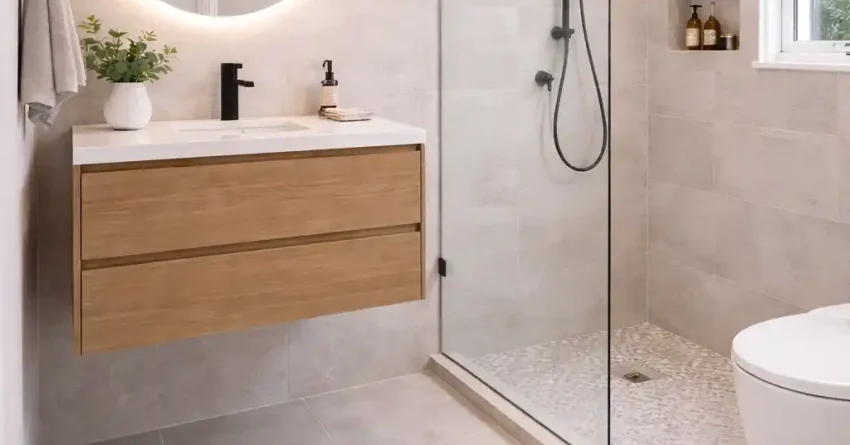
A small bathroom renovation in Sydney typically costs between $8,000 and $40,000 depending on layout changes, fixture quality, and the trades involved. That range is wide for a reason: every compact bathroom presents unique constraints that directly shape your budget.
Whether you own a unit in Surry Hills or a house in the Hills District, getting the most from a small bathroom means making deliberate choices about layout, materials, and where to invest.
Why Small Bathrooms Need a Different Renovation Approach
Renovating a small bathroom is not simply a scaled-down version of a larger project. The constraints of a compact footprint change how every decision plays out, from fixture placement to waterproofing scope. Understanding these differences early prevents costly revisions and helps you prioritise the upgrades that deliver the most impact per square metre.
Common Challenges With Compact Bathroom Spaces
Small bathrooms amplify problems that barely register in larger rooms. Limited floor area means plumbing rough-in points dictate layout options more rigidly. Moving a toilet or shower waste even 300mm can add thousands in hydraulic work and structural modifications.
Ventilation is harder to manage in tight spaces. Moisture accumulates faster, increasing the risk of mould and long-term damage to finishes. Storage becomes a genuine design challenge rather than an afterthought.
Every fixture selection carries more weight because there is no spare room to absorb a poor choice. Access for tradespeople is another practical concern; working in a 3sqm bathroom takes longer per square metre than working in a 10sqm space, which affects labour time and cost.
How Size Affects Your Renovation Budget in Sydney
Smaller does not always mean cheaper. The fixed costs of a bathroom renovation waterproofing, plumbing connections, electrical compliance, and tiling preparation apply regardless of room size. A small bathroom still needs a licensed plumber, a certified waterproofer, an electrician, and a tiler.
In Sydney, these base trade costs create a higher cost-per-square-metre for small bathrooms compared to larger ones. The total project cost is lower, but the intensity of work per metre is higher.
This is why budgeting accurately matters more in small spaces. There is less room to absorb unexpected costs, and fewer areas where you can scale back without compromising the result.
How Much Does a Small Bathroom Renovation Cost in Sydney
Cost is the first question most homeowners ask, and the answer depends on three variables: the scope of work, the quality of finishes, and the complexity of your existing plumbing and electrical layout. Below are realistic price ranges for small bathroom renovations in Sydney as of 2026.
Budget Small Bathroom Renovation ($8,000–$15,000)
A budget renovation typically involves a cosmetic refresh without changing the existing layout. Plumbing stays in its current position. You are replacing fixtures, re-tiling, and updating tapware.
What this typically includes:
- Removal of existing tiles and fixtures
- New floor and wall tiles (builder-grade, $30–$50/sqm supply)
- Standard acrylic shower screen or curtain
- Basic vanity unit with ceramic basin
- New close-coupled toilet
- Chrome tapware
- Waterproofing to Australian Standard AS 3740
- Basic exhaust fan replacement
- Painting of ceiling and any non-tiled walls
At this level, you are working with stock fixtures from major retailers and keeping tile layouts simple to minimise cutting and waste. Labour typically accounts for around 50–60% of the total cost at this tier, based on contractor pricing across Sydney projects.
Mid-Range Small Bathroom Renovation ($15,000–$25,000)
A mid-range renovation allows for minor layout adjustments, better quality fixtures, and more design flexibility. You can relocate the vanity, upgrade to a frameless shower screen, or introduce a wall-hung toilet.
What this typically includes:
- Full strip-out and disposal
- Floor and wall tiles ($50–$100/sqm supply)
- Frameless shower screen
- Wall-hung or back-to-wall vanity with stone or solid surface top
- Wall-faced toilet with concealed cistern
- Mixer tapware in matte black, brushed nickel, or similar finish
- Heated towel rail
- Recessed shower niche
- LED downlights (IP-rated for wet areas)
- Full waterproofing with certificate
- Minor plumbing relocation (one or two points)
This is the most common price range for Sydney homeowners renovating a small ensuite or main bathroom. It balances quality finishes with practical budget management.
High-End Small Bathroom Renovation ($25,000–$40,000+)
A high-end renovation involves significant design input, premium materials, and potentially structural changes. Custom joinery, underfloor heating, smart fixtures, and imported tiles push costs into this range.
What this typically includes:
- Full demolition including potential wall or niche modifications
- Large-format porcelain or natural stone tiles ($100–$250/sqm supply)
- Custom vanity with integrated storage
- Wall-hung toilet with in-wall cistern and flush plate
- Freestanding or semi-recessed basin
- Premium tapware (brands like Sussex, Brodware, or Astra Walker)
- Frameless glass shower with channel drain
- Underfloor electric heating
- Smart mirror with demister and LED
- Full rewire and new switchboard circuit if required
- Architectural or interior design consultation
At this level, every detail is considered. Grout colour, tile layout patterns, niche dimensions, and hardware finishes are all specified. The result is a bathroom that feels significantly larger and more refined than its footprint suggests.
Smart Layout Ideas to Maximise a Small Bathroom
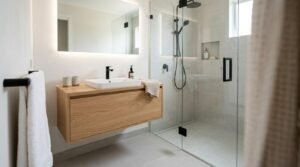
Layout is the single most important decision in a small bathroom renovation. The right configuration makes a 3.5sqm room feel functional and comfortable. The wrong one creates a space that feels cramped regardless of how much you spend on finishes.
Space-Saving Fixture Configurations
The most effective small bathroom layouts follow a linear or L-shaped arrangement. Placing the shower at the far end, the toilet along one wall, and the vanity opposite or adjacent creates a clear circulation path.
Wall-hung vanities and toilets free up visible floor space, which makes the room feel larger. A wall-hung vanity also allows you to adjust the height to suit users, and the open space beneath is easier to clean.
Corner installations work in some configurations. A corner-mounted basin or a quadrant shower enclosure can recover usable floor area in awkward layouts. However, corner fixtures sometimes limit future flexibility, so weigh this against your long-term plans.
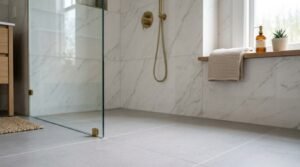
For bathrooms under 3sqm, a wet room design is worth considering. The entire floor is graded at a 1:60 to 1:80 gradient toward a single linear or point drain, eliminating the need for a shower base or screen. This opens up the full floor area and simplifies cleaning, though it requires full-height waterproofing on all walls and adds roughly $500–$1,000 to the waterproofing scope compared to a standard shower enclosure.
Walk-In Shower vs Shower-Over-Bath in Small Spaces
This is one of the most common decisions in small bathroom renovations, and the right answer depends on your household and property goals.
A walk-in shower with a fixed glass panel is the most space-efficient option for adults-only households. It eliminates the visual bulk of a bathtub and creates an open, accessible layout. In a small bathroom, a 900mm x 900mm shower is the minimum comfortable size, though 1000mm x 800mm is preferable if the layout allows it.
A shower-over-bath preserves bathing functionality, which matters for families with young children and for property resale. In Sydney, removing the only bathtub in a home reduces appeal to family buyers. If your property has a second bathroom with a bath, removing one is less of a concern.
The cost difference is modest. A shower-over-bath setup with a bath screen costs roughly the same as a tiled shower base with a frameless panel. The layout implications are more significant than the price difference.
Door and Entry Solutions for Tight Bathrooms
A standard hinged door swinging into a small bathroom blocks access to fixtures and wastes valuable floor space. Three alternatives solve this problem.
A sliding door or cavity slider eliminates the swing arc entirely. Cavity sliders sit inside the wall when open, freeing up the full doorway width. Installation typically adds $400–$800 to the door scope but recovers significant usable space.
A barn-style sliding door mounted on an external track is a simpler retrofit option. It does not require wall cavity modification but needs clear wall space beside the opening.
An outward-opening door is the simplest change. If the hallway or landing allows it, reversing the door swing costs almost nothing and immediately improves the bathroom’s usable area.
Renovating a Small Ensuite: What’s Different
A small ensuite presents constraints that a main bathroom does not. Most ensuites have no external window, which means mechanical ventilation is not optional; it is a Building Code requirement, and the exhaust duct must reach the building exterior.
Access is tighter in ensuites, particularly in apartments. Tradespeople work in confined corridors, and material movement through a bedroom adds time and protection requirements. In strata buildings, the ensuite’s location above another unit’s ceiling makes waterproofing compliance especially critical; a failed membrane in an ensuite is a strata liability issue, not just a personal one.
Budget an additional $500–$1,500 for ensuite-specific access and compliance requirements compared to a main bathroom of equivalent size.
Accessible Design in Small Bathrooms
Accessible design is increasingly relevant for homeowners planning to age in place or accommodate a family member with mobility needs. In a small bathroom, the key changes are a step-free shower entry (no hump or lip), a fold-down shower seat, and blocking in the wall framing behind the shower and toilet to support future grab rail installation.
Grab rail blocking costs very little to add during a renovation, typically $100–$200 in framing, but retrofitting it later requires opening the wall. Australian Standard AS 1428.1 sets the minimum dimensions for accessible bathrooms, and a contractor familiar with these requirements can advise on what is achievable within your existing footprint.
These upgrades also add perceived value for buyers, particularly in the over-55 market.
Best Fixtures and Fittings for Small Bathroom Renovations
Fixture selection in a small bathroom is about proportion, projection, and functionality. Oversized fixtures overwhelm compact spaces. The goal is to choose pieces that perform well without dominating the room.
Compact Vanities and Wall-Hung Storage
Vanity size has the biggest visual impact in a small bathroom. A 600mm to 900mm wall-hung vanity is the sweet spot for most small bathrooms; it provides adequate storage and bench space without crowding the room.
Wall-hung vanities with drawers rather than doors are more practical in tight spaces. Drawers allow full access to stored items without requiring clearance for a swinging door. Soft-close mechanisms are standard on most mid-range units.
For very small powder rooms or ensuites, a wall-mounted basin without a vanity cabinet keeps the footprint minimal. Pair it with a mirror cabinet above for storage.
Price ranges for vanity units in Sydney:
- Builder-grade vanity (600mm, floor-standing): $250–$500
- Mid-range wall-hung vanity (750mm, with stone top): $800–$1,500
- Custom wall-hung vanity (900mm, with integrated basin): $1,500–$3,500+
Toilets and Cistern Options for Small Footprints
Toilet selection affects both floor space and visual weight. Three main options suit small bathrooms.
A close-coupled toilet is the most affordable option ($250–$600 installed). It has a visible cistern mounted directly on the pan, with a total projection from the wall of typically 650–700mm.
A back-to-wall toilet conceals the cistern inside a furniture unit or against the wall, reducing the visible profile to around 550–600mm. Cost is $500–$1,200 for the unit plus installation.
A wall-hung toilet with an in-wall cistern frame is the most space-efficient option. The pan floats off the floor, the cistern sits inside the wall cavity, and total projection is 500–550mm. Cost is $800–$2,000 for the frame, pan, and flush plate, plus installation. In-wall cisterns require a minimum wall depth of 120mm and structural support for the frame.
Tapware and Shower Fittings That Save Space
In small bathrooms, wall-mounted tapware is preferable to deck-mounted options. Wall mixers for the basin and shower keep the vanity top clear and reduce the fixture’s footprint.
A single-lever mixer is more practical than separate hot and cold taps in a compact space. It requires one tapware hole instead of three and is easier to operate.
For showers, a rail shower with a sliding hand shower on a vertical rail is more versatile than a fixed overhead shower head in a small enclosure. It accommodates different user heights and allows you to direct water precisely, reducing overspray in tight spaces.
Tapware pricing in Sydney:
- Chrome basin mixer: $80–$250
- Matte black basin mixer: $150–$400
- Shower mixer with diverter and rail: $200–$600
- Premium finish tapware (brushed brass, gunmetal): $350–$800+
Tile and Material Ideas That Make Small Bathrooms Feel Bigger
Tile selection is where design meets budget in a small bathroom renovation. The right tile choices create an illusion of space, reduce visual clutter, and simplify maintenance. The wrong choices make a small room feel smaller and cost more to install.
Tile Size, Pattern, and Colour Strategies
Larger tiles reduce the number of grout lines, which creates a cleaner, more expansive visual effect. In small bathrooms, 300x600mm or 600x600mm tiles on walls and floors are a practical starting point. Large-format tiles (900x450mm or larger) work well but require a flatter substrate and more precise installation, which increases labour costs.
Light-coloured tiles whites, soft greys, and warm neutrals reflect more light and make walls feel further apart. A feature wall in a deeper tone or textured tile adds character without shrinking the space, provided the remaining surfaces stay light.
Running the same tile from floor to wall, or at least using the same colour family, eliminates visual breaks that make a room feel segmented. Avoid small mosaic tiles on large wall areas they create visual busyness that makes compact spaces feel cluttered.
Wall and Floor Material Options With Costs
| Material | Supply Cost (per sqm) | Best Use | Notes |
| Ceramic tile | $25–$60 | Walls and floors | Most affordable, wide range of styles |
| Porcelain tile | $40–$120 | Walls and floors | Harder, lower porosity, better for wet areas |
| Large-format porcelain | $80–$200 | Feature walls, floors | Fewer grout lines, requires skilled installation |
| Natural stone (marble, travertine) | $100–$300 | Feature walls, vanity tops | Requires sealing, higher maintenance |
| Vinyl plank (waterproof) | $30–$60 | Floors only (outside wet area) | Budget-friendly, not suitable for shower floors |
| Pressed metal panels | $50–$100 | Feature walls, ceilings | Quick install, moisture-resistant options available |
Tiling labour in Sydney typically runs $55–$90 per square metre for standard installations, with large-format and natural stone tiles at the higher end due to additional preparation and handling requirements.
Waterproofing Considerations for Small Wet Areas
Waterproofing is non-negotiable in any bathroom renovation and is a legal requirement under the Building Code of Australia and Australian Standard AS 3740. In a small bathroom, the waterproofing scope often covers a larger proportion of the total floor and wall area because fixtures are closer together.
A licensed waterproofer must apply the membrane and provide a certificate of compliance. This certificate is required before tiling can begin and is essential for insurance and resale purposes.
Waterproofing costs for a small bathroom typically range from $800 to $1,500, depending on the complexity of the layout and the number of penetrations through the membrane. In wet room configurations, waterproofing extends to all walls to a minimum height of 1800mm and across the full floor; this increases material and labour costs but is essential for long-term performance.
Storage and Organisation Ideas for Small Bathrooms
Storage is one of the most overlooked elements in small bathroom design. Without deliberate planning, toiletries, towels, and cleaning supplies end up on every available surface, making the room feel cluttered regardless of how well it was renovated.
Recessed Shelving and Niche Solutions
A recessed shower niche is one of the most practical additions to a small bathroom. Built into the wall cavity during construction, it provides storage for bottles and soap without protruding into the shower space.
Standard niche dimensions are 300mm wide x 400mm tall x 100mm deep, though your tiler and builder can adjust these to align with tile sizes and minimise cuts. Positioning the niche at chest height keeps items accessible without bending.
Double-height niches or stacked niches separated by a tile shelf increase storage capacity without additional wall space. A single tiled niche typically costs $150–$350 including framing, waterproofing, and tiling. Recessed niches can also be built beside the vanity or above the toilet for additional storage outside the wet area.
Vertical Storage and Mirror Cabinets
Vertical space is underused in most small bathrooms. A mirror cabinet above the vanity serves dual purposes: it provides a mirror for daily use and conceals shelving for medications, skincare, and small items.
Mirror cabinets range from $150 for a basic unit to $1,200+ for a recessed, LED-lit cabinet with demister. Recessed installation sits the cabinet flush with the wall, maintaining a clean profile.
Tall, narrow storage towers (150–300mm wide) fit beside vanities or in unused corners. These are particularly useful in bathrooms where wall-hung cabinetry is not possible due to plumbing or structural constraints.
Hidden Storage Behind Panels and Fixtures
Access panels behind baths or beside toilets can double as storage compartments. A tiled access panel on a magnetic or push-to-open mechanism provides a concealed space for cleaning products or spare toilet rolls.
The space above an in-wall cistern frame can also be fitted with a shallow cabinet or shelf, accessed through a flush panel. This recovers dead space that would otherwise serve no purpose.
These solutions typically add $200–$600 to the renovation cost but significantly improve the day-to-day functionality of a small bathroom.
Lighting and Ventilation Tips for Compact Bathrooms
Good lighting and adequate ventilation are essential in any bathroom, but they become critical in small spaces where moisture concentrations are higher and natural light is often limited.
Layered Lighting for Small Spaces
A single ceiling light is insufficient for a small bathroom. Layered lighting combines ambient, task, and accent lighting to create a functional and visually appealing space.
Recessed LED downlights (IP44-rated for wet areas) provide ambient light. Two to three downlights are typically sufficient for a small bathroom; position at least one directly above or near the shower area.
Task lighting beside or behind the mirror improves visibility for grooming. LED strip lighting behind a mirror or inside a mirror cabinet provides even, shadow-free illumination, typically adding $100–$300 to the electrical scope. Accent lighting beneath a wall-hung vanity or inside a shower niche adds depth and creates the impression of more space by drawing the eye to different planes.
All bathroom lighting must comply with AS/NZS 3000 wiring rules and the relevant IP ratings for each zone within the bathroom.
Exhaust and Ventilation Requirements in Sydney
Every bathroom in NSW requires mechanical ventilation. The Building Code of Australia mandates an exhaust fan capable of extracting a minimum of 25 litres per second for a standard bathroom.
In small bathrooms, effective ventilation is even more important because the air volume is lower and moisture levels rise faster. An undersized or poorly positioned exhaust fan leads to condensation, mould growth, and premature deterioration of finishes.
Ducted exhaust fans that vent to the exterior of the building are far more effective than recirculating models. In apartment renovations, check strata requirements for ductwork modifications before specifying a new fan. Exhaust fan costs range from $80 for a basic ceiling-mounted unit to $400+ for a quiet, high-capacity inline fan with a timer and humidity sensor, with licensed electrician installation adding $150–$300.
Small Bathroom Renovation Cost Breakdown
Understanding where your money goes helps you make informed trade-offs and avoid surprises. Below is a detailed breakdown of typical costs for a mid-range small bathroom renovation in Sydney.
Labour Costs (Plumber, Electrician, Tiler, Waterproofer)
Labour is the largest single expense in a bathroom renovation, typically representing 40–60% of the total project cost based on contractor pricing across Sydney projects.
| Trade | Typical Cost Range | Scope |
| Plumber | $2,000–$5,000 | Strip-out, rough-in, final fix, hot water connections |
| Electrician | $800–$2,000 | New circuits, lighting, exhaust fan, heated towel rail, compliance testing |
| Tiler | $1,500–$4,000 | Floor and wall tiling, niche tiling, grouting, silicone |
| Waterproofer | $800–$1,500 | Membrane application, compliance certificate |
| Carpenter/Builder | $500–$1,500 | Framing, niche construction, door modifications, coordination |
| Demolition and removal | $500–$1,200 | Strip-out, skip bin, disposal |
Relocating plumbing, adding new electrical circuits, or working in difficult-access apartments increases labour time and cost.
Material and Fitting Allowances
Material costs are where you have the most control over your budget. Setting clear allowances for each category prevents scope creep.
| Category | Budget Allowance | Mid-Range Allowance | Premium Allowance |
| Tiles (supply) | $300–$600 | $600–$1,500 | $1,500–$4,000 |
| Vanity (with top and basin) | $250–$500 | $800–$1,500 | $1,500–$3,500 |
| Toilet | $250–$500 | $500–$1,200 | $1,200–$2,500 |
| Tapware (full set) | $200–$500 | $500–$1,200 | $1,200–$3,000 |
| Shower screen | $300–$600 | $600–$1,200 | $1,200–$2,500 |
| Mirror/cabinet | $100–$300 | $300–$800 | $800–$2,000 |
| Accessories (towel rail, robe hook, toilet roll holder) | $50–$150 | $150–$400 | $400–$1,000 |
When comparing quotes, confirm whether the contractor’s price includes material supply or whether you purchase fixtures separately. Both approaches work, but the distinction affects how you compare total costs.
Hidden Costs and Budget Contingencies
Every experienced renovator budgets for the unexpected. In small bathroom renovations, common hidden costs include:
Asbestos removal. Bathrooms in Sydney homes built before 1990 may contain asbestos in wall sheeting, floor tiles, or adhesive. Testing costs $50–$150 per sample. Removal by a licensed assessor costs $500–$3,000 depending on the extent.
Structural repairs. Water damage to floor joists, wall framing, or subfloor is often only discovered after demolition. Repairs typically add $500–$2,000.
Plumbing upgrades. Older homes may have galvanised or copper pipes that need replacing. If your hot water system is undersized or failing, this is the most practical time to upgrade.
Electrical compliance. Older wiring may not meet current standards. A switchboard upgrade or new safety switch typically adds $300–$1,000.
Strata and access requirements. Unit renovations in Sydney often require strata approval, after-hours access arrangements, and protection of common areas. These add time and sometimes direct costs.
A contingency of 10–15% of your total budget is a sensible buffer. On a $20,000 renovation, that means setting aside $2,000–$3,000 for unplanned expenses.

How to Plan a Small Bathroom Renovation Step by Step
A well-planned renovation runs smoother, costs less, and delivers a better result. Rushing into demolition without a clear plan is the most common and most expensive mistake homeowners make.
Setting a Realistic Budget and Timeline
Start by defining your total budget, including a contingency allowance. Then work backwards from that number to determine what level of finish and scope is achievable.
A typical small bathroom renovation in Sydney takes 2–4 weeks from demolition to completion, assuming materials are ordered in advance, and no major structural issues arise. The timeline breaks down roughly as follows:
- Demolition and strip-out: 1–2 days
- Plumbing and electrical rough-in: 2–3 days
- Waterproofing (application plus drying time): 2–3 days
- Tiling: 3–5 days
- Grouting and curing: 1–2 days
- Fixture installation (final fix): 1–2 days
- Final clean and handover: 1 day
Delays most commonly occur due to late material deliveries, waterproofing failures requiring reapplication, or discovery of hidden damage during demolition. Ordering all fixtures and materials before demolition begins is the single most effective way to keep the project on schedule.
Choosing the Right Contractor in Sydney
The quality of your contractor determines the quality of your renovation. In Sydney, bathroom renovation contractors range from sole traders to full-service renovation companies, and the difference in process and accountability is significant.
Key criteria for selection:
Licensing. Confirm the contractor holds a current NSW Fair Trading licence appropriate for the scope of work. For renovations over $5,000, a contractor must hold a licence.
Insurance. Verify public liability insurance and home warranty insurance (required for residential work over $20,000 in NSW).
References. Ask for recent project examples and contact details for past clients.
Detailed quote. A professional quote itemises labour, materials, allowances, and exclusions separately. It specifies the tile allowance per sqm, the fixture brands or grades included, and what triggers a variation. Avoid lump-sum quotes that lack this detail; they are the most common source of cost blowouts.
Communication. The contractor should explain the process, timeline, and potential risks clearly before work begins.
Get three quotes for comparison, but do not automatically choose the cheapest. A significantly lower quote often indicates excluded scope, lower-quality materials, or unlicensed subcontractors.
Council Approvals and Compliance in NSW
Most small bathroom renovations in Sydney do not require a Development Application (DA) or Complying Development Certificate (CDC), provided the work does not alter the building’s external appearance or structural elements.
All plumbing and electrical work must be carried out by licensed tradespeople and comply with the relevant Australian Standards. Your plumber must lodge a Notice of Work with NSW Fair Trading, and your electrician must issue a Certificate of Compliance for Electrical Work (CCEW). Waterproofing must comply with AS 3740, and a waterproofing certificate must be issued before tiling begins.
For unit renovations, strata by-laws govern more than just approval. Most strata schemes require written approval from the Owners Corporation before any renovation work begins. Many impose restrictions on work hours (typically 8 am–5 pm weekdays), noise levels, contractor access through common areas, and the protection of lifts and corridors during material delivery. Some schemes require a renovation bond held against potential damage to common property. Check your specific by-laws before engaging a contractor; approval timelines vary from two weeks to two months depending on the scheme.
Small Bathroom Renovation Mistakes to Avoid
Learning from common mistakes saves money and frustration. These are the errors we see most frequently in small bathroom renovations across Sydney.
Overcrowding the Layout
Trying to fit too many fixtures into a small bathroom is the most common design mistake. A double vanity in a 3sqm bathroom, a freestanding bath in a space that barely fits a shower, or a bidet alongside a toilet in a narrow room all create layouts that look impressive on a mood board but fail in daily use.
Prioritise circulation space. You need a minimum of 600mm clear space in front of the toilet and vanity for comfortable use. The shower enclosure should be at least 900mm in its narrowest dimension. If these minimums cannot be met, remove a fixture rather than compromise usability.
Underestimating Waterproofing and Drainage
Cutting corners on waterproofing is a false economy. A failed membrane leads to water damage in adjoining rooms, structural deterioration, and remediation costs that far exceed the original waterproofing investment.
Drainage is equally important. In small bathrooms, particularly wet room configurations, the floor gradient must direct all water to the drain point. A gradient of 1:60 to 1:80 is standard. Poor drainage results in pooling water, slip hazards, and accelerated wear on grout and sealant.
Always use a licensed waterproofer and insist on a compliance certificate. This document protects you in the event of a future claim and is required for insurance purposes.
Choosing Style Over Function in a Small Space
Trend-driven choices sometimes work against functionality in small bathrooms. A matte black basin mixer looks striking, but if it requires constant wiping to remove water spots, it adds a maintenance burden in a high-use space.
Similarly, open shelving creates a curated look in photos but collects dust and moisture in a real bathroom. Vessel basins sit higher than integrated basins, which can be uncomfortable for children and reduce usable bench space on a small vanity.
Choose finishes and fixtures that balance aesthetics with practical performance. Durability and ease of maintenance should carry equal weight to visual appeal.
Does a Small Bathroom Renovation Add Property Value
A well-executed bathroom renovation is consistently ranked among the highest-return home improvements. For small bathrooms, the value equation depends on your property type, location, and the quality of the renovation relative to the rest of the home.
ROI for Owner-Occupiers vs Investment Properties
For owner-occupiers, the return on a bathroom renovation combines financial value and lifestyle value. A functional, well-finished bathroom improves daily comfort and eliminates ongoing maintenance issues. Based on contractor and property industry commentary, the financial return at resale typically ranges from 50–80% of the renovation cost, depending on the local market and the condition of the original bathroom.
For investment properties, the calculation is more direct. Industry estimates suggest a renovated bathroom can increase weekly rent by $20–$50 in many Sydney suburbs, which compounds over the holding period. It also reduces vacancy periods and attracts higher-quality tenants.
The key is proportional spending. A $30,000 bathroom renovation in a $600,000 apartment may not deliver the same percentage return as a $15,000 renovation in the same property. Match your renovation budget to the property’s overall value and the expectations of your target buyer or tenant.
What Sydney Buyers and Renters Look For
Sydney buyers and renters consistently prioritise three things in a bathroom: cleanliness, functionality, and modern finishes. You do not need a luxury specification to appeal to the market. A clean, well-waterproofed bathroom with neutral tiles, quality tapware, and adequate storage meets the expectations of most buyers and tenants.
Specific features that add perceived value in the Sydney market include frameless shower screens, wall-hung vanities, in-wall cistern toilets, and heated towel rails. These are all achievable within a mid-range budget and signal a quality renovation without excessive spending.
Avoid highly personalised design choices in investment properties. Bold tile colours, unusual fixture shapes, and niche design trends may appeal to your taste but narrow the pool of interested buyers or tenants.
Conclusion
Small bathroom renovations in Sydney require careful planning around layout, fixtures, materials, and budget to deliver a result that feels spacious, functions well, and holds its value. Every decision carries more weight in a compact space, from tile selection to cistern type.
Understanding realistic costs, knowing where hidden expenses arise, and choosing a qualified contractor are the foundations of a successful small bathroom project. The right approach turns a cramped, outdated bathroom into one of the most valuable rooms in your home.
At Sydney Home Renovation, we deliver transparent pricing, skilled workmanship, and clear communication on every small bathroom project. Contact us today to discuss your renovation plans and receive a detailed, itemised quote.
Frequently Asked Questions
How much does it cost to renovate a small bathroom in Sydney?
A small bathroom renovation in Sydney typically costs between $8,000 and $40,000. Budget cosmetic updates start around $8,000, mid-range projects run $15,000 to $25,000, and high-end renovations with premium materials exceed $40,000.
How long does a small bathroom renovation take?
Most small bathroom renovations take 2 to 4 weeks from demolition to completion. The timeline depends on material availability, plumbing and electrical scope, and waterproofing curing times. Ordering all materials before demolition begins is the best way to avoid delays.
Do I need council approval to renovate my bathroom in Sydney?
Most small bathroom renovations do not require council approval if you are not altering the building’s structure or external appearance. All plumbing and electrical work must be completed by licensed tradespeople who lodge the required compliance certificates. Unit owners must check strata by-laws before starting work.
Should I keep the bathtub in a small bathroom?
Keep the bathtub if it is the only one in the home, and you plan to sell to families. Removing the sole bathtub reduces property appeal for family buyers. If the home has a second bath, replacing the tub with a walk-in shower maximises space and creates a more open layout.
What is the best tile size for a small bathroom?
Tiles in the 300x600mm to 600x600mm range work well in small bathrooms. Larger tiles reduce grout lines and create a cleaner, more spacious appearance. Light-coloured tiles in neutral tones reflect more light and make walls feel further apart.
How much should I set aside for unexpected costs?
Budget a contingency of 10 to 15 percent of your total renovation cost. On a $20,000 project, that means $2,000 to $3,000 for unplanned expenses such as hidden water damage, asbestos removal, plumbing upgrades, or electrical compliance work discovered during demolition.
Can a small bathroom renovation increase my property value?
Industry estimates suggest a well-executed bathroom renovation returns 50 to 80 percent of the investment at resale. For rental properties, a renovated bathroom can increase weekly rent by $20 to $50 and reduce vacancy periods. Match your renovation budget to the property’s overall value and market expectations.


