
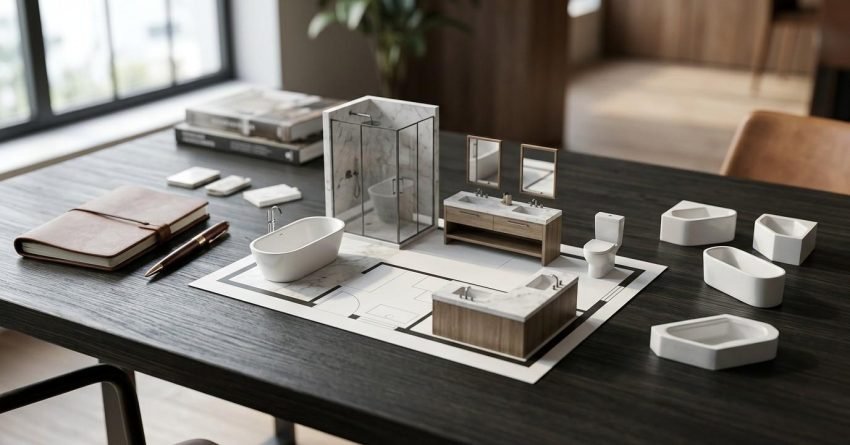
The right bathroom layout balances plumbing position, room dimensions, and daily routines to deliver function, comfort, and long-term value. For Sydney homeowners planning a renovation, layout decisions made early shape every cost, fixture choice, and finish that follows.
Choosing the wrong layout leads to costly plumbing relocations, awkward fixture placement, and budget blowouts that derail otherwise well-planned bathroom renovations across Sydney homes.
This guide explains the most common bathroom layout options, how room size affects design, cost implications of each choice, and how to plan confidently.
What Determines the Best Bathroom Layout for Your Home
Three factors govern every successful bathroom layout: room dimensions, the position of existing plumbing walls, and how the space needs to function for the household using it. A small ensuite for two adults has very different requirements than a family main bathroom serving four people during morning rush hour.
Plumbing walls carry the waste pipes, water supply lines, and ventilation that fixtures connect to. Keeping toilets, basins, baths, and showers grouped along or near existing plumbing walls dramatically reduces renovation cost and structural disruption. Australian Standard AS 1428.1 and the National Construction Code both inform minimum clearance requirements, with 600mm of clear floor space in front of each fixture being the widely applied design convention for comfortable, safe use.
Traffic flow shapes how a bathroom feels in daily use. The door swing alone demands planning; a standard 820mm door sweeps a 900mm arc that eats directly into usable floor space if the layout does not account for it. The path between fixtures, the clear floor space around the basin and toilet, and the direction of the shower screen opening all influence whether the bathroom feels comfortable or cramped.

The Most Common Bathroom Layout Options
Most bathrooms across Sydney follow one of five recognised layout patterns. Each has distinct strengths, cost implications, and ideal room shapes. Understanding these patterns helps homeowners visualise possibilities before engaging a designer or builder.
Single Wall Layout
A single wall layout places the toilet, basin, and shower or bath along one continuous wall. This is the simplest and most cost-effective configuration because all plumbing connects to one stack. It suits long, narrow bathrooms and is common in older Sydney terraces, apartment ensuites, and powder rooms where space is tight but functionality must be preserved.
Drawbacks include limited storage and a stretched appearance that feels corridor-like. For renovation budgets, this layout offers the lowest plumbing cost and the fastest construction timeline.
Galley (Corridor) Layout
The galley layout positions fixtures along two parallel walls with a walkway between. It works well in rectangular rooms with a minimum width of around 1,700mm. Typically, the bath or shower sits on one wall while the toilet and vanity occupy the opposite wall.
This layout offers good separation between wet and dry zones, balanced storage opportunities, and efficient use of long, narrow footprints. Plumbing costs sit slightly higher than single wall layouts because two walls carry services.
L-Shaped Layout
An L-shaped layout arranges fixtures along two adjacent walls forming an L. This configuration suits square or slightly rectangular bathrooms and creates a natural division between zones. The shower or bath usually anchors one end while the vanity and toilet line the adjacent wall.
L-shaped layouts feel more open than corridor designs and often allow for a larger shower enclosure or a freestanding bath in the corner. They balance cost and flexibility well, making them one of the most popular choices for Sydney mid-sized bathroom renovations.
U-Shaped Layout
The U-shaped layout uses three walls, with fixtures distributed across each. This works best in larger square rooms and delivers excellent storage, multiple work zones, and a luxurious feel. A common configuration places the bath at the centre of the back wall, with the shower and vanity on opposing side walls and the toilet adjacent.
Plumbing costs are higher because services run across three walls, but the result is a full-feature bathroom suited to family homes and master ensuites.
Wet Room Layout
A wet room treats the entire bathroom as a waterproofed shower zone, removing the need for a separate shower enclosure. The floor slopes gently toward a central or linear drain, and walls are fully tiled and waterproofed to Australian Standard AS 3740.
Wet rooms feel spacious, are highly accessible for ageing-in-place renovations, and add a premium aesthetic. Full-room waterproofing pushes costs upward and requires licensed waterproofing trades to execute correctly.
Wet Zone and Dry Zone Separation
Every bathroom layout manages the boundary between wet and dry zones, and how well that boundary is defined affects both waterproofing cost and daily usability. In single wall and galley layouts, the wet zone is typically contained to the shower or bath end, with the vanity and toilet sitting in a naturally drier area.
L-shaped and U-shaped layouts allow a more deliberate separation: the shower and bath anchor one arm of the layout while the vanity and toilet occupy the other. Wet rooms dissolve the boundary entirely, which demands full-floor waterproofing but delivers the most accessible and visually open result. Defining the wet zone clearly at the design stage prevents waterproofing disputes and inspection failures later.
Minimum Dimensions for Each Bathroom Layout
Room size narrows layout options quickly, and understanding the minimum workable dimensions for each configuration prevents costly redesigns mid-project.
| Layout Type | Minimum Room Width | Minimum Room Length | Minimum Floor Area |
| Single Wall | 1,200mm | 2,400mm | ~2.9m² |
| Galley (Corridor) | 1,700mm | 2,400mm | ~4.1m² |
| L-Shaped | 1,800mm | 1,800mm | ~4.0m² |
| U-Shaped | 2,400mm | 2,400mm | ~6.5m² |
| Wet Room | 1,500mm | 1,500mm | ~2.3m² (ensuite) |
These are practical minimums for comfortable use with standard fixtures. Larger rooms always improve liveability, storage, and resale appeal. We recommend confirming final dimensions with a licensed bathroom designer before committing to a layout, as fixture selection and door swing direction affect usable space significantly.
Bathroom Layouts by Room Size
The footprint dictates which configurations physically fit and which deliver realistic comfort.
Small Bathroom Layouts (Under 4m²)
Compact bathrooms work best with a single wall or short L-shaped layout. Sliding doors, wall-hung toilets, and recessed shower niches help reclaim usable floor space. A 1,500mm shower over bath remains the most efficient way to fit both bathing options into a small footprint.
Storage moves vertical with tall shaving cabinets and recessed shelving rather than wide vanities. Light tile colours and large-format tiles visually expand the space.
Medium Bathroom Layouts (4–7m²)
Most Sydney main bathrooms sit in this range. Galley and L-shaped layouts perform strongly here, allowing a separate shower and bath plus a 900mm to 1,200mm vanity. A 900mm deep shower recess is the practical minimum for comfortable use; 1,000mm is the preferred standard where space allows.
This is the size where layout flexibility peaks, and where small design decisions like door swing direction meaningfully change the finished feel. We always check door clearance against the vanity position before finalising any medium bathroom layout; it is the most common source of last-minute redesigns.
Large and Master Bathroom Layouts
Bathrooms above 7m² unlock U-shaped layouts, double vanities, freestanding baths, and walk-in wet zones. Master ensuites often integrate a separate water closet for privacy, which requires a minimum 900mm × 1,200mm compartment to meet NCC requirements. Pairing two basins on a 1,500mm or wider vanity reduces morning friction in shared bathrooms.
The trade-off is cost. Larger bathrooms mean more tiling, more fixtures, more waterproofing area, and longer trades schedules. A freestanding bath also needs 300–400mm of clear space on at least three sides to read as intentional rather than cramped.
How Bathroom Layout Affects Renovation Cost
Layout is one of the biggest cost drivers in any bathroom renovation. Three factors translate directly into budget impact.
Plumbing relocation is the first. Moving a toilet to a new wall, repositioning the shower drain, or shifting the bath waste adds several thousand dollars to a project because it requires opening floor structures, rerouting pipes, and re-certifying waste falls. In timber-floored homes, this work is more accessible and typically costs $1,500–$4,000 depending on run length. In concrete slab construction common in Sydney apartments, the same relocation involves core drilling or saw-cutting the slab, pushing costs to $3,000–$8,000 or more before any reinstatement.
Waterproofing scope is the second. A standard shower-and-tub layout requires waterproofing only the wet zone. A wet room requires the entire floor and lower walls to be membrane-treated, which increases material, labour, and inspection costs.
Fixture count and quality are the third. U-shaped and large layouts naturally include more fixtures, more tapware, and larger tiled areas, each of which compounds across the budget.
| Layout Type | Relative Plumbing Cost | Waterproofing Scope | Typical Cost Tier |
| Single Wall | Lowest (1 wall) | Wet zone only | Budget–Mid |
| Galley | Low–Mid (2 walls) | Wet zone only | Mid |
| L-Shaped | Mid (2 walls, corner) | Wet zone only | Mid |
| U-Shaped | Higher (3 walls) | Wet zone only | Mid–Premium |
| Wet Room | Mid (1 drain point) | Full floor + lower walls | Premium |
When a bathroom layout change is part of a larger renovation, integrated trades scheduling reduces duplicated call-out costs and site preparation time, a meaningful saving on projects where plumbing, tiling, and electrical work overlap.

Plumbing and Structural Considerations for Each Layout
Every layout must respect the building’s existing plumbing stack and structural framing. Sydney homes vary widely from timber-floored Federation cottages to concrete-slab apartments, and each construction type changes what is feasible.
In timber-floored homes, drain falls and pipe rerouting are generally more flexible because the floor opens without major structural consequence. In concrete slab construction, particularly in apartments, moving a toilet or shower drain requires strata approval in most cases and involves significantly more invasive work.
Ventilation is non-negotiable. NCC Part F2.4 requires mechanical exhaust in any bathroom without an openable window, and the ducting path directly influences ceiling height, bulkhead design, and layout planning. We factor duct routing into every layout recommendation; a poorly positioned exhaust fan forces a bulkhead that can make a small bathroom feel significantly lower.
Hot water supply distance affects daily performance. Long runs between the hot water unit and wet fixtures create wait times and waste water. Layouts that keep the shower and bath close to the existing hot water supply line deliver noticeably better performance, and larger layouts with multiple wet zones benefit from a recirculation loop to eliminate cold-water purging at distant outlets.

Choosing the Right Layout for Sydney Homes
Sydney’s housing stock shapes layout decisions in distinctive ways. Inner-city terraces typically deliver long, narrow bathrooms ideal for single wall or galley layouts. Suburban brick homes often have square bathrooms suited to L-shaped or U-shaped configurations. Apartments frequently feature compact ensuites where single wall layouts and wet rooms dominate.
Ensuite vs. Main Bathroom Layout Priorities
Ensuites and main bathrooms serve different household functions, and the layout priorities differ accordingly. An ensuite typically serves one or two adults with predictable routines; the priority is efficient use of a compact footprint, with a well-positioned shower, a single vanity, and a toilet that does not crowd the entry. Single wall and short L-shaped layouts dominate Sydney ensuite renovations for this reason.
A main bathroom serves more users across more varied routines, including children, guests, and potentially multiple people simultaneously. Separation between the shower and bath, a wider vanity, and clear traffic paths between fixtures all matter more here. Galley and L-shaped layouts handle these demands well in mid-sized rooms, while U-shaped layouts suit larger family bathrooms where storage and multiple work zones justify the additional plumbing cost.
Strata and Apartment Considerations
Strata-titled properties add a layer of approval that freestanding homes do not face. Any layout change involving plumbing relocation, waterproofing, or structural alteration requires owners corporation consent in most cases, and the approval process typically takes four to eight weeks depending on the scheme’s by-laws and meeting schedule. Work affecting common property, including shared drainage stacks and structural slabs, requires a special resolution in some schemes.
Compact dwellings and secondary residences on Sydney properties often demand the most considered layout decisions on the smallest footprints. A well-planned granny flat bathroom layout maximises functionality without the footprint of a full main bathroom, typically using a single wall or wet room configuration to keep plumbing consolidated and waterproofing costs controlled.
The most successful bathroom layouts start with honest answers to three questions: who uses this bathroom and how, what does the existing plumbing allow without major relocation, and what is the realistic renovation budget once contingencies are included.
Conclusion
Bathroom layout decisions sit at the intersection of plumbing reality, room dimensions, and household needs. The right choice between single wall, galley, L-shaped, U-shaped, or wet room configurations directly shapes renovation cost and long-term liveability.
Sydney’s diverse housing stock means there is no universal best layout; only the best layout for each specific home, budget, and family. Smart planning at the layout stage prevents costly mid-project changes and keeps renovations on schedule.
At Sydney Home Renovation, we help homeowners plan layouts that match their space, budget, and lifestyle from the first measurement through to final fit-off. Contact us to start your bathroom renovation with confidence.
Frequently Asked Questions
What is the most cost-effective bathroom layout?
The single wall layout is the most cost-effective because all fixtures connect to one plumbing wall. This minimises pipe relocation, waterproofing scope, and labour hours, making it ideal for tight renovation budgets.
How much space do I need between bathroom fixtures?
Australian design conventions recommend 600mm of clear floor space in front of each fixture. This ensures comfortable use of the toilet, basin, shower, and bath without crowding or awkward movement.
Can I change my bathroom layout without moving plumbing?
Yes, updating fittings, finishes, and vanities while keeping plumbing positions unchanged reduces renovation cost and construction time significantly while still delivering a fully refreshed bathroom.
Is a wet room layout suitable for all bathrooms?
Wet rooms work best in well-ventilated bathrooms with strong waterproofing and adequate drainage. They suit compact ensuites and accessible designs but require licensed waterproofing trades to meet AS 3740 standards.
What is the best bathroom layout for a small Sydney apartment?
Compact Sydney apartments typically benefit from single wall or short L-shaped layouts. Wall-hung toilets, sliding doors, and recessed niches help maximise floor space and create a more open, functional feel.
Does changing bathroom layout require council approval?
Cosmetic changes generally do not, but moving plumbing, altering structure, or modifying waste lines requires approval in most cases. Strata properties almost always need owners corporation consent before layout changes begin.
How long does a bathroom layout renovation take?
A standard bathroom renovation with a new layout typically takes three to five weeks. Timelines extend when plumbing is relocated, waterproofing is expanded, or premium finishes require longer lead times.


