A well-designed aging-in-place bathroom combines safety, accessibility, and comfort to help older Australians live independently at home for longer. Smart design choices reduce fall risks, support mobility, and add long-term property value.
As Sydney’s population continues to age, more homeowners and renovators are planning bathrooms that support changing physical needs without sacrificing modern style, function, or comfort. The decisions made during a renovation, from floor ratings to fixture heights, determine whether a bathroom remains safe and usable for decades.
This guide covers key safety features, accessible layouts, slip-resistant materials, supportive fixtures, lighting, smart technology, compliance requirements, costs, and how to plan a staged, value-adding renovation with confidence.
Why Bathroom Design Matters for Aging in Place
The bathroom is the highest-risk room in any Australian home for slips, trips, and falls, particularly for adults over 65. Hard surfaces, water, confined spaces, and frequent transitions between sitting and standing combine to make even routine tasks hazardous without the right design.
According to the Australian Institute of Health and Welfare, falls are the leading cause of injury hospitalisation for Australians aged 65 and over, and the bathroom is among the most common locations. More than 30% of adults over 65 experience at least one fall per year, and bathroom falls carry a disproportionately high rate of serious injury.
Aging in place is the principle of remaining in your own home safely and independently as you grow older, rather than relocating to assisted care. A well-planned bathroom is central to that goal because it supports daily hygiene, dignity, and confidence.
Beyond personal safety, accessible bathrooms add measurable resale value in Sydney’s mature housing market. Buyers increasingly look for future-ready features, and a compliant, well-finished accessible bathroom is a genuine point of difference at sale.
Australian Standards and Compliance for Accessible Bathrooms
Australian accessible bathroom design is governed by AS 1428.1 Design for Access and Mobility, which sets minimum dimensions, fixture heights, grab rail specifications, and circulation space requirements for accessible facilities. While AS 1428.1 is mandatory for Class 3 buildings and above (such as aged-care facilities), it serves as the benchmark specification for private residential aging-in-place renovations.
The National Construction Code (NCC) Livable Housing Design requirements, introduced progressively from 2023, now require new residential builds to meet a baseline of accessibility features. Renovations to existing homes are not automatically captured, but we use the NCC Livable Housing Silver standard as our minimum design target for aging-in-place projects.
Understanding which standards apply to your renovation matters for two reasons. First, it determines whether council approval or a building certifier is required. Second, it protects you if the renovation is funded through a Home Care Package or NDIS plan, where compliance documentation is often required before funding is released.
We work with licensed certifiers and occupational therapists on every aging-in-place project to confirm that the finished bathroom meets the relevant standards and that all documentation is in order before handover.
Essential Safety Features for Elderly Bathrooms
Safety begins with the right combination of hardware, controls, and emergency support systems. Every fitting reduces effort, eliminates sharp transitions, and prevents injury during the wettest, most slippery moments of daily routines.
Grab Rails and Support Bars
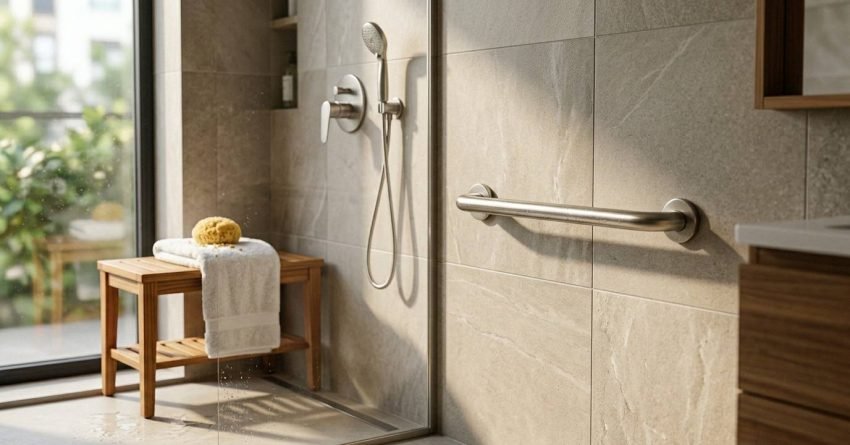
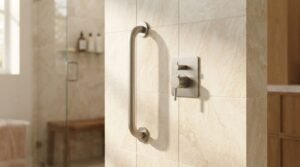
Stainless steel grab rails belong beside the toilet, inside the shower, and near the bathtub. Each rail is secured into structural studs or solid noggings, never plasterboard alone, and rated to support a minimum of 110 kilograms of pull force, as required under AS 1428.1.
Placement specifics matter as much as the rails themselves. The toilet grab rail centreline sits 300mm from the toilet pan centreline and 800mm above the finished floor. The shower rail runs horizontally at 800–900mm above the floor, with a vertical rail at the entry point for balance during the step-in transition.
We always install concealed structural backing plates during the waterproofing phase, even in areas where rails are not immediately required. This means additional rails can be added later without opening walls.
Anti-Scald Tapware and Thermostatic Mixers
Thermostatic mixing valves limit hot water output to a maximum of 50°C at the tap, which is the Australian standard for residential aged-care fittings under AS/NZS 3500.4. For aging-in-place bathrooms, we specify TMV3-rated valves, which offer tighter temperature tolerance and faster response than the TMV2 standard.
Lever-style handles are easier to operate than rotary knobs for users with arthritis or limited grip strength. A single-lever mixer at the shower controls both temperature and flow with one hand, which is a meaningful advantage for users with reduced dexterity.
Emergency Call Systems
A waterproof emergency call button or pull cord allows the user to alert family or a monitoring service in the event of a fall. Three main types suit different households: a fixed pull-cord wired to a panel, a wireless pendant worn around the neck, and a smart sensor that detects inactivity or impact and triggers an alert automatically.
Pendant systems connect to 24-hour monitoring services and are increasingly integrated with smart home platforms. Pull-cord systems are lower cost and require no wearable device. We assess which type suits the household during the planning phase and ensure the call point is positioned within reach of the floor, the most critical location in a fall scenario.
Accessible Layout and Space Planning
Layout is the single most important factor in bathroom accessibility because it determines whether a user can move safely with a walking frame, wheelchair, or carer present. Generous floor space is more valuable than premium finishes when planning for mobility changes over time.
A compliant aging-in-place bathroom includes a clear turning circle of at least 1,500mm in front of the toilet, basin, and shower. Doorways open outward or slide, with a minimum clear width of 850mm to accommodate mobility aids. Thresholds between rooms stay below 5mm to prevent trip hazards.
Reach zones matter throughout the space. Towel rails, shelves, and switches sit between 600mm and 1,200mm above the floor so they are usable from both standing and seated positions. The basin rim height for wheelchair access is 800–820mm from the finished floor, with 680mm of knee clearance underneath.
Many Sydney families pair an accessible main bathroom with a separate self-contained dwelling for older relatives. Secondary dwellings built to Livable Housing Silver or Gold standard provide a purpose-built aging-in-place environment with independent access, and the layout principles are identical to those applied in the main home.
Choosing Slip-Resistant Flooring and Materials
Flooring is the second most critical safety decision after layout. Wet ceramic or polished porcelain tiles are among the leading causes of bathroom falls, and the right slip rating dramatically reduces this risk.
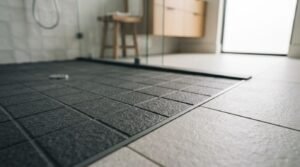
Australia uses two slip resistance classification systems. The R-rating (DIN 51130 ramp test) measures slip resistance under oil contamination and is used primarily for commercial and industrial settings. The P-rating (wet pendulum test, AS 4586) is the correct measure for wet residential bathroom floors. We specify P4 or P5 (equivalent to wet pendulum Class W) for shower floors and P3 minimum for the broader bathroom area.
Textured vinyl planks, matte porcelain, and slip-rated mosaic tiles all perform well. Avoid high-gloss finishes regardless of how easy they appear to clean; the cleaning benefit does not offset the fall risk.
Wall surfaces use matte rather than reflective finishes to reduce glare. High-contrast colour tones between floor, wall, fixtures, and grab rails help users with reduced vision distinguish edges and depth. A contrast ratio of at least 30 Light Reflectance Value (LRV) points between adjacent surfaces is the threshold recommended under AS 1428.1 for users with low vision.
This contrast principle is one of the most overlooked accessibility upgrades in standard bathroom renovations, and it costs nothing extra when specified at the tile selection stage.
Showers, Bathtubs, and Fixtures for Seniors
Fixture selection determines daily comfort and independence. The right combination eliminates the need to step over barriers, stand for long periods, or reach awkwardly for controls.
Curbless Walk-In Showers
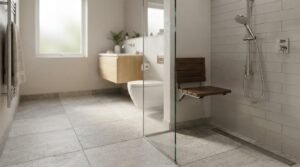
A curbless or hobless shower removes the raised lip that separates the shower from the rest of the bathroom. Linear floor drains and graded waterproofing allow flat, step-free access suitable for walking frames or shower commodes.
The floor gradient inside a curbless shower falls at a minimum of 1:80 toward the drain, which is sufficient to direct water without creating a noticeable slope underfoot. The waterproofing membrane extends a minimum of 150mm up the wall at the shower perimeter and 50mm beyond the shower zone on the floor. We use a two-coat liquid membrane system on all curbless shower floors to eliminate the risk of water tracking under the tile bed.
Linear drains run along one wall rather than the centre of the floor, which allows a single-direction fall gradient and simplifies tiling layout. This also makes the floor easier to clean and reduces grout lines in the wet zone.
Shower Seats and Handheld Showerheads
Fold-down shower seats provide secure seating for users who cannot stand for the full duration of a shower. Three seat types suit different needs: a fold-down wall-mounted seat (best for smaller showers), a fixed corner seat (more stable, suits larger showers), and a transfer bench that extends outside the shower entry (suits wheelchair users transferring from a chair).
All seats are rated to a minimum of 150 kilograms and positioned at 460–480mm above the finished floor, the same height as a comfort-height toilet, so the user can transfer between surfaces without a height change. A handheld showerhead on a vertical slide rail allows the user to wash while seated and adjust water flow with one hand.
Comfort-Height Toilets and Vanities
Comfort-height toilets sit between 460mm and 480mm from the floor, compared with 390mm for standard models. This reduces the muscular effort of standing and sitting, which is the movement most likely to cause a fall in the toilet zone.
For households where a full toilet replacement is not yet in the budget, a raised toilet seat insert achieves a similar height increase as an interim measure. Wall-hung vanities provide 680mm of knee clearance for seated use and make floor cleaning easier. The basin tap centreline sits no more than 300mm from the front edge of the basin so it is reachable without leaning forward.
Lighting, Ventilation, and Visual Clarity
Older eyes need significantly more light to see clearly, and bathrooms are often poorly lit by design. We combine layered lighting sources to eliminate shadows and reduce fall risk during nighttime use.
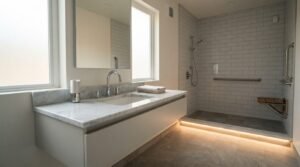
Ceiling lights are rated at a minimum of 300 lux at floor level, measured at the centre of the room. Task lighting around the vanity and mirror adds a further 200–300 lux at face height. Motion-activated nightlights at floor level provide safe pathways without harsh glare, a critical feature for the 2 am bathroom visit that accounts for a disproportionate share of elderly falls.
Warm white globes (2,700–3,000K) are preferred over cool blue tones, which can distort depth perception and make wet surfaces harder to read visually. All light fittings inside the shower zone carry a minimum IP65 rating for water resistance; fittings within 600mm of the shower require IP44 minimum.
Effective ventilation is equally important. An exhaust fan with adequate airflow prevents moisture buildup, mould, and slippery surfaces. Timer-controlled fans run automatically after each use, removing humidity without requiring the user to remember a switch. We specify fans rated at a minimum of 25 litres per second for a standard bathroom volume, in line with AS 1668.2.
Smart Home Technology for Aging-in-Place Bathrooms
Smart technology extends independence and adds a layer of passive safety that hardware alone cannot provide. The most practical upgrades integrate with existing home systems and require no technical knowledge to operate day-to-day.
Voice-activated tapware allows the user to set water temperature and flow by voice command, eliminating the need to grip or twist a handle. Smart thermostatic systems connect to a home hub and can be pre-programmed with preferred temperature profiles for each user. This is particularly valuable for users with Parkinson’s disease or severe arthritis.
Sensor-activated lighting removes the need to locate a switch in the dark. Motion sensors at the bathroom entry and inside the shower zone trigger lighting automatically and switch off after a set period. Combined with floor-level LED strips, this system eliminates the dark-to-bright transition that causes temporary vision impairment in older eyes.
Smart emergency pendants now integrate with home monitoring platforms, sending alerts to family members’ phones as well as monitoring services. Some systems include fall-detection algorithms that trigger an alert without the user pressing a button a critical feature for users who may be incapacitated by a fall.
Automated ventilation fans connect to humidity sensors and activate when moisture levels rise, rather than relying on a timer or manual switch. This removes one more cognitive task from the user’s routine and ensures the bathroom dries consistently after every use.
Planning a Staged Aging-in-Place Renovation
Not every aging-in-place upgrade needs to happen at once. A staged approach lets households invest in the highest-priority safety features now, while preparing the structure for future additions without costly retrofits.
We use a three-stage framework with clients: Now, Soon, and Later.
The Now stage covers the changes that prevent the most common injuries immediately: slip-rated flooring, grab rails at the toilet and shower, thermostatic tapware, and a curbless shower if the existing layout allows. These are the features that reduce fall risk from day one and are the hardest to retrofit cheaply later.
The Soon stage covers upgrades that improve comfort and independence such as mobility changes, a comfort-height toilet, a fold-down shower seat, a handheld showerhead, and improved lighting. These are easier to add after the initial renovation and can be budgeted over one to three years.
The Later stage covers structural changes that may only become necessary if mobility declines significantly: widened doorways, a ceiling hoist track, or a full wet room conversion. We install the structural backing and rough-in provisions for these during the initial renovation so the later work is a fit-out rather than a rebuild.
This approach protects the renovation budget, avoids disruption, and ensures the bathroom grows with the household’s needs rather than requiring a second full renovation in five years.
Cost Planning and Budgeting for an Aging-in-Place Bathroom
An aging-in-place bathroom renovation in Sydney typically costs between $25,000 and $55,000, depending on size, finish level, and the extent of structural changes required. Specialist accessibility features add roughly $3,000 to $8,000 above a standard renovation budget of similar scope.
The table below shows typical cost ranges for the major line items in an aging-in-place bathroom renovation in Sydney:
| Item | Typical Cost Range |
| Waterproofing (curbless shower, full wet room) | $1,800 – $3,500 |
| Grab rails (supply + structural installation) | $800 – $2,000 |
| Thermostatic tapware (TMV3 + lever handles) | $1,200 – $3,000 |
| Slip-rated tiling (floor + walls, supply + lay) | $4,500 – $9,000 |
| Curbless shower (linear drain, membrane, screen) | $3,500 – $7,000 |
| Comfort-height toilet + wall-hung vanity | $1,500 – $4,000 |
| Lighting upgrade (ceiling + task + nightlights) | $800 – $2,500 |
| Occupational therapist assessment | $300 – $600 |
| Labour (builder, plumber, electrician) | $9,000 – $20,000 |
| Contingency (10–15%) | $2,500 – $7,000 |
Labour accounts for 35 to 45 percent of the total project cost, with materials and fittings making up the balance. A contingency of at least 10 to 15 percent covers unforeseen issues such as concealed water damage, outdated plumbing, or upgraded electrical work.
Value-adding upgrades that improve both accessibility and resale appeal include curbless showers, comfort-height fittings, and high-quality lighting. These features are visible to buyers and increasingly expected in Sydney’s aging housing stock.
Working with a Specialist Renovation Team in Sydney
Aging-in-place bathrooms require coordination between licensed builders, plumbers, electricians, and occupational therapists. A specialist team understands the Australian Standards covering accessible design, waterproofing, and electrical safety, and manages approvals where structural alterations are involved.
The Role of an Occupational Therapist
An occupational therapist (OT) assesses the user’s current and anticipated mobility, identifies the specific modifications that will have the greatest impact on independence, and produces a written report that specifies the exact features, dimensions, and placement required. This report becomes the design brief for the renovation.
OT assessments are particularly important when the renovation is funded through a Home Care Package or NDIS plan, as the funding body requires a formal recommendation before approving modifications. We work with a network of accredited OTs across Sydney and can coordinate the assessment as part of the project planning phase.
An OT assessment typically costs $300 to $600 and takes one to two hours. The report it produces prevents costly specification errors and ensures the finished bathroom genuinely meets the user’s needs, not just a generic accessibility checklist.
Look for a contractor with documented experience in accessibility projects, transparent fixed-price quoting, and a clear schedule of inclusions and exclusions. Avoid quotes that omit waterproofing, demolition, rubbish removal, or compliance certificates, as these are common sources of cost blowout.
When accessibility upgrades extend beyond the bathroom into doorways, hallways, or kitchen zones, coordinating all trades under a single project manager keeps the work on schedule and prevents the budget fragmentation that comes from managing multiple contractors independently.
A trusted renovation partner assesses your current bathroom, recommends the right balance of safety and finish, and delivers a clear, written plan that fits your long-term budget.
Conclusion
We know that aging-in-place bathroom design brings together safety, accessibility, and comfort to support independence at every stage of life. Every decision from slip-rated tiles to comfort-height fittings contributes to a safer, more usable space that serves the household for decades.
Planning early lets us stage upgrades within budget, avoid costly retrofits, and protect long-term property value. The right design today prevents the most common bathroom injuries tomorrow, and the structural groundwork we lay now means future upgrades are fit-outs rather than rebuilds.
At Sydney Home Renovation, we deliver transparent quoting, skilled workmanship, and accessibility-focused planning backed by occupational therapy coordination and compliance expertise. Contact our team today to start a confident, on-budget aging-in-place bathroom renovation.
Frequently Asked Questions
What is an aging-in-place bathroom?
An aging-in-place bathroom is designed so older adults can use it safely and independently as their mobility changes. It includes slip-resistant flooring, grab rails, accessible fixtures, and a barrier-free layout.
How much does an accessible bathroom renovation cost in Sydney?
A typical aging-in-place bathroom renovation in Sydney costs between $25,000 and $55,000, depending on size and finish. Specialist accessibility features usually add $3,000 to $8,000 to a standard renovation budget.
Are grab rails required by law in Australian homes?
Grab rails are not legally required in private residences, but they are strongly recommended for elderly users. They must be secured to structural framing and rated to hold at least 110 kilograms of pull force.
What is the safest flooring for an elderly bathroom?
The safest options are slip-rated matte porcelain tiles, textured vinyl planks, or slip-rated mosaic tiles. We specify a P3 minimum rating across the bathroom and P4 or P5 inside the shower zone.
Should I install a walk-in shower or keep the bathtub?
A curbless walk-in shower is generally safer and more accessible than a bathtub for elderly users. Bathtubs require stepping over a high edge, which is one of the most common causes of bathroom falls.
Can I claim government funding for accessibility renovations?
Eligible Australians may receive support through Home Care Packages, the National Disability Insurance Scheme, or the My Aged Care program. Funding amounts and approved modifications depend on individual assessment outcomes and an OT report.
How long does an aging-in-place bathroom renovation take?
A complete accessible bathroom renovation in Sydney typically takes three to five weeks. Timelines depend on demolition complexity, waterproofing requirements, fixture lead times, and any structural or electrical upgrades involved.
What is universal design and how does it apply to bathrooms?
Universal design creates spaces that work for people of all ages and abilities without requiring separate accessible versions. In bathrooms, it means curbless showers, lever tapware, and generous circulation space that suit everyone from toddlers to elderly users.
What does an occupational therapist assessment involve?
An OT visits the home, assesses the user’s mobility and daily routines, and produces a written report specifying the exact modifications required. The assessment takes one to two hours and costs $300 to $600.