A bathroom renovation in Sydney typically takes two to four weeks from demolition to completion, depending on the size of the space and the scope of work involved. Costs generally range from $15,000 for a straightforward refresh to $35,000 or more for a full structural overhaul with premium finishes. Knowing what to expect before work begins is the single most effective way to avoid budget blowouts, unnecessary stress, and unwelcome surprises mid-project.
Most homeowners underestimate how much a renovation disrupts daily life — and how many decisions need to be made before a single tile is laid.
This guide walks through every stage of a bathroom renovation, from the first day of demolition through to final sign-off, so you can plan with confidence and stay in control of your project.
How Long Does a Bathroom Renovation Take?
Timeline is one of the first questions homeowners ask, and one of the hardest to answer without knowing the full scope of work. A like-for-like renovation, where the layout stays the same and no structural changes are required, moves significantly faster than a project involving relocated plumbing, new waterproofing membranes, or custom cabinetry.
Small Bathroom Timelines
A small bathroom, typically under 5 square metres, with a straightforward scope can be completed in 10 to 14 business days. This assumes no structural changes, standard tiling, and off-the-shelf fixtures. Delays most commonly occur when materials are back-ordered or when waterproofing cure times extend the schedule.
Full Bathroom Renovation Timelines
A full renovation involving layout changes, new plumbing rough-in, custom joinery, or large-format tiles typically runs three to five weeks. Complex projects, those requiring council approval, structural modifications, or heritage compliance, can extend beyond six weeks. Building in a buffer of five to seven business days is a practical approach for any project above a basic refresh.

The Renovation Stages: What Happens and When
Understanding the sequence of work helps you track progress, anticipate disruptions, and make timely decisions when trades need answers on site.
What Does a Full Bathroom Renovation Include?
A full bathroom renovation covers the complete replacement of all wet area components: tiles, waterproofing membrane, vanity, toilet suite, shower screen or bath, tapware, and all associated plumbing and electrical connections. It includes demolition of the existing fit-out, structural preparation of the substrate, and a licensed waterproofing application before any new finishes are installed.
A cosmetic refresh, by contrast, replaces surface finishes only, such as tapware, vanity, and accessories, without touching the waterproofing or plumbing layout. Understanding which scope your project falls into is the first step in setting a realistic budget and timeline.
Demolition and Strip-Out
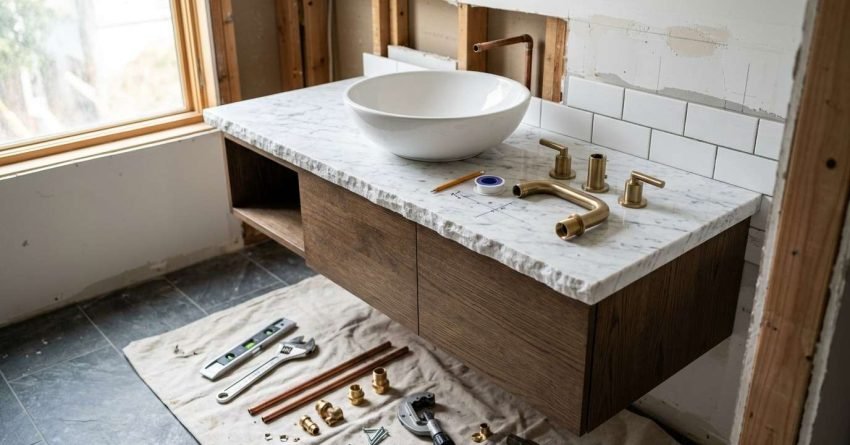
The first stage involves removing everything: tiles, vanity, toilet, shower screen, bath, and any existing waterproofing. This is typically the fastest stage, often completed in one to two days. It is also when hidden problems are most likely to surface, including rotted substrate, previous waterproofing failures, or non-compliant plumbing that must be rectified before work can continue.
Waterproofing and Rough-In Work
Once the space is stripped back, the plumber and electrician complete their rough-in work, repositioning pipes, installing new drainage, and running electrical conduit. Waterproofing membranes are then applied to all wet areas and must cure for a minimum of 24 to 48 hours before tiling can begin, with some membrane systems requiring longer cure windows depending on ambient conditions.
In New South Wales, waterproofing must comply with AS 3740-2021 and be completed by a licensed waterproofer. A licensed inspector must sign off on the waterproofing before it is concealed by tiles. Skipping or rushing this stage is the most common cause of long-term water damage in renovated bathrooms, and rectifying a failed membrane after tiling is complete costs significantly more than getting it right the first time.
Tiling and Fit-Out
Tiling is the most labour-intensive stage and the one most visible to you as the homeowner. Large-format tiles, complex patterns, and feature walls all add time. The trade sequence during fit-out is precise: tiler completes first, then the plumber returns to connect fixtures, then the electrician finalises lighting and exhaust, then the cabinet maker or vanity installer completes joinery. Delays in one trade flow directly through to the next, which is why having all materials on site before work begins matters so much.
Final Fixtures and Finishing
The final stage covers silicone sealing, grouting touch-ups, mirror installation, lighting, and a full defect inspection. A thorough contractor will walk through the completed space with you before signing off, documenting any items requiring attention and confirming all fixtures are operational.
What Disruptions Should You Prepare For?
Losing access to your bathroom for two to four weeks is the most significant disruption most households face. For homes with a single bathroom, this means arranging alternative facilities, whether that is a second bathroom, a gym membership, or temporary accommodation for the duration of the project.
Noise and dust are unavoidable during demolition and tiling. Trades typically work standard business hours, but early starts are common. Water and power to the bathroom will be isolated at various points throughout the project, and there may be periods where the main water supply to the house is briefly shut off during plumbing connections.
Decision fatigue is a less obvious but equally real disruption. Homeowners are frequently asked to make on-the-spot choices about grout colour, fixture placement, or tile cuts. Having a clear brief and pre-approved selections before work starts significantly reduces the number of decisions required during the build.

Do You Need Council Approval for a Bathroom Renovation in Sydney?
Most standard bathroom renovations in Sydney do not require a Development Application (DA). Work that is internal, does not change the building’s footprint, and does not involve structural alterations typically qualifies as exempt development under the NSW State Environmental Planning Policy (Exempt and Complying Development Codes) 2008. This means you can proceed without council approval, provided the work meets the code’s specific conditions.
Where council approval becomes relevant is when your renovation involves structural changes, such as removing a load-bearing wall to expand the bathroom, or when the property is heritage-listed or located in a heritage conservation area. In these cases, a Complying Development Certificate (CDC) through a private certifier, or a full DA through your local council, may be required before work can begin.
Your contractor or a licensed building certifier can confirm the approval pathway for your specific property before you commit to a scope of work. Getting this clarity early avoids costly delays once trades are booked and materials are ordered.
What Disruptions Should You Prepare For?
Losing access to your bathroom for two to four weeks is the most significant disruption most households face. For homes with a single bathroom, this means arranging alternative facilities, whether that is a second bathroom, a gym membership, or temporary accommodation for the duration of the project.
Noise and dust are unavoidable during demolition and tiling. Trades typically work standard business hours, but early starts are common. It is worth sealing the bathroom doorway with a dust barrier sheet during demolition and tiling to limit the spread of fine tile and substrate dust through the rest of the home. Water and power to the bathroom will be isolated at various points throughout the project, and there may be periods where the main water supply to the house is briefly shut off during plumbing connections.
Decision fatigue is a less obvious but equally real disruption. You will frequently be asked to make on-the-spot choices about grout colour, fixture placement, or tile cuts. Having a clear brief and pre-approved selections before work starts significantly reduces the number of decisions required during the build, and eliminates the risk of costly change orders mid-project.
Common Surprises That Catch Homeowners Off Guard
Even well-planned renovations encounter unexpected costs. The most common surprises include:
Waterproofing failures in the existing substrate. When tiles are removed, the membrane beneath is often found to be non-compliant, damaged, or absent entirely. Rectifying this is non-negotiable and adds cost that was not in the original quote.
Asbestos in older homes. Properties built before 1990 may contain asbestos in wall sheeting, floor adhesives, or ceiling materials. Identification and safe removal by a licensed removalist is a legal requirement and adds both time and cost to the project.
Non-compliant existing plumbing. Older bathrooms frequently have plumbing that does not meet current Australian standards. A licensed plumber is required to bring all work up to code before the renovation can proceed.
Tile wastage and overruns. Ordering tiles requires a 10 to 15 percent wastage allowance for cuts, breakages, and pattern matching. Underordering is a common mistake that causes delays when additional stock is needed, particularly for discontinued or imported tiles.
If your bathroom renovation is part of a broader property upgrade, understanding how trades and timelines interact across multiple rooms is critical. Our whole home renovation planning guide explains how to coordinate large-scale projects without budget blowouts.

How Much Does a Bathroom Renovation Cost in Sydney?
Bathroom renovation costs in Sydney vary considerably based on bathroom size, the extent of structural changes, material selections, and the trades required. As a general guide:
- Basic refresh (cosmetic only): $10,000–$15,000
- Mid-range full renovation: $18,000–$28,000
- Premium or complex renovation: $30,000–$50,000+
Labour typically accounts for 40 to 50 percent of the total project cost. Tiling, waterproofing, plumbing, and electrical are the four trade categories that drive the majority of labour spend. Material allowances, covering tiles, vanity, tapware, shower screen, and toilet, make up most of the remainder, with significant variation depending on the quality tier selected.
What Drives the Cost Up or Down?
Relocating plumbing adds cost. Keeping the existing layout and connecting to existing waste points keeps costs lower. Choosing large-format tiles increases both material and labour costs due to the additional preparation and skill required. Selecting fixtures from a mid-range supplier rather than a premium importer can reduce the fittings budget by 20 to 40 percent without compromising quality or durability.
A detailed, itemised quote from your contractor gives you the clearest picture of where money is being spent and where savings are genuinely available without cutting corners on compliance or longevity.
Bathroom Renovation ROI: What Is the Return on Investment?
A well-executed bathroom renovation consistently ranks among the highest-return home improvements for Sydney property owners. A mid-range renovation in a well-located Sydney home typically returns $1.50 to $2.00 in property value for every dollar spent, according to property valuation data from the Australian property market. For investment properties, an updated bathroom directly supports rental yield by reducing vacancy periods and justifying higher weekly rents. The return is strongest when the renovation brings the bathroom to a standard consistent with the rest of the home and the local market, rather than over-capitalising with premium finishes in a mid-market suburb.
Common Surprises That Catch Homeowners Off Guard
Even well-planned renovations encounter unexpected costs. The most common surprises include:
Waterproofing failures in the existing substrate. When tiles are removed, the membrane beneath is often found to be non-compliant, damaged, or absent entirely. Rectifying this is non-negotiable under AS 3740-2021 and adds cost that was not in the original quote. Budget a contingency of $1,500 to $3,000 specifically for waterproofing rectification in bathrooms older than 15 years.
Asbestos in older homes. Properties built before 1990 may contain asbestos in wall sheeting, floor adhesives, or ceiling materials. Identification requires a licensed asbestos assessor, and safe removal must be carried out by a licensed removalist under Safe Work Australia’s asbestos removal regulations. This adds both time and cost to the project, typically $1,000 to $4,000 depending on the extent of the material.
Non-compliant existing plumbing. Older bathrooms frequently have plumbing that does not meet current Australian standards. A licensed plumber is required to bring all work up to code before the renovation can proceed. This is not optional, and a contractor who offers to leave non-compliant plumbing in place to save money is creating a liability for you as the property owner.
Tile wastage and overruns. Ordering tiles requires a 10 to 15 percent wastage allowance for cuts, breakages, and pattern matching. Underordering is a common mistake that causes delays when additional stock is needed, particularly for discontinued or imported tiles. Always confirm with your tiler that the order quantity includes the full wastage allowance before materials are purchased.
How to Choose the Right Bathroom Renovator in Sydney
Choosing the right contractor is as important as choosing the right tiles. The renovators who deliver the best outcomes share a consistent set of credentials and behaviours that are worth verifying before you sign anything.
A licensed builder or licensed contractor number is non-negotiable for any bathroom renovation in NSW. You can verify a contractor’s licence through the NSW Fair Trading licence check. Public liability insurance and home building compensation (HBC) cover are also required for residential work above $20,000 in NSW. Ask for certificates of currency before work begins.
An itemised quote is the clearest signal of a contractor’s professionalism and transparency. A quote that breaks down labour by trade, lists materials with quantities and unit costs, and separates provisional sums from fixed-price items gives you genuine visibility over your budget. A lump-sum quote with no breakdown makes it impossible to identify where costs are being absorbed or where savings are available.
Red flags to watch for include contractors who ask for more than a 10 percent deposit before work begins, who cannot provide references from completed bathroom projects in Sydney, or who are unwilling to put the scope of work in writing before starting. A contractor confident in their work will always welcome a written scope.
How to Stay in Control of Your Renovation
The homeowners who experience the smoothest renovations share a few consistent habits. They finalise all material selections before work begins, so trades are never waiting on decisions. They establish a clear communication rhythm with their contractor, a brief daily or every-other-day update is enough to stay informed without micromanaging. They maintain a contingency budget of 10 to 15 percent above the quoted price to absorb unexpected costs without derailing the project.
Choosing a contractor who provides a detailed, itemised quote, rather than a lump-sum figure, gives you far greater visibility over where money is being spent and where savings can be made without compromising quality. When you receive a quote, check that waterproofing, tiling, plumbing, and electrical are each listed as separate line items with their own labour and material costs.
Homeowners renovating their bathroom often find it practical to update their laundry at the same time <!–NEW PAGE NEEDED–>, since both rooms share wet area trades and waterproofing requirements, and coordinating both projects under one contractor typically reduces overall labour costs.
Conclusion
A bathroom renovation is one of the most impactful upgrades you can make to your home, but only when it is planned with clear expectations, realistic budgets, and a contractor who communicates transparently at every stage. Understanding the sequence of work, the likely disruptions, and the cost drivers puts you in a far stronger position before the first tile is removed.
The difference between a renovation that stays on budget and one that blows out almost always comes down to preparation. Decisions made before work starts cost nothing. Decisions made on site, under pressure, almost always cost more.
At Sydney Home Renovation, we deliver end-to-end bathroom renovation solutions built on honest pricing, skilled trades, and clear project communication. Contact us today to discuss your bathroom renovation and get a detailed, itemised quote you can plan around with confidence.
Frequently Asked Questions
How long will I be without a bathroom during a renovation?
Most bathroom renovations in Sydney take two to four weeks from demolition to completion. Small, straightforward projects can be finished in 10 to 14 business days, while complex renovations involving layout changes or structural work may take five weeks or longer.
Do I need to move out during a bathroom renovation?
Moving out is not always necessary, but it depends on whether your home has a second bathroom. If your property has only one bathroom, arranging alternative facilities or temporary accommodation for the duration of the project is strongly recommended.
What is the most expensive part of a bathroom renovation?
Labour is typically the largest cost component, accounting for 40 to 50 percent of the total project budget. Within labour, waterproofing, tiling, and plumbing are the highest-cost trades. Relocating plumbing or adding structural changes increases costs significantly compared to a like-for-like renovation.
Can I use my bathroom during the renovation?
No. Once demolition begins, the bathroom is a construction site and cannot be used safely. Water and power will be isolated at various points, and the space will not be functional until the final fit-out and sign-off stage is complete.
What should I do before the renovation starts?
Finalise all material selections, including tiles, vanity, tapware, toilet, and accessories, before work begins. Confirm your contingency budget of 10 to 15 percent above the quoted price. Arrange alternative bathroom facilities and discuss the daily communication process with your contractor.
Do I need council approval for a bathroom renovation in Sydney?
Most standard bathroom renovations qualify as exempt development and do not require a DA. Council approval is typically only needed when structural changes are involved or the property is heritage-listed. A licensed certifier can confirm the correct pathway for your property.
How do I choose a reliable bathroom renovator in Sydney?
Verify their NSW contractor licence through Fair Trading, confirm they hold public liability and home building compensation insurance, and request a fully itemised quote. Avoid contractors who cannot provide written scopes, ask for large upfront deposits, or are unwilling to supply references from completed Sydney bathroom projects.