
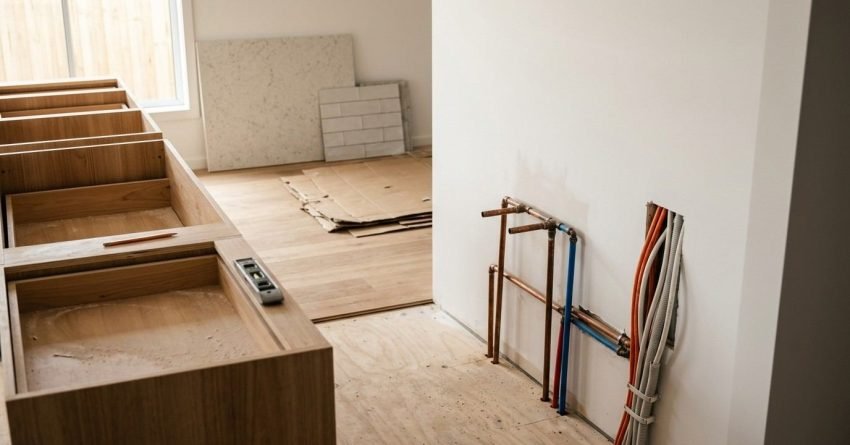
The single most important decision in any kitchen remodel is not what we replace. It is the order in which we replace it. Getting the sequence right protects your budget, keeps tradespeople working efficiently, and prevents costly rework.
In Sydney, where labour rates and material lead times add real financial pressure, a poorly sequenced remodel can turn a $30,000 project into a $45,000 one before the benchtop is even installed.
Most homeowners focus on the exciting decisions: benchtop materials, cabinet colours, appliance brands. Without a clear replacement sequence, those choices can create expensive conflicts. Cabinets get ordered before plumbing is confirmed, flooring gets laid before appliances are measured, and lighting gets roughed in before the layout is finalised.
We walk through every stage of a kitchen remodel in the correct replacement order below, from structural and services work through to final finishes, so you can plan with confidence and avoid the mistakes that blow budgets and extend timelines.
Why the Order of Replacement Matters in a Kitchen Remodel
Most renovation cost overruns do not come from choosing expensive materials. They come from doing work in the wrong order and paying to undo it. The sequence of replacements in a kitchen remodel is a structural decision, not just a logistical one.
Every trade, every material, and every fixture has a dependency. Something must happen before it can be installed correctly, and understanding those dependencies before we start is what separates a smooth, on-budget renovation from one that stalls and frustrates everyone involved.
How Sequencing Affects Your Budget and Timeline
When replacements happen in the right order, each trade completes its work cleanly and hands over to the next without conflict. Plumbers rough in before walls are closed. Electricians run cables before cabinetry is fixed.
Cabinet makers measure after services are confirmed, benchtop templaters measure after cabinets are installed, and appliances are delivered after benchtops are cut. Each step creates the conditions for the next.
When that chain is respected, projects move efficiently, and costs stay predictable. When it is broken, even once, the consequences compound: a cabinet installed before a plumbing rough-in is confirmed may need to be removed, and flooring laid before appliances are delivered may be scratched or cut incorrectly. These are among the most common reasons kitchen remodels in Sydney run over budget.
The Hidden Cost of Getting the Order Wrong
The financial damage from a misordered remodel is rarely visible on a single invoice. It accumulates across multiple trades, each charging for time spent working around someone else’s mistake.
A plumber called back to move a pipe after cabinetry is installed charges significantly more than if the same work had been done during the rough-in phase. An electrician asked to relocate a power point after tiling is complete needs to cut into finished walls, and callback labour in the trades sector typically carries a premium of 20 to 40 percent over work scheduled during the original rough-in visit, according to Master Builders Australia.
Beyond direct rework costs, sequencing errors cause delays that push tradespeople off schedule. In Sydney’s busy renovation market, losing your place in a tradesperson’s schedule can mean waiting weeks for them to return, and the cost of sequencing is measured in time, stress, and the compounding disruption of a home that cannot function normally.

Start With the Structure: Plumbing, Electrical, and Waterproofing
Before a single cabinet is ordered or a benchtop is selected, we assess the structural and services layer of the kitchen and replace or upgrade it where necessary. This is the foundation every other decision rests on, and skipping or deferring this stage is the single most common cause of expensive mid-project surprises.
In Sydney homes, particularly those built before the 1990s, we regularly find ageing plumbing, undersized electrical circuits, and deteriorating subfloors. Identifying and addressing them first protects every subsequent investment.
When to Prioritise Plumbing Upgrades First
Plumbing is the first trade we engage in any kitchen remodel because its location determines where the sink, dishwasher, and any additional water points can be positioned. If you are changing the kitchen layout, moving the sink to an island, adding a pot filler, or relocating the dishwasher, the plumbing rough-in must happen before walls are closed and before cabinetry is measured.
Even if you are keeping the same layout, we inspect existing plumbing before the remodel begins. Older copper or galvanised steel pipes can show corrosion, reduced flow, or non-compliant connections, and replacing them during a remodel, while walls are open, costs a fraction of what it would cost afterward.
In Sydney, licensed plumbers must carry out all plumbing work, and any changes to drainage or water supply must comply with the Plumbing Code of Australia.
Electrical Rewiring and Safety Compliance in Sydney
Electrical work is the second service trade we complete before any surface work begins. Modern kitchens place significant demand on electrical circuits: rangehoods, ovens, dishwashers, refrigerators, microwaves, and multiple power points all require dedicated or shared circuits that older homes were not designed to support.
In New South Wales, all electrical work must be carried out by a licensed electrician and comply with AS/NZS 3000 wiring standards. If your kitchen currently runs on a single circuit, or you are adding appliances that require dedicated circuits such as an induction cooktop or double oven, the electrical rough-in must be completed before walls are closed and before cabinetry is installed.
Attempting to upgrade electrical capacity after cabinets are in place means cutting into finished walls, an avoidable cost when sequencing is correct from the start. We rough in downlights, under-cabinet lighting, and rangehood wiring at this stage, even though the fixtures themselves are not installed until the final phase.
Waterproofing and Subfloor Checks Before Surface Work
While waterproofing is more commonly associated with bathroom renovations, kitchen areas around the sink, dishwasher, and any wet zones still benefit from appropriate moisture management. More critically, we inspect the subfloor beneath the kitchen before any new flooring or cabinetry goes in.
In Sydney homes, particularly older timber-framed properties, subfloor damage from historical leaks, termite activity, or general deterioration is not uncommon. Discovering that damage after new cabinetry has been installed means removing that cabinetry to carry out repairs, while discovering it beforehand makes the repair straightforward. This inspection costs very little; skipping it can cost thousands.
Replace the Kitchen Layout Anchors Next: Cabinets and Benchtops
Once services are confirmed, roughed in, and signed off, we install the kitchen’s layout anchors. Cabinetry and benchtops form the structural core of the kitchen’s functional design and determine where everything else goes.
This is why cabinetry must be installed before flooring, before appliances are delivered, and before benchtop templating occurs. The sequence is non-negotiable if we want accurate measurements and a finished result that fits together correctly.
Why Cabinetry Drives Every Other Decision
Kitchen cabinetry is the single most influential element in a remodel sequence because it establishes the physical boundaries of every other component. Appliance cavities must match appliance dimensions, benchtop overhangs must align with cabinet depths, and powerpoint positions must correspond to where appliances will sit.
When cabinetry goes in first, after services are confirmed, every subsequent trade and supplier can measure from a fixed, accurate reference point. This eliminates the guesswork that causes misaligned splashbacks and ill-fitting appliances. In Sydney, custom cabinetry typically has a lead time of four to eight weeks from order to delivery, so cabinetry decisions need to be made early in the planning phase even though installation happens mid-project.
Choosing Benchtops That Balance Cost and Durability
Benchtop selection is one of the most significant material decisions in a kitchen remodel, both in cost and long-term performance. In Sydney, engineered stone such as Caesarstone or Silestone remains the most popular choice for mid-to-upper-range renovations, offering durability, low maintenance, and a wide range of finishes.
Laminate benchtops offer a cost-effective alternative for budget-conscious renovations, while natural stone options like granite and marble carry premium pricing and require more careful maintenance. Benchtops cannot be templated until cabinetry is fully installed and level, and fabrication typically takes one to two weeks after templating, so benchtop installation follows cabinetry by at least one to two weeks.
How Cabinet and Benchtop Sequencing Affects Appliance Fit
The relationship between cabinetry, benchtops, and appliances is one of the most technically precise aspects of a kitchen remodel. Appliance cavities must be built to the exact specifications of the appliances being installed, not approximate dimensions, which means appliances must be selected and confirmed before cabinetry is ordered, even though delivery happens later.
A common and costly mistake is ordering cabinetry before appliance specifications are confirmed, then discovering the oven cavity is 2cm too narrow or the dishwasher recess is too shallow. Confirming appliance specifications before cabinetry is ordered costs nothing and prevents a problem that affects both budget and finish.
Appliances: What to Replace and When in the Remodel Sequence
Appliances occupy a unique position in the remodel sequence. We select them early, because their specifications drive cabinetry dimensions, but we do not deliver or install them until cabinetry and benchtops are complete.
In Sydney, appliance lead times for premium or imported brands can extend to six to twelve weeks. Factoring this into the project timeline from the outset prevents a completed kitchen from waiting weeks for a delayed oven or rangehood.
Which Appliances Should Be Replaced Early in the Project
Not all appliances carry equal weight in the sequence. Ovens, cooktops, rangehoods, dishwashers, and integrated refrigerators need to be confirmed and ordered earliest because their dimensions directly affect cabinetry design and require dedicated cavities, electrical connections, or plumbing rough-ins.
Smaller countertop appliances like microwaves, coffee machines, and toasters do not affect the structural design and can be selected at any point. If you are planning an integrated or built-in microwave, though, its cavity dimensions need to be confirmed alongside the oven and dishwasher specifications before cabinetry is ordered.
Built-In vs. Freestanding Appliances and Installation Timing
The choice between built-in and freestanding appliances has a direct impact on installation timing and cabinetry design. Built-in appliances, such as integrated dishwashers, column refrigerators, and built-in ovens, require precise cabinetry cavities and are typically installed after benchtops are complete.
Freestanding appliances offer more flexibility in timing but still require confirmed dimensions before cabinetry is ordered. Rangehoods, whether ducted or recirculating, require electrical rough-in and, for ducted models, wall or ceiling penetration for the duct run, work that must be completed during the services phase, before walls are closed.
Energy Efficiency Upgrades Worth Prioritising in Sydney Homes
A kitchen remodel is one of the most cost-effective opportunities to upgrade the energy efficiency of a home’s most-used appliances. In Sydney, where electricity costs have risen by more than 20 percent over recent years, according to the Australian Energy Market Commission, replacing older gas cooktops with induction, upgrading to a heat pump hot water system, or installing a high-efficiency dishwasher delivers meaningful reductions in ongoing energy costs.
Induction cooktops require a dedicated 20-amp electrical circuit, a requirement that must be factored into the electrical rough-in phase. If you are considering switching from gas to induction, that decision needs to be made before the electrical rough-in is completed, since adding a dedicated circuit after walls are closed significantly increases the cost of the upgrade.

Flooring and Splashbacks: Surface Finishes Come After Structure
Flooring and splashbacks are among the most visually impactful elements of a kitchen remodel, and they are also among the most commonly installed in the wrong sequence. Both should go in after cabinetry and appliances are in place, not before.
The most common flooring sequencing mistake is laying new flooring before cabinetry is installed. It seems easier to lay flooring in an empty room, but cabinets installed over new flooring can crack or chip the surface at the edges, and appliances moved across new flooring will scratch or dent it.
The correct sequence is to install flooring after cabinetry is fixed and appliances are in their final positions. This protects the flooring surface and produces a cleaner finished result, which matters in Sydney homes where engineered timber, large-format porcelain tiles, and luxury vinyl planks are common flooring choices worth protecting from construction traffic.
Splashback Selection and Timing in the Renovation Sequence
Splashbacks go in after benchtops are in place and after any power points or switches in the splashback zone have been roughed in. The benchtop surface provides the reference line from which the splashback is measured and cut, so templating it before the benchtop is installed produces inaccurate results.
For tiled splashbacks, the tiling trade follows benchtop installation and precedes powerpoint covers and switch plates. For glass or stone splashbacks, templating occurs after benchtop installation, with fabrication typically taking one to two weeks, and powerpoint covers go in last, after all tiling or panel work is complete.
Material Choices That Affect Installation Order
Some flooring and splashback materials carry specific installation requirements that affect sequencing. Large-format tiles of 600x600mm or larger require a particularly flat and level subfloor, so any remediation must be completed before tiling begins.
Engineered timber flooring requires an acclimatisation period of several days in the installation environment before it can be laid, and heated floor systems, whether electric or hydronic, must be installed before the floor covering, with their electrical connections roughed in during the services phase. Understanding these requirements before finalising selections lets us build them into the schedule accurately.
Lighting, Fixtures, and Final Finishes: The Last Replacements
The final phase of a kitchen remodel covers the elements that complete the space visually and functionally: lighting fixtures, tapware, sinks, hardware, and paint. These come last in the sequence not because they are less important, but because they depend on everything before them being correctly in place.
Pendant Lights, Downlights, and Under-Cabinet Lighting Timing
We install lighting fixtures in two stages. The rough-in, running cables, installing junction boxes, and positioning downlight housings, happens during the electrical services phase, before walls are closed and cabinetry is installed.
The fixture installation, hanging pendants, inserting downlight trims, and connecting under-cabinet lighting, happens at the very end of the project, after painting is complete. This protects fixtures from construction dust and damage, and in Sydney kitchens, getting pendant height and spacing right over an island requires the benchtop to be installed as a reference point.
Tapware, Sinks, and Hardware as Final-Stage Replacements
Sinks and tapware go in after benchtops are in place and after any undermount sink cutouts have been made by the fabricator. The plumber returns at this stage for the second visit to connect the sink waste, install the tapware, and connect the dishwasher.
Cabinet hardware, handles, knobs, and soft-close mechanisms are installed by the cabinet maker or joiner at the end of the project, after painting is complete. Installing hardware before painting risks paint overspray and requires masking that adds time and cost.
Paint and Wall Finishes: When to Schedule the Final Coat
Painting is one of the last trades to complete work, but not the very last. The correct sequence is cabinetry installed, benchtop installed, splashback installed, then painting of walls and ceiling, followed by lighting fixtures, hardware, and powerpoint covers.
Painting before splashbacks are installed risks paint contamination on the splashback surface, and painting before cabinetry means painting around positions that may shift slightly during installation. Scheduling paint after the major fixed elements are in place produces a cleaner result with less masking and touch-up work.
Common Kitchen Remodel Sequencing Mistakes to Avoid
Across the projects we manage in Sydney, the same sequencing errors come up repeatedly. Ordering cabinetry before appliance specifications are confirmed, laying flooring before cabinets and appliances are in place, and scheduling electrical upgrades after walls are closed all lead to rework and unplanned costs.
Painting before splashbacks or cabinetry, installing hardware before the final paint coat, and skipping a subfloor inspection before cabinetry installation round out the most common mistakes we see. Each one is avoidable with a clear stage-by-stage plan agreed before demolition begins.

How to Build a Kitchen Remodel Replacement Schedule for Sydney Homes
A kitchen remodel in Sydney involves multiple licensed trades, supplier lead times, and a sequence of decisions that each depend on the one before. Building a clear replacement schedule before work begins is the primary tool for keeping a project on budget and on time.
Creating a Stage-by-Stage Replacement Plan
A practical kitchen remodel schedule for a Sydney home typically follows this sequence:
Stage 1: Planning and Procurement (Weeks 1-4): Confirm layout, select appliances and confirm specifications, order cabinetry, select benchtop material, engage all trades and confirm availability.
Stage 2: Demolition and Services (Weeks 5-6): Strip existing kitchen, inspect subfloor, complete plumbing rough-in, complete electrical rough-in, address any structural issues identified.
Stage 3: Cabinetry Installation (Week 7): Install wall and base cabinets, confirm appliance cavity dimensions, prepare for benchtop templating.
Stage 4: Benchtop and Appliances (Weeks 8-9): Template and fabricate benchtop, install benchtop, install sink and tapware connections, install appliances.
Stage 5: Surface Finishes (Weeks 9-10): Install splashback, lay flooring, complete painting.
Stage 6: Final Finishes (Weeks 10-11): Install lighting fixtures, fit cabinet hardware, install powerpoint covers and switch plates, complete final plumbing connections, conduct final inspection.
This timeline assumes a standard remodel without significant structural changes. Projects involving layout changes, load-bearing wall removal, or heritage considerations in Sydney may require additional time and council approval.
Working With Tradespeople in the Right Sequence
In Sydney’s renovation market, coordinating tradespeople in the correct sequence requires forward planning. Plumbers, electricians, tilers, and cabinet makers all run their own schedules, and the best tradespeople are typically booked weeks or months in advance.
We engage our trades early, ideally during the planning phase, and confirm their availability for each stage of the project. This prevents the scheduling gaps that extend timelines and increase costs, and managing the full project sequence ourselves, rather than leaving the homeowner to coordinate individual trades, significantly reduces the risk of conflicts.
Budget Allocation Across Each Replacement Stage
Understanding how a kitchen remodel budget is distributed across each stage helps you make informed decisions about where to invest and where to economise. In a mid-range Sydney kitchen remodel, cabinetry and benchtops typically represent the largest single cost category, often 35 to 45 percent of the total project budget, based on cost benchmarking from Housing Industry Association renovation data.
Appliances typically represent 15 to 25 percent depending on brand and specification, while labour across all trades represents 30 to 40 percent of the total budget. Flooring, splashbacks, lighting, and hardware make up the remainder.
Upgrading cabinetry quality has a larger effect on overall project cost than upgrading hardware, and choosing a premium benchtop material has a larger effect than choosing a premium paint finish. Prioritising budget where it has the most structural and visual impact, cabinetry, benchtops, and appliances, is the approach that delivers the best long-term value.
Conclusion
The order in which we replace elements in a kitchen remodel is as important as the elements themselves. Starting with structural and services work, moving through cabinetry and benchtops, sequencing appliances and surface finishes correctly, and finishing with lighting, hardware, and final touches is the framework that keeps kitchen renovations on budget and on schedule.
At Sydney Home Renovation, we manage every stage of this sequence for homeowners and property investors across Sydney, from initial planning and trade coordination through to final inspection and handover.
If you are planning a kitchen remodel in Sydney and want a clear, sequenced plan that protects your budget, we would welcome the chance to give you an honest, detailed project assessment.
Frequently Asked Questions
What is the first thing you should replace in a kitchen remodel?
The first replacements should be structural and service work: plumbing, electrical, and subfloor. These elements need to be assessed and upgraded before any cabinetry or finishes are installed, since their condition determines every later decision.
Should I replace cabinets or appliances first?
Cabinets should be installed before appliances are delivered, but appliances must be selected before cabinets are ordered. Cavity dimensions for ovens, dishwashers, and integrated refrigerators directly determine cabinetry design.
Do I need to redo plumbing before installing new kitchen cabinets?
Yes. Any plumbing changes, relocating the sink, adding a dishwasher connection, or upgrading pipes, must be completed before cabinetry is installed. Moving plumbing afterward requires removing cabinetry entirely.
How long does a kitchen remodel take in Sydney?
A standard kitchen remodel in Sydney typically takes eight to twelve weeks from demolition to completion. Layout changes, structural work, or custom cabinetry with longer lead times can extend this range.
What is the most cost-effective thing to replace in a kitchen?
Cabinet doors and hardware, splashbacks, and lighting deliver strong visual impact relative to cost. If plumbing, electrical, or cabinetry carcasses are in poor condition, addressing those first protects the value of any cosmetic upgrade.
Can I replace kitchen flooring without removing cabinets?
Yes, in most cases, by cutting new flooring to fit around cabinet bases. This produces a less precise finish than installing flooring after cabinetry, so for a full remodel we recommend flooring after cabinetry installation.
How do I know if my kitchen needs structural work before cosmetic upgrades?
Signs include water damage under the sink, soft or uneven subfloor areas, flickering lights when appliances run, low water pressure, or corrosion on exposed pipes. A pre-renovation inspection identifies structural issues before work begins.


