
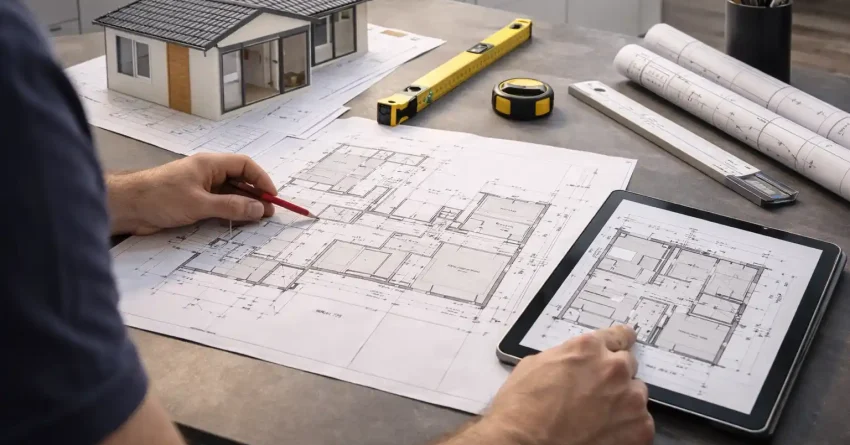
Most bathroom extensions in Sydney require a permit or council approval before any construction work begins. Whether you are converting a laundry into a second bathroom, extending your floor plan to accommodate a larger ensuite, or reconfiguring plumbing and structural walls, the approval pathway you take directly affects your timeline and budget.
Getting permits right from the start prevents costly rework, council fines, and project delays. This guide breaks down every stage of the process — from determining whether you need approval, to understanding costs, timeframes, common mistakes, and how permits fit into your overall bathroom renovation budget
What Are Extension Permits and Approvals in Sydney?
Extension permits and approvals are formal authorisations issued by your local council or a private certifier that give you legal permission to carry out building work on your property. In Sydney, any construction that changes the footprint, structure, or use of a dwelling typically requires approval before work can start.
These permits exist to ensure that building work complies with the Building Code of Australia (BCA), local planning controls, and relevant Australian Standards. They protect you as the homeowner, your neighbours, and the structural integrity of the building itself.
How Sydney Councils Define Home Extensions
Sydney’s local councils, including the City of Sydney, Inner West Council, Bayside Council, and others across the greater metropolitan area, classify a home extension as any building work that increases the floor area or changes the external configuration of an existing dwelling. This includes adding a new room, extending an existing room outward, or building upward with a second storey.
For bathroom renovations specifically, the term “extension” applies when you are physically expanding the bathroom footprint beyond its current walls, or when you are converting non-bathroom space (such as a hallway, bedroom, or laundry) into a new wet area. Internal cosmetic upgrades like replacing tiles, vanities, or tapware generally do not require a permit unless structural or plumbing changes are involved.
Each council in Sydney operates under the NSW Environmental Planning and Assessment Act 1979, but individual Local Environmental Plans (LEPs) and Development Control Plans (DCPs) add location-specific rules. The exact requirements vary depending on which local government area your property falls within.
Why Permits Matter for Bathroom and Home Renovations
Permits are not just bureaucratic paperwork. They serve as a legal record that your renovation was designed and built to code.
This matters in three critical ways. First, unpermitted work can result in council orders to demolish or rectify the construction at your own expense. Second, when you sell your property, buyers and their solicitors will check for building approvals, missing permits can delay or derail a sale, reduce your property value, or expose you to legal liability.
Third, insurance companies may refuse claims on damage related to unapproved building work. For bathroom renovations that involve waterproofing, plumbing relocation, or structural modifications, the permit process also ensures that critical compliance steps are completed and documented before the work is concealed behind tiles and finishes.
When Do You Need a Permit for a Bathroom Extension in Sydney?
Not every bathroom renovation requires a formal permit. The distinction depends on the scope of work, the type of changes being made, and how your property is classified under NSW planning legislation.
Exempt Development vs. Complying Development
NSW planning law categorises building work into three main streams: exempt development, complying development, and work requiring a full development application.
Exempt development covers minor, low-impact work that does not need any approval. For bathrooms, this typically includes like-for-like replacements of fixtures, repainting, replacing tapware, or installing new cabinetry where no structural, plumbing, or waterproofing changes are involved. The State Environmental Planning Policy (Exempt and Complying Development Codes) 2008, commonly known as the Codes SEPP, sets out the specific criteria.
Complying development is a fast-track approval pathway for work that meets predetermined standards. If your bathroom extension fits within the development standards outlined in the Codes SEPP, including setback requirements, height limits, and floor space ratios, you can obtain a Complying Development Certificate (CDC) from a private accredited certifier without going through the full council DA process. If your project does not meet those criteria, you will need to lodge a Development Application (DA) with your local council.
Common Bathroom Renovation Scenarios That Require Approval
Understanding which scenarios trigger a permit requirement helps you plan your budget and timeline accurately. The following situations typically require some form of approval in Sydney:
- Extending the bathroom footprint by moving or removing walls, particularly load-bearing walls
- Converting a non-wet area (bedroom, storage room, laundry) into a bathroom
- Adding a new bathroom or ensuite where one did not previously exist
- Relocating plumbing stacks or drainage lines
- Any work that changes the external appearance of the building, such as adding a window or altering the roofline
- Renovations in heritage-listed properties or heritage conservation areas
- Work on properties with specific overlays such as flood zones, bushfire-prone land, or strata title restrictions
If your renovation is purely cosmetic, replacing tiles, updating the vanity, swapping out a shower screen, and no structural or plumbing changes are involved, you are likely within the exempt development category. Even cosmetic renovations must comply with the BCA for waterproofing if the existing membrane is disturbed.
Strata Title Properties Additional Approval Requirements
If your property is part of a strata scheme, an apartment, townhouse, or villa, you face a dual approval requirement that many renovators overlook. Before lodging any council application, you need written approval from the owners corporation (body corporate) under the strata scheme’s by-laws.
Strata by-laws typically restrict work that affects common property, shared walls, waterproofing membranes, or building. A bathroom extension that touches any of these elements requires a special resolution or by-law amendment from the owners corporation, a process that can take weeks or months depending on the scheme’s governance.
We always advise strata owners to obtain owners corporation approval first, then proceed with the council or certifier pathway. Reversing that order creates significant risk if the strata committee refuses the work after council has already approved it.

Types of Permits and Approvals for Home Extensions in NSW
The NSW planning system involves several distinct permits and certificates. Each serves a different purpose in the approval and construction process.
Development Application (DA) Through Your Local Council
A Development Application is the most common approval pathway for home extensions that do not qualify as complying development. You lodge a DA with your local council, and it is assessed against the LEP, DCP, and any relevant state policies.
The DA process involves a merit-based assessment. Council planners evaluate your proposal against planning controls, consider potential impacts on neighbours and the streetscape, and may impose conditions of consent. For bathroom extensions, conditions often relate to stormwater management, waterproofing compliance, structural adequacy, and hours of construction work.
Neighbour notification is a standard part of the DA process. Council will notify adjoining property owners, and in some cases, submissions from neighbours can influence the outcome or conditions of your approval.
Complying Development Certificate (CDC) Through a Private Certifier
A CDC is a faster alternative to a DA. It is issued by an accredited certifier, either a private certifier or your local council, and confirms that your proposed work meets all the predetermined development standards in the Codes SEPP.
The key advantage of a CDC is speed. Because the assessment is standards-based rather than merit-based, there is no neighbour notification period and no council committee review. If your plans meet the criteria, the certificate can be issued in as little as 10 working days.
Not all properties qualify for the CDC pathway. Properties in heritage conservation areas, flood-prone land, or certain environmentally sensitive zones are often excluded. Your certifier will confirm eligibility before you proceed.
Construction Certificate (CC) and Occupation Certificate (OC)
Regardless of whether you obtain approval through a DA or CDC, you also need a Construction Certificate before building work begins. The CC confirms that the detailed construction plans and specifications comply with the BCA and the conditions of your DA or CDC.
Once construction is complete, an Occupation Certificate (OC) is issued to confirm that the building work has been carried out in accordance with the approved plans and is suitable for occupation. For bathroom extensions, the OC process includes verification that waterproofing, plumbing, and structural work have passed all required inspections.
Skipping the OC is one of the most consequential mistakes a renovator can make.
Without it, you have no formal record that the completed work is compliant, which creates problems at resale and with insurance.
Owner-Builder Permits in NSW
If you plan to manage and carry out the building work yourself rather than engaging a licensed contractor, you need an owner-builder permit from NSW Fair Trading. This permit is available to owner-occupiers for residential building work valued at more than $10,000.
To obtain an owner-builder permit, you must complete an approved owner-builder course and demonstrate that you hold or will arrange the required licences for specialist trades, including licensed plumbers and electricians. Owner-builders are personally responsible for ensuring all work complies with the BCA and the conditions of any DA or CDC.
We work with owner-builders regularly and the most common issue we see is underestimating the compliance documentation required at each inspection stage. Getting that right from the start saves significant time and cost.
The Step-by-Step Permit Application Process in Sydney
Navigating the permit process is more straightforward when you understand each stage. Here is the typical sequence for a bathroom extension in Sydney.
Pre-Application Research and Site Assessment
Before engaging designers or drafting plans, confirm the planning controls that apply to your property. You can access your property’s zoning, heritage status, and applicable overlays through the NSW Planning Portal. Your local council’s website will also have the relevant LEP and DCP documents.
At this stage, identify whether your project is likely to qualify as complying development or will require a DA. Many councils offer pre-DA meetings or duty planner where you can discuss your proposal informally before committing to an application.
A site assessment by a qualified building professional can also identify potential issues early, easements, setback constraints, or structural limitations that could affect your design and approval pathway.
Preparing Plans and Documentation
Your application will require detailed architectural plans, typically prepared by a registered architect or qualified building designer. For a bathroom extension, the documentation package usually includes:
- Site plan showing the property boundaries, existing structures, and proposed extension
- Floor plans showing the existing and proposed layouts
- Elevations and sections showing height, materials, and external finishes
- A BASIX certificate (Building Sustainability Index) — mandatory for all residential development in NSW; it assesses your project’s energy efficiency, water consumption, and thermal comfort performance against state benchmarks
- Structural engineering drawings if load-bearing walls are being modified or new footings are required
- A stormwater management plan if the extension changes the impervious area of the site
- A statement of environmental effects (SEE) for DA applications
The quality and completeness of your documentation directly affects how quickly your application is processed. Incomplete applications are the single most common cause of delays.
Lodging Your Application and Council Review Timelines
DA applications in Sydney are lodged through the NSW Planning Portal. CDC applications can be lodged directly with your chosen accredited certifier.
Once lodged, a DA enters the assessment phase. Council planners review the proposal, conduct neighbour notification (typically 14 days), and may request additional information. The statutory assessment period for a standard DA is 40 calendar days, but in practice, many councils in Sydney take longer, particularly for complex proposals or when additional information is requested.
CDC applications are assessed against the Codes SEPP standards and must be determined within 10 working days of receiving a complete application.
Inspections, Conditions, and Final Sign-Off
Your approval will include conditions that must be met before, during, and after construction. Common conditions for bathroom extensions include mandatory inspections at key stages: footings, framing, waterproofing, and final completion.
The principal certifying authority (PCA), either your council or a private certifier, conducts these inspections. The waterproofing inspection is particularly critical for bathroom work. Under AS 3740 (Waterproofing of Domestic Wet Areas), the membrane must be inspected and approved before any tiling begins, the certifier checks coverage, upstand heights, and bond-breaker placement. If this inspection is missed, the certifier may require tiles to be removed for verification.
After all inspections are passed and conditions are satisfied, the PCA issues the Occupation Certificate, formally completing the approval process.
What Happens If Your DA Is Refused
A refused DA is not the end of the road. In NSW, you have two main options: lodge a modification to address the reasons for refusal and resubmit, or appeal the decision to the NSW Land and Environment Court within 6 months of the determination date.
Before appealing, we recommend requesting a meeting with the council planner to understand exactly which planning controls the proposal failed to meet. In many cases, a targeted design amendment resolves the issue without the cost and time of a court appeal.
If the refusal relates to a neighbour objection rather than a planning control breach, mediation through the Community Justice Centres NSW service is often a faster and less expensive path to resolution.
How Much Do Extension Permits and Approvals Cost in Sydney?
Permit costs are a real line item in your renovation budget. Understanding these costs upfront prevents surprises and helps you allocate funds accurately.
Council Application Fees and Certifier Costs
DA application fees are set by your local council and are typically calculated based on the estimated cost of the proposed work. For a bathroom extension with an estimated construction cost between $50,000 and $150,000, DA fees in Sydney generally range from $500 to $2,500, depending on the council and the complexity of the proposal.
CDC fees charged by private accredited certifiers typically range from $1,500 to $4,000 for residential extensions. This fee covers the assessment, determination, and the certifier acting as your PCA for inspections throughout the build.
Construction Certificate fees, if obtained separately from the CDC, generally add another $1,000 to $3,000 depending on the scope of work.
Professional Fees for Architects, Engineers, and Surveyors
The documentation required for your permit application involves professional that carry their own costs:
- Architectural or building design fees: $2,000 to $8,000 for a bathroom extension, depending on complexity and the level of design service
- Structural engineering: $1,500 to $4,000 for structural drawings and certification
- BASIX certificate preparation: $200 to $500
- Survey (if required): $500 to $1,500 for a registered surveyor to prepare or update a site survey
- Stormwater engineering (if required): $800 to $2,000
These professional fees often represent a larger portion of the total permit cost than the council application fee itself. Budgeting $5,000 to $15,000 for the complete permit and documentation package is a realistic range for most bathroom extensions in Sydney.
Hidden Permit Costs That Catch Renovators Off Guard
Several costs associated with the permit process are easy to overlook during initial budgeting:
- Additional information requests: If council requests further documentation, your architect or engineer may charge additional fees to prepare responses
- Section 7.12 or Section 7.11 contributions: For larger projects, councils may levy development contributions that can add thousands to your costs
- Long service levy: A mandatory levy of 0.25% of the total construction cost, payable to the Building and Construction Industry Long Service Payments Corporation before the Construction Certificate is issued
- Amended applications: If your design changes after approval, you may need to lodge a modification application (Section 4.55), which incurs additional fees
- Specialist reports: Some properties require additional reports such as heritage impact statements, arborist reports, or geotechnical assessments, each typically costing $1,000 to $5,000
Accounting for these potential extras when setting your renovation budget prevents the permit process from becoming an unexpected cost blowout.
How Long Does the Approval Process Take?
Timeframes for permits and approvals vary significantly depending on the approval pathway, the completeness of your application, and the workload of your council or certifier.
Typical Timeframes for DAs vs. CDCs
A Complying Development Certificate is the fastest pathway. With a complete application, a CDC can be determined within 10 working days, which translates to roughly two to three weeks in calendar time.
A Development Application has a statutory assessment period of 40 calendar days, but this clock can be paused if council requests additional information. In practice, straightforward DAs in Sydney typically take 8 to 12 weeks from lodgement to determination. More complex applications, or those that attract neighbour objections, can take 4 to 6 months or longer.
After DA approval, you still need to obtain a Construction Certificate before work can begin, which adds another 2 to 4 weeks. For budget planning purposes, allow a minimum of 4 weeks for the CDC pathway and 12 to 16 weeks for the DA pathway from initial application to being ready to start construction.
What Causes Delays and How to Avoid Them
Incomplete applications are the leading cause of permit delays in Sydney.
Missing documents, insufficient detail in plans, or an absent BASIX certificate will result in a request for additional information, which pauses the assessment clock and can add weeks to the process. Non-compliant designs that do not meet the planning controls for your property will require redesign and resubmission, this is why pre-application research is so valuable.
Neighbour objections during the DA notification period can extend the assessment if council needs to consider and respond to the issues raised. While you cannot prevent objections, clear and accurate plans that demonstrate compliance with setback, privacy, and overshadowing controls reduce the likelihood of substantive concerns. Council workload is outside your control, but lodging a complete, well-prepared application gives your project the best chance of moving through the queue efficiently.
Common Mistakes Homeowners Make with Extension Permits
Permit mistakes are among the most expensive errors in a renovation project. They cause delays, increase costs, and in serious cases, result in legal consequences.
Starting Work Without Proper Approval
Beginning construction before your permit is issued is the most serious mistake you can make. In NSW, carrying out work without the required approval is an offence under the Environmental Planning and Assessment Act. Councils have the power to issue stop-work orders, impose fines, and require demolition of unapproved work.
Beyond the legal risk, unapproved work cannot be inspected by a certifier, which means you will not receive an Occupation Certificate. This creates long-term problems for insurance coverage and property resale.
Even if you believe your work is exempt development, confirm this in writing with your council or certifier before starting. The cost of a brief consultation is negligible compared to the cost of getting it wrong.
Underestimating Documentation Requirements
Many homeowners assume that a simple sketch or a basic floor plan will be sufficient for a permit application. In reality, councils and certifiers require detailed, professionally prepared documentation that demonstrates compliance with all relevant codes and standards.
Submitting incomplete or substandard documentation results in requests for additional information, which delays your application and may incur additional professional fees. Investing in quality documentation from the outset is one of the most effective ways to keep your project on schedule.
Ignoring Neighbour Notification and Heritage Overlays
If your property is in a heritage conservation area or is individually heritage-listed, additional assessment criteria apply. There are two distinct heritage categories in NSW: items listed on the State Heritage Register (managed by the NSW Heritage Office) and local heritage items listed in your council’s LEP. Each carries different assessment requirements, and the design must demonstrate compatibility with the heritage significance of the item, not just avoid obvious harm.
Heritage impact statements are typically required, and the design may need to respond to specific heritage guidelines around materials, scale, and setbacks. Failing to account for these requirements at the design stage can result in a refused application or significant redesign costs.
Similarly, underestimating the neighbour notification process can cause problems. If your extension affects a neighbour’s privacy, sunlight access, or views, and your plans do not adequately address these impacts, objections can delay or complicate your approval. Proactive communication with neighbours before lodging your application helps manage expectations and reduces the risk of formal objections.
How Extension Permits Affect Your Bathroom Renovation Budget
Permits and approvals are not separate from your renovation budget. They are an integral part of it. Understanding how permit costs and timelines interact with your overall project plan is essential for accurate budgeting.
Factoring Permit Costs into Your Overall Renovation Budget
For a typical bathroom extension in Sydney, permit-related costs, including council fees, professional documentation, and certifier fees, can represent 5% to 15% of the total project cost. On a $60,000 bathroom extension, that translates to $3,000 to $9,000 in permit-related expenses.
These costs should be included in your renovation budget from the earliest planning stage, not treated as an afterthought. When comparing quotes from contractors, ask whether permit coordination and documentation costs are included or additional. A transparent contractor will itemise these costs clearly so you can see exactly where your money is going.
How Approval Delays Impact Project Scheduling and Costs
Permit delays have a direct financial impact beyond the application fees themselves. If your builder has scheduled your project and the permit is delayed, you may lose your place in their construction schedule. Rescheduling can push your project back by weeks or months, particularly during busy periods in the Sydney renovation market.
Extended timelines also mean longer periods of disruption to your home, potential additional rental costs if you are living elsewhere during the renovation, and the risk of material price increases between quoting and construction. Building a realistic buffer into your project timeline, typically 4 to 6 weeks beyond the expected approval date, protects your budget from the cascading costs of permit delays.
How a Renovation Contractor Helps Navigate Permits and Approvals
The permit process involves multiple professionals, documents, and regulatory bodies. Coordinating these elements is a project management task in itself.
End-to-End Project Coordination from Permits to Completion
An experienced renovation contractor manages the permit process as part of the overall project delivery. This includes coordinating with architects and engineers to prepare documentation, liaising with council or certifiers on your behalf, scheduling required inspections at the correct construction stages, and ensuring all conditions of consent are met before the Occupation Certificate is issued.
This coordination removes the burden from you as the homeowner and reduces the risk of miscommunication between separate professionals. When one team manages the entire process, from permit application through to final handover, each stage flows into the next without gaps or duplicated effort.
Why Working with an Experienced Sydney Contractor Saves Time and Money
A contractor who regularly works across Sydney’s local government areas understands the specific requirements and expectations of different councils. They know which approval pathway is most efficient for your project, which certifiers are responsive and thorough, and how to prepare documentation that meets the standard required for a smooth assessment.
This experience translates directly into time and cost savings. Fewer requests for additional information, fewer design revisions, and better-coordinated inspections mean your project moves from approval to completion faster and with fewer budget surprises. For homeowners and investors planning a bathroom extension, that practical knowledge is one of the most valuable things a contractor brings to the table.
Conclusion
Extension permits and approvals are a fundamental part of any bathroom extension project in Sydney. Understanding the difference between exempt development, complying development, and full development applications, along with realistic cost and timeline expectations, puts you in control of your renovation budget and schedule.
The permit process protects your investment, ensures your renovation is built to code, and provides the documentation you need for insurance and resale. Treating permits as a core budget item rather than an unexpected expense is one of the most effective ways to avoid cost blowouts and project delays.
At Sydney Home Renovation, we coordinate the entire permit and approval process as part of our end-to-end bathroom renovation service, from pre-application research and documentation through to final Occupation Certificate. Contact us today to get clear, honest guidance on exactly what approvals your project needs and what they will cost.
Frequently Asked Questions
Do I need council approval to renovate my bathroom in Sydney?
It depends on the scope. Cosmetic upgrades like replacing tiles or tapware typically fall under exempt development. Moving walls, relocating plumbing, or extending the footprint requires a CDC or DA.
What is the difference between a DA and a CDC in NSW?
A DA is a merit-based assessment lodged with your local council, typically taking 8 to 12 weeks. A CDC is a faster, standards-based approval issued by a private certifier, usually within 10 working days, but only if your project meets specific criteria.
How much does a development application cost in Sydney?
DA fees vary by council and are based on the estimated construction cost. For a bathroom extension, expect DA fees of $500 to $2,500, plus professional documentation costs of $5,000 to $15,000 for architects, engineers, and required reports.
Can I start renovation work while waiting for permit approval?
No. Starting construction before your permit is issued is illegal in NSW and can result in stop-work orders, fines, and orders to demolish unapproved work. Always wait until you have the relevant approval and Construction Certificate before any building work begins.
What happens if I renovate without a permit in NSW?
Councils can issue fines, stop-work orders, and require you to demolish or rectify unapproved work at your own cost. You will also be unable to obtain an Occupation Certificate, which creates problems with insurance and when selling your property.
How long does a complying development certificate take in Sydney?
A CDC must be determined within 10 working days of receiving a complete application — approximately two to three weeks from lodgement, provided all documentation is complete and the proposal meets the relevant development standards.
Do I need a permit to move plumbing in a bathroom renovation?
Relocating plumbing does not always require a DA or CDC on its own, but it does require licensed plumbing work compliant with the Plumbing Code of Australia. If plumbing relocation is part of a broader structural change or extension, the overall project will likely trigger a permit requirement. A licensed plumber must also lodge a Notice of Work with NSW Fair Trading.


