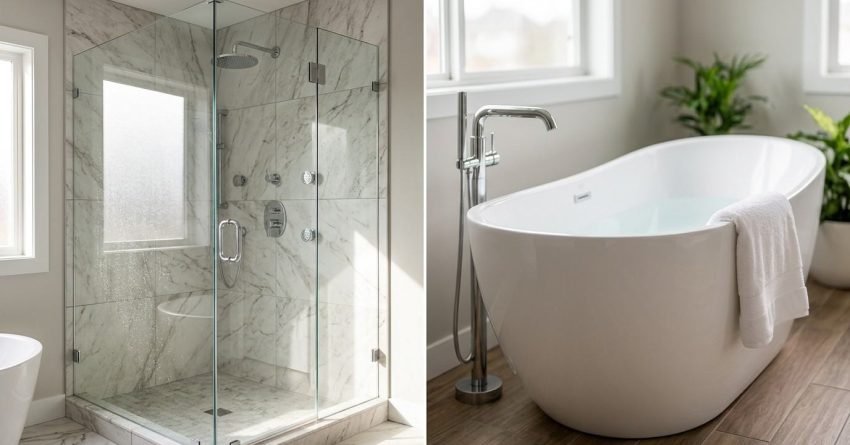
Installing a shower typically costs between $2,500 and $6,500 in Sydney, while bathtub installation ranges from $3,000 to $9,000 or more. The price gap comes down to labour complexity, material choices, and structural requirements unique to each fixture.
We know choosing between a shower and bathtub affects your renovation budget more than most homeowners expect. Understanding the real costs helps you avoid surprises and allocate funds where they matter most.
This guide breaks down installation costs for both options, explains what drives pricing differences, and shows you how to make the right choice for your bathroom renovation budget and lifestyle.
Quick Answer: Shower vs Bathtub Installation Costs in Sydney
For Sydney homeowners planning a bathroom renovation, the bottom line is clear. Showers are generally cheaper to install than bathtubs.
However, the final cost depends heavily on your specific choices and existing bathroom conditions.
Average Shower Installation Cost
A standard shower installation in Sydney ranges from $2,500 to $6,500 for a complete setup. This includes the shower base or tiled floor, waterproofing, screen or enclosure, mixer tap, and showerhead.
Walk-in showers with frameless glass screens sit at the higher end, while prefabricated shower units with basic enclosures cost less. Budget shower installations using acrylic bases and framed screens can come in under $3,000 with straightforward plumbing. Custom-tiled showers with niche shelving and premium fixtures push costs toward $8,000 or beyond.
Average Bathtub Installation Cost
Bathtub installation typically costs between $3,000 and $9,000 in Sydney, depending on the tub type and installation complexity. A basic drop-in acrylic bathtub with standard tapware sits at the lower end.
Freestanding baths, spa baths, or built-in designs with tiled surrounds increase costs significantly. The higher price reflects additional labour for structural support, more extensive plumbing work, and finishing requirements around the tub. Freestanding bathtubs alone can cost $1,500 to $5,000 before installation even begins.
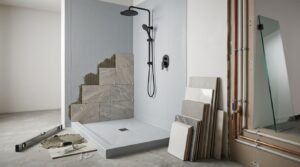
What Factors Affect Shower Installation Costs
Several variables determine your final shower installation price. We find that understanding these factors helps you control costs and make informed decisions during renovation planning.
Shower Type and Configuration
The shower design you choose has the biggest impact on cost. Prefabricated acrylic shower units cost $400 to $1,200 for the base and walls combined. Fully tiled showers require more labour and materials, adding $1,500 to $3,500 for tiling alone.
Walk-in showers without doors need precise floor grading for drainage, which increases labour time. Shower-over-bath configurations use existing tub plumbing but require waterproofing up the walls.
Waterproofing and Tiling Requirements
Waterproofing is mandatory for shower installations across NSW, and we treat it as non-negotiable on every project we run. Professional waterproofing costs $500 to $1,200 depending on shower size and membrane type. Cutting corners here leads to costly water damage repairs later.
Tiling costs vary based on tile size, pattern complexity, and material. Standard ceramic tiles run $30 to $60 per square metre installed. Large-format porcelain or natural stone can exceed $150 per square metre with labour, according to Housing Industry Association cost guidance.
Plumbing Modifications
When your new shower sits in the same location as existing plumbing, connection costs stay minimal at $300 to $600. Relocating the shower or adding new drain points requires cutting into floors and walls, which pushes plumbing costs to $1,000 to $2,500 or more.
Older Sydney homes with galvanised or copper pipes may need upgrades to modern PEX or copper connections. This adds to the overall plumbing budget.
Fixtures and Fittings Quality
Shower mixers, heads, and screens range dramatically in price. A basic mixer and showerhead set costs $150 to $400. Premium rain showerheads with thermostatic mixers run $600 to $1,500 or higher.
Shower screens vary from $300 for framed options to $1,200 or more for frameless glass panels. Semi-frameless designs offer a middle ground at $500 to $800.
What Factors Affect Bathtub Installation Costs
Bathtub installations involve different cost drivers than showers. The tub itself, structural considerations, and finishing work all contribute to higher overall expenses.
Bathtub Type and Material
Bathtub prices vary enormously based on material and style:
- Acrylic drop-in tubs: $300 to $800
- Steel enamel tubs: $400 to $1,000
- Acrylic freestanding tubs: $800 to $2,500
- Stone composite freestanding tubs: $2,000 to $5,000
- Cast iron tubs: $1,500 to $4,000
Spa baths with jets add $1,000 to $3,000 to the base tub price, plus electrical work for the pump system.
Structural Support Requirements
Freestanding and cast iron bathtubs are heavy. A filled cast iron tub can weigh over 500kg. Many Sydney homes, especially older properties and upper-floor bathrooms, need floor reinforcement before installation.
Structural assessment and reinforcement costs $500 to $2,000 depending on the work required. Drop-in tubs in timber-framed surrounds also need proper support structures built by a carpenter.
Plumbing and Drainage Work
Bathtub plumbing involves larger drain pipes than showers, typically 50mm versus 40mm. If existing drainage does not accommodate this, modifications cost $400 to $1,200.
Freestanding tubs need floor-mounted or wall-mounted tapware with supply lines run to the tub location. This exposed plumbing work adds $600 to $1,500 compared to standard drop-in installations.
Surround and Finishing Options
Drop-in bathtubs require a built surround, typically tiled or panelled. Constructing and finishing a tub surround costs $800 to $2,500 depending on materials and complexity.
Freestanding tubs eliminate surround costs but may need feature wall tiling or floor upgrades around the tub. We usually budget $500 to $1,500 for these finishing touches.
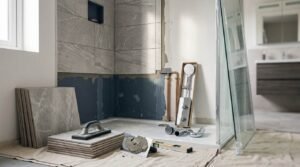
Full Cost Breakdown: Shower Installation in Sydney
Here is what a typical shower installation costs when we break down each component. These figures reflect current Sydney market rates for licensed contractors.
Labour Costs for Shower Installation
Labour represents 40% to 50% of total shower installation costs. Expect to pay:
- Plumber: $80 to $120 per hour (4–8 hours typical)
- Tiler: $50 to $80 per square metre
- Waterproofer: $500 to $1,200 (fixed price common)
- Carpenter (if needed): $60 to $90 per hour
Total labour for a standard tiled shower runs $1,200 to $2,800. Prefabricated shower installations require less labour at $600 to $1,200.
Material and Fitting Allowances
Materials for a mid-range shower installation include:
- Shower base or tray: $200 to $600
- Tiles (walls and floor): $400 to $1,200
- Waterproofing membrane: $150 to $300
- Shower screen: $400 to $1,000
- Mixer and showerhead: $250 to $600
- Drain and waste fittings: $80 to $200
Total materials typically range from $1,500 to $3,900 depending on quality selections.
Hidden Costs to Budget For
Several expenses catch renovators off guard:
- Asbestos testing (pre-1990 homes): $50 to $150
- Asbestos removal (if found): $500 to $2,000+
- Electrical work for exhaust fans: $200 to $500
- Waste disposal fees: $100 to $300
- Building permits (if required): $200 to $500
- Unexpected plumbing repairs: $300 to $1,000
We recommend adding 10% to 15% contingency to your shower budget for these potential extras.
Full Cost Breakdown: Bathtub Installation in Sydney
Bathtub installations involve more components and typically higher labour costs. Here is the detailed breakdown for Sydney homeowners.
Labour Costs for Bathtub Installation
Bathtub installation labour costs reflect the additional complexity:
- Plumber: $80 to $120 per hour (6–12 hours typical)
- Tiler (for surrounds): $50 to $80 per square metre
- Carpenter (for framing): $60 to $90 per hour (4–8 hours)
- Electrician (spa baths only): $80 to $120 per hour
Total labour for a standard bathtub installation runs $1,800 to $4,000. Freestanding tubs with exposed plumbing or spa bath installations sit at the higher end.
Material and Fitting Allowances
Materials for a mid-range bathtub installation include:
- Bathtub: $500 to $2,000
- Tapware and spout: $300 to $800
- Drain and overflow fittings: $100 to $250
- Surround framing materials: $200 to $500
- Tiles for surround: $300 to $800
- Waterproofing (if shower-over-bath): $400 to $800
Total materials typically range from $1,900 to $5,150 depending on tub selection and finishing choices.
Hidden Costs to Budget For
Bathtub-specific hidden costs include:
- Floor reinforcement: $500 to $2,000
- Drain pipe upgrades: $300 to $800
- Access panel installation: $150 to $400
- Silicone and sealant maintenance: $50 to $150
- Waste disposal (old tub removal): $150 to $400
We suggest budgeting 15% to 20% contingency for bathtub projects due to higher structural uncertainty.
Shower vs Bathtub: Side-by-Side Cost Comparison Table
| Cost Category | Shower (Budget) | Shower (Mid-Range) | Shower (Premium) | Bathtub (Budget) | Bathtub (Mid-Range) | Bathtub (Premium) |
| Fixture Cost | $400–$800 | $800–$1,500 | $1,500–$3,000 | $300–$800 | $800–$2,000 | $2,000–$5,000 |
| Labour | $600–$1,200 | $1,200–$2,000 | $2,000–$3,500 | $1,000–$1,800 | $1,800–$3,000 | $3,000–$5,000 |
| Materials | $800–$1,500 | $1,500–$2,500 | $2,500–$4,000 | $700–$1,500 | $1,500–$2,500 | $2,500–$4,500 |
| Hidden Costs | $200–$500 | $400–$800 | $600–$1,200 | $300–$700 | $600–$1,200 | $1,000–$2,000 |
| Total Range | $2,000–$4,000 | $3,900–$6,800 | $6,600–$11,700 | $2,300–$4,800 | $4,700–$8,700 | $8,500–$16,500 |
Note: Figures represent Sydney metropolitan area pricing for 2025. Actual costs vary based on specific project requirements.
When Is a Shower the More Cost-Effective Choice
Showers make financial sense in several common renovation scenarios. Recognising these situations helps you allocate your budget effectively.
Small Bathroom Renovations
Bathrooms under 4 square metres benefit most from shower-only designs. Showers take up less floor space, leaving room for adequate vanity and toilet clearances.
The smaller footprint also means less tiling, waterproofing, and material costs overall. In tight spaces, a well-designed shower feels more spacious than a cramped bathtub. You will save $1,500 to $3,000 choosing a shower over a bathtub in compact bathrooms while gaining functional space.
Budget-Conscious Projects
When renovation funds are limited, showers deliver better value per dollar spent. A quality shower installation at $4,000 to $5,000 provides a fully functional, attractive result.
Showers also have lower ongoing costs. They use less water per use, which reduces utility bills over the life of the fixture. Maintenance requirements are simpler too, with fewer seals and joints to monitor.
Accessibility and Ageing-in-Place Needs
Walk-in showers with level or low-threshold entries support accessibility better than bathtubs. Installing grab rails, fold-down seats, and handheld showerheads costs less in a shower configuration.
For homeowners planning to age in place, a shower investment now avoids costly bathtub-to-shower conversion work later. The $3,000 to $5,000 spent on an accessible shower today prevents $6,000 to $10,000 in conversion costs down the track.
Can You DIY Part of the Installation to Save Money?
Some homeowners try to cut costs by handling demolition, tiling prep, or fixture selection themselves. We generally advise against DIY plumbing or waterproofing work.
Unlicensed waterproofing voids compliance certificates and can void your home insurance if a leak causes damage later. Licensed plumbing work is also a legal requirement in NSW for anything beyond fixture swaps.
Where DIY genuinely saves money is in demolition, painting, and sourcing your own tiles or tapware ahead of trade quotes. This can trim $300 to $800 off labour without touching regulated trade work.
When Is a Bathtub Worth the Extra Investment
Despite higher costs, bathtubs remain the right choice for specific homeowner situations. Understanding when the investment pays off helps you decide confidently.
Family Homes with Young Children
Bathing young children in a shower is difficult and inefficient. Families with children under six typically use bathtubs daily for several years.
The convenience and safety of bathtub bathing justifies the extra installation cost for this demographic. If you are renovating a family bathroom that will serve young children for the next five to ten years, a bathtub provides genuine daily value that showers cannot match.
Resale Value Considerations
Sydney real estate agents consistently note that homes with at least one bathtub sell more easily than shower-only properties. Buyers with young families, or those planning families, specifically seek homes with bathtubs.
Removing the only bathtub from a home can narrow buyer interest and potentially affect sale price. We recommend weighing cost savings against potential resale impacts before removing the last bathtub in a property.
Lifestyle and Relaxation Priorities
For homeowners who genuinely use bathtubs for relaxation, the investment delivers ongoing lifestyle value. A quality soaking tub provides years of stress relief and self-care opportunities that showers cannot replicate.
Be honest about actual bathing habits before committing budget here. A bathtub used a handful of times a year becomes expensive unused space, while weekly use makes the investment worthwhile.
How to Reduce Installation Costs Without Sacrificing Quality
Smart planning reduces bathroom fixture costs without compromising on durability or appearance. These strategies help Sydney renovators maximise their budgets.
Keep Existing Plumbing Locations
The single biggest cost-saving decision is positioning your new shower or bathtub where existing plumbing already runs. Moving drain points or supply lines adds $800 to $2,500 in plumbing labour alone.
We always design around existing waste and water connections wherever possible. Even shifting a fixture 300mm can trigger significant plumbing modifications.
Choose Mid-Range Fixtures Strategically
Premium fixtures do not always deliver proportional value. A $400 mixer performs identically to a $1,200 mixer in daily use, with the difference often coming down to brand prestige and minor aesthetic details.
We recommend investing in quality where it matters most: waterproofing, drainage, and structural elements. Save on visible fixtures that can be upgraded later without major renovation work.
Get Itemised Quotes from Licensed Contractors
Request detailed, itemised quotes from at least three licensed bathroom renovation contractors. Itemisation reveals where costs concentrate and where you might negotiate or adjust specifications.
Avoid lump-sum quotes that hide individual component costs. Transparent, itemised pricing helps you understand exactly what you are paying for and make informed trade-offs.
Common Budget Mistakes When Choosing Between Shower and Bathtub
Many renovators make predictable errors that blow budgets or create regret. Avoiding these mistakes keeps your project on track financially and functionally.
Underestimating Waterproofing Costs
Waterproofing is legally required and critically important, yet many DIY budgets allocate only $200 to $300 for this work. Professional waterproofing with certification costs $500 to $1,200 and is worth every dollar.
Failed waterproofing leads to water damage costing $10,000 to $30,000 or more to repair, according to NSW Fair Trading guidance on building defects. We never cut corners on this essential protection.
Ignoring Long-Term Maintenance Expenses
Bathtubs with jet systems require ongoing maintenance. Pump servicing, jet cleaning, and seal replacements add $200 to $500 annually.
Standard bathtubs and showers have minimal maintenance costs by comparison. We encourage clients to consider five-year and ten-year ownership costs, not just installation prices.
Choosing Based on Price Alone
The cheapest quote often reflects cut corners, unlicensed work, or inadequate materials. Bathroom renovations involve waterproofing, plumbing, and potentially electrical work, all requiring licensed tradespeople in NSW.
Verify contractor licenses through NSW Fair Trading before committing to any quote. The lowest price means nothing if the work fails inspection or causes damage within years.
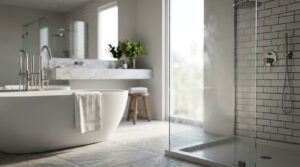
Does Your Bathroom Need Both a Shower and Bathtub
Many Sydney homeowners wonder whether combination solutions offer the best of both worlds. Understanding your options helps you decide if this approach suits your space and budget.
Combination Units and Their Costs
Shower-over-bath configurations provide both functions in one footprint. Installation costs range from $4,000 to $8,000 depending on bathtub selection and shower fitting quality.
This approach works well when:
- You have only one bathroom
- Space prevents separate shower and bath
- Budget does not allow two complete installations
- You want bathing flexibility without major compromise
The trade-off is that neither function is optimised. Stepping over a tub rim to shower is less convenient than a walk-in shower, and bathing in a shower-over-bath tub is less comfortable than a dedicated soaking tub.
Space and Layout Considerations
Separate shower and bathtub installations require a minimum of 6 to 8 square metres of bathroom space to function comfortably. Smaller bathrooms force a choice between fixtures or a combination approach.
If your bathroom measures 8 square metres or more, separate installations often make sense. The additional $3,000 to $5,000 for a second fixture provides genuine functional improvement and potential resale value.
Conclusion
Showers cost less to install than bathtubs in most Sydney bathroom renovations, with typical savings of $1,000 to $4,000 depending on specifications. However, the right choice depends on your household needs, bathroom size, and long-term plans rather than installation cost alone.
Understanding the full cost breakdown, including labour, materials, and hidden expenses, empowers you to budget accurately and avoid the surprises that derail renovation projects. Whether you choose a shower, bathtub, or combination, informed planning delivers better outcomes.
We help Sydney homeowners navigate bathroom renovation decisions with transparent pricing and practical expertise. Contact Sydney Home Renovation for an itemised quote that shows exactly what your shower or bathtub installation will cost, with no hidden surprises and honest guidance from start to finish.
Frequently Asked Questions
Is it cheaper to replace a bathtub with a shower in Sydney?
Yes, converting a bathtub to a shower typically costs $4,000 to $8,000 in Sydney. The conversion involves removing the existing tub, modifying plumbing, installing new waterproofing, and fitting the shower.
How much does a basic shower installation cost in Sydney?
A basic shower installation in Sydney costs $2,500 to $4,000, including a prefabricated base, framed screen, standard mixer, and professional waterproofing. This assumes existing plumbing is in a suitable location.
What is the cheapest type of bathtub to install?
Acrylic drop-in bathtubs are the most affordable option, with tub costs of $300 to $800 and straightforward installation. They are lightweight and fit standard tub surrounds without floor reinforcement.
Do bathtubs add value to a home in Sydney?
Having at least one bathtub in a Sydney home supports resale value, particularly for family-oriented buyers. Removing the only bathtub can narrow your buyer pool and potentially reduce offers.
How long does it take to install a shower vs a bathtub?
Shower installations typically take 2 to 4 days, including waterproofing cure time. Bathtub installations require 3 to 5 days due to additional framing, plumbing complexity, and surround finishing.
What hidden costs should I expect with bathroom fixture installation?
Common hidden costs include asbestos testing and removal, unexpected plumbing repairs, electrical upgrades, waste disposal fees, and permit costs. Budget 10% to 20% contingency above quoted prices.
Should I get a shower-bathtub combo to save money?
Shower-over-bath combinations cost $4,000 to $8,000 installed, less than separate installations combined. This suits single-bathroom homes or tight budgets, though neither function is fully optimised.