
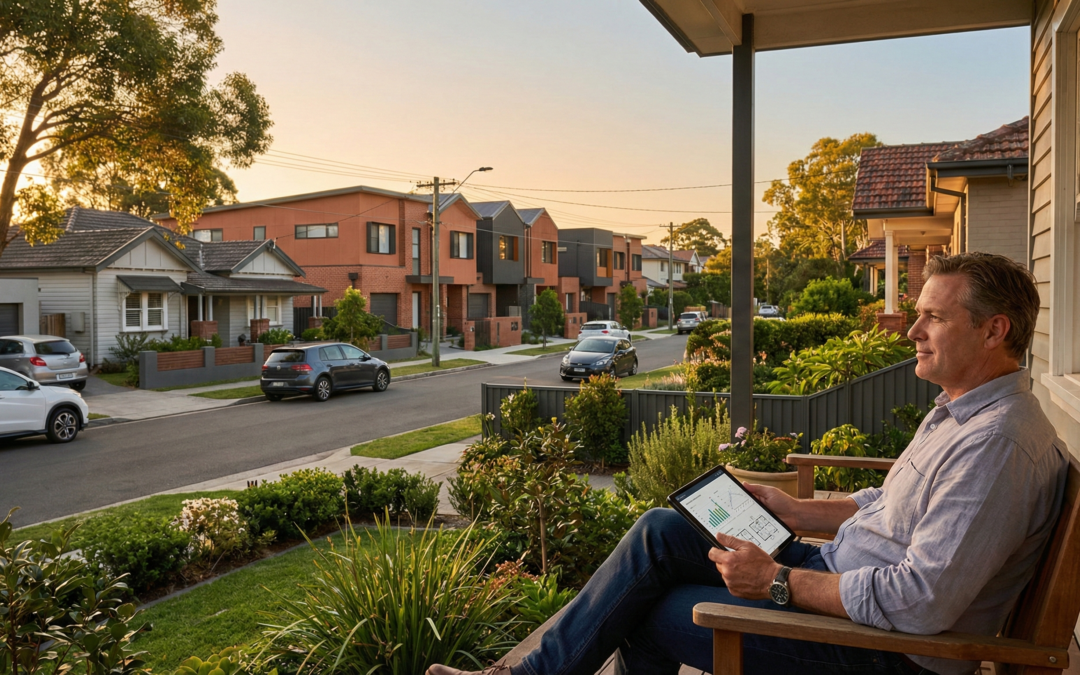
Australian house prices are forecast to grow between 3% and 6% nationally in 2026, though growth rates will vary significantly by city and property type. After a turbulent few years of rapid rises, corrections, and recovery, the property market is entering a more stable phase driven by population growth, housing supply constraints, and evolving interest rate conditions.
Understanding where prices are headed matters whether you’re planning a renovation, considering selling, or timing a property investment. The decisions you make now about your home could be worth tens of thousands more or less depending on market movements.
This guide breaks down the key factors influencing 2026 house prices, regional forecasts across Australian capitals, and practical insights for homeowners and investors navigating the year ahead.
What Are the Current House Price Trends Leading into 2026?
The Australian property market has demonstrated remarkable resilience through 2024 and into 2025. After the sharp correction of 2022, national dwelling values have recovered strongly, with CoreLogic data showing prices in most capital cities now exceeding their previous peaks.
Sydney and Melbourne, the two largest markets, have experienced divergent trajectories. Sydney prices rebounded faster, driven by persistent undersupply and strong migration inflows. Melbourne’s recovery has been slower, with higher vacancy rates and greater new housing supply moderating price growth.
The regional markets that boomed during the pandemic have stabilised. Areas like the Gold Coast, Sunshine Coast, and regional NSW experienced extraordinary growth between 2020 and 2022, but price momentum has cooled as remote work patterns normalise and affordability constraints bite.
How Have Interest Rates Shaped Recent Price Movements?
Interest rates remain the single most influential factor in property price movements. The Reserve Bank of Australia’s aggressive rate hiking cycle from 2022 to 2023 initially triggered price falls, but the market adapted faster than many economists predicted.
Borrowers demonstrated greater resilience than expected, with mortgage arrears remaining historically low despite higher repayments. This resilience, combined with chronic housing undersupply, meant prices stabilised and then recovered even while rates remained elevated.
The expectation of rate cuts has already been partially priced into current valuations. Markets are forward-looking, and buyer sentiment improved throughout 2024 as inflation moderated and the prospect of monetary easing became clearer.
What Role Has Population Growth Played?
Australia’s population growth has been extraordinary by historical standards. Australian Bureau of Statistics figures show net overseas migration reached record levels in 2023, adding significant pressure to an already constrained housing market.
This population surge has created a fundamental supply-demand imbalance. Housing construction has failed to keep pace with population growth, with dwelling completions falling well short of the estimated requirement of approximately 240,000 new homes annually.
The population growth story is particularly acute in Sydney and Melbourne, which absorb the majority of new migrants. These cities face the dual challenge of accommodating new residents while also addressing existing housing shortages accumulated over decades of underbuilding.
What Factors Will Drive House Prices in 2026?
Multiple interconnected factors will determine whether house prices rise, fall, or plateau in 2026. Understanding these drivers helps homeowners and investors make informed decisions about renovations, purchases, and sales timing.
How Will Interest Rate Changes Impact Prices?
The trajectory of interest rates will significantly influence 2026 price movements. Most major bank economists forecast the RBA will begin cutting rates in 2025, with further reductions possible into 2026 depending on inflation outcomes.
Rate cuts typically boost borrowing capacity, allowing buyers to pay more for properties. A reduction of one percentage point in the cash rate can increase borrowing capacity by approximately 10%, directly translating into higher potential purchase prices.
However, the relationship between rates and prices is not linear. If rate cuts occur because of economic weakness or rising unemployment, the positive impact on prices could be offset by reduced buyer confidence and tighter lending standards.
What Impact Will Housing Supply Have?
Housing supply constraints will continue supporting prices in 2026. Construction activity has been hampered by labour shortages, elevated material costs, and planning delays that show little sign of rapid resolution.
The National Housing Accord target of 1.2 million new homes over five years from 2024 appears increasingly ambitious. Industry bodies have expressed scepticism about achieving these targets given current construction sector capacity and regulatory frameworks.
For existing homeowners, this supply shortage has positive implications for property values. Scarcity supports prices, and well-maintained or renovated properties in desirable locations will likely command premium prices in a supply-constrained market.
How Does Affordability Affect Price Growth?
Affordability constraints represent the primary headwind for continued price growth. Housing affordability has deteriorated significantly, with the median dwelling value to income ratio at historically elevated levels across most capital cities.
First home buyers face particular challenges, with deposit requirements and borrowing costs making entry into the market increasingly difficult. This affordability ceiling may moderate price growth even if other factors remain supportive.
Government intervention through schemes like the First Home Guarantee and various state-based incentives provides some demand support, but these measures address symptoms rather than the underlying supply shortage driving affordability challenges.
What Are the Regional House Price Forecasts for 2026?
Price growth will vary substantially across different Australian markets in 2026. Local factors including supply pipelines, economic conditions, and demographic trends create distinct outlooks for each capital city and regional area.
Sydney House Price Outlook
Sydney is forecast to experience moderate price growth of 4% to 6% in 2026, supported by persistent undersupply and strong population growth. The city’s status as Australia’s primary gateway for international migration ensures continued demand pressure.
The premium end of the Sydney market, particularly the Eastern Suburbs, North Shore, and Inner West, typically demonstrates greater resilience during uncertain periods. Buyers in these areas often have greater financial buffers and are less sensitive to interest rate movements.
For Sydney homeowners considering renovations, the outlook supports investment in quality improvements. A well-executed bathroom or kitchen renovation in Sydney can deliver strong returns in a market where buyers are willing to pay premiums for move-in-ready properties.
Melbourne House Price Outlook
Melbourne’s price growth is expected to be more modest at 2% to 4% in 2026. Higher housing supply relative to other capitals, combined with slower population growth recovery, creates a more balanced market dynamic.
The city’s inner and middle ring suburbs are likely to outperform outer growth corridors where new housing supply is more abundant. Established areas with limited development potential benefit from scarcity value that newer suburbs cannot replicate.
Melbourne investors and homeowners should focus on properties with renovation potential in established suburbs. Adding value through strategic improvements can generate returns even in a market with modest overall price growth.
Brisbane and Queensland Outlook
Brisbane and South East Queensland are forecast to see continued strong growth of 5% to 7% in 2026. Interstate migration, relative affordability compared to Sydney and Melbourne, and infrastructure investment supporting the 2032 Olympics underpin this positive outlook.
The Brisbane market has transformed from a historically underperforming capital to one of Australia’s strongest performers. This structural shift reflects changing lifestyle preferences and the region’s improved economic diversification.
Regional Queensland markets including the Gold Coast and Sunshine Coast face more mixed prospects. After exceptional pandemic-era growth, these markets are consolidating, though underlying demand from lifestyle buyers and retirees remains solid.
Perth and Adelaide Outlook
Perth is expected to deliver strong growth of 4% to 6% in 2026, driven by mining sector strength and population growth. The city experienced a prolonged downturn from 2014 to 2020 and is now in a sustained recovery phase.
Adelaide has emerged as one of Australia’s strongest performing markets, with growth of 5% to 7% forecast for 2026. Relative affordability, a diversified economy, and limited new housing supply support continued price appreciation.
Both cities offer opportunities for homeowners and investors seeking markets with stronger growth potential than the larger eastern seaboard capitals.
How Should Homeowners Prepare for 2026 Market Conditions?
Understanding market direction helps homeowners make better decisions about renovations, maintenance, and potential sales. Strategic preparation can maximise property value regardless of whether you plan to sell or stay.
When Is the Right Time to Renovate?
Renovating before a period of expected price growth can amplify returns on improvement spending. If prices rise 5% and your renovation adds 10% to your property’s value, you benefit from both the market uplift and the value-add from improvements.
Bathroom and kitchen renovations consistently deliver the strongest returns relative to cost. These high-use spaces significantly influence buyer perceptions and can differentiate your property in a competitive market.
Timing renovation completion for spring selling seasons, when buyer activity peaks, maximises exposure to motivated purchasers. Planning renovation projects now for completion in early 2026 positions your property optimally if you’re considering selling.
What Renovations Add Most Value in a Growing Market?
In a rising market, renovations that expand usable space or improve functionality typically deliver superior returns. Adding a bathroom, creating open-plan living areas, or improving outdoor entertaining spaces appeal to buyers willing to pay premiums for lifestyle features.
Quality finishes matter more in stronger markets where buyers have greater purchasing power. Investing in durable, attractive materials for bathroom renovations pays dividends when buyers are comparing properties and making emotional purchasing decisions.
Energy efficiency improvements are increasingly valued by buyers conscious of running costs. Solar panels, improved insulation, and efficient hot water systems add both immediate appeal and long-term value.
Should You Sell Before or During Price Growth?
Timing property sales is notoriously difficult, and attempting to pick market peaks often leads to suboptimal outcomes. If your personal circumstances support selling, waiting for uncertain future gains introduces risk.
Selling during a period of steady growth, as forecast for 2026, typically produces good outcomes. Buyer confidence is higher when prices are rising, and properties spend less time on market, reducing holding costs and stress.
If you’re planning to buy another property after selling, market timing matters less since you’re both selling and buying in the same conditions. Focus on finding the right property rather than attempting to time market movements.
What Should Property Investors Consider for 2026?
Property investors face different considerations than owner-occupiers when evaluating 2026 market conditions. Rental yields, capital growth potential, and portfolio strategy all influence investment decisions.
Which Markets Offer Best Investment Potential?
Markets combining solid capital growth prospects with reasonable rental yields offer the most attractive investment profiles for 2026. Brisbane, Adelaide, and Perth currently present this combination more favourably than Sydney or Melbourne.
Investors should consider markets where population growth exceeds housing supply growth. This fundamental imbalance supports both rental demand and price appreciation over time.
Secondary cities and regional centres with diversified economies merit consideration. Areas dependent on single industries carry higher risk, while those with healthcare, education, and government employment bases offer greater stability.
How Do Renovation Strategies Differ for Investors?
Investment property renovations should focus on maximising rental returns and minimising vacancy periods rather than personal preferences. Durable, low-maintenance finishes that appeal to broad tenant demographics deliver better outcomes than highly personalised designs.
Bathroom renovations in investment properties should prioritise functionality, water efficiency, and easy cleaning. Tenants value practical features, and landlords benefit from reduced maintenance requirements and water costs.
Budget allocation for investment renovations should target improvements that directly increase rental income. A renovated bathroom can justify rent increases of $20 to $50 per week, delivering strong returns on renovation spending over the investment holding period.
What Risks Should Investors Monitor?
Interest rate movements remain the primary risk for leveraged property investors. While rate cuts are expected, unexpected inflation persistence could delay or reduce the magnitude of monetary easing.
Regulatory changes affecting investors, including potential changes to negative gearing or capital gains tax treatment, represent political risks that could impact investment returns. Diversification across asset classes provides some protection against property-specific policy changes.
Rental market conditions vary by location, and investors should monitor vacancy rates and rental growth in their target markets. Strong capital growth means little if properties sit vacant or rents decline.
Conclusion
The Australian property market is positioned for moderate growth in 2026, with national prices forecast to rise between 3% and 6% depending on interest rate movements, population growth, and housing supply outcomes. Regional variations will be significant, with Brisbane, Adelaide, and Perth likely outperforming Sydney and Melbourne.
For homeowners and investors, this outlook supports strategic property improvements that add value and appeal. Well-planned renovations, particularly in high-impact areas like bathrooms and kitchens, can amplify returns in a growing market while improving liveability and rental potential.
At Sydney Home Renovation, we help homeowners and investors maximise property value through quality bathroom renovations delivered on budget and on schedule. Contact our team to discuss how strategic improvements can position your property for the opportunities ahead in 2026 and beyond.
Frequently Asked Questions
Will house prices crash in 2026?
A house price crash is considered unlikely in 2026 given current market fundamentals. Chronic housing undersupply, strong population growth, and expected interest rate cuts provide support for prices. Most economists forecast modest growth rather than significant declines.
How much will Sydney house prices rise in 2026?
Sydney house prices are forecast to grow between 4% and 6% in 2026. Persistent undersupply and strong migration inflows support continued price appreciation, though affordability constraints may moderate growth compared to previous boom periods.
Should I buy a house in 2026 or wait?
Timing property purchases based on market predictions is inherently uncertain. If you have stable employment, adequate deposit, and find a suitable property, buying when ready often produces better outcomes than waiting for perfect market conditions that may never arrive.
What will happen to interest rates in 2026?
Most economists expect the Reserve Bank of Australia to cut interest rates during 2025, with potential for further reductions in 2026 depending on inflation outcomes. Lower rates would increase borrowing capacity and likely support property prices.
Are regional house prices expected to grow in 2026?
Regional house price growth will vary significantly by location in 2026. Areas with diversified economies, population growth, and limited housing supply should see continued appreciation, while markets that experienced excessive pandemic-era growth may consolidate.
How does population growth affect house prices?
Population growth directly increases housing demand, supporting prices when supply cannot keep pace. Australia’s record migration levels have created significant demand pressure, particularly in Sydney and Melbourne, contributing to price growth despite higher interest rates.
Is 2026 a good time to renovate before selling?
Renovating before selling in 2026 could be strategically advantageous given forecast price growth. Quality improvements in kitchens and bathrooms can differentiate your property and command premium prices from buyers seeking move-in-ready homes in a competitive market.