
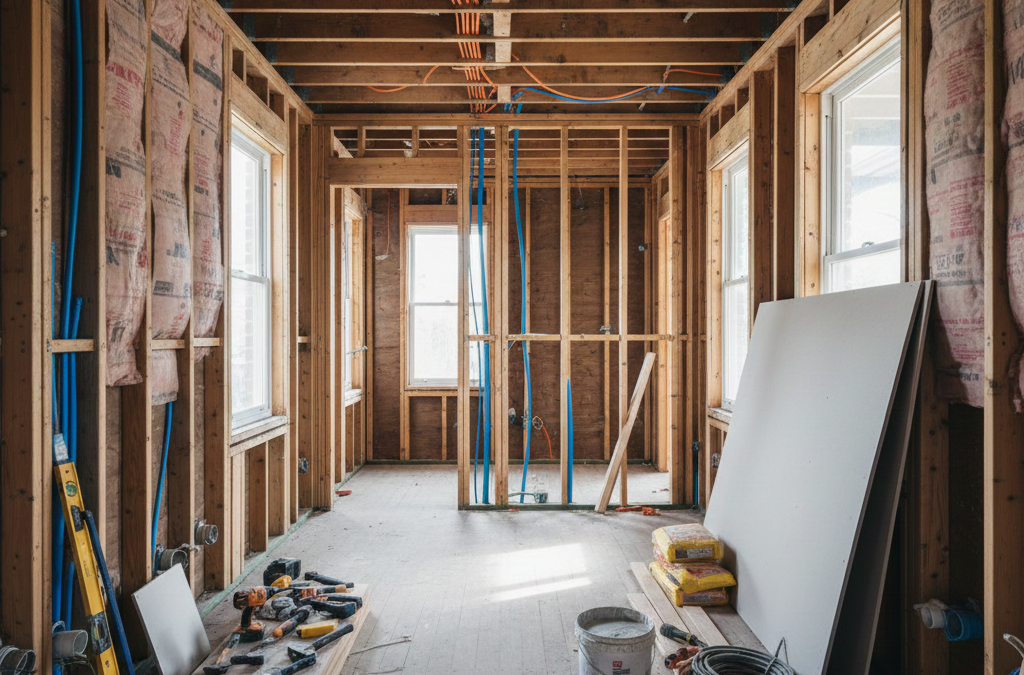
A whole home renovation in Sydney typically takes between 16 and 52 weeks depending on property size, scope of work, and council approval requirements. That range is wide for a reason. Every home carries its own structural history, compliance needs, and design complexity.
Whether you are gutting a two-bedroom apartment in the Inner West or transforming a four-bedroom family home on the North Shore, understanding the real timeline before you commit protects your budget, your sanity, and your end result. Delays cost money. Rushed decisions cost more.
This guide breaks down every phase of a whole home renovation, the factors that stretch or compress your schedule, how to align your budget with each stage, and the mistakes that catch Sydney homeowners off guard. If you are planning a full renovation, this is your roadmap.
What Is a Whole Home Renovation Timeline?
A whole home renovation timeline is the complete schedule of works required to renovate an entire property from start to finish. It covers every stage, from initial design and council approvals through demolition, structural work, fit-outs, and final handover. Unlike a single-room project, a whole home renovation coordinates multiple trades, overlapping phases, and sequential dependencies across the entire dwelling.
The timeline is not just a calendar. It is a project management tool that determines when money is spent, when trades arrive on site, and when decisions need to be locked in. Getting it wrong means budget blowouts, idle tradespeople, and months of unnecessary disruption.
How a Full Home Renovation Differs from Partial Upgrades
A bathroom renovation or kitchen upgrade operates in relative isolation. You are working within one room, with a contained set of trades and a predictable sequence. A whole home renovation is fundamentally different. It involves system-wide changes to plumbing, electrical, structural framing, and sometimes the building envelope itself.
When you renovate an entire home, every phase depends on the one before it. Plumbing rough-in cannot start until demolition is complete. Plastering cannot begin until electrical and plumbing are signed off. Kitchen and bathroom fit-outs wait for waterproofing cures. This sequential dependency is what makes the timeline both longer and more sensitive to disruption than any single-room project.
The coordination challenge also multiplies. Instead of managing two or three trades, a full renovation may require ten or more, including demolishers, structural engineers, plumbers, electricians, plasterers, waterproofers, tilers, carpenters, painters, and specialist installers. Scheduling these trades in the correct order, with minimal downtime between them, is the core skill of effective project management.
Why Sydney Renovations Follow a Different Timeline
Sydney’s renovation environment introduces variables that do not exist in many other Australian markets. Council approval processes vary significantly between local government areas. A Development Application (DA) in one council might take six weeks. In another, it could take sixteen. Complying Development Certificates (CDCs) offer a faster pathway for qualifying projects, but not every renovation scope fits within CDC parameters.
Heritage overlays, bushfire zones, flood mapping, and strata regulations all add layers of compliance that directly affect how long the planning phase takes. Sydney’s construction market is also one of the most competitive in Australia. Trade availability fluctuates with demand, and material supply chains serving the Sydney basin can experience bottlenecks, particularly for imported tiles, stone, and custom joinery.
Weather plays a role too. Sydney’s wet season can delay external work, roofing, and any phase that requires dry conditions for curing or sealing. Planning your renovation start date around these seasonal patterns is a practical decision, not just a preference.
Typical Whole Home Renovation Timeline in Sydney
The total duration of a whole home renovation depends on three primary variables: property size, scope of structural work, and the speed of council approvals. Below are realistic ranges based on common Sydney renovation projects.
Small Homes and Apartments (8–16 Weeks)
A one or two-bedroom apartment or small freestanding home with a cosmetic-to-moderate renovation scope typically falls in the 8 to 16 week range for construction. This assumes planning and approvals are handled beforehand. Projects in this category usually involve a single bathroom, a compact kitchen, new flooring, painting, and updated electrical and plumbing within existing layouts.
Strata properties add a layer of scheduling complexity. Body corporate approval, building access restrictions, and noise-permitted hours can extend the effective construction window. If your apartment building only permits construction work between 8am and 4pm on weekdays, your trades lose productive hours compared to a freestanding home with no such restrictions.
Mid-Size Family Homes (16–30 Weeks)
Three to four-bedroom homes undergoing a full renovation, including kitchen, one or two bathrooms, living areas, flooring, painting, and potentially a layout reconfiguration, typically require 16 to 30 weeks of construction time. Add 4 to 12 weeks on top for the planning and approval phase.
This is the most common category for Sydney whole home renovations. The timeline stretches when structural walls are removed, when extensions are added, or when the home requires re-roofing or re-stumping. Projects that stay within the existing footprint and do not require a DA tend to sit at the shorter end of this range.
Large or Heritage Properties (30–52+ Weeks)
Large homes, multi-storey renovations, and heritage-listed properties regularly exceed 30 weeks of construction. Heritage work in particular introduces specialist trades, conservation requirements, and additional council oversight that can double the planning phase alone.
Properties over 250 square metres with full gut renovations, new wet areas, structural modifications, and external landscaping should budget for a 12-month total project timeline from first design meeting to final handover. This is not pessimistic. It is realistic for Sydney’s regulatory and construction environment.
Phase-by-Phase Breakdown of a Whole Home Renovation
Every whole home renovation follows a predictable sequence of phases. Understanding what happens in each phase, how long it takes, and what decisions you need to make before it starts is the single most effective way to keep your project on track.
Phase 1 – Planning, Design, and Council Approvals (4–12 Weeks)
This is the phase most homeowners underestimate. Before any physical work begins, you need architectural or building design drawings, engineering reports if structural work is involved, a scope of works document, and either a CDC or DA approval from your local council.
For projects that qualify as Complying Development, a private certifier can issue approval in as little as two to four weeks. Development Applications submitted to council take longer, typically six to sixteen weeks depending on the local government area and whether neighbour notification is required.
During this phase, you should also be finalising material selections, obtaining fixed-price quotes from builders, and confirming your renovation budget. Every decision you delay here creates a downstream delay during construction.
Key tasks in this phase include site surveys, soil testing if required, asbestos inspections for pre-1990 homes, and engagement of a principal certifier. In Sydney, SafeWork NSW requires licensed asbestos assessors for any demolition of homes built before 1990.
Phase 2 – Demolition and Structural Work (2–6 Weeks)
Once approvals are in hand, demolition begins. This includes stripping out old kitchens, bathrooms, flooring, wall linings, and any structural elements being modified. If asbestos is present, licensed removal must occur before general demolition can proceed, adding one to two weeks depending on the extent.
Structural work follows immediately. This covers steel beam installation for wall removals, new framing for layout changes, subfloor repairs, and any foundation work. A structural engineer must sign off on beam sizes and connection details before framing can proceed.
For mid-size Sydney homes, demolition and structural work combined typically takes two to six weeks. The variable is complexity. Removing a single load-bearing wall with a steel beam is a three-day job. Reconfiguring an entire floor plan with multiple structural modifications takes considerably longer.
Phase 3 – Rough-In: Plumbing, Electrical, and HVAC (2–4 Weeks)
Rough-in is the phase where all services are installed within walls, floors, and ceilings before they are closed up. Plumbers run new water supply lines, waste pipes, and gas lines. Electricians install wiring, switch plates, and circuit boards. HVAC installers run ductwork for air conditioning or heating systems.
This phase requires precise coordination. Plumbing and electrical rough-in often happen simultaneously, but each trade needs clear access to wall cavities and ceiling spaces. Scheduling conflicts here are one of the most common causes of short delays in residential renovations.
All rough-in work must pass inspection before the next phase can begin. In NSW, plumbing and electrical work requires sign-off from licensed practitioners, and your principal certifier will conduct progress inspections at this stage.
Phase 4 – Framing, Insulation, and Plastering (2–4 Weeks)
With services roughed in and inspected, internal framing is completed, insulation is installed in external walls and ceilings, and plasterboard goes up. This phase transforms the construction site from an open shell into recognisable rooms.
Plastering includes hanging plasterboard, taping joints, applying setting compound, and sanding to a smooth finish. Wet areas require specific plasterboard products rated for moisture exposure. Ceilings, cornices, and any decorative plaster details are completed during this phase.
Drying and curing times matter here. Setting compound needs adequate time to dry between coats, and rushing this step results in visible defects that are expensive to fix after painting. In Sydney’s humid months, allow extra drying time.
Phase 5 – Kitchen and Bathroom Fit-Outs (3–6 Weeks)
This is the phase where the renovation starts to look like a finished home. Bathroom waterproofing is applied and must cure for a minimum period before tiling begins. Kitchen cabinetry is installed, followed by benchtops, splashbacks, and appliance connections.
Bathroom fit-outs follow a strict sequence: waterproofing, tiling, fixture installation, and then glass screens or shower enclosures. Each step has a mandatory waiting period. Waterproofing membranes in NSW must comply with AS 3740 and require inspection before tiling.
If you are renovating multiple bathrooms and a kitchen simultaneously, this phase can run in parallel across different rooms, compressing the overall timeline. However, it requires enough tradespeople on site to maintain progress without bottlenecks.
Material lead times are critical here. Custom vanities, stone benchtops, imported tiles, and specialty tapware can take 4 to 12 weeks to arrive after ordering. If these items are not ordered during the planning phase, this is where the timeline stalls.
Phase 6 – Flooring, Painting, and Interior Finishes (2–4 Weeks)
Flooring installation, internal painting, and finish carpentry happen in this phase. The sequence matters. Painting typically happens before flooring to avoid drips and spills on new surfaces. Skirting boards, architraves, door hardware, and built-in joinery are installed after painting.
Flooring options each carry different installation and curing timelines. Engineered timber can be laid and walked on within 24 hours. Polished concrete requires grinding, sealing, and extended curing. Large-format floor tiles need careful substrate preparation and longer setting times.
This phase also includes installation of light fittings, power point covers, towel rails, mirrors, and all the small details that complete each room. These items seem minor individually, but collectively they represent dozens of installation tasks that need to be scheduled and completed.
Phase 7 – Final Inspections, Defects, and Handover (1–2 Weeks)
The final phase covers the Occupation Certificate inspection, defect identification, and rectification. Your principal certifier will conduct a final inspection to confirm all work complies with the approved plans and the Building Code of Australia.
A defect walkthrough with your builder identifies any items that need correction. Common defects include paint touch-ups, minor tile grout repairs, door adjustments, and appliance commissioning. A reputable builder will address these within an agreed defect liability period, typically 13 weeks for residential work in NSW under the Home Building Act 1989.
Handover includes receiving all warranties, compliance certificates, trade contact details, and maintenance instructions for installed products. This documentation is important for insurance, future resale, and ongoing property management.
Key Factors That Affect Your Renovation Timeline
No two whole home renovations run on exactly the same schedule. The following factors are the most common reasons Sydney projects run longer than initially expected.
Council Approvals and DA Processing in Sydney
Council processing times are outside your builder’s control and often outside your architect’s control. Sydney councils each maintain their own assessment timelines, and these can shift based on staffing levels, application volumes, and the complexity of your proposal.
A CDC through a private certifier is the fastest approval pathway, typically two to four weeks. A DA submitted to council ranges from six to sixteen weeks for straightforward applications. If your project triggers heritage review, tree preservation orders, or neighbour objections, add additional weeks for assessment and potential modification.
The practical advice is simple. Start the approval process as early as possible, and do not sign a construction contract with a start date that assumes approval will arrive on time. Build a buffer.
Scope Changes and Design Revisions
Changing your mind during construction is the single most expensive and time-consuming thing you can do. Every scope change requires reassessment by the builder, potential re-quoting from trades, possible re-ordering of materials, and sometimes re-approval from your certifier.
A decision to move a bathroom door by 300mm sounds minor. In practice, it may require re-routing plumbing, adjusting waterproofing, modifying framing, and re-tiling. That one change can add a week to the schedule and thousands to the budget.
Lock in your design, selections, and layout before construction begins. If you are unsure about a decision, resolve it during the planning phase when changes cost nothing.
Material Lead Times and Supply Chain Delays
Imported materials are a common timeline risk for Sydney renovations. Italian or Spanish floor tiles, custom stone benchtops, European tapware, and bespoke joinery all carry lead times that range from 4 to 16 weeks depending on the supplier and country of origin.
Domestic materials are generally faster, but not immune to delays. Popular tile ranges sell out. Benchtop fabricators have booking queues. Appliance models go on backorder.
The solution is early selection and early ordering. Finalise all materials during the planning phase and place orders before construction begins. Your builder should provide a materials schedule that maps delivery dates to the construction program.
Weather and Seasonal Considerations in NSW
Sydney receives the bulk of its rainfall between January and March. External work, including roofing, cladding, external painting, and concrete pours, is vulnerable to wet weather delays during these months.
Internal work is less affected, but prolonged wet periods can delay material deliveries, restrict site access, and slow curing times for adhesives, sealants, and coatings.
Starting a whole home renovation in late autumn or early winter allows the most weather-sensitive phases, demolition and structural work, to occur during Sydney’s driest months. By the time wet season arrives, the project is typically under roof and focused on internal fit-outs.
Contractor Availability and Trade Scheduling
Sydney’s residential construction market operates at high capacity for much of the year. Experienced plumbers, electricians, tilers, and carpenters are in demand, and their availability dictates your construction schedule as much as any other factor.
A well-organised builder maintains relationships with reliable trade teams and books them in advance based on the construction program. If your builder is scrambling to find a tiler two days before tiling is due to start, that is a red flag.
Ask your builder how they manage trade scheduling before you sign a contract. A clear construction program with named trades and confirmed booking dates is a sign of professional project management.
Asbestos, Structural Surprises, and Hidden Issues
Pre-1990 Sydney homes have a high probability of containing asbestos in eaves, wet area linings, floor tiles, and cement sheeting. Licensed asbestos removal is mandatory and adds time and cost to the demolition phase.
Beyond asbestos, older homes can reveal termite damage, inadequate foundations, non-compliant wiring, corroded plumbing, and structural deficiencies that only become visible once walls and floors are opened up. These discoveries are not failures of planning. They are inherent risks of renovating older properties.
A pre-renovation building inspection reduces surprises but cannot eliminate them entirely. Budget both time and money for the unexpected. A contingency of 10 to 15 percent of your total budget is standard practice for whole home renovations in Sydney.
How to Build a Realistic Renovation Budget Around Your Timeline
Your renovation timeline and your budget are directly connected. Understanding when money is spent during a renovation helps you plan cash flow, avoid payment disputes, and make informed decisions about where to invest and where to economise.
Aligning Costs with Each Renovation Phase
Renovation costs do not distribute evenly across the timeline. The planning phase involves design fees, engineering fees, and council application costs. These typically represent 8 to 12 percent of the total project budget.
Demolition and structural work account for 10 to 15 percent. Rough-in services add another 10 to 15 percent. The bulk of expenditure, often 40 to 50 percent, occurs during the fit-out phases when kitchens, bathrooms, flooring, and finishes are installed. Final inspections and defect rectification represent a small percentage but should not be overlooked.
Understanding this distribution helps you plan progress payments with your builder. Most Sydney builders use a progress payment schedule tied to phase completion milestones, which aligns cash outflow with actual work delivered.
| Renovation Phase | Typical Budget Allocation | Timeline Position |
| Planning, Design, Approvals | 8–12% | Weeks 1–12 |
| Demolition and Structural | 10–15% | Weeks 13–18 |
| Rough-In Services | 10–15% | Weeks 19–22 |
| Framing, Insulation, Plastering | 8–10% | Weeks 23–26 |
| Kitchen and Bathroom Fit-Outs | 25–35% | Weeks 27–32 |
| Flooring, Painting, Finishes | 10–15% | Weeks 33–36 |
| Final Inspections and Handover | 2–5% | Weeks 37–38 |
| Contingency | 10–15% | As needed |
Labour Costs and How Timing Impacts Pricing
Labour represents 35 to 45 percent of most whole home renovation budgets in Sydney. Trade rates fluctuate based on demand, and peak construction periods, typically spring and early summer, can see higher quotes due to trade availability pressure.
Engaging a builder during quieter periods, such as late autumn or winter, may result in more competitive pricing and better trade availability. This is not guaranteed, but it is a pattern observed across the Sydney residential market.
Fixed-price contracts protect you from labour cost escalation during the project. Ensure your contract specifies a fixed price for the agreed scope, with a clear variation process for any changes.
Contingency Budgets: How Much to Set Aside and When
A contingency budget is not optional for a whole home renovation. It is essential. The industry standard recommendation is 10 to 15 percent of the total construction cost, held in reserve for unforeseen issues.
Common contingency triggers include asbestos discovery, structural deficiencies, plumbing or electrical non-compliance, and material price increases for long-lead items. In a whole home renovation, the probability of encountering at least one of these issues is high.
Release contingency funds only for genuine unforeseen costs, not for scope additions or upgrade decisions. If you reach the end of your renovation without using the full contingency, that money is available for landscaping, furnishing, or simply retained as savings.
How to Keep Your Whole Home Renovation on Schedule
Staying on schedule requires proactive management, not reactive problem-solving. The following strategies are used by experienced builders and informed homeowners to minimise delays.
Choosing the Right Builder and Project Manager
Your builder is the single most important factor in timeline adherence. A builder with a structured project management approach, established trade relationships, and a track record of completing projects on schedule is worth more than the cheapest quote.
Ask prospective builders for a sample construction program. This document should show each phase, its duration, trade assignments, and dependencies. If a builder cannot produce this before signing a contract, they are unlikely to manage your timeline effectively during construction.
Check references specifically for timeline performance. Ask previous clients whether the project finished on time, how delays were communicated, and how variations were managed.
Locking In Materials and Selections Early
Every material selection you delay is a potential timeline delay during construction. Tiles, tapware, vanities, benchtops, appliances, flooring, and light fittings should all be selected and ordered before construction begins.
Create a selections schedule during the planning phase. Your builder or designer should provide a list of every item that needs to be chosen, the date by which it must be ordered, and the expected delivery lead time. Work through this list methodically and make final decisions. Provisional selections that change later cause re-ordering, restocking fees, and schedule disruption.
Communication Milestones and Progress Check-Ins
Regular communication between you and your builder prevents small issues from becoming large delays. Establish a communication rhythm at the start of the project. Weekly site meetings or progress reports are standard for whole home renovations.
Each progress update should cover work completed since the last update, work planned for the coming week, any issues or decisions required, and the current status relative to the construction program. This transparency allows you to identify emerging delays early and make timely decisions.
What to Do When Delays Happen
Delays are not always avoidable. Weather events, material shortages, and unforeseen site conditions can disrupt even the best-managed projects. What matters is how delays are managed.
Your builder should notify you of any delay as soon as it is identified, explain the cause, quantify the impact on the overall timeline, and propose a recovery plan. If the delay is caused by something outside the builder’s control, such as weather or council processing, the contract should include provisions for time extensions.
If the delay is caused by the builder’s poor scheduling or trade management, that is a performance issue that should be addressed directly. A clear contract with defined completion dates and delay provisions protects both parties.
Common Timeline Mistakes Sydney Homeowners Make
Certain mistakes appear repeatedly in Sydney whole home renovations. Recognising them before you start helps you avoid them.
Underestimating the Planning Phase
Many homeowners want to start demolition as quickly as possible. This urgency often leads to starting construction before designs are finalised, approvals are granted, or materials are ordered. The result is almost always a longer total project duration than if the planning phase had been given adequate time.
Invest the time upfront. A thorough planning phase of 8 to 12 weeks for a whole home renovation is not excessive. It is the foundation of an efficient construction phase.
Starting Without Fixed Selections
Beginning construction with provisional allowances instead of fixed material selections is a common source of budget and timeline blowouts. When you have not chosen your tiles, your tiler cannot be booked with confidence. When your benchtop material is undecided, your kitchen installer cannot confirm templating dates.
Fixed selections before construction starts. No exceptions.
Skipping Pre-Renovation Inspections
A pre-renovation building and pest inspection costs a few hundred dollars. Discovering termite damage, asbestos, or structural deficiencies during construction costs thousands and adds weeks.
For any Sydney home built before 1990, an asbestos survey is particularly important. For any home over 30 years old, a structural assessment of subfloor, framing, and roofing should be conducted before finalising your renovation scope and budget.
Whole Home Renovation Timeline Checklist
Use this checklist to track your progress through each phase of a whole home renovation.
Planning Phase
- Engage architect or building designer
- Complete site survey and soil testing (if required)
- Commission asbestos inspection (pre-1990 homes)
- Finalise design drawings and specifications
- Obtain engineering reports for structural work
- Submit CDC or DA application
- Finalise all material selections
- Order long-lead items (tiles, stone, joinery, tapware)
- Obtain and compare fixed-price builder quotes
- Sign construction contract
- Appoint principal certifier
Construction Phase
- Demolition and asbestos removal (if applicable)
- Structural work and engineering sign-off
- Plumbing and electrical rough-in
- Rough-in inspections passed
- Framing, insulation, and plasterboard
- Waterproofing application and inspection
- Tiling in wet areas
- Kitchen cabinetry and benchtop installation
- Flooring installation
- Internal painting
- Fixture and fitting installation
- Final carpentry and joinery
Completion Phase
- Builder defect walkthrough
- Defect rectification
- Final certifier inspection
- Occupation Certificate issued
- Handover of warranties and compliance documents
- Final payment per contract terms
Conclusion
A whole home renovation in Sydney is a complex, multi-phase project that demands careful planning, realistic timelines, and disciplined budget management. From council approvals and trade coordination to material lead times and contingency planning, every decision you make during the planning phase directly impacts how smoothly construction runs.
The difference between a renovation that finishes on time and on budget and one that spirals into delays and cost overruns almost always comes down to preparation. Locking in your design, selections, and builder before construction starts gives you the strongest possible foundation for a successful project.
At Sydney Home Renovation, we guide homeowners and property investors through every phase of the renovation timeline with transparent pricing, structured project management, and clear communication. If you are planning a whole home renovation, contact our team to discuss your project scope, timeline, and budget with a contractor who builds on honesty and delivers on promises.
Frequently Asked Questions
How long does a whole home renovation take in Sydney?
A whole home renovation in Sydney typically takes 16 to 52 weeks of construction time, depending on property size and scope. Add 4 to 12 weeks for the planning and approval phase. Smaller apartments sit at the shorter end, while large or heritage properties can exceed 12 months total.
What is the most time-consuming phase of a full renovation?
The planning and approval phase is often the longest single phase, taking 4 to 12 weeks or more if a DA is required. During construction, kitchen and bathroom fit-outs typically take the most time at 3 to 6 weeks due to waterproofing curing, tiling, and fixture installation sequences.
Do I need council approval for a whole home renovation in Sydney?
Most whole home renovations require either a Complying Development Certificate (CDC) or a Development Application (DA). A CDC is faster and issued by a private certifier. A DA goes through your local council. The approval pathway depends on your property’s zoning, heritage status, and the scope of proposed work.
How much does a whole home renovation cost in Sydney?
Whole home renovation costs in Sydney vary widely based on scope, size, and finish level. A mid-range full renovation of a three-bedroom home typically ranges from $150,000 to $350,000 or more. High-end renovations with premium finishes, structural changes, and extensions can exceed $500,000.
Can I live in my house during a whole home renovation?
Living in a home during a full renovation is generally not practical or safe. Demolition, dust, disconnected services, and construction activity make the property unsuitable for habitation during most phases. Most homeowners arrange temporary accommodation for the duration of construction.
What causes the biggest delays in home renovations?
The most common delay causes are slow council approvals, late material selections, supply chain delays for imported products, scope changes during construction, and discovery of asbestos or structural issues. Poor trade scheduling by the builder is another frequent contributor.
When is the best time of year to start a renovation in Sydney?
Late autumn and early winter are generally the best times to start a whole home renovation in Sydney. This timing allows demolition and structural work to occur during drier months, with internal fit-outs progressing through the wetter January to March period when the project is under roof.