
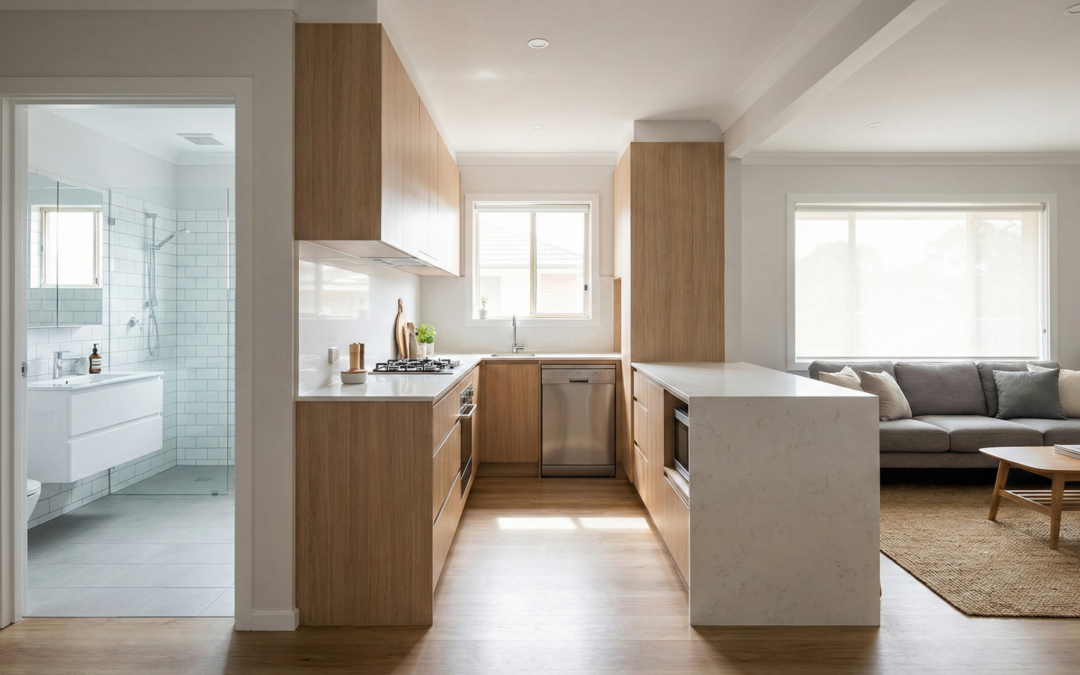
The kitchen delivers the highest return on investment for most Sydney homeowners, typically recouping 75-100% of renovation costs at resale, while bathrooms follow closely at 70-80% ROI. However, the “right” room depends on your property’s current condition, your renovation goals, and whether you’re renovating for lifestyle improvement or investment returns.
Choosing where to start your renovation journey affects everything from your daily living comfort during construction to your final budget allocation and timeline. A strategic approach prevents costly mistakes and ensures each dollar works harder toward your goals.
This guide breaks down the key factors for prioritising renovation rooms, compares ROI across different spaces, and provides a practical framework for making confident decisions about your Sydney home renovation sequence.
Understanding Renovation Priorities: Investment vs Lifestyle Goals
Your renovation priority depends fundamentally on why you’re renovating. Investment-focused renovators and lifestyle-focused homeowners often reach different conclusions about which room deserves attention first.
Renovating for Resale Value
Property investors and homeowners planning to sell within five years should prioritise rooms that buyers scrutinise most heavily. Real estate agents consistently report that kitchens and bathrooms make or break sale negotiations. A dated kitchen can reduce offers by $20,000-$50,000 on Sydney properties, while a modern bathroom signals overall property maintenance quality.
Buyers mentally calculate renovation costs when inspecting properties. An outdated kitchen triggers immediate budget concerns, often leading to lower offers or lost sales entirely. Strategic renovators address these high-impact spaces first to maximise their property’s market position.
Renovating for Daily Living
Owner-occupiers planning to stay long-term should consider which room causes the most daily frustration. A cramped bathroom shared by a growing family creates morning chaos. A dysfunctional kitchen layout makes meal preparation exhausting. Identifying your household’s primary pain point often reveals the logical starting room.
Lifestyle renovators benefit from addressing functionality issues before aesthetic upgrades. A beautifully tiled bathroom with poor ventilation develops mould problems. A stunning kitchen with inadequate storage becomes cluttered within months. Prioritise practical improvements that enhance daily routines.
Kitchen Renovations: The Heart of Home Value
Kitchens consistently rank as the most valuable renovation investment across Australian property markets. Sydney buyers expect modern, functional kitchens and penalise properties that fall short.
Why Kitchens Deliver Strong ROI
The kitchen serves as the home’s social hub, where families gather, meals are prepared, and guests congregate during parties. This central role means buyers emotionally connect with kitchen quality more than any other room. A well-designed kitchen creates immediate positive impressions during property inspections.
Kitchen renovations also offer visible transformation potential. New cabinetry, benchtops, and appliances dramatically change a space’s appearance and functionality. Buyers recognise quality materials and modern layouts, translating renovation investment into perceived property value.
Kitchen Renovation Cost Considerations
Sydney kitchen renovations typically range from $25,000 for cosmetic updates to $80,000+ for complete transformations. Budget allocation generally follows this pattern:
Cabinetry consumes 30-40% of kitchen budgets, representing the largest single expense. Quality cabinetry lasts decades and defines the kitchen’s overall aesthetic. Benchtops account for 10-15%, with engineered stone offering excellent durability at mid-range prices. Appliances require 15-20% allocation, though existing appliances in good condition can be retained to reduce costs.
Labour costs for kitchen renovations in Sydney typically represent 35-45% of total project budgets, covering demolition, plumbing modifications, electrical work, installation, and finishing trades.
When to Prioritise Kitchen Renovation
Start with your kitchen when the existing layout creates workflow problems, when cabinetry shows significant wear or damage, when appliances are failing or energy-inefficient, or when the kitchen’s style dates the entire property. Properties with original 1980s or 1990s kitchens particularly benefit from kitchen-first renovation strategies.
Bathroom Renovations: Essential Spaces with Strong Returns
Bathrooms rank second only to kitchens in renovation ROI, with Sydney buyers expecting clean, modern, and functional wet areas. Outdated bathrooms raise concerns about hidden water damage and maintenance neglect.
Bathroom ROI and Buyer Expectations
Main bathrooms and ensuites directly influence buyer decisions. Cracked tiles, dated vanities, and poor lighting suggest deferred maintenance throughout the property. Conversely, renovated bathrooms signal careful property stewardship and reduce buyer anxiety about hidden problems.
Bathroom renovations typically return 70-80% of costs at resale, though this varies based on renovation quality and local market conditions. Over-capitalisation risks exist in lower-priced suburbs, where luxury bathroom finishes may not translate to proportional value increases.
Bathroom Renovation Budget Breakdown
Standard Sydney bathroom renovations range from $15,000 for basic updates to $45,000+ for complete transformations. Waterproofing represents a non-negotiable expense, typically $1,500-$3,000, protecting your investment from water damage. Tiling costs vary dramatically based on tile selection and layout complexity, generally consuming 20-30% of bathroom budgets.
Fixtures and fittings including vanities, toilets, tapware, and shower screens account for 25-35% of costs. Labour for bathroom renovations typically represents 40-50% of total budgets, reflecting the intensive trade coordination required for plumbing, waterproofing, tiling, and electrical work.
When to Prioritise Bathroom Renovation
Bathrooms should come first when waterproofing has failed or shows signs of deterioration, when mould problems persist despite cleaning, when the layout wastes space or creates accessibility issues, or when fixtures are damaged beyond cosmetic repair. Properties with single bathrooms serving multiple bedrooms often benefit from bathroom additions or expansions as priority projects.
Living Areas: Lifestyle Impact vs Investment Returns
Living rooms, dining areas, and family rooms offer significant lifestyle improvements but typically deliver lower ROI than kitchens and bathrooms. These spaces suit renovation prioritisation when wet areas are already functional and modern.
Living Area Renovation Considerations
Open-plan living conversions remain popular in Sydney, removing walls between kitchens, dining, and living areas to create spacious, light-filled zones. These structural modifications require engineering assessment and council approval, adding complexity and cost compared to cosmetic updates.
Flooring upgrades across living areas deliver noticeable impact at moderate cost. Replacing worn carpet with timber or hybrid flooring modernises spaces while improving durability and maintenance requirements. Living area flooring typically costs $80-$150 per square metre installed, depending on material selection.
When Living Areas Should Come First
Prioritise living area renovations when structural issues affect daily use, when heating or cooling systems require replacement, when flooring presents safety hazards, or when removing walls would dramatically improve functionality. Properties with solid kitchens and bathrooms but cramped, dark living areas benefit from living space prioritisation.
Bedroom Renovations: Lower Priority for Most Projects
Bedrooms typically rank lower in renovation priority unless specific problems demand attention. Buyers expect functional bedrooms but rarely pay premiums for bedroom upgrades beyond basic presentation standards.
Bedroom Renovation ROI Reality
Bedroom renovations deliver modest returns compared to kitchens and bathrooms. Built-in wardrobes add practical value, particularly in Sydney’s competitive rental and sales markets where storage space commands attention. However, elaborate bedroom renovations rarely translate to proportional value increases.
Cosmetic bedroom updates including painting, new carpet, and updated lighting fixtures offer cost-effective improvements without major renovation investment. These updates typically cost $3,000-$8,000 per bedroom and refresh spaces adequately for most purposes.
When Bedrooms Require Priority
Bedrooms should come first when structural damage affects the room, when moisture problems create health concerns, when electrical systems pose safety risks, or when adding bedrooms increases property value in your market. Converting garages, studies, or large storage areas to bedrooms can significantly boost property value in family-oriented suburbs.
Creating Your Renovation Priority Framework
Systematic evaluation helps identify which room deserves first attention in your specific circumstances. Consider these factors when establishing your renovation sequence.
Assessing Current Condition
Walk through your property with fresh eyes, noting which spaces show the most wear, damage, or functional problems. Rate each room on a scale of 1-10 for condition, functionality, and aesthetic appeal. Rooms scoring lowest across multiple criteria often represent logical starting points.
Document specific problems in each space: leaking taps, cracked tiles, inadequate storage, poor lighting, dated finishes. This inventory helps prioritise based on urgency rather than preference alone.
Evaluating Disruption and Logistics
Kitchen and bathroom renovations create significant household disruption. Kitchen renovations eliminate cooking facilities for weeks, requiring alternative meal arrangements. Bathroom renovations in single-bathroom homes necessitate temporary facilities or accommodation arrangements.
Consider renovation sequencing that minimises cumulative disruption. Completing bathroom renovations before kitchen work allows cooking to continue during bathroom construction. Alternatively, renovating during planned holidays or extended absences reduces daily inconvenience.
Budget Allocation Strategy
Most renovation budgets benefit from concentration rather than distribution. Completing one room to high standards typically delivers better results than spreading funds across multiple partial renovations. A fully renovated kitchen creates stronger impact than a half-renovated kitchen plus a half-renovated bathroom.
Establish your total renovation budget, then allocate 60-70% to your priority room. Reserve remaining funds for contingencies and minor updates to other spaces. This approach ensures your primary renovation achieves its full potential.
Sydney-Specific Renovation Considerations
Sydney’s property market presents unique factors affecting renovation priorities. Understanding local conditions helps optimise your renovation strategy.
Climate and Construction Factors
Sydney’s humid subtropical climate demands attention to ventilation, waterproofing, and moisture management. Bathroom renovations in Sydney properties must address these environmental factors to prevent mould and structural damage. Quality exhaust fans, proper waterproofing, and appropriate material selection protect your renovation investment.
Older Sydney homes often feature asbestos-containing materials requiring professional assessment and removal before renovation work begins. Budget for asbestos testing and potential removal when planning renovations in pre-1990 properties.
Local Market Expectations
Sydney buyers expect certain standards based on suburb and price point. Research recent sales in your area to understand buyer expectations and competitor property presentations. Renovations should meet or exceed local standards without dramatically over-capitalising for your market segment.
Inner-city and eastern suburbs buyers often expect higher-end finishes than western suburbs markets. Align your renovation specifications with local expectations to maximise return on investment.
Making Your Final Decision
The right room to renovate first balances multiple factors: current condition, renovation goals, budget constraints, lifestyle impact, and market considerations. Most Sydney homeowners benefit from prioritising kitchens or bathrooms, but individual circumstances may suggest different approaches.
Start by clarifying your primary renovation goal. Investment-focused renovators should prioritise the room that most negatively affects property value. Lifestyle-focused homeowners should address the space causing greatest daily frustration. This clarity simplifies decision-making and ensures your renovation delivers meaningful results.
Consider consulting with renovation professionals who can assess your property’s specific needs and provide tailored recommendations. Professional input helps identify hidden issues, realistic budgets, and optimal renovation sequences for your circumstances.
Conclusion
Choosing which room to renovate first requires balancing investment returns, lifestyle improvements, and practical constraints unique to your property and goals. Kitchens and bathrooms consistently deliver the strongest returns for Sydney homeowners, though individual circumstances may warrant different priorities.
At Sydney Home Renovation, we help homeowners navigate these decisions with transparent cost guidance, practical construction expertise, and honest recommendations tailored to your specific situation. Our team understands that every renovation project serves different goals and budgets.
Contact Sydney Home Renovation today to discuss your renovation priorities and receive a detailed assessment of which room renovation will deliver maximum value for your property and lifestyle needs.
Frequently Asked Questions
Which room adds the most value to a house when renovated?
Kitchens typically add the most value, returning 75-100% of renovation costs at resale. Bathrooms follow closely at 70-80% ROI. Both spaces significantly influence buyer decisions and property valuations in Sydney markets.
Should I renovate my kitchen or bathroom first?
Renovate whichever space is in worse condition or causes more daily frustration. If both are similar, kitchens generally offer slightly higher ROI and create stronger first impressions during property inspections.
How much should I budget for a first room renovation in Sydney?
Budget $25,000-$50,000 for a quality bathroom renovation or $35,000-$80,000 for a kitchen renovation in Sydney. These ranges cover mid-range finishes with quality workmanship and appropriate contingency allowances.
Is it worth renovating before selling my house?
Strategic renovations typically increase sale prices beyond renovation costs, particularly for kitchens and bathrooms. However, over-capitalisation risks exist. Consult local real estate agents to understand buyer expectations in your specific market.
How long does a typical room renovation take in Sydney?
Bathroom renovations typically require 2-4 weeks, while kitchen renovations take 4-8 weeks depending on scope and complexity. Allow additional time for design, approvals, and material procurement before construction begins.
Can I live in my house during a kitchen or bathroom renovation?
Yes, though expect significant disruption. Kitchen renovations eliminate cooking facilities, requiring alternative meal arrangements. Single-bathroom renovations may require temporary facilities. Discuss logistics with your contractor before work begins.
What hidden costs should I budget for in room renovations?
Budget 10-20% contingency for unexpected issues including asbestos removal, structural repairs, plumbing or electrical upgrades, and waterproofing remediation. Older Sydney properties frequently reveal hidden problems once renovation work begins.