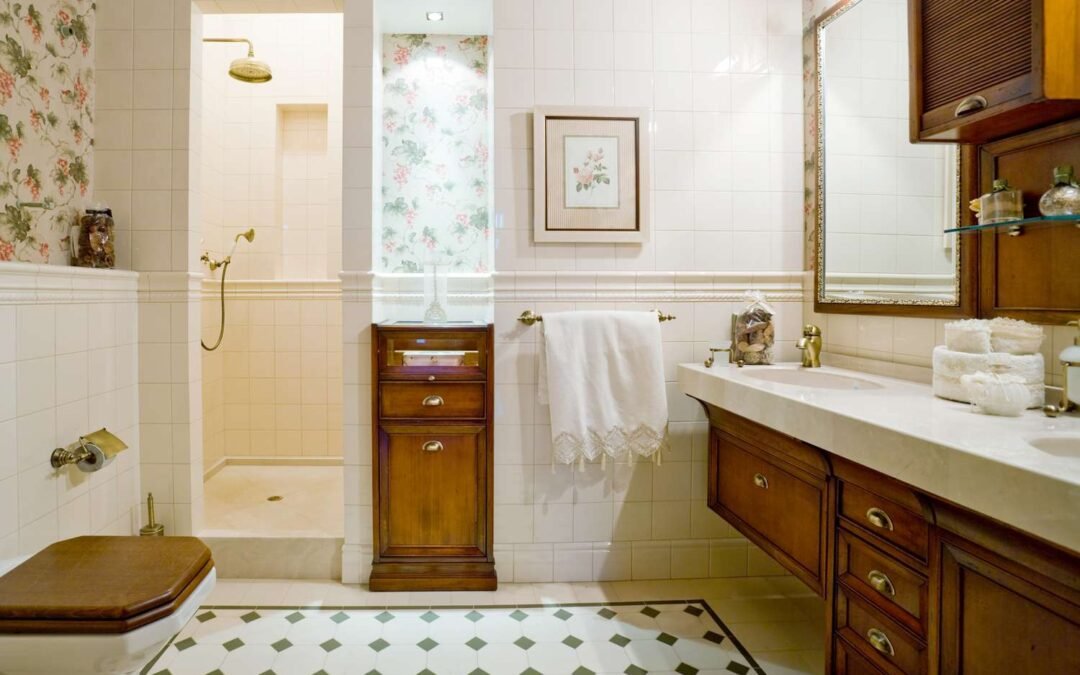
Outdated bathrooms share common design flaws: beige or pastel colour schemes, small square tiles, brass or chrome fixtures from the 1980s-90s, single overhead lighting, and builder-grade vanities. These elements instantly age a space, reduce property appeal, and signal deferred maintenance to potential buyers or tenants. Recognising these features helps homeowners prioritise renovation investments that deliver maximum visual and financial impact.
Bathroom design trends evolve rapidly, and what felt modern a decade ago now appears tired and uninviting. Understanding which features date your bathroom allows you to make strategic upgrade decisions that balance budget constraints with long-term value creation.
This guide identifies eight major categories of outdated bathroom features, explains why they diminish your space, and provides practical modernisation strategies tailored for Sydney homeowners, first-time renovators, and property investors planning cost-effective bathroom transformations.
Outdated Colour Schemes and Finishes
Colour choices profoundly influence how modern or dated a bathroom appears. Certain palettes immediately signal specific decades, creating visual associations with outdated design eras that undermine contemporary appeal.
Beige, Peach, and Pastel Overload
Bathrooms dominated by beige, peach, pink, mint green, or powder blue instantly evoke 1980s and early 1990s design aesthetics. These soft, warm-toned colour schemes were ubiquitous in Australian homes during this period, appearing on walls, tiles, fixtures, and accessories. While initially popular for creating “warm” spaces, these palettes now feel dated and visually heavy.
Industry research shows that 78% of bathroom renovations in 2024 moved toward neutral whites, greys, and natural tones, with warm pastels appearing in less than 8% of new designs. The shift reflects changing preferences for clean, spa-like environments that feel fresh and timeless.
Beige tile surrounds paired with matching beige grout create monotonous, flat surfaces lacking visual interest. Peach or pink fixtures—once considered sophisticated—now appear garish and difficult to coordinate with modern design elements. These colours also show age more readily, with discolouration and wear becoming highly visible against the soft backgrounds.
Replacing pastel tiles represents a significant investment, but strategic updates deliver substantial returns. Painting walls in crisp whites or soft greys immediately modernises the space without touching tilework. Introducing contrasting elements—matte black tapware, white subway tiles, natural timber accents—creates contemporary visual balance that diminishes the impact of existing pastel features.
Almond and Harvest Gold Fixtures
Coloured bathroom fixtures reached peak popularity in the 1970s and 1980s, with almond (off-white cream), harvest gold (mustard yellow), and avocado green appearing in toilets, bathtubs, basins, and bidets across Australian homes. These fixtures were marketed as premium alternatives to standard white, offering coordinated colour schemes throughout bathrooms.
Today, coloured fixtures represent one of the most instantly recognisable outdated elements. Real estate data indicates that bathrooms with coloured fixtures sell for 7-12% less than comparable properties with white fixtures, and take 23% longer to sell in Sydney’s competitive market.
Beyond aesthetic concerns, coloured fixtures create practical renovation challenges. Replacing a single damaged piece requires sourcing discontinued colours or replacing the entire suite. Coordinating new tiles, paint, and accessories with almond or harvest gold proves difficult, limiting design flexibility and forcing homeowners into dated colour schemes.
White fixtures offer timeless appeal, maximum design flexibility, and universal buyer acceptance. Modern white sanitaryware features improved materials, water efficiency, and sleek profiles unavailable in vintage coloured versions. Replacing coloured fixtures with contemporary white alternatives represents a high-impact renovation investment that immediately modernises bathroom appearance and improves market appeal.
Dark, Heavy Wood Cabinetry
Bathroom vanities and cabinetry in dark timber stains—particularly orange-toned oak, mahogany, or walnut finishes—dominated 1980s and 1990s bathroom design. These heavy, ornate pieces often featured raised panel doors, brass hardware, and bulky proportions that overwhelmed smaller bathroom spaces.
Dark wood cabinetry creates several visual problems in bathrooms. The heavy appearance reduces perceived space, making already compact Sydney bathrooms feel cramped and cave-like. Dark finishes absorb light rather than reflecting it, requiring additional artificial lighting to achieve adequate brightness. The warm orange or red undertones clash with contemporary cool-toned palettes, creating colour conflicts that prevent cohesive modern design.
Bathroom design surveys show that 68% of renovators in 2024 chose light-coloured or white vanities, with dark timber selections dropping to just 11% of new installations. The preference shift reflects desires for brighter, more spacious-feeling bathrooms that align with contemporary minimalist aesthetics.
Moisture exposure accelerates deterioration in older timber vanities, causing warping, swelling, and finish degradation. Water damage around sink cutouts and base cabinets creates unsightly staining and structural weakness. Dated hardware—brass pulls, ornate hinges—further emphasises the aged appearance.
Modernising dark cabinetry offers several approaches depending on budget. Painting existing cabinets in crisp white or soft grey transforms appearance at minimal cost, though proper preparation and moisture-resistant paint products ensure durability. Replacing hardware with contemporary matte black or brushed nickel options provides instant visual updates. For comprehensive transformations, installing new floating vanities in light timber or white finishes maximises space, improves storage efficiency, and delivers contemporary appeal that resonates with buyers and tenants.
Old-Fashioned Tile Choices
Tile selection dramatically influences bathroom aesthetics, with certain styles, sizes, and patterns immediately signalling specific design eras. Outdated tile choices create visual clutter, reduce perceived space, and prove difficult to coordinate with modern fixtures and finishes.
Small Square Ceramic Tiles
Small square ceramic tiles—typically 100mm × 100mm or smaller—covered bathroom walls and floors throughout the 1970s, 1980s, and 1990s. These tiles appeared in various colours, often in pastel shades or white with coloured grout, creating busy grid patterns that fragment visual space.
The proliferation of grout lines in small tile installations creates multiple problems. Grout attracts dirt, mildew, and staining, requiring constant maintenance to maintain clean appearance. Building research indicates that bathrooms with small tiles and extensive grout lines experience 40% higher mould growth compared to large-format tile installations, due to increased surface area for moisture accumulation.
Small tiles create visual busyness that makes bathrooms feel cluttered and dated. The repetitive grid pattern draws attention to the tilework itself rather than creating a calm, cohesive backdrop. In compact Sydney bathrooms, small tiles exacerbate space constraints, making rooms feel smaller and more confined.
Contemporary bathroom design favours large-format tiles—600mm × 300mm, 600mm × 600mm, or larger—that minimise grout lines and create clean, expansive surfaces. Subway tiles (200mm × 100mm) offer a middle ground, providing classic appeal with reduced grout maintenance compared to smaller formats. Large tiles reflect more light, simplify cleaning, and deliver the streamlined aesthetic that defines modern bathroom design.
Replacing small tiles represents significant investment, involving demolition, waterproofing, and complete retiling. However, the transformation proves dramatic, immediately modernising bathroom appearance and improving functionality. For budget-conscious renovators, focusing tile replacement on high-visibility areas—shower surrounds, feature walls—delivers maximum impact while controlling costs.
Busy Patterned or Floral Tiles
Decorative tiles featuring busy patterns, floral motifs, or elaborate borders enjoyed popularity in 1980s and 1990s bathroom design. These tiles appeared as feature strips, border accents, or full wall installations, often in contrasting colours that created visual focal points.
Patterned tiles date bathrooms instantly, evoking specific design eras with unmistakable clarity. Floral patterns, geometric designs, and decorative borders reflect period-specific tastes that feel incongruous in contemporary spaces. The visual complexity creates restless, busy environments that conflict with modern preferences for calm, spa-like bathroom atmospheres.
Coordinating fixtures, accessories, and finishes with busy patterned tiles proves challenging. The tiles dictate colour schemes and design directions, limiting flexibility and forcing homeowners into dated aesthetic choices. Replacing damaged patterned tiles becomes nearly impossible, as discontinued designs require complete reinstallation to maintain visual consistency.
Renovation data shows that removing patterned tiles and installing neutral alternatives increases bathroom appeal to 85% of potential buyers, compared to just 34% appeal for bathrooms retaining busy tile patterns. The preference gap reflects universal desire for adaptable, timeless design that accommodates personal styling without imposing dated aesthetics.
Modern bathroom design emphasises subtle texture and tonal variation over bold patterns. Large-format tiles in neutral colours—whites, greys, soft beiges—create sophisticated backdrops that highlight fixtures and fittings. Textured tiles, natural stone, or wood-look porcelain add visual interest without overwhelming spaces. Strategic use of accent tiles—a single feature wall, niche backing—provides personality while maintaining overall restraint.
Mismatched Grout Lines and Discolouration
Even well-chosen tiles appear outdated when grout lines show significant discolouration, staining, or inconsistent colour. Grout deterioration signals age, poor maintenance, and potential moisture problems that undermine bathroom appeal.
Grout naturally darkens over time as dirt, soap residue, and minerals accumulate in the porous material. In high-moisture areas—showers, around bathtubs—mould and mildew colonise grout lines, creating black or grey staining that resists conventional cleaning. Inconsistent grout colour, resulting from repairs or partial regrouting, creates patchwork appearances that highlight age and maintenance issues.
Building studies indicate that 62% of bathroom moisture problems manifest first in grout deterioration, with cracking, crumbling, or discolouration signalling underlying waterproofing failures. Addressing grout issues prevents more serious structural damage while improving aesthetic appeal.
Regrouting represents a cost-effective bathroom refresh that delivers disproportionate visual impact. Removing deteriorated grout and installing fresh material in contemporary colours—bright white, light grey—immediately brightens bathrooms and creates clean, maintained appearance. Epoxy grout offers superior stain resistance and durability compared to traditional cement-based products, though higher material costs and installation complexity require professional application.
For severely deteriorated grout, complete tile replacement may prove more cost-effective than regrouting, particularly when tiles themselves show age. Evaluating the condition of underlying waterproofing during grout assessment prevents investing in cosmetic repairs while ignoring structural problems that will resurface quickly.
Wall-to-Wall Carpeting or Vinyl Flooring
Bathroom carpeting enjoyed brief popularity in the 1970s and early 1980s, marketed as providing warmth and comfort underfoot. Similarly, sheet vinyl flooring in busy patterns or faux-tile designs covered bathroom floors throughout the 1980s and 1990s, offering affordable, water-resistant surfaces.
Both materials now appear hopelessly dated and create significant hygiene concerns. Bathroom carpet absorbs moisture, harbours bacteria and mould, and develops persistent odours that resist cleaning. Health research shows that carpeted bathrooms contain 300% higher mould spore counts compared to hard-surface bathrooms, creating respiratory health risks for occupants.
Vinyl flooring, particularly older sheet vinyl with busy patterns, shows age through curling edges, discolouration, and surface wear. The material’s flexibility allows telegraphing of subfloor imperfections, creating uneven surfaces that trap water and dirt. Dated patterns—faux terracotta, busy geometric designs—immediately signal 1980s-90s installation.
Contemporary bathroom flooring emphasises durability, water resistance, and clean aesthetics. Porcelain or ceramic tiles in large formats provide timeless appeal and superior moisture performance. Luxury vinyl plank (LVP) flooring offers wood-look aesthetics with complete waterproofing, though quality varies significantly across products. Natural stone—travertine, marble, limestone—delivers premium appearance but requires sealing and maintenance.
Removing carpet or vinyl and installing modern flooring transforms bathroom appearance and improves hygiene. The investment proves particularly valuable in Sydney’s humid climate, where moisture management determines long-term bathroom performance and occupant health.
Dated Fixtures and Fittings
Bathroom fixtures—tapware, toilets, basins, bathtubs, showers—represent the most visible and frequently used elements in the space. Outdated fixtures immediately signal age, reduce functionality, and create maintenance challenges that undermine bathroom performance.
Chrome and Brass Tapware from the 80s and 90s
Tapware styles evolve rapidly, with specific designs, finishes, and configurations clearly identifying installation periods. Chrome tapware with ornate handles, separate hot and cold taps, and bulky spouts dominated 1980s bathrooms. Polished brass fixtures enjoyed popularity in the late 1980s and early 1990s, marketed as premium alternatives to standard chrome.
Both finishes now appear dated, though for different reasons. Chrome tapware from this era features chunky proportions, decorative detailing, and mechanical aesthetics that contrast sharply with contemporary minimalist designs. Polished brass tarnishes over time, developing patina that appears worn rather than characterful. The warm gold tone clashes with modern cool-toned palettes, limiting design flexibility.
Plumbing industry data shows that 73% of bathroom renovations in 2024 installed matte black or brushed nickel tapware, with chrome selections dropping to 18% and brass virtually disappearing at less than 2% of installations. The preference shift reflects desires for contemporary aesthetics and improved durability.
Older tapware also suffers functional limitations. Separate hot and cold taps prevent temperature mixing, creating usability frustrations. Compression tap mechanisms require frequent washer replacement, leading to drips and leaks. Water efficiency lags significantly behind modern standards, with older tapware using 12-15 litres per minute compared to 6-7.5 litres per minute for contemporary WELS-rated products.
Replacing dated tapware delivers immediate visual and functional improvements. Modern mixer taps provide precise temperature control, improved water efficiency, and sleek profiles that complement contemporary design. Matte black finishes offer striking visual contrast while hiding water spots and fingerprints. Brushed nickel provides warm metallic tones without brass’s dated associations. Wall-mounted tapware creates clean, minimalist aesthetics while simplifying vanity cleaning.
Pedestal Sinks with Limited Storage
Pedestal sinks—freestanding basins supported by decorative pedestals—appeared in countless Australian bathrooms from the 1970s through 1990s. These fixtures offered affordable, space-efficient solutions for powder rooms and small bathrooms, with various styles ranging from traditional to contemporary.
While pedestal sinks can work in specific design contexts, older versions typically feature dated profiles, limited basin sizes, and complete absence of storage. The pedestal conceals plumbing but provides no functional benefit, wasting valuable floor space that could accommodate storage. In compact Sydney bathrooms where every centimetre matters, pedestal sinks sacrifice practicality for questionable aesthetics.
Dated pedestal sink designs feature ornate detailing, small oval basins, and bulky proportions that overwhelm small spaces. The lack of surrounding counter space creates functional problems, leaving no surface for toiletries, soap, or daily essentials. Users must install separate shelving or cabinets, adding clutter and visual complexity.
Bathroom design research indicates that 82% of renovators prioritise storage as a primary bathroom improvement goal, with vanity selection driven primarily by storage capacity rather than basin style. The finding reflects practical realities of bathroom use, where adequate storage determines daily functionality and visual order.
Modern vanities integrate basins with storage cabinetry, maximising space efficiency while providing essential storage. Wall-mounted floating vanities create contemporary aesthetics while maintaining floor space for cleaning. Drawer-based storage offers superior organisation compared to traditional cabinet doors. Soft-close mechanisms, integrated power outlets, and internal organisers enhance functionality beyond basic storage.
Replacing pedestal sinks with appropriate vanities transforms bathroom usability and appearance. The investment addresses both aesthetic and functional deficiencies, delivering improvements that users appreciate daily while enhancing property appeal.
Builder-Grade Vanities and Mirrors
Builder-grade fixtures—the basic, economical products installed in volume housing and apartment developments—serve functional purposes but lack design distinction or quality materials. Builder-grade vanities typically feature particle board construction with thin laminate finishes, basic hardware, and minimal design consideration.
These vanities show age rapidly. Laminate edges chip and peel, particularly around sink cutouts where moisture exposure accelerates deterioration. Particle board swells when wet, causing drawer and door misalignment. Basic hinges and drawer slides fail, creating functional frustrations. The generic appearance—often in oak or white laminate—provides no visual interest or design personality.
Builder-grade mirrors compound the problem. Large, frameless mirrors with basic mounting clips or cheap plastic frames appear institutional rather than residential. Bevelled edges—popular in the 1980s and 1990s—now signal dated installation. Poor-quality mirrors develop edge deterioration where moisture penetrates backing, creating unsightly black spots and silvering failure.
Renovation surveys show that upgrading from builder-grade to mid-range vanities and mirrors increases bathroom appeal ratings by 47% among potential buyers, with the improvement costing typically $1,200-$2,500 for standard bathroom applications. The return on investment proves substantial, particularly in competitive Sydney property markets.
Quality vanities feature solid timber or moisture-resistant engineered wood construction, durable finishes, and superior hardware. Soft-close drawers, dovetail joinery, and integrated organisers demonstrate quality that users notice immediately. Contemporary profiles—floating designs, integrated handles, mixed materials—create visual interest while improving functionality.
Modern mirrors serve as design features rather than purely functional elements. Backlit LED mirrors provide excellent task lighting while creating ambient glow. Framed mirrors in matte black, brushed brass, or natural timber add architectural interest. Oversized mirrors expand perceived space while delivering contemporary proportions.
Shower-Over-Bath Configurations
Combined shower-bath installations dominated Australian bathroom design for decades, offering space-efficient solutions that provided both bathing options in compact footprints. These configurations typically featured bathtubs with wall-mounted showerheads and shower curtains or basic glass screens.
While shower-over-bath setups remain common in older homes, they create several functional and aesthetic problems. Shower curtains appear dated, harbour mould and mildew, and create claustrophobic showering experiences. Basic glass screens—often in aluminium frames with limited height—fail to contain water effectively, creating cleaning challenges and moisture problems.
The bathtub itself often goes unused in modern households. Australian water usage studies show that 78% of Sydney households rarely or never use bathtubs, preferring quicker, more water-efficient showers. The unused bathtub wastes valuable bathroom space while complicating cleaning and maintenance.
Stepping over bathtub edges to access showers creates safety hazards, particularly for elderly occupants or those with mobility limitations. The elevated entry threshold increases fall risk, while slippery bathtub surfaces compound dangers. Accessibility concerns make shower-over-bath configurations increasingly problematic as populations age.
Modern bathroom design separates bathing functions or eliminates bathtubs entirely in favour of spacious walk-in showers. Frameless glass shower screens create open, contemporary aesthetics while providing superior water containment. Floor-level shower bases with linear drains eliminate trip hazards and improve accessibility. Generous shower dimensions—minimum 900mm × 900mm, ideally larger—provide comfortable showering experiences that feel luxurious rather than cramped.
For bathrooms where bathtubs serve genuine purposes—households with young children, personal preferences—freestanding bathtubs create striking design features while maintaining separate shower enclosures. The configuration requires adequate space but delivers resort-style aesthetics that significantly enhance bathroom appeal.
Poor Lighting Design
Lighting profoundly influences bathroom functionality, safety, and aesthetics. Inadequate or poorly designed lighting makes bathrooms feel dingy, creates safety hazards, and prevents effective task completion. Outdated lighting immediately signals aged bathrooms while undermining usability.
Single Overhead Downlight or Bare Bulb
Many older bathrooms rely on single overhead light sources—a central downlight, surface-mounted fixture, or bare bulb—to illuminate the entire space. This approach creates harsh shadows, uneven illumination, and inadequate light levels for detailed tasks like shaving, makeup application, or grooming.
Single overhead lights cast shadows on faces when users stand at mirrors, making grooming tasks difficult and creating unflattering appearances. The downward light direction leaves corners and recesses in shadow, making bathrooms feel smaller and less inviting. Insufficient overall light levels create safety hazards, particularly in wet areas where visibility determines fall risk.
Lighting design research indicates that bathrooms require minimum 240 lux for general activities and 500 lux at mirrors for grooming tasks. Single overhead fixtures typically deliver 80-150 lux at counter height, falling dramatically short of functional requirements.
Older light fixtures themselves appear dated. Surface-mounted ceiling fixtures with frosted glass shades, ornate brass or chrome details, or coloured glass immediately signal 1980s-90s installation. Bare bulb installations appear unfinished and institutional, lacking any design consideration.
Contemporary bathroom lighting employs layered approaches combining ambient, task, and accent lighting. Recessed LED downlights provide general illumination with energy efficiency and clean aesthetics. Wall-mounted sconces flanking mirrors deliver shadow-free task lighting for grooming. Backlit mirrors integrate task lighting directly into mirror design. Under-cabinet lighting illuminates countertops while creating ambient glow. Dimmer controls allow lighting adjustment for different times and activities.
LED technology revolutionised bathroom lighting, offering superior energy efficiency, longer lifespans, and better colour rendering compared to incandescent or fluorescent alternatives. Modern LED fixtures produce minimal heat, reducing cooling loads and improving comfort in compact bathrooms.
Lack of Task Lighting Around Mirrors
Even bathrooms with adequate general lighting often lack proper task lighting at mirrors, creating functional deficiencies that frustrate daily use. Task lighting provides focused illumination for specific activities, with mirror lighting being critical for grooming, makeup application, and personal care.
Overhead lighting alone creates downward shadows that obscure facial features and make detailed grooming tasks difficult. The lighting angle prevents users from seeing clearly, leading to makeup application errors, missed shaving spots, and general frustration. Poor task lighting particularly affects older users, whose vision requires higher light levels for detailed work.
Traditional approaches placed single fixtures above mirrors, but this configuration still creates shadows under eyes, nose, and chin. The lighting comes from a single direction, preventing even illumination across faces. Bulb selection further complicates matters, with warm-toned bulbs distorting colour perception and making makeup matching difficult.
Lighting design standards recommend 500-750 lux at face height for grooming tasks, delivered from multiple angles to minimise shadows. Achieving these levels requires dedicated task lighting beyond general bathroom illumination.
Modern mirror lighting employs several effective approaches. Wall-mounted sconces flanking mirrors at face height provide even, shadow-free illumination from both sides. Backlit LED mirrors integrate lighting directly into mirror design, creating ambient glow while delivering task lighting. LED strip lighting above and beside mirrors offers flexible, energy-efficient solutions. All approaches benefit from colour temperature selection around 4000K-5000K, providing neutral white light that renders colours accurately.
Installing proper task lighting transforms bathroom functionality and user satisfaction. The improvement proves particularly valuable in master bathrooms where daily grooming occurs, delivering practical benefits that users appreciate immediately.
Yellowing or Fluorescent Tube Lighting
Older bathrooms frequently feature fluorescent tube lighting—either exposed tubes with basic diffusers or integrated into vanity light bars. While fluorescent technology offered energy efficiency advantages over incandescent bulbs, the lighting quality, colour rendering, and aesthetic appearance create multiple problems.
Fluorescent tubes produce harsh, flat light with poor colour rendering that makes skin tones appear sallow and distorts colour perception. The cool, institutional quality feels unwelcoming and clinical rather than creating pleasant bathroom atmospheres. Fluorescent ballasts emit audible humming and create flickering that some users find disturbing.
Aging fluorescent tubes yellow over time, shifting colour temperature and reducing light output. The yellowing creates dingy, aged appearance that undermines bathroom aesthetics. Tubes require periodic replacement, with failures creating dark spots or complete lighting loss. Disposal presents environmental challenges due to mercury content.
Fluorescent fixtures themselves appear dated. Exposed tube installations with basic plastic diffusers look industrial and unfinished. Vanity light bars with multiple bulbs and chrome or brass detailing immediately signal 1980s-90s design. The bulky fixtures dominate visual space while providing poor-quality illumination.
Energy efficiency data shows that modern LED lighting matches or exceeds fluorescent efficiency while delivering superior colour rendering, instant-on operation, and longer lifespans. LED technology eliminates mercury concerns, reduces maintenance requirements, and provides better dimming capabilities.
Replacing fluorescent lighting with LED alternatives improves bathroom aesthetics, functionality, and energy performance. Recessed LED downlights create clean, contemporary appearances while delivering excellent illumination. LED strip lighting offers flexible installation options for task and accent lighting. Integrated LED fixtures eliminate bulb replacement concerns while providing decades of maintenance-free operation.
The lighting upgrade proves particularly impactful when combined with other bathroom improvements, as proper lighting reveals and enhances updated finishes, fixtures, and design elements.
Inefficient Layout and Wasted Space
Bathroom layout determines functionality, comfort, and perceived spaciousness. Poor layouts waste valuable space, create awkward traffic patterns, and reduce usability. Outdated bathroom configurations often reflect builder convenience rather than user needs, resulting in frustrating daily experiences.
Awkward Toilet Placement
Toilet positioning significantly impacts bathroom functionality and privacy. Older bathrooms frequently placed toilets in highly visible locations—directly opposite entry doors, adjacent to bathtubs without separation, or in corners that prevented comfortable use.
Toilets positioned directly opposite entry doors create privacy concerns and visual discomfort. Users entering bathrooms immediately confront the toilet, creating awkward sightlines that feel intrusive. The configuration proves particularly problematic in ensuite bathrooms where bedroom visibility extends into bathroom space.
Toilets placed immediately adjacent to bathtubs without separation or screening create cramped, uncomfortable arrangements. The proximity complicates cleaning, reduces perceived space, and creates functional conflicts when multiple users share bathrooms. Insufficient clearance around toilets—less than the recommended 400mm on each side—makes use uncomfortable and cleaning difficult.
Building regulations specify minimum clearances for toilet installation, but older bathrooms often predate current standards or reflect minimal compliance rather than optimal design. Toilets require 600mm minimum front clearance for comfortable use, with 900mm preferred for accessibility.
Modern bathroom layouts position toilets thoughtfully, considering privacy, clearances, and visual aesthetics. Toilets placed perpendicular to entry doors reduce direct sightlines while maintaining accessibility. Separate toilet compartments in larger bathrooms provide privacy and allow simultaneous bathroom use. Wall-hung toilets create contemporary aesthetics while simplifying floor cleaning and improving perceived space.
Relocating toilets during renovations involves significant plumbing work and waterproofing requirements, increasing costs substantially. However, the functional improvements often justify investment, particularly when poor toilet placement creates daily frustrations or reduces bathroom usability.
Lack of Storage Solutions
Inadequate storage represents one of the most common complaints about older bathrooms. Limited or poorly designed storage forces users to keep toiletries, towels, and essentials in visible locations, creating visual clutter that undermines bathroom aesthetics and functionality.
Older bathrooms typically provided minimal storage—a small vanity cabinet, perhaps a medicine cabinet above the basin, and towel rails. This approach proved insufficient for modern needs, where households accumulate numerous personal care products, cleaning supplies, and bathroom essentials. The storage deficit forces items onto counter surfaces, windowsills, or floor corners, creating messy, disorganised appearances.
Pedestal sinks and wall-hung basins eliminated storage entirely, prioritising visual minimalism over practical functionality. While these fixtures suited powder rooms with minimal storage needs, their use in main bathrooms created significant usability problems. Users resorted to freestanding storage units, over-toilet shelving, or wall-mounted cabinets that appeared afterthought rather than integrated design.
Bathroom design surveys indicate that storage capacity ranks as the top priority for 82% of bathroom renovators, exceeding aesthetic considerations, fixture quality, or layout changes. The finding reflects practical realities where adequate storage determines daily bathroom functionality and visual order.
Modern bathroom design integrates comprehensive storage solutions throughout the space. Vanities with drawer-based storage provide superior organisation compared to traditional cabinet doors, with internal dividers and organisers maximising usable space. Tall storage cabinets utilise vertical space efficiently, providing linen storage and concealed organisation. Recessed wall niches in showers eliminate need for hanging caddies while creating integrated storage. Medicine cabinets with internal lighting and power outlets combine storage with functionality.
Maximising storage during renovations requires thoughtful planning that considers user needs, available space, and design aesthetics. The investment in proper storage delivers daily functional benefits while maintaining clean, organised bathroom appearances that enhance property appeal.
Narrow or Cramped Shower Spaces
Shower dimensions dramatically affect user comfort and bathroom functionality. Older bathrooms frequently featured minimal shower enclosures—often 900mm × 900mm or smaller—that met basic requirements but provided cramped, uncomfortable showering experiences.
Small shower enclosures create multiple problems. Users feel confined and restricted, unable to move comfortably or avoid direct water spray. The tight quarters complicate washing, particularly for larger individuals or those with mobility limitations. Cleaning becomes difficult as limited space prevents easy access to all surfaces. The cramped feeling undermines bathroom quality and creates negative daily experiences.
Shower-over-bath configurations exacerbate space constraints, as bathtub widths (typically 700-800mm) provide even less lateral space than minimum shower enclosures. Shower curtains encroach further into usable space, creating claustrophobic environments that feel oppressive rather than refreshing.
Bathroom design standards recommend minimum 900mm × 900mm shower dimensions, but contemporary design increasingly favours 1000mm × 1200mm or larger enclosures that provide comfortable, spacious showering experiences. The additional space transforms shower functionality while creating resort-style aesthetics that significantly enhance bathroom appeal.
Larger showers accommodate multiple showerheads—overhead rain showers, wall-mounted body jets, handheld wands—that deliver luxurious showering experiences. The generous dimensions allow comfortable movement, reduce water spray outside enclosures, and simplify cleaning. Walk-in configurations with partial glass screens create open, contemporary aesthetics while maintaining water containment.
Expanding shower dimensions during renovations requires careful space planning and often involves reconfiguring entire bathroom layouts. Removing unused bathtubs frequently provides space for larger showers, delivering functional improvements that align with modern usage patterns. The investment creates daily comfort and enjoyment while substantially improving bathroom appeal and property value.
Worn or Damaged Surfaces
Physical deterioration signals deferred maintenance and age, immediately undermining bathroom appeal regardless of original design quality. Worn, damaged, or deteriorating surfaces create negative impressions that affect property values and user satisfaction.
Cracked or Chipped Tiles
Tile damage—cracks, chips, or broken pieces—occurs through impact, structural movement, or installation defects. Even minor damage creates disproportionate visual impact, drawing attention and signalling neglect or poor maintenance.
Cracked tiles often indicate underlying problems beyond cosmetic damage. Structural movement, inadequate substrate preparation, or waterproofing failures create stresses that fracture tiles. Cracks provide pathways for water penetration, potentially causing hidden moisture damage to substrates, framing, or adjacent spaces. What appears as minor cosmetic damage may signal significant structural concerns requiring comprehensive remediation.
Chipped tiles typically result from impact—dropped objects, fixture installation, or cleaning equipment contact. While less concerning structurally than cracks, chips create rough edges that trap dirt and create safety hazards. The damage proves particularly problematic with discontinued tile styles, where matching replacements become impossible without complete reinstallation.
Building research shows that 47% of bathroom moisture problems originate from tile or grout failures, with cracks providing primary water entry points. Addressing tile damage prevents more serious structural deterioration while improving aesthetic appearance.
Repairing individual tiles proves difficult and often creates mismatched appearances, particularly with aged tiles where colour and finish have changed over time. Comprehensive retiling provides opportunity to address underlying waterproofing, update aesthetics, and ensure long-term performance. The investment proves particularly valuable when combined with other bathroom improvements, creating cohesive renovations that maximise value and appeal.
Peeling Paint or Water-Damaged Walls
Bathroom walls endure constant moisture exposure, temperature fluctuations, and humidity that challenge paint and surface finishes. Older bathrooms frequently show peeling paint, bubbling finishes, or water-damaged drywall that signals inadequate moisture management and deferred maintenance.
Peeling paint results from moisture penetration behind paint films, causing adhesion failure and surface deterioration. The problem proves particularly common around showers, bathtubs, and above tile lines where water spray and humidity concentrate. Inadequate surface preparation, inappropriate paint selection, or insufficient ventilation accelerate paint failure.
Water-damaged drywall appears as soft spots, discolouration, or visible mould growth. The damage indicates moisture penetration from plumbing leaks, inadequate waterproofing, or condensation accumulation. Damaged drywall loses structural integrity and harbours mould that creates health concerns and persistent odours.
Health authorities report that bathroom mould exposure contributes to respiratory problems, allergic reactions, and asthma exacerbation, particularly affecting children and immune-compromised individuals. Addressing water damage and mould growth protects occupant health while improving bathroom appearance.
Proper bathroom wall preparation requires moisture-resistant materials and appropriate finishes. Cement sheet or moisture-resistant drywall provides superior performance compared to standard drywall in high-humidity environments. Proper waterproofing behind tile and around wet areas prevents moisture penetration. Bathroom-specific paints with mould inhibitors and moisture resistance maintain appearance and performance.
Repairing water-damaged walls requires addressing underlying moisture sources before cosmetic restoration. Plumbing leaks, inadequate ventilation, or waterproofing failures must be corrected to prevent recurring damage. The remediation provides opportunity to upgrade wall materials, improve moisture management, and create durable, long-lasting bathroom surfaces.
Rusty or Corroded Fixtures
Metal fixtures and fittings corrode when exposed to moisture, creating unsightly rust stains, structural weakness, and functional failures. Older bathrooms frequently show corroded towel rails, toilet roll holders, cabinet hardware, or exposed plumbing that signals age and poor maintenance.
Rust appears as orange-brown staining on chrome, steel, or iron fixtures. The corrosion weakens metal, causing structural failure and creating rough surfaces that snag towels or clothing. Rust stains transfer to surrounding surfaces—tiles, walls, floors—creating secondary damage that proves difficult to remove.
Corroded fixtures often indicate inadequate ventilation and excessive moisture levels. Bathrooms lacking proper exhaust fans or window ventilation trap humidity that accelerates metal corrosion. The fixture deterioration signals broader moisture management problems that affect entire bathroom performance and longevity.
Chrome plating on older fixtures deteriorates over time, exposing underlying base metals to corrosion. The plating failure appears as dark spots, pitting, or flaking that cannot be repaired effectively. Attempting to clean corroded chrome with abrasive methods accelerates deterioration, removing remaining plating and exposing more base metal.
Modern bathroom fixtures employ superior corrosion-resistant materials and finishes. Stainless steel provides excellent corrosion resistance with minimal maintenance requirements. Brass fixtures with PVD (Physical Vapour Deposition) finishes offer durability far exceeding traditional chrome plating. Powder-coated finishes on matte black fixtures resist corrosion while delivering contemporary aesthetics.
Replacing corroded fixtures eliminates unsightly deterioration while providing opportunity to update bathroom aesthetics with contemporary designs and finishes. The investment proves particularly valuable when combined with improved ventilation that prevents future corrosion and extends fixture lifespans.
Mould, Mildew, and Grout Staining
Mould and mildew growth represents one of the most common and problematic issues in older bathrooms. These fungi thrive in moist, poorly ventilated environments, appearing as black, grey, or green staining on grout, caulking, walls, and ceilings.
Mould growth signals inadequate moisture management and ventilation. Bathrooms lacking proper exhaust fans or window ventilation trap humidity that creates ideal conditions for mould colonisation. The growth concentrates in corners, along grout lines, around fixtures, and on ceilings where air circulation proves minimal.
Beyond aesthetic concerns, mould creates significant health risks. Health research indicates that mould exposure causes respiratory irritation, allergic reactions, asthma exacerbation, and immune system stress. Children, elderly individuals, and those with compromised immune systems face particular vulnerability to mould-related health effects.
Grout staining from mould penetrates porous grout material, making surface cleaning ineffective. The staining requires grout replacement or sealing to address effectively. Caulking around bathtubs, showers, and basins harbours mould in deteriorated or improperly installed applications, requiring removal and replacement.
Addressing mould requires eliminating moisture sources and improving ventilation. Installing adequate exhaust fans—minimum 25 litres per second for standard bathrooms—removes moisture-laden air before condensation occurs. Ensuring fans vent externally rather than into roof spaces prevents moisture accumulation in building cavities. Running exhaust fans during and after showers reduces humidity levels that support mould growth.
Cleaning existing mould with appropriate antimicrobial products removes surface growth, but preventing recurrence requires addressing underlying moisture and ventilation deficiencies. Sealing grout after cleaning provides protective barrier that resists future mould colonisation. Replacing deteriorated caulking with high-quality silicone products ensures proper sealing and mould resistance.
Lack of Modern Amenities
Contemporary bathrooms incorporate amenities and features that enhance comfort, convenience, and functionality. Older bathrooms lacking these elements feel dated and less luxurious, reducing user satisfaction and property appeal.
No Heated Towel Rails or Underfloor Heating
Bathroom heating significantly improves comfort, particularly during Sydney’s cooler months. Heated towel rails and underfloor heating represent standard features in modern bathroom design, yet older bathrooms typically lack any dedicated heating beyond general home systems.
Heated towel rails serve dual purposes—warming towels for post-shower comfort while providing supplementary bathroom heating. The fixtures dry towels effectively, preventing musty odours and mildew growth while creating spa-like luxury. Modern heated towel rails operate efficiently, consuming minimal electricity while delivering substantial comfort benefits.
Underfloor heating transforms bathroom experiences, eliminating cold floor shock and creating even, comfortable warmth throughout the space. The heating proves particularly valuable with tile or stone flooring, which feels uncomfortably cold without heating. Electric underfloor heating systems install relatively easily during renovations, with thin heating mats fitting beneath tile installations.
Energy efficiency studies show that bathroom underfloor heating costs approximately $0.40-$0.80 per day to operate during winter months in Sydney, providing affordable comfort that users appreciate daily. The systems heat quickly, allowing on-demand operation rather than continuous running.
Beyond comfort benefits, bathroom heating reduces moisture and condensation that contribute to mould growth and surface deterioration. Warmer bathroom temperatures allow air to hold more moisture, reducing condensation on mirrors, walls, and fixtures. The improved moisture management extends bathroom lifespan while enhancing user comfort.
Installing heated towel rails and underfloor heating during renovations adds relatively modest costs—typically $800-$1,500 for heated towel rails and $1,200-$2,500 for underfloor heating in standard bathrooms—while delivering daily comfort and luxury that significantly enhances bathroom appeal.
Absence of Niche Storage or Built-In Shelving
Shower storage solutions dramatically affect bathroom functionality and aesthetics. Older bathrooms relied on hanging caddies, corner shelves, or soap dishes that appear dated, create cleaning challenges, and provide inadequate storage for modern needs.
Hanging shower caddies—whether over-showerhead models or suction-cup versions—appear temporary and institutional. The fixtures corrode, accumulate soap scum, and create visual clutter. Suction cups fail regularly, causing caddies to fall and potentially break tiles or injure users. The storage capacity proves limited, forcing multiple caddies or overflow onto bathtub edges.
Recessed wall niches provide integrated storage that appears intentional and architecturally considered rather than afterthought. The niches install during wall construction or renovation, creating waterproofed storage alcoves that blend seamlessly with surrounding tile. Modern niches feature LED lighting, multiple shelves, and generous dimensions that accommodate full-size product bottles.
Built-in shelving in shower enclosures offers similar benefits, with tiled or stone shelves creating permanent storage that matches surrounding finishes. The integrated approach eliminates need for separate storage fixtures while providing ample, accessible storage for shower essentials.
Bathroom design surveys show that 68% of bathroom renovations in 2024 incorporated recessed niches or built-in shower storage, reflecting recognition of storage importance and preference for integrated solutions over aftermarket accessories.
Installing niches or built-in shelving requires planning during renovation design phases, as the features integrate into wall construction and waterproofing. The modest additional cost—typically $300-$600 per niche—delivers permanent storage solutions that enhance functionality while maintaining clean, contemporary aesthetics.
Old Exhaust Fans with Poor Ventilation
Bathroom ventilation critically affects moisture management, air quality, and long-term bathroom performance. Older exhaust fans frequently provide inadequate ventilation capacity, operate noisily, or fail entirely, creating moisture problems that damage bathrooms and affect occupant health.
Inadequate ventilation allows moisture accumulation that causes mould growth, paint failure, and material deterioration. Building research indicates that bathrooms require minimum 25 litres per second exhaust capacity, yet older fans often deliver 10-15 litres per second or less. The insufficient capacity fails to remove moisture-laden air effectively, leaving humidity that condenses on surfaces and supports mould growth.
Older exhaust fans operate loudly, creating noise pollution that discourages use. Users avoid running noisy fans, exacerbating moisture problems and reducing air quality. The noise results from worn bearings, unbalanced fan blades, or poor-quality motors that deteriorate over time.
Failed exhaust fans provide no ventilation benefit while consuming electricity and creating false confidence that moisture management occurs. Many older fans continue running despite blocked ducts, failed motors, or disconnected venting, providing sound without actual air movement.
Modern exhaust fans operate quietly—often below 30 decibels—while delivering superior ventilation capacity. Energy-efficient DC motors reduce operating costs while improving reliability. Integrated humidity sensors activate fans automatically when moisture levels rise, ensuring consistent ventilation without requiring user intervention. LED lighting integration combines ventilation and illumination in single fixtures, simplifying installation and reducing costs.
Upgrading exhaust fans improves bathroom performance, protects against moisture damage, and enhances user comfort. The investment proves particularly valuable in Sydney’s humid climate, where effective moisture management determines long-term bathroom condition and occupant health.
No Water-Efficient or Smart Fixtures
Water efficiency and smart technology represent significant advances in bathroom fixtures, yet older bathrooms lack these features entirely. Modern fixtures reduce water consumption, lower utility costs, and provide enhanced functionality through technological integration.
Older toilets consume 11-12 litres per flush, compared to modern dual-flush toilets using 3/4.5 litres per flush. Sydney Water data shows that toilet flushing represents 30% of household water use, making efficient toilets significant contributors to water conservation and cost reduction. A household replacing a single old toilet with modern dual-flush model saves approximately 15,000-20,000 litres annually.
Older tapware and showerheads similarly waste water, using 15-20 litres per minute compared to modern WELS-rated fixtures using 6-9 litres per minute. The efficiency improvements reduce water heating costs substantially, as less hot water consumption decreases energy requirements.
Smart bathroom technology offers enhanced functionality and convenience. Digital shower controls allow precise temperature setting and flow control, eliminating temperature fluctuations and reducing water waste during warm-up. Motion-sensor tapware in basins prevents taps being left running while providing touchless operation that improves hygiene. Smart toilets with integrated bidets, heated seats, and automatic flushing deliver luxury and functionality unavailable in traditional fixtures.
Water efficiency improvements qualify for rebates and incentives through Sydney Water and NSW government programs, reducing upgrade costs while delivering ongoing savings. The combination of reduced water consumption, lower energy costs, and available rebates creates compelling financial cases for fixture upgrades beyond aesthetic and functional improvements.
Inconsistent or Clashing Design Elements
Visual cohesion significantly affects bathroom aesthetics and perceived quality. Bathrooms with inconsistent finishes, clashing styles, or mismatched elements appear disjointed and poorly planned, undermining overall appeal regardless of individual component quality.
Mixed Metals and Finishes
Bathroom fixtures and fittings come in various metal finishes—chrome, brushed nickel, matte black, brass, bronze, copper. While intentional mixing of metals can create sophisticated design when executed thoughtfully, unintentional mixing from piecemeal updates or replacements creates visual confusion and dated appearance.
Older bathrooms frequently display mixed metals resulting from repairs or partial updates over decades. Chrome tapware pairs with brass towel rails, nickel cabinet hardware, and bronze light fixtures, creating visual cacophony that lacks intentional design direction. The mixing signals accumulated changes rather than cohesive planning, appearing haphazard and poorly maintained.
Certain metal combinations prove particularly problematic. Mixing warm metals (brass, bronze, copper) with cool metals (chrome, brushed nickel) creates temperature conflicts that feel visually uncomfortable. Combining shiny polished finishes with matte finishes creates textural inconsistency that appears unintentional rather than designed.
Interior design research indicates that consistent finish selection ranks among the top three factors affecting perceived bathroom quality, with mixed finishes reducing appeal ratings by 34% compared to cohesive finish applications. The finding reflects human preference for visual harmony and intentional design.
Modern bathroom design typically employs single metal finishes throughout spaces, creating visual consistency and cohesive aesthetics. Matte black fixtures deliver contemporary appeal with dramatic contrast. Brushed nickel provides warm metallic tones without brass’s dated associations. Chrome offers timeless appeal, though contemporary applications favour brushed or matte finishes over high-polish versions.
Intentional metal mixing requires careful planning and design expertise. Successful applications typically limit mixing to two finishes maximum, maintain consistent temperature (all warm or all cool), and follow deliberate patterns rather than random distribution. The approach proves challenging and often benefits from professional design guidance.
Updating bathroom fixtures to consistent finishes transforms visual cohesion and perceived quality. The investment need not occur simultaneously—establishing target finish and replacing fixtures progressively as budgets allow creates improvement trajectory while maintaining consistency.
Overly Themed or Novelty Decor
Bathroom themes—nautical, tropical, country, Victorian—enjoyed popularity in past decades, with homeowners creating strongly styled spaces through coordinated colours, patterns, and decorative elements. While personal expression has merit, overly themed bathrooms date quickly and limit broad appeal.
Nautical bathrooms featuring anchors, rope details, blue-and-white stripes, and maritime accessories appeared frequently in 1980s-90s coastal homes. Tropical themes employed palm fronds, bamboo, bright colours, and exotic patterns. Country bathrooms featured roosters, gingham, distressed wood, and rustic accessories. Victorian themes incorporated ornate details, floral patterns, and period-appropriate fixtures.
These strong themes create several problems. The styling dates quickly as design trends evolve, making bathrooms appear frozen in specific eras. The themes limit decorating flexibility, as all elements must coordinate with established styling. Personal taste variations mean themed bathrooms appeal to narrow audiences, reducing property marketability.
Novelty elements—decorative toilet seats, themed shower curtains, character-shaped soap dispensers—compound problems. These items appear juvenile or kitschy rather than sophisticated, undermining bathroom quality perception. The novelty wears quickly, leaving homeowners with elements they tire of but feel committed to maintaining for consistency.
Real estate research shows that neutrally styled bathrooms appeal to 89% of potential buyers, compared to 31% appeal for strongly themed bathrooms. The preference gap reflects desires for adaptable spaces that accommodate personal styling without imposing specific aesthetics.
Contemporary bathroom design favours restrained, timeless approaches that create sophisticated backdrops for personal touches. Neutral colour palettes—whites, greys, soft beiges—provide versatile foundations. Natural materials—timber, stone, concrete—add texture and interest without overwhelming spaces. Minimal decorative elements allow easy personalisation without commitment to specific themes.
Removing overly themed elements and adopting neutral approaches improves bathroom appeal and flexibility. The transition need not eliminate personality—carefully selected artwork, plants, or accessories provide personal expression within sophisticated, timeless frameworks.
Lack of Cohesive Style or Vision
Perhaps the most common design problem in older bathrooms involves absence of any cohesive style or intentional design vision. These bathrooms accumulate elements over time—replacement fixtures, added storage, updated lighting—without overall planning or aesthetic consideration, resulting in disjointed spaces lacking visual harmony.
Bathrooms without cohesive design display random element selection that fails to create unified aesthetics. Traditional pedestal sinks pair with contemporary floating shelves, ornate mirrors, and industrial lighting, creating style confusion that appears unplanned and poorly executed. The lack of intentional design direction signals low-quality outcomes regardless of individual component quality.
Colour and material inconsistency compounds problems. Multiple tile types, varied paint colours, different wood tones, and clashing metal finishes create visual noise that overwhelms spaces. The inconsistency prevents eyes from resting, creating busy, uncomfortable environments that lack the calm, spa-like qualities modern bathrooms should provide.
Scale and proportion problems frequently appear in bathrooms lacking design vision. Oversized vanities overwhelm small spaces, while undersized mirrors appear lost on large walls. Fixture selections ignore spatial relationships, creating awkward visual imbalances that feel uncomfortable even when specific problems prove difficult to identify.
Professional bathroom design establishes clear style directions—contemporary, transitional, traditional—that guide all selections and create visual cohesion. Material palettes limit choices to complementary options that work harmoniously. Fixture selections consider scale, proportion, and spatial relationships. The intentional approach creates bathrooms that feel complete, considered, and professionally executed.
Homeowners planning bathroom renovations benefit substantially from establishing clear design visions before beginning work. Creating mood boards, consulting design professionals, and developing comprehensive plans prevent piecemeal approaches that create disjointed results. The planning investment ensures renovation budgets deliver cohesive, high-quality outcomes that maximise value and appeal.
How to Modernise an Outdated Bathroom
Recognising outdated bathroom features represents the first step toward effective modernisation. Strategic renovation planning ensures investments deliver maximum impact while respecting budget constraints and project timelines.
Prioritise High-Impact Updates
Bathroom renovation budgets rarely accommodate complete overhauls, requiring strategic prioritisation that maximises visual and functional improvements within available resources. Certain updates deliver disproportionate impact relative to costs, making them priority investments for budget-conscious renovators.
Fixture replacement—tapware, showerheads, toilet—provides immediate visual updates at relatively modest costs. Modern fixtures in contemporary finishes transform bathroom aesthetics while improving water efficiency and functionality. A complete fixture update in standard bathrooms typically costs $1,500-$3,500 including supply and installation, delivering substantial impact for reasonable investment.
Vanity replacement addresses multiple deficiencies simultaneously—outdated cabinetry, inadequate storage, dated basins, poor lighting. Modern vanities with integrated storage, contemporary profiles, and quality construction transform bathroom functionality and appearance. Costs range $2,000-$6,000 depending on size, materials, and features, representing significant but high-value investments.
Lighting upgrades dramatically improve bathroom ambience and functionality. Installing recessed LED downlights, task lighting at mirrors, and contemporary light fixtures creates modern, well-lit spaces that feel larger and more inviting. Lighting improvements typically cost $1,200-$2,500 for comprehensive updates in standard bathrooms.
Paint and minor cosmetic updates deliver surprising impact at minimal cost. Fresh paint in contemporary colours, new mirrors, updated accessories, and thorough cleaning transform bathroom appearance for $500-$1,200 in materials and labour. These updates prove particularly valuable when budgets prevent comprehensive renovations.
Renovation return-on-investment data shows that strategic bathroom updates recover 65-85% of costs in increased property values, with fixture and vanity replacements delivering highest returns. The data supports prioritising visible, functional improvements over purely cosmetic changes.
Focus on Fixtures, Finishes, and Lighting
Three elements most significantly influence bathroom appearance and functionality: fixtures (tapware, sanitaryware, shower fittings), finishes (tiles, paint, flooring), and lighting. Concentrating renovation investments in these areas delivers maximum impact while creating cohesive, modern aesthetics.
Fixture selection establishes bathroom style and quality perception. Contemporary tapware in matte black or brushed nickel immediately signals modern design. Wall-hung toilets create clean, minimalist aesthetics while simplifying floor cleaning. Frameless glass shower screens replace dated curtains or framed enclosures, opening spaces visually while improving water containment.
Finish updates transform bathroom character and perceived quality. Large-format tiles in neutral colours replace small, dated tiles, creating clean, contemporary surfaces with minimal grout maintenance. Subway tiles offer classic appeal that transcends trends. Natural stone or wood-look porcelain adds texture and warmth. Fresh paint in soft greys or crisp whites brightens spaces and provides neutral backdrops for fixtures and fittings.
Lighting improvements enhance functionality while creating ambience and visual interest. Layered lighting combining ambient, task, and accent sources provides flexibility and sophistication. LED technology delivers energy efficiency, superior colour rendering, and long-term reliability. Dimmer controls allow lighting adjustment for different times and activities.
Coordinating fixtures, finishes, and lighting creates visual cohesion that elevates overall bathroom quality. Consistent metal finishes throughout fixtures and lighting establish intentional design direction. Complementary colour palettes in tiles, paint, and materials create harmonious environments. The coordinated approach delivers professional results that significantly exceed piecemeal updates.
Work with a Trusted Renovation Contractor
Bathroom renovations involve complex coordination of trades—plumbers, electricians, tilers, waterproofers, carpenters—requiring project management expertise and construction knowledge. Working with experienced renovation contractors ensures proper execution, regulatory compliance, and quality outcomes.
Professional contractors provide comprehensive services including design consultation, material selection guidance, trade coordination, and project management. Their experience identifies potential problems before they occur, preventing costly mistakes and delays. Established trade relationships ensure quality workmanship and reliable scheduling.
Waterproofing represents critical bathroom renovation component requiring specialist expertise and regulatory compliance. Building regulations mandate proper waterproofing in wet areas, with specific requirements for materials, application methods, and inspection. Professional contractors ensure waterproofing meets standards, preventing future moisture damage and structural problems.
Licensed contractors provide warranties and insurance protection that safeguard homeowner interests. Workmanship warranties typically cover 6-7 years, while structural warranties extend 6-7 years, providing recourse if problems emerge. Insurance coverage protects against accidents, damage, or trade defaults during construction.
Industry research indicates that professionally managed bathroom renovations experience 73% fewer cost overruns and 68% fewer timeline delays compared to owner-managed projects. The data reflects value of professional expertise, trade coordination, and project management in delivering successful outcomes.
Selecting renovation contractors requires careful evaluation. Verify licensing and insurance, review previous work, check references, and ensure clear communication and detailed contracts. The selection investment prevents problems and ensures renovation investments deliver expected results.
Budget for Quality Materials and Skilled Labour
Bathroom renovation costs vary dramatically based on material quality, fixture selection, and labour rates. Understanding cost structures helps homeowners make informed decisions that balance budget constraints with quality expectations and long-term value.
Material costs typically represent 40-50% of total bathroom renovation budgets, with labour comprising 50-60%. Quality materials deliver superior performance, appearance, and longevity, justifying higher initial costs through reduced maintenance and longer replacement cycles. Budget materials may reduce upfront costs but often require earlier replacement and create ongoing maintenance expenses.
Tile selection illustrates cost-quality relationships. Budget ceramic tiles cost $25-$45 per square metre, while premium porcelain tiles range $60-$120 per square metre. Natural stone tiles extend $80-$200+ per square metre. The price differences reflect durability, appearance, and performance variations that affect long-term satisfaction and value.
Labour costs reflect skill levels, experience, and quality standards. Licensed, experienced tradespeople command higher rates—$80-$120 per hour for qualified plumbers and electricians, $60-$90 per hour for skilled tilers—but deliver superior workmanship that prevents problems and ensures longevity. Budget labour may reduce immediate costs but often creates quality issues requiring expensive remediation.
Renovation cost research shows that Sydney bathroom renovations average $18,000-$35,000 for standard bathrooms (3-4 square metres), with costs varying based on fixture quality, material selection, and scope complexity. Budget-conscious renovations focusing on essential updates range $12,000-$18,000, while premium renovations with high-end materials and fixtures extend $35,000-$55,000+.
Establishing realistic budgets requires detailed planning and professional cost estimates. Contractors provide itemised quotes breaking down material and labour costs, allowing informed decision-making about priorities and trade-offs. Allocating contingency funds—typically 10-15% of total budget—accommodates unexpected issues without derailing projects.
Quality material and labour investments deliver superior outcomes that provide daily satisfaction, require minimal maintenance, and maintain value over time. The approach proves more cost-effective long-term than budget selections requiring frequent replacement or creating ongoing problems.
Conclusion
Outdated bathrooms share recognisable features: dated colour schemes, small tiles, old fixtures, poor lighting, and inadequate storage. These elements reduce property appeal, signal deferred maintenance, and create daily frustrations that undermine quality of life. Recognising these features allows strategic renovation planning that addresses deficiencies while maximising value and functionality.
Bathroom modernisation requires thoughtful prioritisation balancing aesthetic improvements with functional upgrades. Focusing investments on fixtures, finishes, and lighting delivers maximum impact while creating cohesive, contemporary spaces. Quality materials and skilled labour ensure renovations perform reliably and maintain appeal over decades, justifying initial investments through superior long-term value.
Sydney Home Renovation delivers comprehensive bathroom renovation solutions combining transparent cost planning, skilled workmanship, and quality materials. Our experienced team guides homeowners through renovation planning, material selection, and project execution, ensuring bathrooms stay on budget, on schedule, and built for lasting value. Contact us today to transform your outdated bathroom into a modern, functional space you’ll enjoy for years to come.
Frequently Asked Questions
What is the most outdated feature in a bathroom?
Coloured fixtures—particularly almond, harvest gold, or avocado sanitaryware—represent the most instantly recognisable outdated bathroom feature. These fixtures immediately signal 1980s-90s installation and reduce property appeal significantly. Replacing coloured fixtures with contemporary white alternatives delivers immediate visual modernisation.
Can I update my bathroom without a full renovation?
Yes, strategic updates deliver substantial improvements without complete renovations. Replacing fixtures (tapware, showerhead, toilet), updating lighting, painting walls, and installing new mirrors and accessories transform bathroom appearance for $3,000-$8,000. These updates provide cost-effective modernisation when budgets prevent comprehensive renovations.
How much does it cost to modernise an outdated bathroom in Sydney?
Sydney bathroom modernisation costs range $12,000-$35,000 for standard bathrooms, depending on scope and material quality. Budget-focused updates addressing essential elements cost $12,000-$18,000. Mid-range renovations with quality fixtures and finishes range $18,000-$28,000. Premium renovations with high-end materials extend $28,000-$55,000+. Costs vary based on bathroom size, fixture selection, and structural changes required.
What colours make a bathroom look outdated?
Beige, peach, pink, mint green, powder blue, and harvest gold immediately date bathrooms, evoking 1980s-90s design aesthetics. These warm pastels create heavy, dated appearances that conflict with contemporary preferences for neutral whites, greys, and natural tones. Updating to modern colour palettes transforms bathroom aesthetics significantly.
Should I replace or reglaze old bathroom tiles?
Tile replacement delivers superior long-term results compared to reglazing, which provides temporary cosmetic improvement lasting 3-5 years before deterioration. Replacement allows waterproofing updates, modern tile installation, and comprehensive bathroom transformation. Reglazing suits situations where budgets prevent replacement or tiles have heritage value, but replacement proves more cost-effective long-term.
What fixtures should I upgrade first in an outdated bathroom?
Prioritise tapware and showerhead replacement first, as these fixtures deliver maximum visual impact at relatively modest cost ($800-$2,000 installed). Next, update lighting to improve functionality and ambience ($1,200-$2,500). Third, replace vanity to address storage deficiencies and dated cabinetry ($2,000-$6,000). This sequence maximises improvement within progressive budget allocations.
How long does a bathroom renovation take in Sydney?
Standard bathroom renovations require 3-5 weeks from demolition to completion, depending on scope complexity and material availability. Simple updates (fixtures, painting, vanity replacement) complete in 1-2 weeks. Comprehensive renovations involving layout changes, extensive tiling, or structural modifications extend 5-7 weeks. Professional contractors provide detailed timelines during planning phases.