
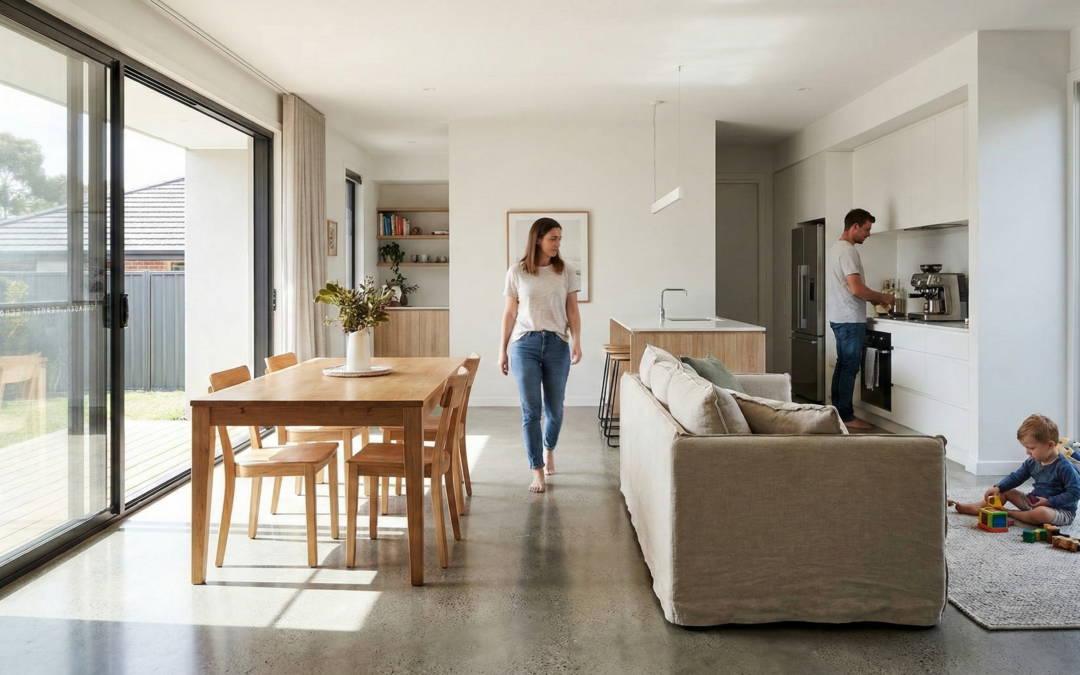
A livable floorplan prioritises natural traffic flow, functional room connections, and adequate space for daily activities. It balances open-plan living with private zones while maximising natural light and storage.
Many Sydney homeowners renovate without understanding how layout changes affect daily life. They focus on aesthetics but overlook how rooms connect and function together.
The right floorplan design transforms how you move through your home. It reduces friction in daily routines and adds long-term value.
In this blog, we will explain the key to a livable floorplan.
Understanding What Makes a Floorplan Truly Livable
A livable floorplan works with your lifestyle, not against it. According to the Australian Institute of Architects, functional layout ranks as the top priority for 78% of renovation clients. This matters more than finishes or fixtures.
Livability comes down to three core elements. These are circulation paths, room relationships, and spatial proportions.
Traffic flow determines how easily you move between spaces. Poor circulation creates bottlenecks. Good circulation feels invisible—you don’t notice it because it works.
Room adjacencies affect daily efficiency. Kitchens near dining areas reduce meal-time friction. Bathrooms near bedrooms improve morning routines.
The Housing Industry Association reports that layout changes deliver 15-20% higher ROI than cosmetic upgrades alone. This makes floorplan improvements a smart investment for Sydney property owners.
Assessing Your Current Layout for Renovation Potential
Before breaking any walls, you need honest assessment. Walk through your home during peak activity times. Note where congestion occurs and where space sits unused.
Structural walls limit what’s possible without major engineering. Load-bearing walls require steel beams and council approval. Non-structural walls offer more flexibility.
Consider these assessment questions:
- Where do family members collide during morning routines?
- Which rooms feel cramped despite adequate square metres?
- What spaces rarely get used?
Sydney’s median house size is 186 square metres, according to CoreLogic data. Many homes waste 10-15% of this space through poor layout design.
Document your findings with photos and measurements. This baseline helps architects and builders understand your goals. It also prevents scope creep during renovation planning.
Prioritising Traffic Flow and Circulation Paths
Circulation consumes 15-20% of total floor area in well-designed homes. This isn’t wasted space—it’s functional infrastructure.
Primary circulation connects main living areas. Secondary circulation serves private zones like bedrooms. Both need minimum widths for comfortable movement.
Australian Standard AS 1428.1 recommends 1000mm minimum corridor width. For wheelchair accessibility, this increases to 1200mm. These standards affect resale value and future-proofing.
Key circulation principles include:
- Avoid dead-end hallways where possible
- Create clear sightlines between connected spaces
- Position doors to prevent swing conflicts
The Building Code of Australia requires minimum 820mm door widths for accessibility compliance. Wider doors improve flow and accommodate furniture movement.
Traffic patterns should follow logical sequences. Entry to living to kitchen to outdoor areas creates intuitive flow. Forcing residents through bedrooms to reach bathrooms creates daily frustration.
Balancing Open-Plan Living with Private Zones
Open-plan layouts dominate Sydney renovations. Research from the University of Melbourne shows 67% of Australian families prefer open-plan kitchen-living combinations. But fully open designs create problems.
Noise travels freely in open spaces. Cooking smells permeate living areas. Visual clutter from one zone affects others.
The solution is “broken-plan” design. This approach uses partial walls, level changes, or furniture placement to define zones. You maintain connection while creating separation.
Acoustic privacy matters more post-pandemic. With more Sydneysiders working from home, dedicated quiet zones add significant value.
Consider these zoning strategies:
- Kitchen islands as visual dividers
- Sliding doors for flexible separation
- Ceiling height changes to define areas
- Strategic furniture placement
Private zones need buffer spaces from active areas. Bedrooms adjacent to living rooms suffer noise intrusion. A hallway or bathroom between them solves this problem.
Maximising Natural Light and Ventilation
Natural light reduces energy costs by up to 75% during daylight hours, according to the Australian Government’s YourHome guide. It also improves mood and perceived space.
Sydney’s climate allows year-round natural ventilation. Cross-ventilation requires openings on opposite walls. This creates airflow that reduces cooling costs.
BASIX requirements mandate minimum glazing ratios for Sydney renovations. These regulations ensure adequate natural light in habitable rooms.
Light-maximising strategies include:
- North-facing windows for winter sun
- Clerestory windows for deep-plan homes
- Internal glazing between rooms
- Light wells for central spaces
Rooms deeper than 6 metres struggle with natural light penetration. Consider skylights or borrowed light from adjacent spaces.
Ventilation planning affects room placement. Bathrooms and kitchens need exhaust capacity. Bedrooms benefit from operable windows for night cooling. Living areas need cross-flow options.
Integrating Storage Without Sacrificing Space
The average Australian household owns 300,000 items, according to professional organiser research. Storage-poor floorplans create visible clutter and daily frustration.
Built-in storage uses wall depth efficiently. A 600mm deep wardrobe consumes less visual space than freestanding furniture. It also increases property value.
Sydney’s smaller lot sizes make storage integration critical. Vertical storage, under-stair solutions, and multi-functional furniture help maximise limited footprints.
Effective storage strategies include:
- Floor-to-ceiling wardrobes in bedrooms
- Kitchen pantries with pull-out systems
- Bathroom vanities with drawer storage
- Entry zones with concealed coat storage
Each bedroom needs minimum 1.8 linear metres of wardrobe space per occupant. This standard from interior design guidelines ensures adequate clothing storage.
Storage placement affects circulation. Wardrobes need 900mm clearance for door swing. Walk-in robes need 1200mm aisle width. These dimensions prevent cramped daily routines.
Planning for Future Flexibility and Accessibility
Australia’s population aged 65+ will double by 2057, according to ABS projections. Designing for accessibility now prevents costly future modifications.
Universal design principles benefit all ages. Wider doorways accommodate prams and wheelchairs. Step-free entries prevent trip hazards. Lever handles work for arthritic hands.
Livable Housing Australia’s Silver Level certification adds 3-5% to construction costs but increases long-term value significantly. Many Sydney councils now encourage these standards.
Future-proofing considerations include:
- Reinforced bathroom walls for future grab rails
- Wider hallways for mobility aids
- Ground-floor bedroom potential
- Accessible bathroom on entry level
Room flexibility matters for changing families. A home office might become a nursery. A formal dining room might become a study. Design for adaptability.
Structural planning enables future changes. Positioning plumbing stacks centrally allows bathroom additions. Adequate electrical capacity supports future technology needs.
Conclusion
A livable floorplan transforms daily life and protects your renovation investment. The principles of traffic flow, zoning, natural light, storage, and accessibility work together to create homes that function beautifully.
Sydney Home Renovation helps homeowners and investors achieve these outcomes. Our end-to-end renovation solutions include transparent cost planning, detailed budgeting, and skilled workmanship.
We combine practical construction expertise with honest pricing. Our team ensures projects stay on budget, on schedule, and built for long-term value.
Contact Sydney Home Renovation to discuss your floorplan goals. We’ll help you create a home that works for your lifestyle today and adapts for tomorrow.
FAQs
What is the most important factor in a livable floorplan?
Traffic flow ranks as the most critical factor. Good circulation allows smooth movement between rooms without congestion. It affects every daily activity from morning routines to entertaining guests.
How much does a floorplan change cost in Sydney?
Structural layout changes typically cost $15,000-$50,000 depending on complexity. Non-structural modifications cost less. Engineering requirements and council approvals add to structural change costs.
Can I change my floorplan without council approval?
Minor non-structural changes often qualify as exempt development. Structural modifications, room additions, and changes affecting fire safety require Development Application approval. Always verify with your local council first.
How do I know if a wall is load-bearing?
Load-bearing walls typically run perpendicular to floor joists. They often align with walls on floors above. A structural engineer can confirm through inspection. Never remove walls without professional assessment.
What floorplan changes add the most value?
Open-plan kitchen-living conversions deliver strong returns. Adding bathrooms near bedrooms increases functionality. Creating indoor-outdoor flow suits Sydney’s climate and lifestyle expectations.
How long does a floorplan renovation take?
Simple layout changes take 4-8 weeks. Major structural modifications require 12-20 weeks. Council approval adds 6-12 weeks before construction begins. Planning thoroughly reduces timeline blowouts.
Should I hire an architect for floorplan changes?
Architects add value for complex renovations exceeding $100,000. Building designers suit simpler projects. Both provide professional drawings required for council approval and builder quotes.