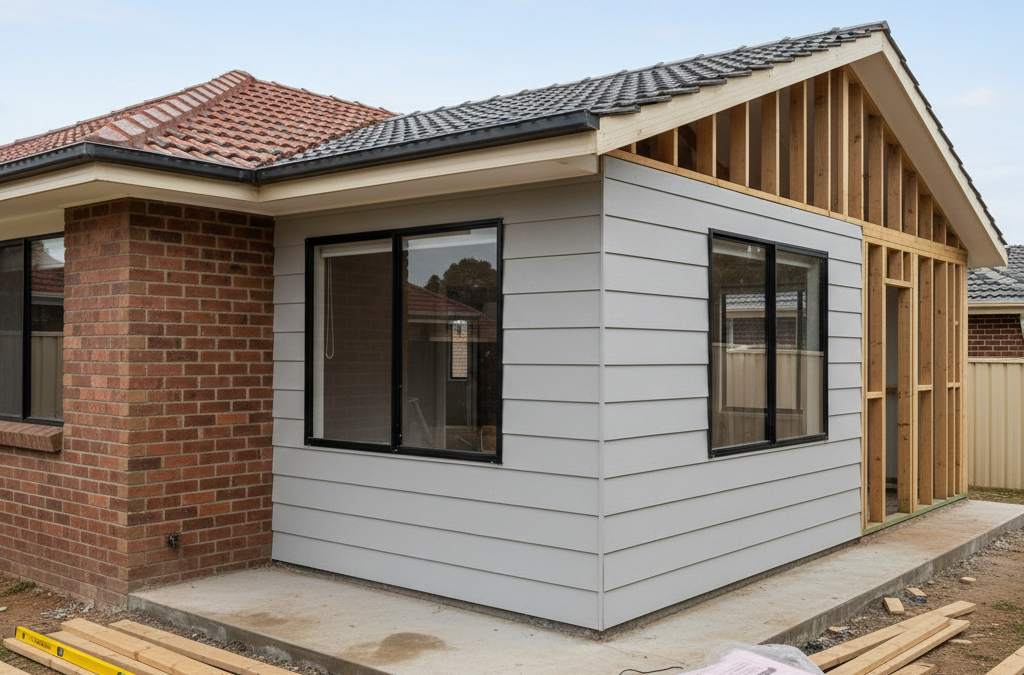
A side extension is one of the most practical ways to add living space to a Sydney home, with costs typically ranging from $2,500 to $4,500 per square metre depending on scope, materials, and site conditions. Whether you are working with a narrow lot, an underused side passage, or a property that cannot go up, extending sideways unlocks floor area without the disruption and expense of a full second storey.
This guide covers everything Sydney homeowners, first-time renovators, and property investors need to plan a side extension from start to finish. You will find real cost breakdowns, council approval requirements, design strategies, build timelines, and practical budgeting advice to keep your project on track and on budget.
What Is a Side Extension?
A side extension is a ground-level or multi-level addition built onto the side of an existing house. It expands the building footprint laterally, typically into a side yard, driveway space, or unused passage that runs along the property boundary. In Sydney, side extensions are especially common on older detached and semi-detached homes where narrow side setbacks leave just enough room to add a bedroom, bathroom, laundry, or expanded kitchen and living area.
Unlike rear extensions that push the home deeper into the backyard, a side extension preserves outdoor space at the rear while making use of land that often serves no functional purpose. The new structure ties into the existing building through shared walls, matched rooflines, and integrated internal layouts.
Single-Storey vs Two-Storey Side Extensions
A single-storey side extension is the most common and cost-effective option. It works well for adding a single room, widening a kitchen, or creating an open-plan living and dining area. Structural requirements are simpler, council approvals are often faster, and construction timelines are shorter.
A two-storey side extension costs more but delivers significantly more usable floor area on the same footprint. This option suits homeowners who need both ground-floor living space and upper-level bedrooms or a home office. Two-storey builds require deeper foundations, engineered structural steel, and more complex roof integration, which increases both cost and build time.
For most Sydney blocks, the choice comes down to budget, how much space you need, and what your local council’s building envelope controls allow. Properties in areas with strict height limits or overshadowing rules may be limited to single-storey construction.
Common Uses for a Side Extension in Sydney Homes
Sydney homeowners use side extensions to solve specific space problems. The most frequent applications include:
Expanding the kitchen and living area. Many older Sydney homes have small, enclosed kitchens. A side extension can widen the ground floor enough to create an open-plan kitchen, dining, and living zone that connects to the backyard.
Adding a bedroom or home office. Growing families and remote workers need extra rooms. A side extension provides a self-contained space without sacrificing the backyard or requiring a second storey.
Creating a new bathroom or laundry. Homes with only one bathroom benefit from a side extension that houses a second bathroom, an ensuite, or a combined laundry and utility room.
Building a granny flat or secondary dwelling. On wider blocks, a side extension can function as a semi-independent living space for elderly parents or as a rental income source, subject to council regulations.
Widening a narrow hallway or entry. Some side extensions are modest in scope but transform the feel of a home by opening up a cramped corridor or creating a proper entryway.
How Much Does a Side Extension Cost in Sydney?
Side extension costs in Sydney vary widely based on size, complexity, finishes, and site conditions. Getting a realistic budget range early helps you make informed decisions about scope and priorities before committing to architectural plans.
Average Cost Per Square Metre
In Sydney’s current construction market, side extensions typically cost between $2,500 and $4,500 per square metre for standard residential builds. This range covers structural work, internal fit-out, basic to mid-range finishes, and standard compliance costs.
Budget-level builds using simple materials and minimal internal changes sit at the lower end. Mid-range projects with quality finishes, custom joinery, and integrated plumbing or electrical work fall in the middle. High-end builds with premium materials, architectural detailing, and complex structural requirements push toward or beyond the upper end.
These figures reflect builder quotes and project data from Sydney’s Inner West, Northern Beaches, Eastern Suburbs, and Greater Western Sydney. Actual costs depend on your specific site, builder, and design choices.
Single-Storey Side Extension Costs
A single-storey side extension in Sydney generally costs between $80,000 and $250,000 depending on size and specification.
A small extension of 10 to 15 square metres, such as adding a single room or widening a kitchen, typically falls between $80,000 and $130,000. A medium extension of 20 to 30 square metres that includes plumbing for a bathroom or laundry usually ranges from $130,000 to $200,000. Larger single-storey extensions exceeding 30 square metres with full fit-out and premium finishes can reach $200,000 to $250,000 or more.
These estimates include demolition of the existing side wall, new foundations, structural framing, roofing, external cladding, internal lining, electrical and plumbing rough-in, and basic finishes. They do not include architectural fees, engineering, council application fees, or landscaping, which add $15,000 to $40,000 depending on complexity.
Two-Storey Side Extension Costs
A two-storey side extension in Sydney typically costs between $200,000 and $500,000. The higher cost reflects deeper foundations, structural steel, scaffolding, additional roofing complexity, and the fit-out of two levels.
A compact two-storey build of 30 to 40 square metres total (across both floors) generally starts around $200,000 to $300,000. Larger two-storey extensions of 50 to 70 square metres with multiple wet areas, custom design features, and high-end finishes can reach $350,000 to $500,000.
Two-storey builds also carry higher professional fees. Structural engineering, architectural design, and energy compliance reports are more involved, adding $25,000 to $60,000 to the project budget.
Cost Comparison Table by Extension Size
| Extension Type | Size (sqm) | Typical Cost Range | Cost Per sqm |
| Small single-storey | 10–15 sqm | $80,000–$130,000 | $2,500–$3,500 |
| Medium single-storey | 20–30 sqm | $130,000–$200,000 | $2,800–$3,800 |
| Large single-storey | 30–45 sqm | $200,000–$250,000 | $3,000–$4,000 |
| Compact two-storey | 30–40 sqm | $200,000–$300,000 | $3,200–$4,200 |
| Large two-storey | 50–70 sqm | $350,000–$500,000 | $3,500–$4,500 |
These figures are indicative for Sydney in 2024–2025. Request itemised quotes from at least three licensed builders to get accurate pricing for your specific project.
What Factors Affect Side Extension Costs?
No two side extension projects cost the same. Understanding the variables that drive pricing helps you control your budget and avoid surprises during construction.
Site Access and Structural Conditions
The physical characteristics of your property have a direct impact on cost. Narrow side access makes it harder and slower to move materials, equipment, and waste on and off site. If a crane or specialised machinery is needed to lift materials over the existing house, expect additional charges of $2,000 to $10,000 depending on the number of lifts required.
Soil conditions matter too. Reactive clay soils, which are common across Western Sydney and parts of the Inner West, require deeper or engineered foundations. A geotechnical report (typically $1,500 to $3,000) determines what foundation type your site needs. Poor soil can add $10,000 to $30,000 to foundation costs compared to stable sandy or rock sites.
Existing structural conditions also affect pricing. If the shared wall between the existing house and the new extension needs reinforcement, or if load-bearing walls must be removed to open up the floor plan, structural steel and engineering costs increase.
Materials and Finishes
Material selection is one of the biggest cost levers you control. The difference between standard and premium finishes can shift your total project cost by 20 to 40 percent.
Structural materials. Timber framing is the most common and cost-effective option for single-storey side extensions in Sydney. Steel framing costs more but is required for two-storey builds and large open spans. Brick or block construction adds thermal mass and durability but increases labour time and material costs.
External cladding. Fibre cement weatherboard is a popular mid-range choice. Brick veneer matches many existing Sydney homes but costs more. Rendered blockwork and timber cladding sit at different price points depending on the product and installation method.
Internal finishes. Flooring, tiling, cabinetry, benchtops, and paint all contribute to the final cost. A standard laminate kitchen benchtop might cost $800 to $1,500, while engineered stone ranges from $2,500 to $5,000 for the same area. Multiplied across every surface in the extension, these choices add up quickly.
Labour and Trade Costs in Sydney
Labour is the single largest cost component in any Sydney side extension, typically accounting for 40 to 50 percent of the total build cost. Sydney’s construction labour market remains tight, and trade rates reflect high demand.
Key trades involved in a side extension include:
- Builder/carpenter: $60–$85 per hour
- Electrician: $80–$120 per hour
- Plumber: $80–$130 per hour
- Bricklayer: $70–$100 per hour
- Plasterer: $50–$70 per hour
- Tiler: $60–$90 per hour
- Painter: $45–$65 per hour
These rates vary by experience, location within Sydney, and project complexity. Builders who manage all trades under a single contract typically charge a margin of 15 to 25 percent on top of trade costs, which covers project management, insurance, and coordination.
Council Approvals and Compliance Fees
Every side extension in Sydney requires some form of approval, and the associated fees add to your budget.
A Complying Development Certificate (CDC) through a private certifier typically costs $3,000 to $6,000 including assessment and inspections. A Development Application (DA) through your local council costs $5,000 to $15,000 or more, depending on the project value and council fee schedule. DA processing times are longer, which can delay your project start by 8 to 16 weeks.
Additional compliance costs include:
- BASIX certificate (energy and water efficiency): $500–$800
- Structural engineering certification: $3,000–$8,000
- Private building certifier inspections: $2,500–$5,000
- Section 7.12 development contributions: 0.5–1% of project cost
Hidden Costs and Budget Contingencies
Experienced renovators budget for the unexpected. Common hidden costs in side extension projects include:
Asbestos removal. Many Sydney homes built before 1990 contain asbestos in eaves, wall cladding, or wet area linings. Licensed asbestos removal costs $3,000 to $15,000 depending on the quantity and location.
Stormwater and drainage upgrades. Increasing your roof area means more stormwater runoff. Council may require upgraded drainage, a new stormwater pit, or on-site detention, costing $3,000 to $12,000.
Utility relocations. Gas meters, electrical switchboards, water meters, or sewer lines located on the side of the house may need to be relocated before construction begins. Each relocation can cost $1,000 to $5,000.
Temporary accommodation. If the build disrupts your kitchen, bathroom, or main living area, you may need to budget for temporary accommodation or alternative cooking and bathing arrangements.
A contingency of 10 to 15 percent of your total build budget is standard practice. On a $200,000 project, that means setting aside $20,000 to $30,000 for unforeseen costs.
Sydney Council Approval and Planning Requirements
Understanding the approval pathway before you start designing saves time, money, and frustration. Sydney’s planning framework offers two main routes for side extensions, each with different rules, timelines, and costs.
Complying Development vs Development Application
Complying Development (CDC) is the faster and simpler approval pathway. If your side extension meets all the predetermined standards in the State Environmental Planning Policy (Exempt and Complying Development Codes) 2008, a private certifier can approve it without a council DA. CDC approvals typically take 10 to 20 business days and do not require neighbour notification.
To qualify for CDC, your project must meet specific criteria including setback distances, building height limits, floor space ratios, and landscaped area requirements. The extension must not affect heritage items, flood-prone land, or bushfire-prone areas.
Development Application (DA) is required when your project does not meet CDC standards. This involves submitting plans to your local council for assessment. DAs require neighbour notification, and objections can extend the process. Typical DA processing times in Sydney range from 8 to 16 weeks, though complex applications or those requiring design review panels can take longer.
Your architect or building designer can assess which pathway suits your project during the initial design phase.
Setback Rules and Building Envelope Controls
Setback rules determine how close your side extension can be built to the property boundary. In most Sydney residential zones, the minimum side setback is 900mm for single-storey construction. Two-storey extensions typically require larger setbacks, often 1.5 metres or more, depending on wall height and the specific council’s Development Control Plan (DCP).
Building envelope controls limit the overall height and bulk of your extension. These controls use a combination of maximum building height (usually 8.5 to 9.5 metres in residential zones), floor space ratio (FSR), and setback planes that angle inward from the boundary to protect neighbouring properties from overshadowing and visual bulk.
Your local council’s DCP contains the specific controls for your property. Checking these early prevents costly redesigns after plans are drawn.
Heritage Overlays and Conservation Areas
If your property is within a heritage conservation area or is individually heritage-listed, additional approval requirements apply. Side extensions on heritage properties must demonstrate that the new work is sympathetic to the existing building’s character, materials, and proportions.
Many Sydney councils require a Heritage Impact Statement (HIS) prepared by a qualified heritage consultant, costing $2,000 to $5,000. The extension design may need to be set back from the main facade, use matching or complementary materials, and maintain the visual prominence of the original building.
Heritage requirements do not prevent side extensions, but they add design constraints and approval time. Early consultation with your council’s heritage advisor can clarify what is and is not acceptable before you invest in detailed plans.
Side Extension Design Considerations
Good design turns a side extension from a basic room addition into a seamless part of your home. The best results come from treating the extension as an integrated upgrade, not an afterthought.
Maximising Natural Light and Ventilation
Side extensions can create dark internal spaces if not designed carefully. The new structure often sits close to the boundary, limiting window placement on the side wall. Compensate with these strategies:
Skylights and roof windows. These bring light deep into the extension without relying on side windows. Operable skylights also provide ventilation, which helps meet the Building Code of Australia’s natural ventilation requirements.
Clerestory windows. High-level windows above the roofline of the existing house allow light in without compromising privacy or boundary setbacks.
Internal glass doors and partitions. Glazed internal doors between the extension and existing rooms allow borrowed light to flow through the home.
Light wells and courtyards. On wider blocks, incorporating a small light well or courtyard between the old and new sections creates a private outdoor space that floods both areas with natural light.
Matching the Existing Roofline and Facade
A side extension that looks like it belongs with the original house adds more value and street appeal than one that appears bolted on. Key design principles include:
Roof pitch and form. Matching the roof pitch of the existing house creates visual continuity. If the existing roof is a hipped tile roof, the extension roof should follow the same angle and material where possible. Flat roofs or skillion roofs can work as a deliberate contrast on contemporary homes.
External materials. Using the same or complementary brick, render, or cladding ties the extension to the original building. Where exact material matching is not possible (common with older bricks), a deliberate material change with a clean junction line can look intentional and architecturally considered.
Window proportions. Matching window sizes, styles, and head heights with the existing house maintains a consistent facade. This is especially important for street-facing elevations.
Open-Plan Layouts and Room Configuration
The internal layout of your side extension should respond to how you actually use your home. Common layout strategies include:
Widening the kitchen into an open-plan living zone. Removing the side wall of an existing kitchen and extending into the new space creates a wide, open kitchen-dining-living area. This is the most popular side extension layout in Sydney.
Adding rooms along a new corridor. On narrower extensions, a hallway along the shared wall provides access to new rooms (bedroom, bathroom, study) without disrupting the existing floor plan.
Creating a self-contained wing. Larger side extensions can function as a semi-independent section of the house with its own entrance, bathroom, and living space, ideal for multigenerational living or future rental potential.
Work with your architect to test multiple layout options before committing. Even small changes in room configuration can significantly affect how the finished space feels and functions.
The Side Extension Build Process Step by Step
Understanding the build process helps you plan realistic timelines, coordinate trades, and avoid delays. A typical side extension in Sydney follows this sequence.
Feasibility and Site Assessment
Before any design work begins, assess whether a side extension is physically and financially viable on your property. This involves:
Measuring available space. Check the width of your side yard, the distance to the boundary, and any obstructions such as trees, retaining walls, or services.
Reviewing planning controls. Look up your property’s zoning, FSR, height limits, and setback requirements through your council’s online planning portal or by requesting a planning certificate (Section 10.7 certificate, approximately $50 to $150).
Setting a preliminary budget. Based on the size and type of extension you want, establish a realistic budget range using the cost data in this guide. Include professional fees, approvals, and contingency.
Engaging a building designer or architect. A qualified professional can assess your site, advise on the best design approach, and estimate whether your budget aligns with your goals.
Architectural Plans and Engineering
Once feasibility is confirmed, your architect or building designer prepares detailed plans. This phase typically takes 4 to 8 weeks and includes:
- Measured survey of the existing house
- Concept design and floor plan options
- Detailed architectural drawings for approval
- Structural engineering design and certification
- BASIX certificate preparation
- Specification of materials and finishes
Architectural fees for a side extension in Sydney range from $8,000 to $25,000 depending on the project’s complexity and the level of design service you choose.
Approvals and Permits
With completed plans, your certifier or council assesses the application. Timeline expectations:
- CDC approval: 10–20 business days
- DA approval: 8–16 weeks (longer if design review or heritage assessment is required)
Your certifier will also issue a Construction Certificate (CC) before building work can legally commence. The CC confirms that the detailed construction plans comply with the Building Code of Australia.
Construction Timeline and Key Stages
A single-storey side extension in Sydney typically takes 10 to 16 weeks to build. A two-storey extension takes 16 to 24 weeks. Key construction stages include:
Week 1–2: Site preparation and demolition. Temporary fencing, site protection, removal of the existing side wall or structure, and excavation for new footings.
Week 2–4: Foundations and slab. Pouring concrete footings and slab. This stage depends on soil conditions and weather.
Week 4–8: Framing and roofing. Erecting wall frames, installing roof trusses or rafters, and fixing roof sheeting. The extension becomes weatherproof at this stage.
Week 8–12: Lock-up and internal rough-in. Installing windows and external doors, running electrical wiring, plumbing pipes, and any mechanical ventilation. External cladding and brickwork are completed.
Week 12–16: Internal fit-out and finishing. Plastering, tiling, painting, installing cabinetry, benchtops, fixtures, and fittings. Final electrical and plumbing connections.
Final Inspections and Handover
Before you can occupy the new space, your building certifier conducts a final inspection and issues an Occupation Certificate (OC). The OC confirms the completed work matches the approved plans and complies with all relevant building standards.
Your builder should also provide:
- A defects list walkthrough (you and the builder inspect together)
- Warranty documentation for structural work (typically 6 years under NSW Home Building Act)
- Warranty documentation for non-structural work (typically 2 years)
- Maintenance guides for new fixtures and finishes
Retain all certificates, plans, and warranties. You will need them for future insurance claims, property sales, or further renovations.
How to Save Money on a Side Extension Without Cutting Corners
Smart budgeting is not about choosing the cheapest option for everything. It is about directing your money where it delivers the most value and avoiding waste.
Prioritising Structural Work Over Cosmetic Upgrades
The foundation, framing, roofing, waterproofing, and insulation of your extension are permanent. Cosmetic finishes like paint colours, light fixtures, and cabinet handles can be upgraded later at relatively low cost.
Allocate the majority of your budget to getting the structure right. Skimping on foundations, waterproofing, or structural steel to afford a more expensive benchtop is a false economy that leads to expensive repairs down the track.
Choosing Cost-Effective Materials
You do not need the most expensive materials to get a quality result. Consider these substitutions:
- Engineered timber flooring instead of solid hardwood (saves 30–40% with similar appearance)
- Fibre cement cladding instead of brick veneer (saves on both material and labour)
- Laminate or porcelain benchtops instead of natural stone (saves 40–60% with improved durability)
- Standard aluminium windows instead of timber or custom profiles (saves 20–40%)
Discuss material options with your builder early. Experienced builders know which products deliver the best balance of cost, durability, and appearance for Sydney conditions.
Getting Accurate Quotes and Avoiding Scope Creep
The most common cause of budget blowouts is not unexpected site conditions. It is scope creep, where small changes and additions accumulate during construction.
Get detailed, itemised quotes. A lump-sum quote that says “side extension: $180,000” tells you nothing. Request a breakdown by trade, material, and stage so you can see exactly where your money goes.
Finalise your design before construction starts. Every change made after construction begins costs more than the same change made during the design phase. Changing a window size after framing is complete means reworking the frame, reordering the window, and potentially adjusting the cladding and lining.
Use a fixed-price contract where possible. A fixed-price building contract locks in the total cost for the agreed scope of work. Variations are still possible, but they must be documented and approved in writing before the work is done.
Does a Side Extension Add Value to Your Property?
A well-executed side extension is one of the most reliable ways to increase your home’s market value. But the return depends on what you build, how well you build it, and where your property is located.
Return on Investment for Sydney Homes
In Sydney’s property market, additional living space consistently adds value. Industry data and property valuation principles suggest that a quality side extension can return 60 to 80 percent of its cost in added property value immediately after completion. In high-demand suburbs, the return can exceed 100 percent, particularly when the extension transforms a two-bedroom home into a three-bedroom home or creates an open-plan living area that meets current buyer expectations.
The key factors that maximise return on investment include:
- Adding a bedroom. Moving from two to three bedrooms, or three to four, shifts your property into a higher price bracket.
- Creating open-plan living. Buyers in Sydney consistently pay more for homes with connected kitchen-dining-living areas.
- Adding a bathroom. A second bathroom or ensuite is a high-value addition, especially for family homes.
- Improving street appeal. An extension that enhances the front facade adds perceived value before buyers even walk through the door.
How Extra Square Metres Affect Property Valuation
Property valuers assess homes on a per-square-metre basis relative to comparable sales in the area. Adding 20 to 30 square metres of well-finished living space to a home in a suburb where the median price is $1.5 million for a 120-square-metre house can add $150,000 to $250,000 in value, depending on the quality of the build and the functionality of the new space.
However, overcapitalisation is a real risk. If your extension costs $300,000 but only adds $200,000 in value, you have overcapitalised by $100,000. This is more likely in lower-value suburbs or when the extension includes luxury finishes that exceed the neighbourhood standard.
Before committing to a large extension, get an informal appraisal from a local real estate agent on what your home could be worth after the work is completed. Compare that figure to your total project cost to confirm the investment makes financial sense.
Side Extension vs Other Home Extension Types
A side extension is not always the best option. Understanding how it compares to other extension types helps you choose the right approach for your block, budget, and goals.
Side Extension vs Rear Extension
A rear extension pushes the home deeper into the backyard. It is often easier to build because there are fewer boundary constraints and better site access. Rear extensions work well for creating large open-plan living areas that connect to outdoor entertaining spaces.
The trade-off is reduced backyard space. On smaller Sydney blocks, a rear extension can leave very little usable outdoor area. A side extension preserves the backyard while using land that typically has no functional value.
Choose a rear extension if you have a deep block with plenty of backyard space. Choose a side extension if your backyard is already small or if you want to maintain outdoor living area.
Side Extension vs Second Storey Addition
A second storey addition builds upward rather than outward. It does not consume any ground-level land, making it ideal for small blocks where there is no room to extend sideways or backward.
However, second storey additions are significantly more expensive and disruptive. They require temporary relocation during construction, extensive structural reinforcement of the existing ground floor, and complex engineering. Costs typically start at $300,000 and can exceed $600,000 for a full second storey.
A side extension is less disruptive, often allows you to remain in the home during construction, and costs less per square metre. Choose a second storey if you need maximum additional space and your block cannot accommodate a ground-level extension.
Which Extension Type Suits Your Block?
| Factor | Side Extension | Rear Extension | Second Storey |
| Best for | Narrow side yards, preserving backyard | Deep blocks, open-plan living | Small blocks, maximum space |
| Typical cost | $2,500–$4,500/sqm | $2,500–$4,000/sqm | $3,500–$5,500/sqm |
| Backyard impact | None | Significant | None |
| Disruption level | Moderate | Moderate | High |
| Can stay in home? | Usually yes | Usually yes | Usually no |
| Council complexity | Moderate | Low to moderate | High |
The right choice depends on your specific block dimensions, planning controls, budget, and how much space you need. Many Sydney homeowners benefit from combining extension types, such as a side and rear extension together, to maximise the result.
Conclusion
A side extension gives Sydney homeowners a practical, cost-effective way to add living space, increase property value, and improve daily functionality without sacrificing backyard area or undertaking a full second-storey build.
Planning well is the difference between a smooth, on-budget project and a stressful, expensive one. Understanding your costs, council requirements, and design options before construction starts puts you in control of every decision.
We help Sydney homeowners plan and build side extensions with confidence. Contact Sydney Home Renovation today for a detailed, obligation-free quote and let us turn your unused side space into the extra room your home needs.
Frequently Asked Questions
How long does a side extension take to build in Sydney?
A single-storey side extension typically takes 10 to 16 weeks from site preparation to handover. Two-storey extensions take 16 to 24 weeks. Add 4 to 16 weeks for design and approvals before construction begins.
Do I need council approval for a side extension in NSW?
Yes. All side extensions require either a Complying Development Certificate from a private certifier or a Development Application through your local council. The pathway depends on whether your project meets the predetermined standards in the NSW planning codes.
Can I build a side extension on a narrow block?
Yes, but your options depend on the available width and your council’s minimum setback requirements. Most councils require at least 900mm between the extension wall and the side boundary for single-storey construction. An architect can design solutions that maximise space within these constraints.
What is the cheapest type of side extension?
A small single-storey side extension of 10 to 15 square metres using timber framing, fibre cement cladding, and standard finishes is the most affordable option. Expect to pay $80,000 to $130,000 in Sydney, excluding professional fees and approvals.
How far can a side extension go to the boundary?
Under NSW Complying Development provisions, a single-storey side extension wall can be built as close as 900mm to the side boundary. Some councils allow construction closer to or on the boundary under specific conditions, but this typically requires a DA rather than a CDC.
Will a side extension affect my neighbour’s property?
It can. Potential impacts include overshadowing, reduced privacy, and visual bulk. Sydney planning controls include setback rules and building envelope planes specifically designed to limit these impacts. Your certifier or council assesses these factors during the approval process.
Is a side extension worth it for a small house?
A side extension is often the best option for small houses because it adds functional space without reducing the backyard. Even a modest 15 to 20 square metre extension can transform a cramped two-bedroom home into a comfortable three-bedroom property, significantly increasing both liveability and resale value.