The biggest remodeling trends for 2026 centre on wellness-focused design, sustainable materials, and seamless smart home integration—with Australian homeowners prioritising bathroom and kitchen renovations that deliver both lifestyle improvements and long-term property value. Whether you’re planning a full home transformation or a strategic bathroom upgrade, understanding these emerging trends helps you make renovation decisions that won’t feel dated within five years.
This guide breaks down the most significant remodeling directions shaping Sydney homes in 2026, covering everything from material choices and colour palettes to technology integration and budget-conscious approaches. You’ll discover which trends offer genuine value versus fleeting fads, helping you renovate with confidence and maximise your return on investment.
Sustainable and Eco-Friendly Renovations Lead the Way
Sustainability has shifted from a niche preference to a mainstream expectation in Australian home renovations. Homeowners are increasingly demanding materials and systems that reduce environmental impact while lowering long-term operating costs.
Recycled and Reclaimed Materials Gain Momentum
Recycled timber, reclaimed bricks, and repurposed metals are becoming standard specifications rather than specialty requests. Sydney renovators are sourcing materials from demolition sites, giving character pieces new life while reducing landfill waste. Recycled glass countertops and tiles made from post-consumer waste offer durability comparable to virgin materials at competitive price points.
The appeal extends beyond environmental consciousness. Reclaimed materials often feature unique patinas and textures impossible to replicate with new products, adding authentic character to bathroom and kitchen spaces.
Energy-Efficient Systems Become Standard
Solar integration, heat pump hot water systems, and high-performance insulation are no longer premium upgrades—they’re baseline expectations for 2026 renovations. Energy.gov.au reports that Australian households can reduce energy bills by up to 30% through strategic efficiency upgrades during renovation.
For bathroom renovations specifically, instantaneous hot water systems and LED lighting with motion sensors deliver immediate savings. These investments typically pay for themselves within three to five years while increasing property appeal to future buyers.
Water Conservation Features
With Sydney’s variable rainfall patterns, water-saving fixtures have become essential rather than optional. Dual-flush toilets, low-flow showerheads that maintain pressure, and greywater recycling systems are appearing in renovation specifications across all budget levels.
Smart irrigation controllers and rainwater harvesting tanks complement indoor water efficiency measures, creating comprehensive conservation strategies that resonate with environmentally conscious buyers.
Smart Home Technology Integration Expands
The smart home market continues maturing, with 2026 bringing more sophisticated and genuinely useful integrations rather than gimmicky additions.
Voice-Controlled and Automated Systems
Voice-activated lighting, temperature control, and even tap operation are moving from luxury apartments into standard family homes. The key shift for 2026 involves systems that work together seamlessly rather than requiring multiple apps and platforms.
Bathroom renovations increasingly include smart mirrors with integrated lighting controls, defogging functions, and even health monitoring capabilities. These features add $2,000-$5,000 to bathroom budgets but significantly enhance daily functionality.
Integrated Security and Monitoring
Smart locks, video doorbells, and comprehensive security systems now integrate with renovation planning from the outset. Electricians and builders coordinate during rough-in stages to ensure proper wiring and placement, avoiding costly retrofits.
For investment properties, smart access systems simplify tenant management while providing security documentation—a practical consideration for Sydney landlords planning renovation upgrades.
Energy Management Dashboards
Real-time energy monitoring helps homeowners understand consumption patterns and identify savings opportunities. These systems connect to smart appliances, HVAC units, and solar installations, providing actionable insights through smartphone apps.
The data proves particularly valuable for demonstrating efficiency improvements to potential buyers, supporting premium pricing for renovated properties.
Wellness-Focused Design Takes Centre Stage
Post-pandemic priorities continue influencing renovation decisions, with health and wellbeing considerations driving design choices throughout the home.
Spa-Inspired Bathroom Retreats
Bathrooms are evolving from purely functional spaces into personal wellness sanctuaries. Freestanding soaking tubs, rainfall showerheads, and steam shower capabilities appear in renovations across budget ranges—not just luxury projects.
Natural light maximisation through skylights or larger windows supports circadian rhythms and reduces reliance on artificial lighting. Where privacy permits, Sydney renovators are incorporating operable windows to improve ventilation and air quality.
Biophilic Design Elements
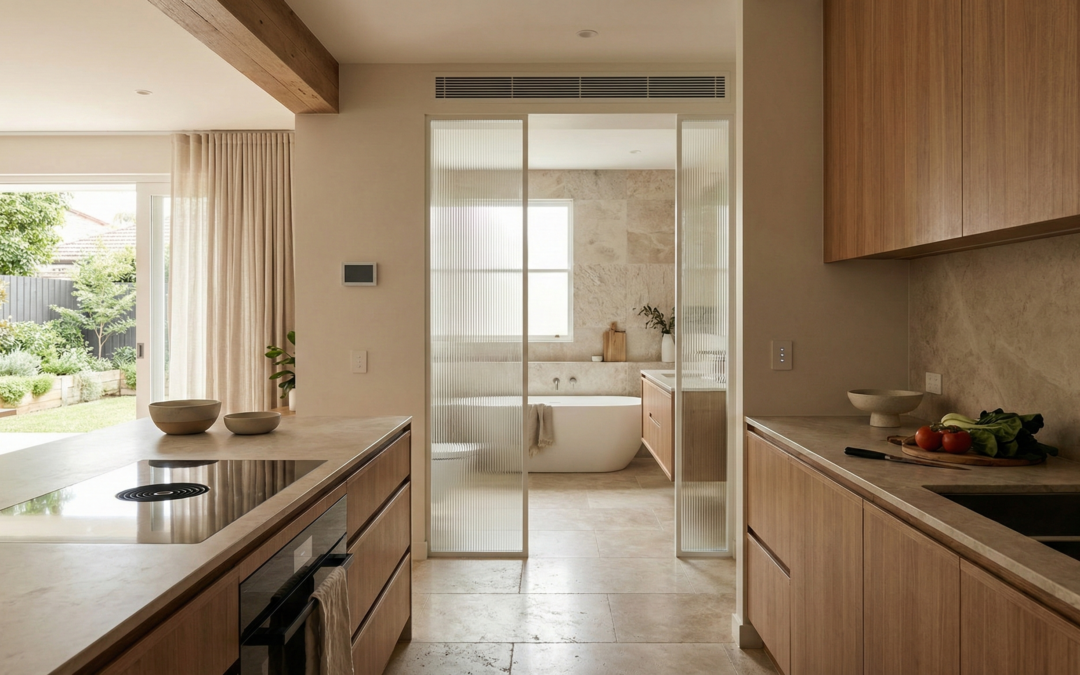
Bringing nature indoors through living walls, indoor plants, and natural materials creates calming environments that support mental health. Bathroom renovations increasingly feature timber accents, stone surfaces, and organic shapes that soften the traditionally hard-edged space.
The trend extends to colour palettes, with earthy greens, warm terracottas, and soft neutrals replacing the stark whites that dominated previous years.
Improved Ventilation and Air Quality
Mechanical ventilation with heat recovery, air purification systems, and humidity control have become standard considerations for bathroom and kitchen renovations. These systems prevent mould growth while maintaining comfortable indoor environments year-round.
For Sydney’s humid summers, proper ventilation planning during renovation prevents costly remediation work later while protecting occupant health.
Bold Colours and Textured Finishes Emerge
The all-white minimalist aesthetic is giving way to more expressive, personality-driven design choices in 2026.
Rich, Saturated Colour Palettes
Deep greens, navy blues, and warm terracotta tones are appearing on bathroom vanities, feature walls, and cabinetry. These colours create visual interest while maintaining the sophisticated feel homeowners expect from quality renovations.
The shift doesn’t mean abandoning neutrals entirely. Rather, bold colours serve as accents against softer backgrounds, allowing personality without overwhelming smaller spaces.
Textured Tiles and Dimensional Surfaces
Flat, glossy surfaces are being replaced by textured alternatives that add depth and tactile interest. Fluted panels, ribbed tiles, and three-dimensional wall treatments create visual movement without requiring bold colours.
In bathrooms, textured tiles also provide practical slip resistance, combining aesthetic appeal with safety considerations—particularly important for aging-in-place renovations.
Mixed Metal Finishes
The matchy-matchy approach to tapware and hardware is fading. Combining brushed brass with matte black, or aged bronze with polished chrome, creates layered, collected-over-time aesthetics that feel more personal than catalogue-perfect coordination.
This trend actually benefits renovation budgets, as homeowners can retain quality existing fixtures while introducing new elements in complementary finishes.
Multifunctional Spaces Maximise Value
Sydney’s property prices drive demand for spaces that work harder, serving multiple purposes without feeling cramped.
Flexible Room Configurations
Rooms designed for single purposes are giving way to adaptable spaces that accommodate changing needs. Home offices that convert to guest rooms, laundries that double as mudrooms, and bathrooms with integrated storage for household supplies reflect this practical approach.
For bathroom renovations, this might mean incorporating a dedicated space for exercise equipment, meditation, or grooming stations that serve the whole family.
Integrated Storage Solutions
Built-in storage eliminates visual clutter while maximising usable floor space. Recessed medicine cabinets, vanity drawers with organisational inserts, and concealed cistern systems create clean lines while providing essential functionality.
Custom joinery costs more upfront but delivers better space utilisation than freestanding furniture, particularly in Sydney’s typically compact bathroom footprints.
Indoor-Outdoor Flow
Where site conditions permit, renovations increasingly blur boundaries between interior and exterior spaces. Bathrooms with private courtyard access, outdoor showers, and seamless flooring transitions extend living areas and enhance connection with nature.
Even without direct outdoor access, strategic window placement and material choices can create visual connections that make spaces feel larger and more connected to their surroundings.
Aging-in-Place Features Gain Mainstream Appeal
Universal design principles are moving beyond accessibility compliance into mainstream renovation planning, driven by both aging demographics and recognition that these features benefit users of all ages.
Barrier-Free Shower Designs
Curbless showers with linear drains have become the default specification for bathroom renovations, regardless of current occupant mobility. These designs look contemporary while eliminating trip hazards and simplifying cleaning.
The practical benefits extend to families with young children, pet owners, and anyone who’s struggled with traditional shower enclosures.
Comfort-Height Fixtures
Toilets and vanities at comfortable heights reduce strain for users of all ages. These specifications add minimal cost during renovation while significantly improving daily usability.
Lever-style tapware, which operates easily with limited grip strength, similarly benefits everyone from arthritis sufferers to people with wet or soapy hands.
Reinforced Walls for Future Modifications
Forward-thinking renovators are installing blocking within walls to support future grab bar installation, even when current occupants don’t require them. This $200-$500 investment during renovation prevents $2,000+ retrofit costs later.
The approach reflects broader recognition that homes should adapt to changing needs rather than forcing occupants to move as circumstances evolve.
Natural and Organic Materials Dominate
Authentic materials with visible character are replacing synthetic alternatives that mimic natural surfaces.
Stone and Timber Feature Prominently
Natural stone benchtops, timber vanities, and terrazzo flooring bring warmth and individuality to bathroom spaces. Each piece features unique variations that synthetic materials cannot replicate, creating one-of-a-kind results.
For budget-conscious renovators, limiting natural materials to feature areas while using quality synthetics elsewhere achieves the aesthetic without premium pricing throughout.
Handcrafted and Artisanal Elements
Mass-produced uniformity is giving way to appreciation for handmade tiles, custom metalwork, and artisan fixtures. These elements add character and support local makers while creating spaces that feel personally curated rather than catalogue-ordered.
Sydney’s strong artisan community offers numerous options for custom bathroom elements, from hand-thrown ceramic basins to locally forged tapware.
Warm Neutrals Replace Cool Greys
The grey-dominated palettes of recent years are warming up, with creamy whites, soft beiges, and warm taupes creating more inviting atmospheres. These colours complement natural materials while providing timeless backdrops that won’t date quickly.
The shift reflects broader recognition that bathrooms should feel welcoming rather than clinical, supporting the wellness-focused design priorities driving 2026 trends.
Budget-Smart Renovation Strategies
Economic pressures are driving creative approaches to achieving high-impact results within realistic budgets.
Strategic Splurges and Saves
Experienced renovators are learning to identify where quality investments deliver returns versus where budget options perform equally well. Spending on quality tapware and tiles while economising on paint and accessories creates balanced outcomes.
For bathroom renovations, the hierarchy typically prioritises waterproofing and plumbing (never economise), followed by fixtures and fittings, then finishes and accessories.
Phased Renovation Approaches
Rather than compromising quality to complete everything immediately, homeowners are planning staged renovations that allow premium choices within annual budgets. Completing rough-in work for future additions during initial renovation prevents costly rework later.
This approach particularly suits investment properties, where strategic improvements can be timed to coincide with tenant changeovers or market conditions.
Refurbishment Over Replacement
Where existing elements remain structurally sound, refinishing rather than replacing offers significant savings. Reglazing bathtubs, repainting cabinets, and replacing hardware rather than entire units can achieve fresh aesthetics at a fraction of full replacement costs.
The approach also reduces renovation timelines and waste, aligning with sustainability priorities while respecting budget constraints.
Conclusion
The remodeling trends shaping 2026 reflect a maturing market where homeowners prioritise lasting value over fleeting fashions. Sustainability, wellness, and smart technology integration offer genuine lifestyle improvements, while bold design choices and natural materials create spaces with enduring appeal.
At Sydney Home Renovation, we help homeowners navigate these trends with practical expertise, ensuring your renovation investment delivers both immediate satisfaction and long-term value. Our transparent approach to budgeting and project management means you’ll understand exactly where your money goes and why.
Ready to explore how 2026’s remodeling trends can transform your home? Contact Sydney Home Renovation today for a detailed consultation that addresses your specific goals, budget, and timeline. We’ll help you create spaces that work beautifully now and adapt gracefully to whatever comes next.
Frequently Asked Questions
What is the most popular renovation trend for 2026?
Wellness-focused design leads 2026 renovation priorities, with homeowners transforming bathrooms into spa-like retreats featuring natural materials, improved ventilation, and calming colour palettes. This trend combines aesthetic appeal with genuine health benefits.
Are smart home features worth the investment in renovations?
Smart home integration delivers measurable returns through energy savings, convenience, and increased property appeal. Budget $3,000-$8,000 for meaningful smart features in bathroom renovations, focusing on lighting, climate control, and water management systems.
Which bathroom colours are trending for 2026?
Deep greens, warm terracottas, and navy blues are replacing all-white schemes, typically as accent colours against warm neutral backgrounds. These saturated tones create personality while maintaining sophisticated, timeless appeal.
How can I make my renovation more sustainable?
Prioritise recycled and reclaimed materials, install water-efficient fixtures, and choose energy-saving lighting and ventilation systems. These choices reduce environmental impact while lowering ongoing operating costs.
What aging-in-place features should I include in a bathroom renovation?
Install curbless showers, comfort-height toilets, lever-style tapware, and reinforced wall blocking for future grab bars. These features benefit users of all ages while future-proofing your home.
How much should I budget for a trend-forward bathroom renovation in Sydney?
Quality bathroom renovations incorporating 2026 trends typically range from $25,000-$45,000 for standard bathrooms and $50,000-$80,000+ for premium specifications. Costs vary based on size, material choices, and structural modifications required.
Which 2026 trends offer the best return on investment?
Energy-efficient systems, quality fixtures, and timeless natural materials deliver the strongest returns. Avoid overly trendy choices that may date quickly, focusing instead on classic designs enhanced with current colour and texture preferences.