A partial bathroom renovation lets Sydney homeowners refresh fittings, finishes, and fixtures without removing tiles, moving plumbing, or rebuilding the room. We typically update vanities, tapware, mirrors, lighting, paint, and accessories for a fraction of a full renovation cost.
For owner-occupiers and investors, knowing what to update and what to leave alone protects your budget and prevents avoidable structural work or compliance triggers down the line.
Below, we explain what partial updates cover, realistic Sydney budgets, hidden costs, and how to prioritise upgrades that lift comfort, function, and resale value.
What Is a Partial Bathroom Renovation?
A partial bathroom renovation updates surface-level elements and replaceable fittings without removing wall or floor tiles, reconfiguring plumbing, or disturbing waterproofing membranes. The bathroom layout, drainage points, and wet-area lining stay exactly as they are.
This approach suits homeowners whose bathrooms are functional but tired, dated, or visually worn. It is also a strong option for landlords preparing a rental for re-listing or owners staging a home for sale.
Partial vs Full Bathroom Renovation
A full renovation involves a complete strip-out: tiles, waterproofing, plumbing, and sometimes layout changes. A partial renovation keeps the existing wet-area shell intact and focuses on visible upgrades.
The cost difference is significant. A full bathroom renovation in Sydney typically runs $20,000 to $35,000 or more, while a partial update sits anywhere from $2,000 to $12,000 depending on scope.
When a Partial Update Makes Sense
Choose a partial renovation when tiles and waterproofing are in sound condition, the layout works well, and you simply want to modernise the look or replace ageing fittings. It is the right call when the bones of the bathroom are solid, and only the surface needs attention.
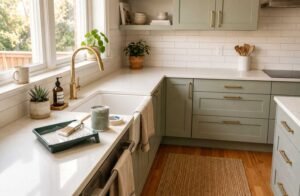
What You Can Update Without a Full Renovation
Most cosmetic and fitting-based upgrades sit well within partial renovation scope. These changes deliver visible impact without touching waterproofed surfaces or requiring licensed plumbing alterations.
Cosmetic Upgrades
Painting ceilings and non-tiled walls with bathroom-grade, mould-resistant paint is one of the cheapest ways to refresh the space. Replacing skirtings, door handles, and towel rails further sharpens the finish.
Fittings and Fixtures
Like-for-like replacement of tapware, showerheads, toilet seats, and toilet cisterns is straightforward when connection points stay in the same position. A licensed plumber is still required for tap and toilet work under NSW regulations.
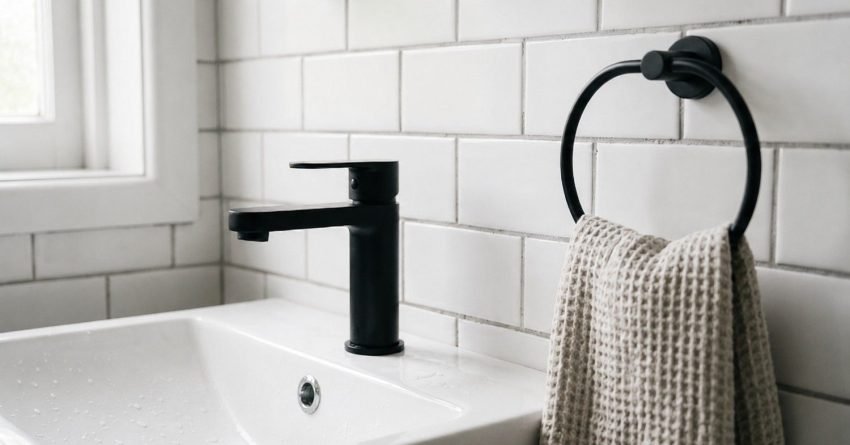
Entry-level tapware starts around $80–$200 per fitting, mid-range sits at $250–$600, and premium European brands run $700 and above. Choosing mid-range fittings across a standard bathroom delivers the best balance of durability and visual impact for the spend.
Vanity, Mirror, and Storage Replacement
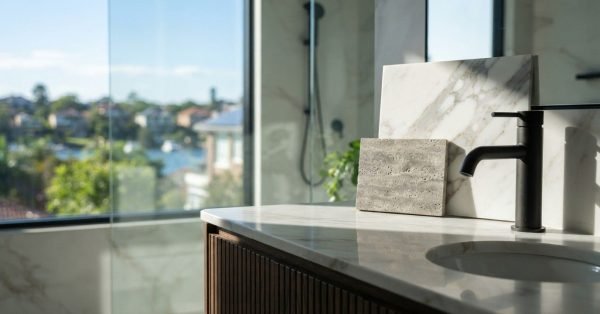
Swapping a vanity for a similarly sized unit using existing plumbing connections is one of the highest-impact updates we make in a partial renovation. The key is matching the new unit’s width and basin position to the existing waste and supply points a standard 600mm or 750mm vanity replaces most originals without any pipe relocation.
New mirrors, shaving cabinets, and wall-mounted storage modernise the room instantly. Framed mirrors and integrated LED mirror cabinets are the two upgrades that consistently draw the most positive feedback from buyers and tenants.
Lighting, Ventilation, and Accessories
Upgrading downlights, adding LED mirror lighting, or installing a higher-capacity exhaust fan improves both function and atmosphere. These tasks require a licensed electrician but involve no structural work.

Cost-Effective Upgrades for Maximum Impact
Some partial upgrades return far more value than their price tag suggests. Targeting these first stretches your budget further and noticeably lifts the room.
Re-Grouting and Tile Refresh Options
Re-grouting refreshes tired tiles without removing them. A professional re-grout involves raking out the old grout to a consistent depth, applying fresh grout in a modern colour, and resealing all joints. The process takes one to two days and costs $400 to $900 for a standard bathroom.
Specialist tile cleaning, silicone replacement around seals, and tile painting extend the life of existing surfaces by several years. Tile paint is a budget option for dated colours, though it requires proper surface preparation and a quality bathroom-grade product to hold long-term. Re-grouting alone transforms the perceived cleanliness of a bathroom more than almost any other single upgrade at the price point.
Bath and Shower Resurfacing
Resurfacing chipped, stained, or yellowed baths and shower bases delivers a near-new finish at a fraction of replacement cost. The process involves cleaning, sanding, and applying a specialist acrylic or epoxy coating that bonds to the existing surface. A professional job takes one day, and the surface is ready for use within 24 to 48 hours.
A quality resurface holds for eight to twelve years with normal use. The cost runs $400 to $800 for a bath and $500 to $1,000 for a shower base, compared to $1,500 to $3,500 or more for full replacement including tile cutting and waterproofing. It is the right call when the underlying fixture is structurally sound, and the damage is cosmetic.
Smart Swaps That Lift Resale Value
For investors and sellers, the highest-return swaps are vanities, tapware, mirrors, lighting, and toilet suites. These visible touchpoints define buyer perception during inspections without triggering major trade costs.
A dated vanity and brass tapware signal an unmaintained property to buyers, even when everything else is functional. Replacing both with a wall-hung vanity and matte black or brushed nickel tapware shifts the bathroom from tired to contemporary for $1,500 to $3,000 in materials. Property stylists consistently rank bathroom tapware and mirrors as the two fastest-read signals of renovation quality during open homes. For investors, these swaps justify higher asking rents and reduce vacancy periods.
What Requires a Licensed Trade in NSW
Understanding the licensing boundary protects you from compliance issues and unlicensed work penalties. In NSW, the rules are clear.
A Licensed plumber is required for: any connection or disconnection of tapware, replacement of toilets, showerheads, or cisterns, and any work involving water supply lines or drainage. There are no DIY exceptions for these tasks under the NSW plumbing and drainage regulations
Licensed electrician required for: installing or replacing downlights, exhaust fans, heated towel rails hardwired to the circuit, and any new power point or lighting circuit work. Changing a light globe or a plug-in accessory does not require a licence.
DIY-legal tasks include: painting non-tiled walls and ceilings, replacing towel rails and toilet roll holders on existing fixings, installing freestanding accessories, and applying tile paint or grout sealer. These carry no licensing requirement under NSW Fair Trading rules.
Always request a Certificate of Compliance from your licensed plumber and electrician on completion. This documentation protects you at resale and confirms the work meets the National Construction Code requirements.
What You Cannot Change Without a Full Renovation
Some changes inevitably push a project from partial to full scope. Recognising these triggers early protects your budget from blowouts.
Plumbing Layout and Waterproofing
Moving a toilet, shower, basin, or floor waste means cutting tiles, removing waterproofing, and re-laying both. Once plumbing relocation or waterproofing is involved, the project becomes a full bathroom renovation with a corresponding jump in cost and trade coordination.
Structural Walls and Floor Tiling
Removing walls, changing door openings, or replacing floor tiles all trigger waterproofing rework under Australian Standard AS 3740. There is no compliant shortcut around this in wet areas.
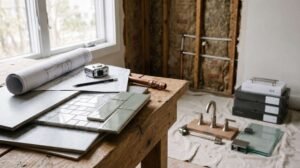
Budget Expectations for Partial Bathroom Updates in Sydney
Partial bathroom budgets in Sydney generally fall between $2,000 and $12,000, with most projects landing in the $4,000 to $8,000 range. Final cost depends on fitting quality, trade access, and how many elements you change at once.
Typical Partial Renovation Cost Ranges
A cosmetic refresh with paint, mirror, tapware, and accessories typically sits at $2,000 to $4,000. A mid-tier update adding a new vanity, toilet, lighting, and resurfacing usually runs $5,000 to $9,000. A high-end partial refresh with premium fittings and full accessory replacement reaches $10,000 to $12,000.
Labour vs Materials Split
Labour typically accounts for 40 to 55 percent of a partial renovation, with materials and fittings making up the balance. Licensed plumbing carries the highest hourly rates; Sydney plumbers charge $120 to $180 per hour for bathroom work, with most partial renovation plumbing scopes running two to four hours. Electricians sit at $100 to $160 per hour. Tilers, when needed for minor patching, charge $60 to $90 per square metre for rectification work.
Understanding this split helps you prioritise. Reducing the number of trade call-outs by batching plumbing and electrical tasks into single visits is one of the most effective ways to keep a partial renovation under budget.
Hidden Costs to Watch For
Common surprises include disposal fees, isolation valves, replacement seals, and minor wall patching once old fittings come off. Always budget a 10 to 15 percent contingency. When a bathroom update sits inside a wider multi-room project, sequencing trades across rooms in a single mobilisation reduces call-out costs significantly.
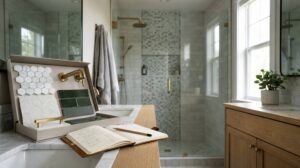
How to Plan a Partial Bathroom Renovation
A clear plan keeps a partial renovation efficient and avoids scope creep into full-reno territory. Start with measurable goals: lift resale appeal, modernise finishes, or fix specific functional issues.
Prioritising High-Impact Upgrades
Rank upgrades by visibility, cost, and disruption. Vanity, tapware, and mirror replacement win on all three metrics. Paint and accessories follow closely behind.
We recommend listing every element you want to change, then sorting by trade requirement. Group all plumbing tasks into one visit and all electrical tasks into another; this alone reduces labour costs by 15 to 25 percent compared to scheduling trades separately.
Do You Need Council Approval?
Most partial bathroom renovations in NSW do not require a Development Application or council approval. Work that stays within the existing footprint, does not alter the building structure, and does not relocate plumbing or drainage is classified as exempt development under the NSW State Environmental Planning Policy (Exempt and Complying Development Codes) 2008
Owner-builders undertaking work valued above $5,000 in NSW are required to hold an Owner-Builder Permit from NSW Fair Trading. For most partial renovations using licensed trades, no permit is needed beyond the standard trade certificates.
How to Avoid Scope Creep
Scope creep is the most common reason a partial renovation budget blows out. The warning signs are: discovering cracked or hollow tiles during fitting removal, finding mould behind a vanity cabinet, identifying a leaking waste pipe once the floor is exposed, or realising the existing exhaust fan ducting is non-compliant.
We address this by completing a pre-renovation condition check before any fittings are ordered. Inspecting behind the vanity, checking tile adhesion around the shower base, and confirming the exhaust fan duct path takes less than an hour and prevents the most expensive surprises. If any of these checks reveal a waterproofing issue, the project moves to a full renovation scope, and it is far better to know that before trades are booked.
When to Bring in a Professional Renovator
A professional renovator coordinates plumbers, electricians, tilers, and suppliers under one schedule, removing the risk of overlapping trades or compliance gaps. Many homeowners pair a partial bathroom refresh with a laundry or ensuite update, and coordinating both under a single project manager reduces total trade costs and minimises household disruption.
Conclusion
A partial bathroom renovation is one of the highest-value, lowest-risk upgrades available to Sydney homeowners. It modernises function and finish without disturbing tiles, plumbing layout, or waterproofing, and protects your budget from unnecessary structural costs.
The key is knowing where the line sits between cosmetic upgrades and full-renovation triggers. Clear planning, prioritised swaps, and licensed trade coordination keep every dollar working harder.
At Sydney Home Renovation, we help homeowners and investors plan partial bathroom updates that deliver maximum impact for the budget. Get in touch to scope your project with confidence.
Frequently Asked Questions
How much does a partial bathroom renovation cost in Sydney?
A partial bathroom renovation in Sydney typically costs between $2,000 and $12,000. Most projects land in the $4,000 to $8,000 range depending on fittings, vanity choice, and trade requirements.
Can I replace a vanity without doing a full renovation?
Yes. A like-for-like vanity replacement using existing plumbing connections is a standard partial renovation task. A licensed plumber is required, but no tile removal or waterproofing rework is needed.
Do I need a plumber for a partial bathroom update in NSW?
Yes. Any work involving taps, toilets, drainage, or water connections must be carried out by a licensed plumber in NSW. Cosmetic tasks like painting or accessory installation do not require a licence.
Is bath resurfacing worth it compared to replacement?
Bath resurfacing is worth it when the existing bath is structurally sound but visually worn. It typically costs 60 to 80 percent less than replacement and avoids tile cutting and waterproofing work.
How long does a partial bathroom renovation take?
Most partial bathroom renovations in Sydney are completed in three to seven working days. Larger scopes with vanity, toilet, lighting, and resurfacing usually finish within one to two weeks.
Will a partial bathroom update increase my property value?
Yes. A well-planned partial update adds measurable resale value, particularly through modern vanities, tapware, mirrors, and lighting. The return is highest when the existing layout and tiles remain in good condition.
Do I need council approval for a partial bathroom renovation in NSW?
No, in most cases. Work within the existing footprint that does not relocate plumbing or alter the structure is exempt development under NSW planning rules. Owner-builders on projects above $5,000 need an Owner-Builder Permit from NSW Fair Trading.