
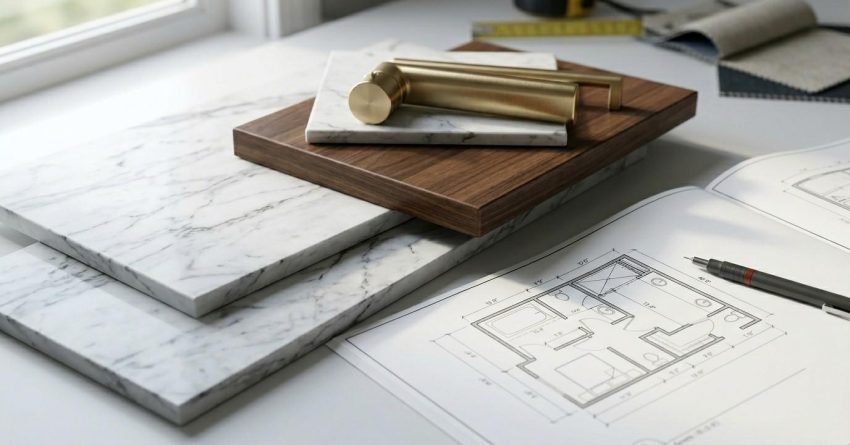
A master bathroom renovation in Sydney typically costs between $25,000 and $75,000, depending on size, fixtures, and finish quality. Premium renovations often exceed $90,000, while budget refreshes can stay under $20,000.
Understanding these cost ranges helps Sydney homeowners and investors plan accurately, avoid blowouts, and make confident decisions about where to invest renovation dollars wisely.
This guide breaks down labour costs, material allowances, fixtures, hidden expenses, pricing tiers, and budgeting strategies so you can plan your master bathroom renovation with confidence.
How Much Does a Master Bathroom Renovation Cost in Sydney?
A master bathroom renovation in Sydney generally ranges from $20,000 for a basic refresh to $90,000+ for a luxury, fully customised result. Most homeowners land in the $35,000 to $55,000 range for a complete, quality renovation that updates layout, plumbing, waterproofing, tiling, and fixtures.
The total investment reflects every stage of the project from initial design and council compliance through to the final trade fit-off and clean.
| Renovation Scope | Typical Cost Range |
| Cosmetic refresh (layout unchanged) | $15,000 – $25,000 |
| Mid-range full renovation | $25,000 – $50,000 |
| Premium / luxury renovation | $50,000 – $90,000+ |
| Cost per square metre (quality finish) | $3,000 – $6,000/m² |
| Cost per square metre (premium) | $6,000 – $7,500+/m² |
Average Cost Range by Project Scope
The total cost depends heavily on the scope. A cosmetic refresh keeping the existing layout and replacing surface finishes sits at the lower end. A full structural renovation, with relocated plumbing, new waterproofing, custom cabinetry, and premium fixtures, sits at the top.
Master bathrooms are typically larger than secondary bathrooms, often including double vanities, separate showers and baths, and feature walls. That size and fixture count pushes them into the higher cost bracket.
Cost Per Square Metre Benchmarks
In Sydney, master bathroom renovations commonly cost between $3,000 and $6,000 per square metre for a quality finish. Premium projects with stone, custom joinery, and designer tapware can exceed $7,500 per square metre.
A typical master bathroom of 8 to 12 square metres therefore translates to a working budget of roughly $30,000 to $75,000
Master Bathroom Renovation Cost Breakdown by Tier
Renovation costs fall into three clear tiers. Each tier reflects a consistent combination of material quality, fixture brands, and trade allowances. Choosing your tier early prevents scope creep and helps your builder quote accurately.
Budget Renovation ($15,000–$25,000)
A budget master bathroom renovation keeps the existing layout and plumbing locations. We replace tiles, vanity, toilet, shower screen, and tapware with off-the-shelf options. Waterproofing is renewed, but no structural changes are made.
This tier suits investors preparing rental properties or homeowners delaying a full renovation. Finishes are functional and clean, but design flexibility is limited by the existing footprint.
Mid-Range Renovation ($25,000–$50,000)
This is the most common tier for Sydney owner-occupiers. We deliver quality Australian-made or reputable imported fixtures, full-height tiling, a custom or semi-custom vanity, and minor plumbing relocations.
Layout adjustments are possible, and finishes feel modern and durable without entering luxury pricing. This tier consistently delivers the strongest value-to-cost ratio for owner-occupiers.
Premium Renovation ($50,000–$90,000+)
Premium renovations involve full layout redesign, structural alterations, designer fixtures, natural stone, custom joinery, underfloor heating, frameless showers, and freestanding baths. Expect imported tapware, smart toilets, niche lighting, and detailed waterproofing.
This tier delivers the strongest long-term value uplift and the longest design lifespan. It suits homeowners in premium suburbs where the renovation investment aligns with market expectations.
Labour Costs for a Master Bathroom Renovation
Labour accounts for roughly 40 to 55 percent of total project cost. A master bathroom renovation involves multiple trades working in sequence, and labour pricing reflects skill level, licensing requirements, and project complexity.
Trades Involved and Hourly Rates
According to NSW Fair Trading licensing requirements, all plumbing, electrical, and waterproofing work must be carried out by licensed tradespeople. Typical Sydney trade rates currently sit around: licensed plumber $95 to $150 per hour, licensed electrician $90 to $140 per hour, tiler $70 to $110 per hour, waterproofer $80 to $120 per hour, carpenter $80 to $130 per hour, and painter $55 to $85 per hour.
Plumbing, waterproofing, and tiling alone often account for 60 percent of labour spend. These are the three trades where cutting costs most commonly leads to compliance failures and expensive rework.
Project Management and Coordination Costs
Hiring a renovation contractor to manage trades, scheduling, deliveries, and inspections typically adds 15 to 25 percent on top of trade costs. This cost prevents far larger blowouts caused by trade clashes, delays, and rework.
It usually pays for itself on any project above $30,000. On complex renovations with four or more trades, unmanaged scheduling alone can add weeks to a timeline.
How Long Does a Master Bathroom Renovation Take?
A standard master bathroom renovation takes three to six weeks from demolition to final clean. Premium renovations with custom joinery, stone, or structural changes can extend to eight to ten weeks including approvals.
Project Stage Breakdown
The renovation moves through five sequential stages. Demolition and rough-in plumbing typically take three to five days. Waterproofing, membrane application, and the mandatory AS 3740 inspection add another two to four days before tiling can begin.
Tiling is the longest single trade on most projects, running five to ten days depending on bathroom size and tile format. Fixture fit-off vanity, shower screen, tapware, toilet, and accessories takes two to three days. Final electrical connections, touch-ups, and the builder’s clean complete the project.
What Causes Delays
Delays most commonly come from three sources: custom joinery lead times (four to eight weeks for bespoke pieces), tile back-orders on imported or large-format products, and structural surprises discovered during demolition. Booking trades in advance and locking in all product selections before demolition starts are the two most effective ways to protect your timeline.
Material and Fixture Cost Allowances
Material allowances are where renovations most commonly blow out. Knowing realistic price ranges before selecting products helps you stay in budget without compromising quality.
Tiling, Waterproofing, and Flooring
Tile supply ranges from $40 per square metre for ceramic to $250+ per square metre for natural stone or large-format porcelain. Tile installation costs $75 to $130 per square metre.
Waterproofing is mandatory under Australian Standard AS 3740-2021 and costs $600 to $1,500 depending on bathroom size and complexity. This is a non-negotiable compliance item cutting corners here creates liability and future water damage.
Vanities, Tapware, and Sanitaryware
Off-the-shelf vanities start around $600; custom vanities range from $2,500 to $8,000+. Quality tapware sets cost $400 to $1,800, with designer European brands pushing $3,500+.
Toilets range from $400 for standard suites to $4,000+ for wall-hung concealed cisterns and smart toilets. Wall-hung options add installation complexity but deliver a cleaner aesthetic and easier floor cleaning.
Shower, Bath, and Cabinetry
A semi-frameless shower screen costs $700 to $1,400, while a frameless screen runs $1,400 to $3,000. Drop-in baths start at $500; freestanding stone or composite baths range from $1,500 to $6,000+.
Custom mirror cabinets and storage joinery typically add $1,500 to $5,000. Storage is consistently underbudgeted plan for it early, because retrofitting joinery after tiling is expensive.
Underfloor Heating Costs
Electric underfloor heating is increasingly common in Sydney master bathrooms, particularly in premium renovations. Supply and installation typically costs $1,200 to $2,500 for a standard master bathroom footprint, depending on the heating mat size and thermostat specification.
Hydronic underfloor heating is less common in bathroom retrofits due to the complexity of connecting to an existing hot water system, and generally costs $3,000 to $6,000+ installed. Electric systems are the practical choice for most renovations.
Where to Spend and Where to Save on Fixtures and Finishes
One of the most common mistakes in bathroom renovation budgeting is applying the same quality level across every product category. A smarter approach is to identify where quality directly affects longevity and daily experience, and where mid-range products perform just as well.
Where to Spend
Spend on waterproofing it is the single most consequential item in any wet area and the most expensive to fix if it fails. Spend on tapware: quality mixer cartridges last decades, while cheap cartridges fail within two to three years. Spend on tiles in high-traffic zones floor tiles especially need to handle daily wear, cleaning products, and moisture without degrading.
Frameless shower screens are worth the premium over semi-frameless for both aesthetics and long-term ease of cleaning. Custom vanity joinery, while expensive upfront, eliminates the compromises of off-the-shelf sizing and delivers a finish that reads as genuinely bespoke.
Where to Save
Toilet suites are a strong save opportunity a quality close-coupled suite at $600 to $900 performs identically to a $2,500 designer equivalent in daily use. Accessories such as towel rails, toilet roll holders, and hooks are another save category: consistent finishes matter more than brand.
Feature tiles used selectively a single niche, a feature wall strip, or a floor pattern deliver visual impact at a fraction of the cost of tiling an entire room in premium stone. Save on the volume; spend on the placement.
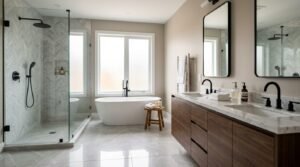
Hidden Costs and Budget Pitfalls to Avoid
Hidden costs are the single largest source of renovation blowouts. Most stem from unknown structural conditions or compliance requirements only discovered after demolition begins.
Structural and Plumbing Surprises
Removing tiles often reveals damaged substrate, rotten timber, rusted pipework, or non-compliant electrical work. Re-routing plumbing through concrete slabs or rerouting drainage adds $1,500 to $6,000.
When bathroom works overlap with broader structural issues subfloor damage, corroded stack pipes, or undersized drainage costs can escalate quickly across multiple trades. Always allocate a 10 to 15 percent contingency on top of your quoted budget.
Asbestos and Hazardous Materials in Older Sydney Homes
Sydney homes built before 1990 frequently contain asbestos in wall sheeting, floor tiles, tile adhesive, and ceiling materials. Identification and removal by a licensed asbestos removalist is legally required and typically costs $800 to $3,500 depending on the volume and location of material.
Skipping this step is not a legal option and discovery mid-project halts all other trades until clearance is issued. If your home was built before 1990, budget for an asbestos inspection before demolition begins.
Council Approvals and Compliance
Most cosmetic bathroom renovations in NSW do not require approval, but structural changes, window alterations, or external plumbing modifications may need a complying development certificate. Application fees range from $300 to $2,000.
Waterproofing must be certified, and electrical and plumbing works require licensed trades issuing compliance certificates. These are not optional they protect your home’s insurance coverage and resale value.
Factors That Influence Your Final Renovation Cost
Several variables shift your final price within or outside the typical tier ranges. Understanding these helps you spec your renovation accurately from the quoting stage.
Bathroom Size, Layout, and Fixture Count
Size is the most direct cost driver more square metres means more tiles, more waterproofing membrane, more grout, and longer trade hours. Layout changes amplify cost further: moving a toilet or shower requires relocating drainage, which adds plumber hours and potential slab work.
Fixture count matters too. A master bathroom with a double vanity, freestanding bath, separate shower, and heated towel rail involves more fit-off time and more product cost than a single-vanity, shower-only configuration.
Building Age and Structural Condition
Older buildings carry higher risk of hidden costs. Pre-1990 homes may contain asbestos, undersized drainage, and non-compliant electrical wiring that must be rectified before new work can proceed. Post-2000 construction is generally more straightforward, though concrete slab construction in any era adds cost when drainage relocation is needed.
Heritage-listed properties add another layer any external changes, window modifications, or alterations to original fabric require heritage approval, which extends timelines and adds compliance costs.
Apartment Renovations vs. House Renovations in Sydney
Apartment renovations in Sydney typically cost 10 to 20 percent more than equivalent house renovations. Strata approval is required before work begins, and the approval process can take two to eight weeks depending on the owners corporation. Noise restrictions typically limiting trade work to business hours on weekdays extend project timelines and increase trade coordination costs.
Material transport in apartment buildings adds time and cost: trades cannot park at the door, lifts must be booked, and waste removal is more complex. Wet area work in apartments also requires additional waterproofing scrutiny because water damage affects the units below.
How to Get an Accurate Quote for Your Master Bathroom Renovation
Getting an accurate quote is one of the most important steps in the renovation process and one of the most commonly mishandled. A vague brief produces a vague quote, and vague quotes lead to variations and blowouts.
What to Include in Your Brief
A good brief specifies the existing bathroom dimensions, the proposed layout (or confirmation that the layout stays), the fixture and tile selections (or a budget allowance per category), and any known structural issues. The more specific the brief, the more comparable the quotes you receive.
Include your preferred timeline and any access restrictions strata rules, heritage overlays, or site access limitations. Builders price risk into their quotes; removing uncertainty reduces that risk margin.
Fixed-Price vs. Hourly Contracts
Fixed-price contracts are strongly preferable for bathroom renovations above $20,000. They transfer scope risk to the builder and give you a clear budget ceiling. Hourly or cost-plus arrangements suit small, genuinely undefined scopes not full renovations.
Always confirm that your fixed-price quote includes waterproofing certification, all trade compliance certificates, and a contingency allowance for hidden structural work. A quote that excludes these items is not a true fixed price.
What a Good Quote Includes
A thorough renovation quote itemises labour by trade, materials by category, project management fees, and a clearly stated exclusions list. It references the scope of work document, specifies the products being supplied, and states the payment schedule tied to project milestones.
If a quote arrives as a single lump sum with no breakdown, ask for the itemisation before signing. Transparency at the quoting stage is the clearest signal of how a builder will communicate throughout the project.
How to Budget and Maximise ROI on Your Master Bathroom Renovation
Smart budgeting starts with separating must-haves from nice-to-haves. Allocate roughly 30 percent to labour, 25 percent to tiling and waterproofing, 20 percent to fixtures and tapware, 15 percent to joinery and cabinetry, and 10 percent as contingency.
Investor vs. Owner-Occupier Budgeting
Investors and owner-occupiers have different return profiles, and the right budget allocation reflects that. Investors renovating for rental yield should target the mid-range tier quality finishes that attract good tenants and withstand rental wear, without over-capitalising on luxury features that don’t increase rent.
Owner-occupiers renovating for long-term liveability and eventual resale have more flexibility to invest in premium finishes, particularly in suburbs where the property value supports it. The key question is whether the renovation cost aligns with the ceiling price of comparable homes in the street.
Suburb Benchmarking
In Sydney’s premium suburbs the Eastern Suburbs, Lower North Shore, and Inner West a $70,000 to $90,000 master bathroom renovation is well within market expectations and typically recovers strongly at resale. In outer suburban and regional markets, the same spend may exceed the property’s ceiling price.
Research recent comparable sales in your suburb before finalising your budget. A renovation that adds $120,000 to a property’s value in Mosman may add only $40,000 in Penrith the renovation scope should reflect that reality.
Prioritising Value-Adding Upgrades
To maximise return on investment, prioritise upgrades buyers value most: double vanities, quality tiling, frameless showers, ample storage, and neutral colour palettes. Avoid over-capitalising with niche luxury features unless your home sits in a premium suburb where they match market expectations.
Kitchens and bathrooms together deliver the strongest resale uplift of any renovation category. A well-executed master bathroom renovation consistently ranks among the highest-return investments a Sydney homeowner can make.
Conclusion
A master bathroom renovation cost reflects the balance between scope, materials, labour, and hidden contingencies, with most Sydney projects landing between $25,000 and $75,000 for quality outcomes.
Smart planning, accurate allowances, and a well-coordinated trade schedule consistently separate on-budget renovations from costly blowouts especially in older Sydney homes with unknown structural conditions.
At Sydney Home Renovation, we deliver transparent pricing, expert project coordination, and quality workmanship so your master bathroom renovation finishes on budget, on schedule, and built for long-term value.
Frequently Asked Questions
How much should I budget for a master bathroom renovation in Sydney?
Most Sydney master bathroom renovations cost between $35,000 and $55,000 for quality results. Budget projects start near $20,000, while premium renovations regularly exceed $75,000 depending on fixtures and layout changes.
Why are master bathrooms more expensive to renovate than other bathrooms?
Master bathrooms are typically larger, include double vanities, separate baths and showers, and use higher-grade finishes. The increased square metreage, fixture count, and design complexity all push total costs significantly above secondary bathrooms.
How long does a master bathroom renovation take in Sydney?
A standard master bathroom renovation takes three to six weeks from demolition to final clean. Premium renovations with custom joinery, stone, or structural changes can extend to eight or ten weeks including approvals.
What percentage of my renovation budget should go to labour?
Labour typically represents 40 to 55 percent of total project cost. Plumbing, waterproofing, and tiling consume most of this allowance, so always verify your quote breaks down trade hours and materials separately.
Do I need council approval for a master bathroom renovation in NSW?
Cosmetic renovations rarely require approval. Structural alterations, window changes, or external plumbing modifications often need a complying development certificate. Always confirm with your local council or your renovation contractor before starting work.
What hidden costs should I plan for?
Common hidden costs include damaged substrate, rotted timber, non-compliant electrical, rerouted plumbing, asbestos removal in older homes, and waterproofing certification fees. Allow a 10 to 15 percent contingency on every renovation budget.
How do I maximise return on investment from my bathroom renovation?
Prioritise quality tiling, double vanities, frameless showers, ample storage, and neutral colour palettes. Avoid over-capitalising with luxury features that exceed neighbourhood expectations, and choose timeless finishes that age well over trend-driven design.
How much more does it cost to renovate a bathroom in a Sydney apartment?
Apartment renovations typically cost 10 to 20 percent more than house renovations due to strata approval requirements, noise restrictions, and material transport logistics. Budget additional time for the strata approval process before work begins.
How do I choose the right renovation tier for my budget?
Match your tier to your property’s market position and your renovation goals. Investors targeting rental yield suit the mid-range tier. Owner-occupiers in premium suburbs can justify premium spend. Always check comparable sales before committing to a tier above the mid-range.
What should a fixed-price bathroom renovation contract include?
A fixed-price contract should itemise labour by trade, materials by category, project management fees, waterproofing certification, all compliance certificates, and a clearly stated exclusions list. Payment milestones tied to project stages protect both parties.


