
Living during a renovation is entirely possible, but it demands planning, patience, and a clear strategy to keep your household running while tradespeople work around you. Most Sydney homeowners choose to stay put during bathroom and home renovations, and with the right preparation, the process is far more manageable than you might expect.
The reality is that renovation disruptions, from dust and noise to losing access to your bathroom for days or weeks, can catch you off guard if you haven’t thought them through. Knowing what to expect puts you in control.
This guide covers everything from setting up temporary living spaces and managing dust to budgeting for the hidden costs of staying home. You’ll walk away with a practical plan that keeps your renovation on track and your sanity intact.
What Does Living During a Renovation Actually Look Like?
Living through a renovation means sharing your home with a construction site. Walls come down, plumbing gets disconnected, and your normal routines shift. For a bathroom renovation, that could mean no shower for a few days, dust settling on surfaces in rooms you thought were sealed off, and the sound of tile saws starting at 7 a.m.
It is not chaos if you plan for it. But it is a significant change to your daily rhythm, and understanding the scope of that change is the first step toward managing it well.
Daily Disruptions You Should Expect
Every renovation project brings a predictable set of disruptions. Knowing them in advance removes the surprise factor.
Access restrictions. Parts of your home will be off-limits during active work. In a bathroom renovation, this means no toilet, no shower, or no vanity for defined periods. Your contractor should communicate these windows clearly.
Dust and debris. Even with barriers in place, fine dust migrates. Demolition phases produce the most, but tiling, plastering, and sanding all generate airborne particles that settle on benchtops, furniture, and electronics.
Noise. Cutting tiles, drilling into walls, and removing old fixtures create sustained noise. In Sydney, residential construction work is typically permitted between 7:00 a.m. and 5:00 p.m. on weekdays, with limited hours on Saturdays and none on Sundays under most council regulations.
Tradespeople in your space. Plumbers, tilers, electricians, and builders will move through your home. They need access to water mains, electrical panels, and sometimes rooms adjacent to the renovation zone.
Utility interruptions. Water and electricity may be switched off for hours at a time during plumbing rough-ins or electrical upgrades. Your contractor should give you advance notice for each interruption.
How Long Will the Disruption Last?
The duration depends on the scope of your project. Here is a general guide for common renovation types in Sydney:
| Renovation Type | Typical Duration | Peak Disruption Phase |
| Small bathroom refresh (cosmetic) | 1 to 2 weeks | Days 2 to 5 (demolition and plumbing) |
| Full bathroom renovation | 3 to 5 weeks | Weeks 1 to 2 (demolition, waterproofing, plumbing) |
| Kitchen renovation | 4 to 8 weeks | Weeks 1 to 3 (demolition, plumbing, electrical) |
| Multi-room renovation | 8 to 16 weeks | Varies by staging |
The most disruptive phase is almost always demolition and rough-in work. Once tiling and fit-off begin, the noise drops and access gradually returns. A well-organised contractor will stage the work so you regain use of essential areas as quickly as possible.
How to Prepare Your Home Before the Renovation Starts
Preparation is the single biggest factor in how comfortable your renovation experience will be. The work you do before day one determines whether you spend the next few weeks adapting smoothly or scrambling to solve problems you could have prevented.
Setting Up a Temporary Kitchen and Bathroom
If your bathroom is being renovated, you need an alternative. For homes with a second bathroom, this is straightforward. For single-bathroom homes, the options include:
Portable shower units. Some Sydney homeowners rent a portable shower or use a camping shower setup in the laundry. It is not glamorous, but it works for a two to three week stretch.
Gym or pool memberships. A short-term gym membership gives you reliable access to showers and change rooms. Several Sydney facilities offer casual or monthly passes that cover the renovation period.
Neighbour or family arrangements. If you have nearby family or neighbours willing to help, a quick morning shower at their place can bridge the gap during the most disruptive days.
For kitchen renovations, set up a temporary station with a microwave, kettle, portable cooktop, and a washing-up basin. Place it in a room away from the work zone, ideally near a power outlet and water source.
Protecting Furniture, Flooring, and Personal Belongings
Dust is the number one complaint from homeowners who live through renovations. Protecting your belongings before work starts saves hours of cleaning later.
Move valuables out of adjacent rooms. Anything within two rooms of the renovation zone is at risk. Electronics, artwork, and soft furnishings absorb dust quickly.
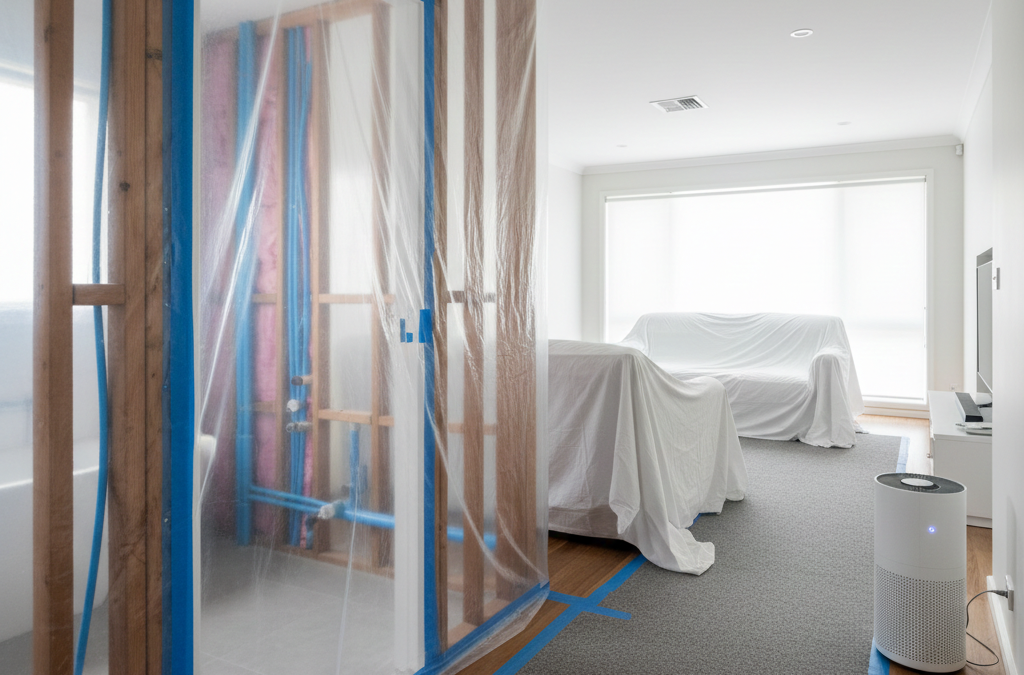
Cover what you cannot move. Use plastic sheeting or drop cloths over large furniture. Tape the edges down so dust cannot settle underneath.
Roll up rugs and protect hard floors. Tradespeople carry tools, materials, and debris through your home. Lay protective sheeting or cardboard along walkways between the entry point and the work zone.
Seal wardrobes and cupboards. Painter’s tape along the edges of wardrobe doors and kitchen cupboards prevents fine dust from entering.
Creating Dust-Free Zones and Living Barriers
A dust-free zone is a room or section of your home that stays sealed off from the renovation area. This is where you eat, sleep, and relax.
Plastic sheeting barriers. Hang heavy-duty plastic sheeting across doorways and hallways between the work zone and your living areas. Use painter’s tape or temporary adhesive strips to seal the edges.
Zip walls. For longer renovations, spring-loaded zip wall barriers create a tighter seal than loose plastic. Some contractors supply these as part of their site setup.
Positive air pressure. Keeping a window cracked in your living zone while sealing the renovation zone creates slight positive pressure that pushes dust away from your space rather than drawing it in.
Air purifiers. A HEPA-rated air purifier in your main living area captures fine particles that make it past barriers. This is especially important if anyone in your household has asthma or respiratory sensitivities.
Managing Dust, Noise, and Access During a Bathroom Renovation
Once the renovation is underway, your focus shifts from preparation to daily management. Dust, noise, and access are the three variables that affect your quality of life most directly.
Dust Control Strategies That Actually Work
Dust management is a shared responsibility between you and your contractor. A professional renovation team will implement site-specific dust controls, but there are steps you can take on your end.
Daily wipe-downs. A damp microfibre cloth across benchtops, tables, and electronics at the end of each workday prevents dust from building up. Dry dusting just moves particles around.
Seal HVAC vents. If your home has ducted air conditioning, seal the vents in and near the renovation zone with plastic and tape. Dust pulled into your ductwork will circulate through every room in the house for months after the renovation ends.
Door sweeps and towel rolls. A rolled towel at the base of closed doors blocks the gap where dust creeps through. Temporary adhesive door sweeps work even better.
Contractor-side controls. Your builder should be using dust extraction on power tools, wet-cutting tiles where possible, and cleaning the work zone at the end of each day. If they are not, raise it early.
Dealing With Noise and Contractor Schedules
Noise is unavoidable during demolition, cutting, and drilling. But it is predictable, and predictability makes it manageable.
Ask for a weekly schedule. A good contractor will tell you which days involve heavy noise (demolition, tile cutting) and which are quieter (painting, silicone work, fit-off). Plan your week around it.
Work from a different location on loud days. If you work from home, schedule your most demanding tasks on quieter renovation days. Use a library, cafe, or co-working space on demolition days.
Noise-cancelling headphones. A practical investment if you are home during work hours. They will not eliminate impact noise, but they reduce sustained background noise significantly.
Know your council rules. In Sydney, the NSW Environment Protection Authority sets guidelines for residential construction noise. Standard permitted hours are 7:00 a.m. to 5:00 p.m. Monday to Friday and 8:00 a.m. to 1:00 p.m. on Saturdays. No work on Sundays or public holidays. If your contractor is working outside these hours, you have grounds to address it.
Maintaining Safe Access Throughout Your Home
Safety is non-negotiable, especially when you are walking through a home that doubles as a construction site.
Clear walkways. Your contractor should maintain a clear path from your front door to your living areas at all times. Tools, materials, and debris should not block hallways or stairs.
Lighting. If electrical work temporarily removes lighting in hallways or rooms you use, battery-operated LED lights or torches should be placed along your route.
Secure hazardous materials. Adhesives, solvents, waterproofing chemicals, and sharp tools must be stored securely at the end of each workday. This is especially critical in homes with children or pets.
Footwear. Wear closed-toe shoes when moving through or near the renovation zone. Nails, tile fragments, and sharp offcuts are common hazards on active sites.
How to Budget for Living Expenses During a Renovation
Your renovation budget should account for more than materials and labour. Living through a renovation introduces costs that many homeowners overlook until they are already committed.
Hidden Costs of Staying in Your Home
These are the expenses that do not appear on your builder’s quote but still come out of your pocket.
Takeaway meals and dining out. Without a functioning kitchen, food costs rise. A family of four eating out or ordering delivery for three to four weeks can easily add $1,500 to $2,500 to the total renovation cost.
Temporary accommodation for peak disruption. Even if you plan to stay home for most of the renovation, a night or two in a hotel or Airbnb during demolition or waterproofing curing can be worth the cost for your comfort and the contractor’s efficiency.
Cleaning costs. Post-renovation deep cleaning is almost always necessary. Professional cleaning services in Sydney typically charge between $300 and $600 for a thorough post-construction clean, depending on the size of the affected area.
Laundry. If your laundry is in or near the renovation zone, you may need to use a laundromat for a period. Budget $20 to $40 per week.
Storage. If you need to move furniture out of the renovation zone and do not have space elsewhere in the home, a small storage unit in Sydney runs approximately $100 to $250 per month depending on size and location.
Increased energy bills. Running air purifiers, portable heaters or fans in temporary living spaces, and using alternative cooking appliances can push your energy bill up during the renovation period.
When Moving Out Temporarily Makes Financial Sense
Staying home is not always the most cost-effective choice. In some cases, moving out for part or all of the renovation saves money and time.
Large-scale renovations. If your project involves multiple rooms, structural work, or asbestos removal, the cost of temporary accommodation may be offset by a faster construction timeline. Contractors work more efficiently in an unoccupied home because they do not need to manage access, dust barriers, or noise restrictions around your schedule.
Health considerations. Homes built before the mid-1980s in Sydney may contain asbestos in wall sheeting, floor tiles, or wet areas. If asbestos removal is part of your renovation, you should not be in the home during that phase. Licensed asbestos removalists will confirm the required clearance period.
Short-term rental costs versus extended timelines. If living in the home adds two weeks to a renovation that would otherwise take four, calculate whether the cost of two weeks in a short-term rental is less than two extra weeks of contractor labour and your own disruption costs.
A practical approach is to stay home for the quieter phases (tiling, painting, fit-off) and move out only during demolition and rough-in work. Your contractor can help you identify the best window.
Keeping Your Renovation on Schedule While Living In
Living in your home during a renovation introduces variables that can slow the project down. Your presence is not a problem if both you and your contractor plan for it, but it does require coordination.
Communication Tips for Working With Your Contractor
Clear, consistent communication is the foundation of a smooth renovation experience.
Establish a single point of contact. Whether it is the project manager, site supervisor, or lead builder, have one person you communicate with about scheduling, access, and concerns. This avoids mixed messages and ensures accountability.
Weekly check-ins. A five-minute conversation at the start of each week about what is happening, what you need to prepare for, and any changes to the schedule keeps everyone aligned.
Put key decisions in writing. If you agree to a change in materials, layout, or timing, confirm it via text or email. Verbal agreements during busy workdays are easily forgotten or misunderstood.
Raise concerns early. If something is not working, whether it is dust management, noise, access, or timeline, bring it up immediately. Small issues become big problems when left unaddressed.
How to Avoid Delays Caused by Occupancy
Your contractor has worked in occupied homes before. But there are specific things you can do to keep the project moving.
Clear the work zone before each phase. If the next stage requires access to a room you have been using, move your belongings out the night before. Contractors lose time working around furniture and personal items.
Be available for decisions. Renovations involve dozens of small decisions: tile layout, tap placement, paint colours, grout shades. If you are unreachable when a decision is needed, work stops until you respond.
Respect the schedule. If your contractor says they need the bathroom cleared by Monday morning, have it cleared by Sunday night. Delays on your end cascade through the entire project timeline.
Keep pets and children away from the work zone. Beyond safety, unsupervised access to the renovation area can cause accidental damage to fresh waterproofing, wet adhesive, or newly laid tiles, all of which require time and cost to fix.
Living During a Renovation With Kids, Pets, or Housemates
A renovation is more complex when your household includes young children, animals, or multiple adults with different schedules. Each adds a layer of planning, but none makes living through a renovation impossible.
Child Safety Around Active Work Zones
Children are curious, and a renovation site is full of things that look interesting and are genuinely dangerous.
Physical barriers. Baby gates or temporary fencing across doorways leading to the work zone are essential. These should be in place before work starts and remain until the final clean.
Tool and material storage. Confirm with your contractor that all tools, blades, chemicals, and sharp materials are locked away or removed from the site at the end of each workday.
Dust exposure. Young children are more vulnerable to airborne dust and particulates. Keep them in sealed living zones during work hours, and run a HEPA air purifier in their bedroom overnight.
Routine disruption. Noise and unfamiliar people in the home can unsettle young children. Maintain their routines as much as possible, and consider arranging playdates or outings during the loudest phases of work.
Managing Pets and Shared Spaces
Pets react to renovation disruption in unpredictable ways. Dogs may bark at tradespeople, cats may hide or escape through open doors, and both can wander into hazardous areas.
Confine pets to a safe zone. Designate a room away from the work area where your pet can stay during work hours. Include their bed, water, food, and familiar items.
Secure exits. Contractors move in and out of your home frequently, often leaving doors open while carrying materials. If your pet is an escape risk, communicate this clearly and ensure barriers are in place.
Noise sensitivity. Some animals are highly stressed by construction noise. If your pet shows signs of distress, consider daycare, a friend’s home, or a boarding facility during the most disruptive days.
Housemates and shared living. If you share your home with other adults, agree on a renovation plan before work starts. Shared bathrooms, kitchen access, parking for contractor vehicles, and noise tolerance all need to be discussed upfront to avoid friction during the project.
Practical Tips From Sydney Homeowners Who Stayed During Renovations
Sydney’s housing stock, from Federation homes in the Inner West to modern builds in the Hills District, presents unique renovation challenges. Homeowners who have been through the process consistently highlight a few lessons.
Plan your mornings the night before. With no bathroom or limited kitchen access, your morning routine takes longer. Lay out clothes, prepare breakfast items, and charge devices the night before so your mornings run smoothly.
Invest in good dust barriers early. Several homeowners report that the $50 to $100 spent on quality plastic sheeting and painter’s tape saved them hundreds in post-renovation cleaning.
Use the renovation as a declutter opportunity. Packing up rooms before work starts is the perfect time to sort, donate, or discard items you no longer need. Many Sydney homeowners find they do not unpack everything afterward because they realise how little they actually use.
Stay flexible on timing. Weather, supply delays, and unexpected discoveries behind walls (old plumbing, water damage, non-compliant wiring) can shift your timeline. Build a buffer of one to two weeks into your expectations.
Keep a renovation diary. Noting daily progress, decisions made, and any issues helps you track the project and provides a record if disputes arise later. A simple notes app on your phone is enough.
Communicate with your neighbours. Let adjacent neighbours know about the renovation timeline, expected noise, and any impacts on shared access like driveways or parking. A quick conversation before work starts prevents complaints and maintains good relationships.
Conclusion
Living during a renovation requires preparation, flexibility, and clear communication with your contractor. From setting up temporary living spaces and managing dust to budgeting for hidden costs, every step you plan in advance makes the experience smoother and keeps your project on track.
The right renovation partner makes all the difference. A contractor who communicates schedules clearly, manages site cleanliness, and respects your living space turns a potentially stressful experience into a manageable one.
We at Sydney Home Renovation guide homeowners through every phase of the renovation process, from transparent budgeting to coordinated project delivery. Contact us today to plan your renovation with confidence.
Frequently Asked Questions
Can I use my bathroom at all during a bathroom renovation?
During most bathroom renovations, you will lose access for the full duration of the wet works phase, which includes demolition, plumbing, waterproofing, and tiling. This typically lasts two to three weeks. Your contractor should confirm exact dates before work begins.
How do I shower if my only bathroom is being renovated?
Common solutions include using a portable shower in the laundry, showering at a nearby gym or pool, or arranging access at a neighbour’s or family member’s home. Some homeowners book a short-term rental for the most disruptive days.
Is it safe to sleep in my house during a renovation?
Yes, provided the work zone is properly sealed and hazardous materials are stored securely at the end of each day. If asbestos removal is involved, you must vacate the home until clearance is confirmed by a licensed assessor.
How much extra should I budget for living costs during a renovation?
Most Sydney homeowners spend an additional $1,000 to $3,000 on food, temporary accommodation, cleaning, and laundry during a standard bathroom renovation. The exact amount depends on your household size and the project duration.
Will living in the house slow down my renovation?
It can, but the impact is minimal with good planning. Contractors may need extra time for dust control and access management. Clear communication and timely decisions on your part help keep the project on schedule.
How do I keep dust out of the rest of my house?
Seal doorways with heavy-duty plastic sheeting, close HVAC vents near the work zone, use HEPA air purifiers in living areas, and wipe surfaces daily with a damp cloth. Your contractor should also use dust extraction on power tools.
Should I move out during a major renovation?
For large-scale projects involving structural work, asbestos removal, or multiple rooms, moving out can be safer and may speed up the build. For a standard bathroom renovation, most homeowners stay home comfortably with proper preparation.