What Is a Knock Down Rebuild?
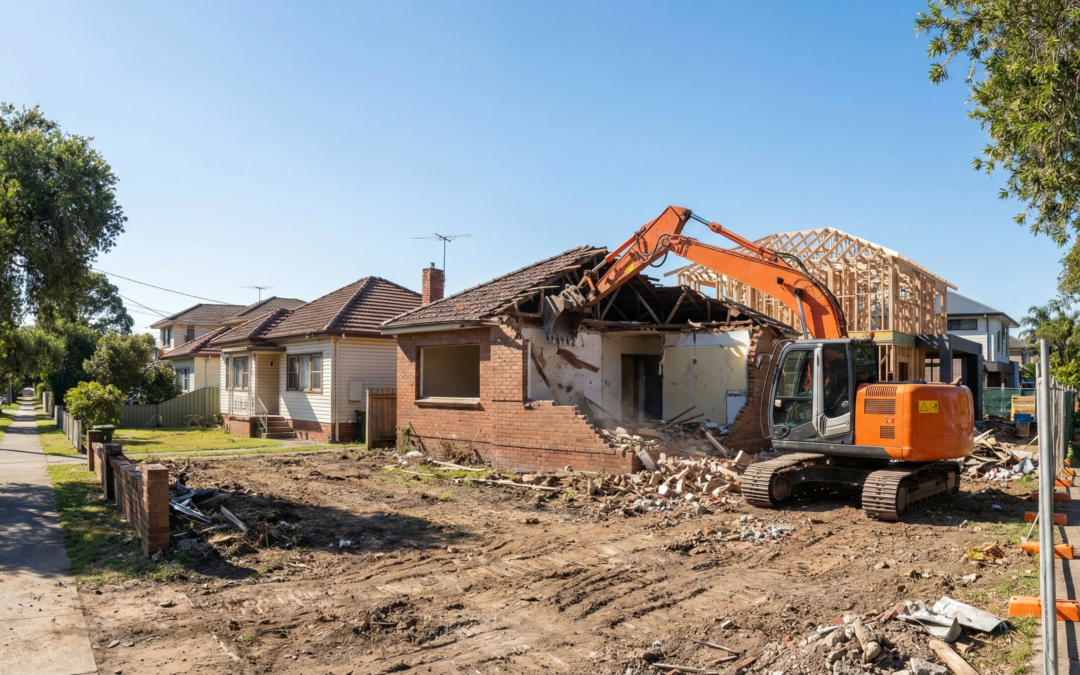
A knock down rebuild involves completely demolishing your existing home and constructing a brand new dwelling on the same block of land. You retain your land, your location, and often your established gardens and landscaping where possible, but everything else starts fresh.
The process typically begins with demolition permits, followed by site clearing, new foundation work, and construction of a completely new structure. You’re essentially building a new home from the ground up, which means new electrical systems, new plumbing, new structural elements, and modern building standards throughout.
This option gives you complete design freedom within council regulations. You can reconfigure room layouts, change the home’s orientation, add levels, and incorporate modern energy efficiency standards that older homes simply cannot match through renovation alone.
What Does a Major Renovation Involve?
A major renovation works with your existing structure, modifying, extending, or upgrading what’s already there. This can range from cosmetic updates to significant structural changes, including removing walls, adding extensions, or completely reconfiguring internal layouts.
Renovations preserve the bones of your home while improving functionality, aesthetics, and value. You might retain original features that have character or heritage significance, work around existing structural elements, and upgrade systems incrementally rather than replacing everything at once.
The complexity varies enormously. A bathroom and kitchen renovation differs vastly from a full home renovation that includes structural modifications, extensions, and complete system upgrades. Understanding where your project falls on this spectrum is crucial for accurate cost comparison.
Structural and Design Limitations of Each Approach
Renovations come with inherent constraints. Your existing floor plan, structural walls, foundation capacity, and ceiling heights all limit what’s possible. Sometimes these limitations add significant cost as you work around problems rather than eliminating them entirely.
Knock down rebuilds face different constraints. Council setback requirements, height limits, floor space ratios, and heritage overlays all affect what you can build. In some Sydney suburbs, these regulations are more restrictive than what your current home enjoys under existing use rights.
The key difference is predictability. New builds follow a more linear process with fewer surprises. Renovations often uncover hidden issues like asbestos, structural damage, outdated wiring, or plumbing problems that weren’t visible during initial assessments.
Cost Comparison: Renovation vs Knock Down Rebuild in Sydney
Understanding the true costs of each option requires looking beyond headline figures to examine what’s actually included and what typically gets added during the project.
Average Renovation Costs in Sydney
Renovation costs in Sydney vary dramatically based on scope, quality of finishes, and structural complexity. According to Archistar’s 2024 construction cost data, Sydney renovation costs typically range from $2,000 to $4,500 per square metre depending on the level of finish and complexity involved.
A basic cosmetic renovation focusing on kitchens, bathrooms, and surface finishes might cost $150,000 to $250,000 for a typical three-bedroom home. A comprehensive renovation including structural modifications, extensions, and full system upgrades can easily reach $400,000 to $700,000 or more.
These figures often exclude costs that homeowners don’t initially consider: temporary accommodation during construction, storage for furniture, landscaping restoration, and the premium charged for working around existing structures rather than building new.
Average Knock Down Rebuild Costs in Sydney
New home construction in Sydney typically costs between $2,500 and $5,000 per square metre for the build itself, according to HIA housing industry data. A complete knock down rebuild including demolition, site preparation, and construction of a new home generally ranges from $500,000 to $1,200,000 depending on size and specification.
Demolition costs add $15,000 to $50,000 depending on the size of the existing structure, presence of asbestos, and site access. Site preparation, including clearing, levelling, and connection of services, typically adds another $20,000 to $40,000.
The advantage of new construction is cost predictability. Fixed-price contracts are more common and more reliable because builders aren’t working around unknown existing conditions. You know what you’re getting and what you’re paying before construction begins.
Hidden Costs You Need to Factor In
Both options carry hidden costs that catch homeowners off guard. For renovations, the biggest hidden cost is discovery work. Opening walls often reveals problems that weren’t visible during inspection: termite damage, inadequate framing, asbestos materials, or non-compliant previous work that must be rectified.
Insurance Council of Australia research indicates that renovation projects exceed initial budgets by 15-25% on average, with structural renovations showing even higher overruns. Building a contingency of at least 20% into your renovation budget is essential.
Knock down rebuilds have their own hidden costs. Temporary accommodation for 12-18 months, storage costs, duplicate utility connections, and landscaping establishment all add up. Council contributions and development levies in some Sydney areas can add $20,000 to $50,000 to new construction costs.
Factors That Influence the Right Decision for Your Property
The best choice depends on your specific circumstances, not general rules. Several key factors should guide your decision-making process.
Assessing Your Home’s Current Structural Condition
The structural integrity of your existing home is perhaps the most important factor. A home with solid foundations, good bones, and no major structural issues is a strong renovation candidate. A home with foundation problems, significant termite damage, or structural deficiencies may cost more to fix than to replace.
Engage a structural engineer for an independent assessment before making your decision. This inspection costs $500 to $1,500 but provides crucial information about what you’re actually working with. Look for foundation movement, roof structure condition, wall integrity, and any signs of water damage or pest activity.
Homes built before 1990 often contain asbestos materials that significantly increase renovation costs. SafeWork NSW guidelines require licensed removal of asbestos, which can add $10,000 to $50,000 to renovation projects depending on the extent of contamination.
Location and Land Value Considerations
In Sydney’s premium suburbs, land value often represents 70-80% of total property value. When land is this valuable, the existing structure becomes almost irrelevant to overall property value. In these locations, knock down rebuild often makes more financial sense because you’re maximising the value of your most expensive asset: the land.
In areas where land and building values are more balanced, renovation can deliver better returns. You’re improving an asset that represents a significant portion of your property’s value, and the cost of renovation relative to the value added is more favourable.
Consider also the neighbourhood context. If surrounding homes are being rebuilt as modern residences, a renovated older home may struggle to achieve comparable values. Conversely, in heritage areas or established neighbourhoods with character homes, a sympathetic renovation may be more valuable than a new build.
Council Regulations and Heritage Overlays
Sydney councils have varying regulations that significantly impact your options. Heritage overlays, conservation areas, and character statements can restrict or prohibit demolition entirely. Before assuming knock down rebuild is an option, check your property’s planning controls through your local council’s online planning portal.
Even without heritage restrictions, new builds must comply with current planning controls that may be more restrictive than what your existing home enjoys. Floor space ratios, height limits, setbacks, and landscaping requirements all affect what you can build. Your existing home may have non-compliant elements that would be lost in a rebuild.
Development applications for knock down rebuilds typically take 3-6 months for approval in Sydney, sometimes longer in areas with complex planning controls. Renovation approvals are often faster, particularly for work that doesn’t change the building envelope.
Your Long-Term Plans and Lifestyle Goals
How long do you plan to stay in the property? If you’re planning to sell within five years, renovation typically offers better return on investment because you’re not overcapitalising. If this is your forever home, the additional cost of a knock down rebuild may be justified by decades of improved living.
Consider your lifestyle requirements. Do you need single-level living for accessibility? Do you want specific room configurations that your current layout cannot accommodate? Are energy efficiency and running costs important to you? New builds can achieve energy ratings that renovations struggle to match.
Family circumstances matter too. A growing family has different needs than empty nesters. The flexibility to design exactly what you need, rather than adapting what exists, has real value that’s difficult to quantify but important to consider.
When Renovation Makes More Financial Sense
Renovation is often the smarter choice, but knowing when requires honest assessment of your specific situation.
Homes with Good Bones and Minor Issues
If your home has solid structural foundations, a functional layout that needs only minor modifications, and systems that are dated but not failing, renovation delivers excellent value. You’re preserving the significant investment already made in the structure while upgrading the elements that affect daily living.
Character homes with features worth preserving, such as high ceilings, original timber floors, decorative plasterwork, or period details, often justify renovation. These elements are expensive or impossible to replicate in new construction and add genuine value to the finished home.
Homes that need primarily cosmetic updates, kitchen and bathroom renovations, and system upgrades without major structural work are ideal renovation candidates. The cost differential between renovation and rebuild is largest in these scenarios.
Budget Constraints and Financing Considerations
Renovations can often be staged, allowing you to spread costs over time and live in the home during at least part of the work. This flexibility is valuable for homeowners who can’t access the full funding required for a knock down rebuild upfront.
Financing renovations is also typically simpler. You can use home equity, personal loans, or redraw facilities without the complexity of construction loans. Knock down rebuilds usually require construction finance with progressive drawdowns, which involves more paperwork and higher interest rates during the build period.
If your budget is under $400,000, renovation almost always delivers more value than attempting a knock down rebuild. The fixed costs of demolition, site preparation, and new construction mean that budget rebuilds often compromise on size or quality in ways that don’t serve homeowners well.
Preserving Character and Heritage Value
In heritage conservation areas or for homes with genuine architectural significance, renovation isn’t just financially sensible but often mandatory. Heritage-listed properties cannot be demolished, and even contributory items in heritage areas face significant restrictions.
Beyond regulatory requirements, there’s genuine value in preserving character homes. Original features, established gardens, and the patina of age contribute to both lifestyle enjoyment and property value in ways that new construction cannot replicate.
Sympathetic renovations that respect and enhance original character while adding modern functionality often achieve premium prices in Sydney’s market. Buyers pay more for authentically renovated period homes than for new builds attempting to replicate period style.
When Knock Down Rebuild Is the Better Investment
Sometimes starting fresh is genuinely the smarter financial decision, despite the higher upfront cost.
Homes with Significant Structural Problems
When structural issues are extensive, renovation costs can spiral beyond new construction costs while still leaving you with compromised foundations or framing. Foundation failure, significant termite damage, major water damage, or non-compliant structural elements all tip the balance toward rebuild.
Homes with layouts so dysfunctional that renovation would require removing most internal walls and reconfiguring everything are also rebuild candidates. At some point, you’re paying renovation premiums to achieve a result that new construction delivers more efficiently.
If multiple major systems need replacement, including electrical, plumbing, roofing, and structural elements, the cumulative cost often exceeds new construction while delivering an inferior result. New builds come with warranties; extensively renovated old homes do not.
Maximising Land Value in Premium Locations
In Sydney’s most valuable suburbs, where land values exceed $2 million, the existing dwelling often represents a small fraction of total property value. Maximising what you build on that land makes financial sense because the construction cost is proportionally small relative to the land investment.
New construction allows you to build to current planning maximums, potentially adding floor space that increases property value significantly. If your existing home underutilises the site’s development potential, rebuild captures value that renovation cannot.
Premium locations also attract buyers who expect modern amenities, energy efficiency, and contemporary design. A new build in these areas often achieves higher sale prices than even extensively renovated older homes.
Achieving Specific Design or Energy Goals
If you have specific design requirements that your existing home cannot accommodate, rebuild may be the only viable option. Single-level living, specific room configurations, orientation for solar access, or accessibility features are often impossible to achieve through renovation.
Energy efficiency is another consideration. New homes built to current standards achieve energy ratings of 6-7 stars or higher. Renovating an older home to achieve comparable performance is extremely expensive and often impossible due to structural constraints.
NSW Government sustainability data shows that new homes use 40-60% less energy for heating and cooling than homes built before 2000. Over a 20-year ownership period, these savings are substantial and should factor into your cost comparison.
Making Your Final Decision: A Practical Framework
With all factors considered, here’s how to make your decision systematically and confidently.
Getting Accurate Quotes for Both Options
Don’t decide based on estimates or averages. Get detailed quotes for both options from reputable builders. For renovation, this means a thorough scope of work based on professional assessment of your existing home. For rebuild, this means a design that meets your requirements within council constraints.
Ensure quotes are genuinely comparable. Renovation quotes should include contingency for discovery work. Rebuild quotes should include demolition, site preparation, and all connection costs. Both should specify the same level of finish and inclusions.
Get at least three quotes for each option from builders experienced in that type of work. The variation between quotes often reveals important information about scope interpretation and builder capability.
Consulting the Right Professionals
Beyond builders, consult professionals who can provide objective advice. A building inspector assesses your existing home’s condition. A structural engineer evaluates foundation and framing integrity. An architect or building designer helps you understand what’s possible with each approach.
A quantity surveyor can provide independent cost estimates that help you evaluate builder quotes. This investment of $1,000 to $2,000 often saves many times that amount by identifying unrealistic quotes or missing scope items.
Your accountant or financial advisor should review the financing implications of each option, including tax considerations, loan structures, and impact on your overall financial position.
Weighing Lifestyle Factors Against Financial Returns
Not every decision should be purely financial. Living through a renovation is disruptive but keeps you in your home and neighbourhood. A knock down rebuild means 12-18 months of alternative accommodation, which has lifestyle costs beyond the financial.
Consider the stress and disruption tolerance of your household. Renovations involve living with construction chaos, dust, and noise. Rebuilds mean relocating entirely but returning to a finished home. Neither is inherently better; it depends on your circumstances.
Think about what you’ll regret. Will you regret not building exactly what you wanted? Or will you regret spending more than necessary when renovation would have achieved your goals? The answer is personal and depends on your values and priorities.
Conclusion
Choosing between knock down rebuild and renovation requires honest assessment of your home’s condition, clear understanding of your goals, and realistic evaluation of costs for both options. Neither choice is universally better; the right decision depends entirely on your specific property, budget, and lifestyle requirements.
At Sydney Home Renovation, we help homeowners navigate this decision with transparent assessments and honest advice. Our experience across both renovation and new construction projects means we can evaluate your options objectively and recommend the approach that genuinely serves your interests.
Contact our team for a comprehensive property assessment and detailed comparison of your renovation and rebuild options. We’ll help you make this significant decision with confidence, ensuring your investment delivers the home and the value you deserve.
Frequently Asked Questions
Is it cheaper to knock down and rebuild or renovate in Sydney?
It depends on your existing home’s condition and the scope of work required. Minor to moderate renovations typically cost less than rebuilding, but extensive renovations involving structural work can exceed new construction costs while delivering inferior results. Get detailed quotes for both options before deciding.
How long does a knock down rebuild take compared to renovation?
A knock down rebuild typically takes 12-18 months from demolition to completion, including approval timeframes. Major renovations take 6-12 months for construction but may allow you to remain in the home for portions of the work. Simple renovations can be completed in 3-6 months.
Can I knock down and rebuild if my home is heritage listed?
No. Heritage-listed properties cannot be demolished. Properties in heritage conservation areas face significant restrictions and may require heritage approval even for renovations. Check your property’s planning controls through your local council before assuming rebuild is an option.
What happens to my mortgage during a knock down rebuild?
You’ll typically need to refinance to a construction loan, which has different terms and progressive drawdown arrangements. Your existing mortgage is paid out, and the new loan covers both land value and construction costs. Consult your lender early in the planning process.
Do I need council approval for both renovation and knock down rebuild?
Most renovations require development approval or at minimum a complying development certificate. All knock down rebuilds require approval. The approval process for rebuilds is typically longer and more complex, taking 3-6 months compared to 4-8 weeks for many renovations.
How much contingency should I budget for renovation versus rebuild?
Budget 20-25% contingency for renovations due to the risk of discovering hidden problems. New builds are more predictable; 10-15% contingency is typically sufficient. Fixed-price contracts for new construction provide more cost certainty than renovation contracts.
Will a knock down rebuild add more value than renovation?
In premium suburbs where land dominates property value, rebuilds often add more value. In areas where building value is significant, quality renovations can deliver better returns relative to cost. The answer depends on your location, the quality of execution, and market conditions at the time of sale.