
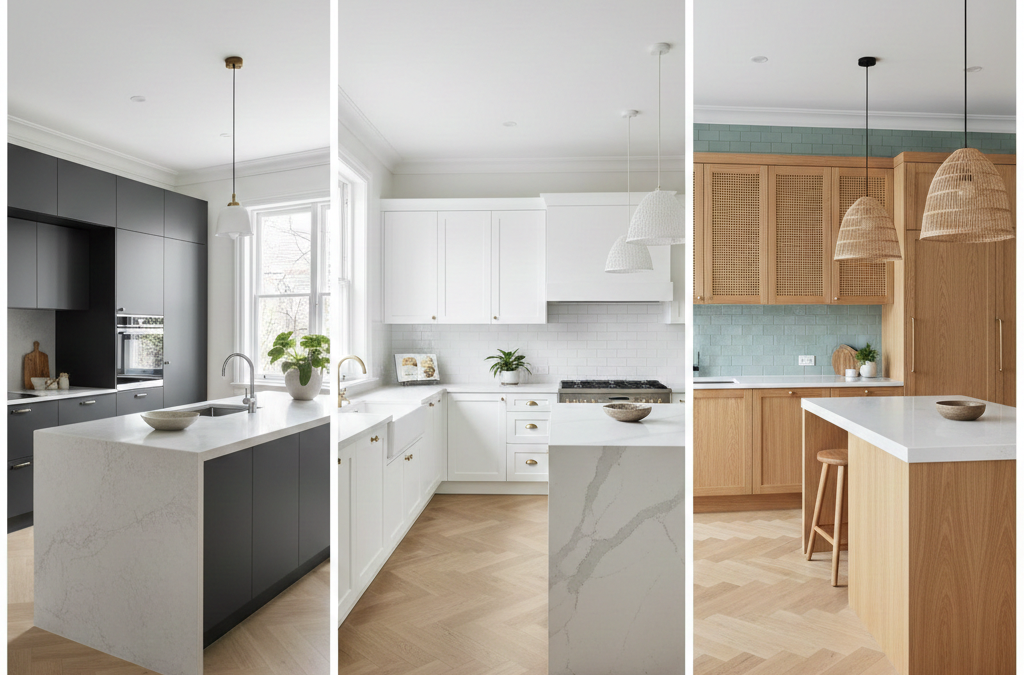
Your kitchen style sets the tone for your entire renovation budget, material selections, and long-term property value. Whether you lean toward a sleek modern look or a warm Hamptons feel, the design direction you choose determines everything from cabinetry costs to benchtop materials.
For Sydney homeowners and renovators, understanding each style before committing helps avoid costly mid-project changes. This guide breaks down the most popular kitchen design styles, what they cost, and how to match the right one to your home, lifestyle, and budget.
What Defines a Kitchen Design Style
A kitchen design style is the combination of layout choices, material selections, colour palettes, hardware finishes, and visual details that give a kitchen its distinct character. It is not just about appearance. The style you choose directly shapes your renovation scope, trade requirements, and total project cost.
Every kitchen renovation in Sydney starts with a design direction. That direction influences whether you need custom joinery or flat-pack cabinetry, natural stone or engineered surfaces, integrated appliances or freestanding units. Getting clear on style early prevents budget blowouts and scope creep.
Layout, Materials, and Visual Identity
Kitchen design styles are built on three pillars. Layout refers to the spatial arrangement, whether that is a galley, L-shape, U-shape, or island configuration. Materials cover everything from benchtop surfaces and splashback tiles to cabinet doors and flooring. Visual identity ties it together through colour, texture, hardware, and lighting choices.
A Hamptons kitchen, for example, pairs shaker-profile cabinetry with marble-look benchtops and brushed nickel hardware. A modern kitchen strips that back to handleless cabinetry, engineered stone, and clean horizontal lines. Same room, completely different material lists and labour requirements.
How Design Style Affects Renovation Costs
Style is one of the biggest cost variables in any kitchen renovation. A minimalist kitchen with laminate benchtops and simple slab doors will cost significantly less than a traditional kitchen with detailed mouldings, solid timber cabinetry, and natural stone surfaces.
In Sydney, kitchen renovations typically range from $25,000 for a basic refresh to $80,000 or more for a high-end custom build. The design style you select determines where you land on that spectrum. Understanding this relationship early gives you control over your budget from day one.
Modern Kitchen Design
Modern kitchen design is defined by clean lines, minimal ornamentation, and a focus on function. It draws from mid-twentieth century modernist principles and prioritises simplicity, open space, and streamlined surfaces. In Sydney, modern kitchens remain one of the most requested styles for both new builds and renovations.
The modern aesthetic works particularly well in apartments, townhouses, and contemporary homes where space efficiency matters. It pairs naturally with open-plan living areas and creates a sense of visual calm through restrained material palettes.
Key Features of a Modern Kitchen
Flat-panel or slab-front cabinetry is the foundation of a modern kitchen. Doors are typically handleless, using push-to-open mechanisms or integrated finger-pull profiles. Colour palettes lean toward whites, greys, and matte blacks, with occasional warm timber accents.
Benchtops are usually engineered stone or porcelain slabs. Splashbacks are often a single material, either glass, large-format tile, or the same surface as the benchtop. Lighting is recessed or linear, avoiding decorative pendants. The overall effect is uncluttered and horizontal.
Best Materials and Finishes for Modern Kitchens
Engineered stone brands like Caesarstone and Essastone are popular choices for modern kitchen benchtops in Sydney. They offer consistent colour, low maintenance, and a wide range of neutral tones. For cabinetry, polyurethane or laminate finishes in matte or satin sheens deliver the smooth, seamless look modern kitchens require.
Stainless steel or integrated appliances reinforce the streamlined aesthetic. Flooring options include polished concrete, large-format porcelain tiles, or engineered timber in light or mid-tone finishes.
Modern Kitchen Cost Considerations in Sydney
A modern kitchen renovation in Sydney typically starts around $30,000 for a mid-range fitout and can reach $60,000 to $75,000 for premium materials and custom joinery. Handleless cabinetry systems cost more than standard hinged doors due to specialised hardware.
Engineered stone benchtops generally range from $400 to $900 per square metre installed, depending on the brand and edge profile. The simplicity of modern design can work in your favour on labour costs, as fewer decorative details mean faster installation times.
Hamptons Kitchen Design
The Hamptons style is one of the most enduringly popular kitchen design styles in Sydney. Inspired by the coastal homes of Long Island, New York, it combines classic American elegance with a relaxed, light-filled aesthetic that suits the Australian lifestyle.
Hamptons kitchens feel spacious, welcoming, and timeless. They work well in freestanding homes, particularly in Sydney’s Eastern Suburbs, Northern Beaches, and Inner West, where the style complements both heritage and new-build architecture.
Defining Elements of a Hamptons Kitchen
Shaker-profile cabinet doors are the signature element. These feature a recessed centre panel with a simple frame, creating subtle shadow lines that add depth without excessive ornamentation. Cabinetry is almost always painted, typically in white, off-white, or soft grey.
Large kitchen islands with seating are a hallmark of the Hamptons look. Pendant lighting, usually in glass, brass, or nickel finishes, hangs above the island as a focal point. Open shelving or glass-front upper cabinets add display opportunities.
Colour Palettes and Material Choices
The Hamptons palette centres on white and neutral tones. Walls and cabinetry are white or pale grey, with contrast introduced through benchtops, hardware, and sometimes a feature island in a darker shade like navy or charcoal.
Marble or marble-look benchtops are the preferred surface. Natural Carrara marble delivers the authentic look but requires sealing and careful maintenance. Engineered alternatives like Smartstone or Caesarstone offer marble-inspired patterns with better durability. Brushed nickel or aged brass hardware completes the material palette.
Budgeting for a Hamptons Kitchen Renovation
Hamptons kitchens sit in the mid-to-upper price range. In Sydney, expect to budget between $40,000 and $80,000 depending on kitchen size, material quality, and whether you choose natural or engineered stone.
Shaker-profile doors cost more than flat-panel alternatives due to the additional manufacturing steps. Custom island builds with waterfall edges, integrated sinks, and seating add further cost. Allocating 10 to 15 percent of your kitchen budget for hardware, lighting, and finishing details is a practical benchmark for this style.
Contemporary Kitchen Design
Contemporary kitchen design refers to what is current and evolving right now. Unlike modern design, which is rooted in a specific historical movement, contemporary style is fluid. It borrows from multiple influences and adapts to current trends in materials, technology, and spatial design.
In Sydney, contemporary kitchens often feature bold material combinations, mixed finishes, and statement elements that reflect the homeowner’s personal taste. This style suits renovators who want a kitchen that feels current without committing to a single rigid aesthetic.
How Contemporary Differs from Modern
The distinction matters when planning a renovation. Modern design follows strict principles: clean lines, minimal decoration, and a restrained palette. Contemporary design is more flexible. It might incorporate curved forms, textured surfaces, mixed metals, or organic materials alongside sleek cabinetry.
A contemporary kitchen could feature fluted glass cabinet inserts, a terrazzo splashback, and matte black tapware in the same space. Modern design would rarely combine those elements. Understanding this difference helps you brief your designer accurately and avoid miscommunication during the quoting process.
Popular Contemporary Kitchen Features
Current contemporary trends in Sydney include integrated appliances concealed behind cabinetry panels, thin-profile porcelain benchtops, and butler’s pantries that keep the main kitchen visually clean. Colour-blocking, where sections of cabinetry use contrasting colours, is increasingly popular.
Textured finishes like ribbed timber veneer, fluted panels, and brushed metal surfaces add tactile interest. Smart storage solutions, including corner drawers, pull-out pantry systems, and hidden bins, are standard in contemporary kitchen designs.
Cost Factors for Contemporary Kitchens
Contemporary kitchens vary widely in cost because the style itself is so flexible. A restrained contemporary fitout might cost $35,000 to $50,000. A high-specification contemporary kitchen with custom joinery, premium appliances, and a butler’s pantry can exceed $90,000.
The cost variability makes detailed quoting essential. Because contemporary design often mixes materials and finishes, each element needs individual pricing. Requesting itemised quotes from your contractor helps you understand exactly where your money goes and where you can adjust.
Traditional Kitchen Design
Traditional kitchen design draws from European and colonial influences. It values craftsmanship, detail, and warmth. In Sydney, traditional kitchens are common in Federation homes, heritage properties, and established suburbs where architectural character is a priority.
This style suits homeowners who appreciate decorative mouldings, rich timber tones, and a sense of permanence. Traditional kitchens tend to feel substantial and layered, with more visual complexity than modern or minimalist alternatives.
Characteristics of a Traditional Kitchen
Raised-panel cabinet doors with detailed profiles are the defining feature. Crown moulding along the top of wall cabinets, decorative corbels under island overhangs, and turned timber legs on furniture-style pieces add architectural interest.
Colour palettes include cream, antique white, sage green, and deep timber stains. Benchtops are often natural stone, particularly granite or marble. Splashbacks may feature subway tiles in a herringbone or brick-bond pattern. Hardware is typically polished brass, oil-rubbed bronze, or antique pewter.
Cabinetry, Hardware, and Material Selections
Traditional cabinetry requires more manufacturing time and skill than flat-panel alternatives. Raised panels, applied mouldings, and glazed finishes all add to the per-door cost. Solid timber doors are available but significantly more expensive than MDF with a polyurethane finish.
Hardware selection is important in traditional kitchens because it is visible and decorative. Cup pulls, ring pulls, and knob handles in period-appropriate finishes contribute to the overall aesthetic. Budgeting $1,500 to $3,000 for hardware alone is realistic for a full-sized traditional kitchen.
Traditional Kitchen Renovation Pricing
Traditional kitchens are among the more expensive styles to execute well. In Sydney, a quality traditional kitchen renovation typically ranges from $45,000 to $85,000. The higher cost reflects detailed joinery, natural stone surfaces, and the skilled labour required for moulding installation and finishing.
Cutting corners on a traditional kitchen is risky. Cheap imitations of raised-panel doors or low-quality hardware undermine the entire aesthetic. If budget is tight, consider applying traditional details selectively, such as a feature island with decorative legs and mouldings, while keeping perimeter cabinetry simpler.
Farmhouse Kitchen Design
Farmhouse kitchen design celebrates rustic warmth, natural materials, and a lived-in quality. It is less formal than traditional design and more textured than modern. In Sydney, farmhouse kitchens appeal to homeowners who want a relaxed, inviting space that feels connected to nature and heritage.
The style works particularly well in homes with generous kitchen footprints, open-plan living areas, and access to outdoor entertaining spaces. It translates well across both rural properties and suburban Sydney homes.
Core Farmhouse Kitchen Elements
The farmhouse kitchen centres on a large apron-front (butler) sink, open shelving, and a freestanding or furniture-style island. Exposed timber beams, reclaimed wood accents, and vintage-inspired lighting reinforce the rustic character.
Cabinetry is typically shaker-profile or flat-panel with a painted or distressed finish. Whites, creams, and muted greens are common base colours. Natural timber in warm honey or walnut tones provides contrast through benchtops, shelving, or flooring.
Farmhouse Materials and Fixtures
Timber benchtops, particularly butcher block, are a signature farmhouse material. They require regular oiling and maintenance but deliver unmatched warmth. For lower-maintenance alternatives, engineered stone in warm-toned finishes or honed granite works well.
Fixtures lean toward vintage or industrial styles. Bridge-style tapware in aged brass or matte black suits the aesthetic. Pendant lights with metal shades, mason jar fixtures, or woven rattan pendants add character above islands and dining areas.
Farmhouse Kitchen Budget Planning
Farmhouse kitchens can be surprisingly cost-effective if you make smart material choices. Using open shelving instead of upper cabinets reduces joinery costs. Butcher block benchtops are more affordable than natural stone. Painted MDF cabinetry delivers the farmhouse look without the cost of solid timber.
In Sydney, a well-executed farmhouse kitchen renovation typically costs between $30,000 and $55,000. Reclaimed materials and vintage fixtures can add character without adding significant cost, but sourcing them takes time. Factor that into your project timeline.
Minimalist Kitchen Design
Minimalist kitchen design strips everything back to essentials. It prioritises clean surfaces, hidden storage, and a disciplined material palette. Every element serves a purpose. There is no decorative excess.
For Sydney apartments and smaller homes, minimalist design is a practical choice. It maximises the sense of space, reduces visual clutter, and creates a calm environment. It also tends to be one of the more budget-friendly styles when executed with standard materials.
Principles of Minimalist Kitchen Styling
The minimalist kitchen follows a “less is more” philosophy. Benchtops are kept clear. Appliances are integrated behind cabinetry panels. Hardware is either concealed or reduced to simple, flush-mounted pulls.
Colour palettes are extremely restrained. All-white kitchens, white-and-timber combinations, or monochromatic grey schemes are typical. A single accent material, such as a timber shelf or a concrete-look benchtop, provides the only visual contrast.
Storage Solutions and Functional Layout
Because minimalist kitchens hide everything, storage design is critical. Deep drawers replace traditional base cabinets. Pull-out pantry towers, internal drawer organisers, and integrated bin systems keep the kitchen functional without visible clutter.
Layout efficiency matters more in minimalist kitchens than in any other style. Every centimetre of cabinetry needs to work hard. Working with a kitchen designer who understands ergonomic workflow, the relationship between sink, cooktop, and refrigerator, ensures the minimalist aesthetic does not compromise daily function.
Cost Efficiency of Minimalist Kitchens
Minimalist kitchens can be among the most affordable to build because they use fewer materials and simpler construction methods. Flat-panel doors in laminate or polyurethane are cost-effective. Integrated handles eliminate hardware costs.
A minimalist kitchen renovation in Sydney can start from $20,000 to $25,000 for a compact space with standard finishes. Mid-range minimalist kitchens with engineered stone benchtops and quality soft-close hardware typically fall between $30,000 and $45,000. The savings come from simplicity, not from cutting quality.
Industrial Kitchen Design
Industrial kitchen design takes inspiration from converted warehouses, factories, and commercial kitchens. It celebrates raw materials, exposed structures, and utilitarian function. In Sydney, the industrial style is popular in inner-city apartments, warehouse conversions, and homes with open-plan layouts.
The aesthetic is bold and unapologetic. It works best when the architecture supports it, exposed brick walls, concrete floors, high ceilings, and visible ductwork all reinforce the industrial character.
Industrial Kitchen Aesthetic and Materials
Key materials include stainless steel, concrete, raw timber, and black steel. Benchtops may be polished concrete, stainless steel, or dark-toned engineered stone. Cabinetry is often flat-panel in dark colours or raw timber veneer, sometimes combined with open metal shelving.
Exposed pendant lighting with metal or cage shades is a defining feature. Tapware is typically matte black or brushed gunmetal. Splashbacks might be exposed brick, subway tiles in dark grout, or raw concrete panels.
Combining Industrial Style with Residential Function
The challenge with industrial kitchens in residential settings is balancing the raw aesthetic with everyday comfort and practicality. A fully industrial kitchen can feel cold or uninviting. The most successful residential versions soften the look with warm timber accents, comfortable seating, and layered lighting.
Acoustic considerations matter too. Hard surfaces like concrete and steel reflect sound. In open-plan homes, adding soft furnishings, timber elements, or acoustic panels in adjacent living areas helps manage noise levels.
Industrial Kitchen Renovation Costs
Industrial kitchens have a wide cost range. A basic industrial-inspired kitchen using laminate cabinetry, concrete-look benchtops, and standard appliances might cost $25,000 to $40,000. An authentic industrial fitout with polished concrete benchtops, custom steel shelving, and commercial-grade appliances can reach $60,000 to $80,000.
Polished concrete benchtops require specialist fabrication and installation, which adds to both material and labour costs. Stainless steel benchtops are priced per linear metre and vary based on gauge and finish. Getting detailed quotes for these specialty materials is essential.
Coastal Kitchen Design
Coastal kitchen design captures the relaxed, light-filled character of life near the water. In Sydney, this style has a natural home. From the Northern Beaches to the Sutherland Shire, coastal kitchens reflect the outdoor lifestyle and natural beauty of the surrounding environment.
The coastal style is not the same as Hamptons, though they share some DNA. Coastal design is more casual, more textured, and more directly connected to natural materials and ocean-inspired colour palettes.
Coastal Design Elements for Sydney Homes
Light timber cabinetry, woven pendant lights, and natural stone or terrazzo benchtops define the coastal kitchen. Colour palettes draw from the shoreline: soft whites, sandy neutrals, pale blues, and seafoam greens.
V-groove or tongue-and-groove panelling on island fronts or rangehood surrounds adds texture. Open shelving in natural timber displays ceramics and glassware. Splashbacks might feature handmade tiles in ocean tones or natural stone in a honed finish.
Material Durability and Finish Options
Coastal kitchens need materials that handle humidity and salt air, particularly in homes close to the water. Engineered timber flooring performs better than solid hardwood in these conditions. Marine-grade stainless steel is worth the premium for coastal properties.
For benchtops, porcelain slabs and engineered stone outperform natural marble in coastal environments. They resist moisture, staining, and salt damage. Cabinetry finishes should be moisture-resistant, polyurethane or thermolaminate rather than raw timber or standard MDF.
Coastal Kitchen Budget Expectations
A coastal kitchen renovation in Sydney typically costs between $35,000 and $60,000. Natural materials like stone and quality timber push costs toward the upper end. Handmade tiles and custom woven light fixtures also add to the budget.
For a more affordable coastal look, consider timber-look laminate cabinetry, engineered stone with natural veining, and rattan-style pendant lights. These alternatives capture the coastal aesthetic at a lower price point without sacrificing durability.
Scandinavian Kitchen Design
Scandinavian kitchen design prioritises light, function, and natural materials. Originating from the Nordic countries, this style responds to limited natural light by maximising brightness through white surfaces, reflective finishes, and uncluttered layouts.
In Sydney, Scandinavian kitchens appeal to homeowners who value simplicity and warmth in equal measure. The style works well in apartments, townhouses, and compact homes where efficient use of space is essential.
Scandinavian Design Principles in the Kitchen
Form follows function in Scandinavian design. Every element earns its place. Cabinetry is clean-lined, typically flat-panel or lightly profiled, in white or pale timber finishes. Hardware is minimal, often simple round knobs or slim bar handles in matte black or brushed steel.
The Scandinavian kitchen avoids visual noise. Benchtops are clear. Appliances are integrated. Storage is concealed. The result is a space that feels calm, organised, and effortlessly stylish.
Light, Timber, and Functional Simplicity
Natural light timber, particularly oak and birch, is the signature material. It appears on cabinetry fronts, open shelving, flooring, and sometimes benchtop edges. The warmth of timber prevents all-white Scandinavian kitchens from feeling sterile.
White walls and cabinetry reflect natural light, making the kitchen feel larger. Pendant lighting in simple geometric forms, often in white, black, or natural materials, provides task and ambient illumination. Plants and greenery are common finishing touches.
Scandinavian Kitchen Cost Breakdown
Scandinavian kitchens are moderately priced. The simplicity of the design keeps joinery costs reasonable, while the emphasis on quality materials, particularly real timber, adds a premium over fully laminate alternatives.
In Sydney, a Scandinavian-style kitchen renovation typically costs between $30,000 and $55,000. Timber veneer cabinetry costs more than painted MDF but less than solid timber. Engineered stone benchtops in white or light grey tones are the most common surface choice and fall in the mid-price range.
Transitional Kitchen Design
Transitional kitchen design sits between traditional and contemporary. It takes the warmth and detail of traditional design and pairs it with the clean lines and restraint of modern aesthetics. The result is a balanced, versatile style that suits a wide range of Sydney homes.
This style is ideal for homeowners who find modern kitchens too cold and traditional kitchens too ornate. It offers flexibility in material choices and adapts well to both period homes and newer builds.
Blending Traditional and Modern Elements
A transitional kitchen might feature shaker-profile cabinetry, a traditional element, paired with a waterfall-edge stone island, a contemporary detail. Hardware is simple but visible, often brushed nickel or matte black bar pulls rather than ornate traditional knobs.
Crown moulding may be present but in a simplified profile. Colour palettes are neutral and grounded: warm whites, soft greys, greige tones, and natural timber accents. The overall effect is sophisticated without being fussy.
Transitional Material and Colour Choices
Engineered stone benchtops in marble-look or concrete-look finishes are popular in transitional kitchens. They bridge the gap between the natural stone of traditional design and the engineered surfaces of modern kitchens.
Splashbacks often feature subway tiles in a classic format but with modern grout colours or layouts. Cabinetry mixes painted and timber finishes, sometimes using a darker tone on the island and white on perimeter cabinets. This two-tone approach adds depth without complexity.
Transitional Kitchen Pricing Guide
Transitional kitchens fall in the mid-range for renovation costs. The style avoids the most expensive traditional details like raised-panel doors and ornate mouldings while incorporating higher-quality materials than a basic modern fitout.
In Sydney, expect to budget between $35,000 and $65,000 for a transitional kitchen renovation. The two-tone cabinetry approach can add 10 to 15 percent to joinery costs compared to a single-colour kitchen. Shaker doors cost slightly more than flat-panel but significantly less than raised-panel alternatives.
How to Choose the Right Kitchen Design Style
Choosing a kitchen design style is one of the first and most important decisions in any renovation. It sets the direction for every subsequent choice, from cabinetry profiles to benchtop materials to hardware finishes. Getting it right saves time, money, and frustration.
The best approach is to consider three factors together: your home’s existing architecture, your renovation budget, and how you actually use your kitchen day to day.
Matching Style to Your Home Architecture
A kitchen style that clashes with your home’s architecture creates visual tension. Federation and Edwardian homes in Sydney’s Inner West and North Shore suit traditional, Hamptons, or transitional kitchens. Mid-century homes pair naturally with modern or Scandinavian design. Warehouse conversions call for industrial or contemporary styles.
This does not mean you cannot mix eras. A contemporary kitchen in a heritage home can work beautifully when the transition between old and new is handled thoughtfully. But it requires careful design and usually costs more than a style that flows naturally from the existing architecture.
Budget Alignment and Material Trade-Offs
Every kitchen style has a natural price range. Minimalist and modern kitchens tend to be more affordable because they use simpler construction methods. Traditional and Hamptons kitchens cost more due to detailed joinery and premium materials.
If your preferred style exceeds your budget, look for smart trade-offs. Use engineered stone instead of natural marble. Choose polyurethane shaker doors instead of solid timber. Select quality laminate for internal cabinetry while reserving premium finishes for visible surfaces. These decisions preserve the design intent while keeping costs manageable.
Lifestyle, Functionality, and Resale Value
Your kitchen needs to work for your life. Families with young children benefit from durable, easy-clean surfaces and generous storage. Keen cooks need efficient workflow layouts and quality appliances. Entertainers want island seating and open-plan connectivity.
Resale value is also worth considering. In Sydney, Hamptons, modern, and transitional kitchens consistently appeal to the broadest range of buyers. Highly personalised styles like industrial or farmhouse may limit your buyer pool. If you plan to sell within five to ten years, choosing a broadly appealing style protects your investment.
Kitchen Design Styles and Renovation Budgeting
Your kitchen design style is not separate from your renovation budget. It is the single biggest factor that determines it. Understanding this connection helps you plan realistically and avoid the frustration of falling in love with a style you cannot afford.
Every style carries its own cost profile based on material requirements, joinery complexity, and labour intensity. Knowing these profiles before you start getting quotes puts you in a stronger negotiating position.
How Style Choices Impact Total Project Cost
The difference between the most affordable and most expensive kitchen styles can be $30,000 to $50,000 for the same sized space. A minimalist kitchen with laminate cabinetry and engineered stone might cost $25,000. A traditional kitchen with raised-panel doors, natural stone, and decorative mouldings in the same footprint could reach $75,000.
Cabinetry typically accounts for 40 to 50 percent of a kitchen renovation budget. Door profile, finish type, and hardware selection are the primary cost drivers within that category. Benchtops represent another 15 to 20 percent, with material choice creating the biggest variance.
Where to Save and Where to Invest
Invest in the elements you touch and use every day. Quality soft-close drawer runners, durable benchtop surfaces, and a reliable sink and tapware set make a daily difference. These items also wear out fastest if you choose cheap options.
Save on elements that are easy to update later. Splashback tiles, pendant lights, cabinet handles, and paint colours can all be refreshed without a full renovation. Choosing a less expensive splashback now and upgrading in five years is a smarter strategy than overspending on every element at once.
Getting an Accurate Kitchen Renovation Quote in Sydney
An accurate quote starts with a clear design brief. Before approaching contractors, know your preferred style, your must-have features, and your realistic budget range. Provide a floor plan if possible. The more detail you give, the more accurate the quote you receive.
Request itemised quotes that break down cabinetry, benchtops, appliances, plumbing, electrical, tiling, and project management as separate line items. This transparency lets you compare quotes fairly and identify where costs can be adjusted. A reputable Sydney renovation contractor will welcome this level of detail.
Conclusion
Kitchen design styles shape every aspect of your renovation, from material selections and joinery details to total project cost and long-term property value. Understanding the differences between modern, Hamptons, coastal, traditional, and other popular styles gives you the clarity to plan with confidence.
The right kitchen style balances your personal taste with your home’s architecture, your daily needs, and your renovation budget. Making informed decisions at the design stage prevents costly changes and ensures a result you will enjoy for years.
We help Sydney homeowners navigate these decisions every day. Contact Sydney Home Renovation for a detailed consultation and transparent quote tailored to your preferred kitchen design style and budget.
Frequently Asked Questions
What is the most popular kitchen design style in Sydney?
Hamptons and modern kitchens are the two most requested styles across Sydney. Hamptons suits freestanding homes in coastal and suburban areas, while modern design is popular in apartments and contemporary builds.
How much does a kitchen renovation cost in Sydney?
Kitchen renovations in Sydney typically range from $20,000 for a basic update to $80,000 or more for a premium custom build. Your design style, material choices, and kitchen size are the primary cost factors.
What is the difference between modern and contemporary kitchen design?
Modern design follows a specific mid-century aesthetic with clean lines and minimal decoration. Contemporary design is fluid and trend-driven, borrowing from multiple styles and incorporating current materials and finishes.
Which kitchen style adds the most value to a home?
Hamptons, modern, and transitional kitchens tend to deliver the strongest resale value in Sydney because they appeal to the widest range of buyers. Neutral palettes and quality finishes maximise buyer interest.
Can you mix kitchen design styles in one renovation?
Yes. Transitional design is built on mixing traditional and modern elements. The key is maintaining a cohesive colour palette and material family so the combined elements feel intentional rather than disjointed.
What kitchen design style is best for small spaces?
Minimalist and modern kitchens work best in compact spaces. Their clean lines, integrated storage, and light colour palettes create a sense of openness. Handleless cabinetry and concealed appliances reduce visual clutter.
How do I choose a kitchen style that fits my renovation budget?
Start by understanding the natural cost range of each style. Minimalist and modern kitchens are generally more affordable. Hamptons and traditional kitchens cost more. Identify your non-negotiable features first, then adjust secondary elements to stay within budget.