
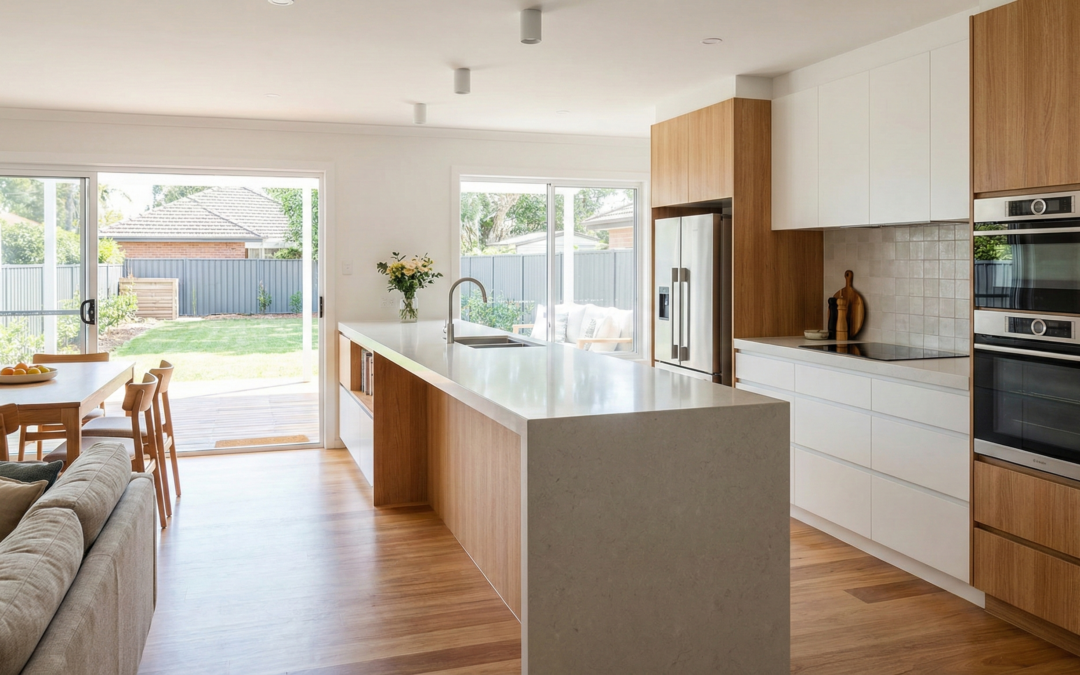
A new kitchen is one of the most reliable home investments you can make, typically returning 50-80% of your renovation costs at resale while delivering immediate lifestyle benefits. For Sydney homeowners, this translates to both tangible property value increases and the daily enjoyment of a functional, modern cooking space.
The kitchen remains the heart of Australian homes, and buyers consistently rank it as the most important room when evaluating properties. Whether you’re planning to sell within five years or staying long-term, understanding when and how kitchen renovations pay off helps you make smarter financial decisions.
This guide breaks down the real ROI figures, explores which upgrades deliver the best returns, and helps you determine whether a kitchen renovation makes sense for your specific situation and budget.
Understanding Kitchen Renovation ROI in Australia
Return on investment for kitchen renovations varies significantly based on your property type, location, and the scope of work undertaken. In the Australian market, kitchens consistently outperform other renovation projects when it comes to adding resale value.
The general rule among property valuers suggests that a well-executed kitchen renovation adds approximately $1.50 to $2 in value for every $1 spent, though this depends heavily on not overcapitalising for your suburb. Sydney’s competitive property market tends to reward quality kitchen upgrades, particularly in areas where buyers expect modern finishes.
Understanding these returns requires looking beyond simple percentages. A kitchen that costs $40,000 to renovate might add $60,000 to your property’s value in one suburb while only adding $35,000 in another. The key lies in matching your investment to local buyer expectations and property price ceilings.
How Kitchen Upgrades Affect Property Value
Kitchen condition directly influences how buyers perceive your entire property. Real estate agents consistently report that outdated kitchens are among the top reasons buyers negotiate harder or walk away from otherwise suitable homes.
Modern kitchens signal to buyers that the property has been well-maintained. They reduce the mental burden of imagining renovation costs, making your home more attractive compared to similar properties with dated cooking spaces. This psychological factor often translates to faster sales and stronger offers.
The impact extends beyond the kitchen itself. An updated kitchen often makes adjacent living and dining areas feel more cohesive and contemporary, creating a flow that buyers find appealing. Open-plan layouts connecting kitchen, dining, and living spaces remain highly desirable in the Sydney market.
Comparing Kitchen ROI to Other Home Improvements
When weighing renovation options, kitchens consistently rank among the highest-returning projects. Bathroom renovations follow closely, typically returning 60-70% of costs, while cosmetic updates like painting and flooring offer lower absolute returns but excellent percentage returns due to their lower costs.
Structural additions like extra bedrooms or extensions can add significant value but often require larger investments and longer timeframes. For homeowners seeking the best balance of cost, disruption, and return, kitchen renovations frequently emerge as the optimal choice.
Outdoor improvements, including decking and landscaping, provide good returns in Sydney’s climate but rarely match the consistent performance of kitchen upgrades. The kitchen’s central role in daily life and its visibility during property inspections give it an advantage that few other renovations can match.
Factors That Determine Kitchen Investment Value
Not every kitchen renovation delivers the same return. Several key factors influence whether your investment pays off handsomely or falls short of expectations.
Your property’s current value and location set the ceiling for sensible renovation spending. Overcapitalising—spending more than the local market can support—remains the most common mistake homeowners make. A $100,000 kitchen in a suburb where median prices sit at $800,000 rarely makes financial sense, regardless of how beautiful the result.
The condition of your existing kitchen also matters. Transforming a genuinely outdated 1980s kitchen typically delivers better returns than upgrading an already-functional 2010s space. Buyers notice dramatic improvements more than incremental ones.
Location and Market Conditions
Sydney’s diverse property market means renovation returns vary dramatically between suburbs. Premium areas like the Eastern Suburbs and Lower North Shore support higher-end finishes, while Western Sydney buyers may prioritise functionality and value over luxury appointments.
Current market conditions influence returns as well. In strong seller’s markets, well-presented properties with modern kitchens attract multiple offers and premium prices. During slower periods, a quality kitchen helps your property stand out from competing listings.
Local buyer demographics shape expectations too. Family-oriented suburbs value practical storage and durable surfaces, while areas popular with young professionals might reward sleek, minimalist designs. Understanding your target buyer helps you make renovation decisions that resonate with the people most likely to purchase your home.
Quality of Materials and Workmanship
Cutting corners on materials or installation rarely pays off. Buyers and their building inspectors can spot cheap cabinetry, poorly fitted benchtops, and substandard appliances. These shortcuts often cost more in reduced offers than they save during renovation.
Quality materials don’t necessarily mean the most expensive options. Mid-range selections from reputable suppliers typically offer the best value, providing durability and visual appeal without the premium pricing of luxury brands. Stone benchtops, soft-close cabinetry, and quality tapware have become baseline expectations in the Sydney market.
Professional installation ensures your investment lasts. Poorly fitted kitchens develop problems quickly—doors that don’t close properly, benchtops with visible seams, and plumbing issues that emerge within months. These defects undermine both your daily enjoyment and eventual resale value.
Kitchen Layout and Functionality
Layout improvements often deliver better returns than cosmetic upgrades alone. A kitchen that flows well, offers adequate storage, and provides comfortable working space appeals to buyers more than one with expensive finishes but awkward functionality.
The work triangle concept—positioning sink, stove, and refrigerator for efficient movement—remains relevant despite evolving kitchen designs. Modern interpretations might include multiple work zones for households where several people cook simultaneously, but the underlying principle of functional flow persists.
Storage solutions significantly impact perceived value. Pull-out pantries, corner cabinet organisers, and dedicated appliance housing demonstrate thoughtful design. Buyers appreciate kitchens where everything has a logical place, reducing the visual clutter that makes spaces feel smaller and less appealing.
Cost Breakdown for Kitchen Renovations in Sydney
Understanding typical costs helps you budget realistically and avoid unpleasant surprises. Sydney kitchen renovations span a wide range depending on scope, size, and finish level.
Budget renovations focusing on cosmetic updates—new doors, benchtops, splashback, and appliances while retaining existing layout and cabinetry boxes—typically range from $15,000 to $25,000. These projects suit homeowners seeking quick improvements without major disruption.
Mid-range complete renovations with new cabinetry, quality stone benchtops, and standard appliances generally fall between $30,000 and $50,000. This bracket represents the sweet spot for most Sydney homeowners, delivering significant improvements without overcapitalising in average suburbs.
Labour Costs and Timeframes
Labour typically accounts for 35-45% of total kitchen renovation costs. This includes cabinetmakers, plumbers, electricians, tilers, and potentially plasterers and painters. Coordinating multiple trades requires either skilled project management or a renovation contractor who handles scheduling.
Standard kitchen renovations take 4-8 weeks from demolition to completion, though this extends if structural changes, council approvals, or custom cabinetry are involved. Planning for realistic timeframes helps you arrange alternative cooking facilities and manage household disruption.
Trade shortages in Sydney can affect both pricing and availability. Booking trades well in advance and maintaining flexibility with timing often results in better rates and more reliable scheduling than last-minute arrangements.
Material Allowances and Hidden Costs
Material costs vary enormously based on selections. Laminate benchtops might cost $200-400 per linear metre installed, while premium stone ranges from $800-1,500 per linear metre. Similar variations exist across cabinetry, splashbacks, flooring, and appliances.
Hidden costs catch many homeowners off guard. These include asbestos removal in older homes, electrical upgrades to meet current standards, plumbing modifications, and structural changes for layout alterations. Building a 15-20% contingency into your budget provides a buffer for unexpected discoveries.
Appliance costs deserve careful consideration. While it’s tempting to allocate most of your budget to visible elements like cabinetry and benchtops, quality appliances significantly impact daily functionality. Balancing visual appeal with practical performance ensures your kitchen works as well as it looks.
When a Kitchen Renovation Makes Financial Sense
Timing your kitchen renovation strategically maximises both enjoyment and financial return. Several scenarios particularly favour kitchen investment.
If you’re planning to sell within 2-5 years, a kitchen renovation can significantly improve your sale price and reduce time on market. The investment has time to be enjoyed while remaining fresh enough to impress buyers. Renovating immediately before listing risks appearing rushed and may not allow time to address any issues that emerge.
For long-term homeowners, the calculation shifts toward lifestyle value. A kitchen you’ll use daily for 10-20 years justifies investment based on improved functionality and enjoyment, with eventual resale benefits as a bonus rather than the primary motivation.
Signs Your Kitchen Needs Updating
Certain indicators suggest renovation will deliver strong returns. Kitchens with original 1970s-1990s fitouts typically show their age through dated colours, worn surfaces, and inefficient layouts. These spaces offer the greatest transformation potential.
Functional problems signal renovation priority. Insufficient storage, poor lighting, inadequate bench space, and failing appliances all impact daily life and buyer perception. Addressing these issues improves both your experience and your property’s appeal.
If your kitchen feels disconnected from the rest of your home’s style, renovation creates cohesion. A contemporary living area adjoining an outdated kitchen creates jarring contrast that buyers notice. Bringing the kitchen in line with your home’s overall presentation strengthens its market position.
When to Renovate vs. When to Wait
Certain circumstances favour delaying renovation. If you’re uncertain about staying in your home, investing heavily in a kitchen you might not enjoy long-term rarely makes sense. Similarly, if your suburb’s price ceiling limits potential returns, modest updates might serve better than comprehensive renovation.
Financial readiness matters too. Stretching your budget to the breaking point for a kitchen renovation creates stress and may force compromises that undermine the result. Waiting until you can comfortably afford quality work often produces better outcomes than rushing with inadequate funds.
Market timing plays a role for those planning to sell. Renovating during a property downturn means your investment sits in the home longer before realisation, while renovating as the market strengthens positions you to capture maximum value.
Maximising Return on Your Kitchen Investment
Strategic decisions throughout the renovation process influence your eventual return. Focusing investment where it matters most ensures your dollars work harder.
Prioritise elements buyers notice first: benchtops, splashback, and cabinetry fronts create immediate visual impact. These surfaces dominate the kitchen’s appearance and set the tone for buyer perception. Allocating budget here before less visible elements like internal fittings makes sense for resale-focused renovations.
Neutral colour schemes appeal to broader buyer pools. While bold colours might suit your personal taste, they risk alienating buyers who can’t see past strong design choices. Whites, greys, and natural tones provide a canvas that buyers can imagine personalising.
High-Impact Upgrades That Add Value
Stone benchtops have become expected in Sydney’s market. Engineered stone offers durability and consistent appearance at lower cost than natural stone, making it the popular choice for value-conscious renovations. The visual and tactile quality of stone significantly elevates kitchen presentation.
Quality tapware and sinks demonstrate attention to detail. These relatively affordable elements are touched and used constantly, making their quality immediately apparent. Investing in reputable brands here delivers disproportionate impact relative to cost.
Adequate lighting transforms kitchen functionality and atmosphere. Under-cabinet task lighting, pendant lights over islands, and sufficient general illumination make spaces feel larger and more inviting. Lighting upgrades often cost relatively little while dramatically improving the room’s appeal.
Avoiding Overcapitalisation
Research comparable sales in your area before setting your renovation budget. Understanding what similar properties sell for—and what kitchen standards they feature—helps you calibrate appropriate spending levels.
The general guideline suggests limiting kitchen renovation costs to 5-10% of your property’s value. A home worth $1.2 million might reasonably support a $60,000-$120,000 kitchen, while a $600,000 property should stay closer to $30,000-$60,000.
Consider your suburb’s trajectory too. Areas undergoing gentrification may support higher investment as buyer expectations rise, while established suburbs with stable demographics have more predictable return profiles.
Making Your Decision: Investment Checklist
Before committing to a kitchen renovation, work through key considerations that influence whether the investment makes sense for your situation.
Assess your timeline honestly. How long will you remain in the property? Longer stays justify higher investment through extended enjoyment, while shorter horizons require tighter focus on resale returns.
Evaluate your current kitchen objectively. Is it genuinely dated and dysfunctional, or merely not to your taste? Dramatic transformations deliver better returns than refinements to already-adequate spaces.
Questions to Ask Before Renovating
What’s the realistic price ceiling for your property given its location and size? Consult local agents for honest assessments rather than optimistic estimates.
Can you afford quality work without financial strain? Underfunded renovations often produce disappointing results that neither satisfy daily use nor impress buyers.
Do you have realistic expectations about disruption? Kitchen renovations impact daily life significantly. Ensuring household members understand and accept this disruption prevents frustration during the project.
Working With Renovation Professionals
Experienced renovation contractors bring valuable perspective to kitchen projects. They understand what works in your local market, can identify potential issues before they become expensive problems, and coordinate trades efficiently.
Get multiple quotes and check references thoroughly. The cheapest quote rarely represents the best value—understanding what’s included and excluded in each proposal helps you compare accurately.
Clear communication about budget, timeline, and expectations prevents misunderstandings. Documenting agreements in writing protects both parties and provides reference points throughout the project.
Conclusion
A new kitchen represents one of the soundest home improvement investments available to Sydney homeowners, delivering both immediate lifestyle benefits and long-term financial returns when executed thoughtfully. The key lies in matching your investment to your property’s value, your suburb’s expectations, and your personal timeline.
At Sydney Home Renovation, we help homeowners navigate these decisions with transparent cost planning, realistic return projections, and quality workmanship that stands the test of time. Our experience across Sydney’s diverse suburbs means we understand what works in your specific market.
Ready to explore whether a kitchen renovation makes sense for your home? Contact our team for an honest assessment of your options and a detailed quote tailored to your goals and budget.
Frequently Asked Questions
How much does a kitchen renovation cost in Sydney?
Sydney kitchen renovations typically range from $15,000-$25,000 for cosmetic updates, $30,000-$50,000 for mid-range complete renovations, and $60,000-$100,000+ for high-end projects. Your final cost depends on kitchen size, material selections, and whether layout changes are involved.
What is the average ROI on a kitchen renovation in Australia?
Australian kitchen renovations generally return 50-80% of costs at resale, with well-planned projects in strong markets sometimes exceeding 100% return. The actual figure depends on your property’s location, the renovation quality, and current market conditions.
How long does a kitchen renovation take?
Most complete kitchen renovations take 4-8 weeks from demolition to completion. Cosmetic updates might finish in 2-3 weeks, while projects involving structural changes or custom cabinetry can extend to 10-12 weeks or longer.
Should I renovate my kitchen before selling?
Renovating 6-12 months before selling often delivers the best results, giving you time to enjoy the space while ensuring it remains fresh for buyers. Avoid renovating immediately before listing, as rushed projects may show quality issues.
What kitchen features add the most value?
Stone benchtops, quality cabinetry, modern appliances, and good lighting consistently add the most value. Functional improvements like better storage and improved layout often matter more to buyers than purely cosmetic upgrades.
Is it better to renovate or buy a new house with a better kitchen?
This depends on your attachment to your current location, the cost differential, and transaction costs involved in moving. Often, renovating costs less than the stamp duty and moving expenses associated with purchasing a comparable property with an updated kitchen.
How do I avoid overcapitalising on my kitchen renovation?
Research comparable sales in your suburb to understand local price ceilings, limit renovation spending to 5-10% of your property’s value, and focus on quality mid-range finishes rather than luxury appointments that exceed local buyer expectations.