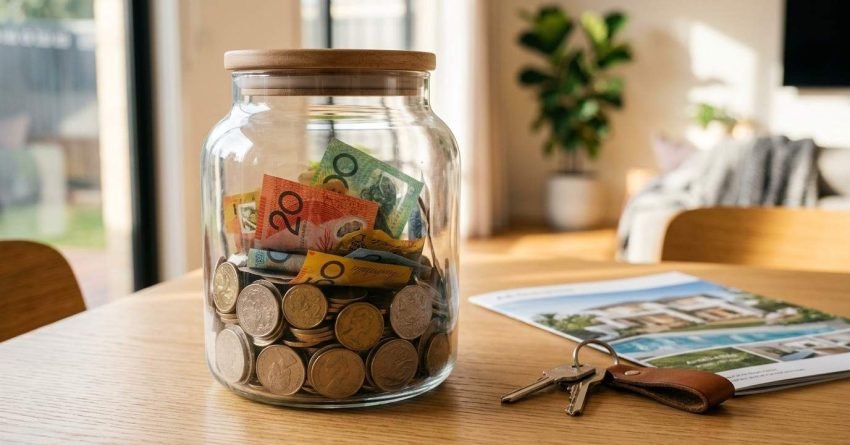
Saving a bigger down payment can reduce your borrowing costs significantly, but it is not always the better financial decision. Whether it makes sense depends on your current savings position, how quickly Sydney property prices are moving, and what a delay in entering the market would actually cost you.
For most buyers, the question is not simply “more deposit equals better outcome.” It is a calculation that weighs interest savings and avoided fees against the real cost of waiting while property values continue to rise.
What a Bigger Down Payment Actually Changes
A larger deposit directly reduces the amount you borrow, which lowers your total interest paid over the life of the loan. It also improves your loan-to-value ratio, which can unlock better interest rates and, critically, help you avoid Lenders Mortgage Insurance. For Sydney buyers, where median property prices remain among the highest in Australia, these savings are not trivial. A stronger deposit position also signals lower risk to lenders, which can improve your borrowing capacity and negotiating position.
How Loan-to-Value Ratio Affects Your Borrowing Costs
Your loan-to-value ratio (LVR) is the percentage of the property’s value you are borrowing. A 20% deposit produces an 80% LVR, which is the threshold most lenders use to offer their most competitive rates. Borrowing at 90% LVR versus 80% LVR on a $900,000 Sydney property means carrying an extra $90,000 in debt. Over a 30-year loan at a standard variable rate, that difference compounds into tens of thousands of dollars in additional interest. Reducing your LVR is one of the most direct levers you have over your long-term borrowing cost.
When Lenders Mortgage Insurance Becomes the Deciding Factor
Lenders Mortgage Insurance is charged when your deposit falls below 20% of the purchase price. It protects the lender, not you, and the premium is added to your loan. On a $900,000 Sydney property with a 10% deposit, what LMI actually costs at different deposit levels can reach $15,000 to $25,000 or more depending on the lender and loan amount. For some buyers, paying LMI to enter the market sooner is a rational trade-off. For others, it is an avoidable cost that justifies saving longer.
The right answer depends on more than the deposit figure alone. How you structure your savings timeline and what you do with the time you spend saving both shape the final outcome.
When Saving Longer Makes Financial Sense
Saving a larger deposit makes clear financial sense when property prices in your target area are stable or moving slowly, when your current savings rate is strong, and when the LMI premium you would pay by entering sooner is significant. In these conditions, the interest savings from a lower LVR and the avoided LMI cost outweigh the opportunity cost of waiting. If you can reach a 20% deposit within 12 to 18 months without meaningful price growth eroding your position, saving longer is typically the stronger strategy.
The Hidden Cost of Waiting in a Rising Property Market
The calculation changes sharply when property prices are rising faster than you can save. In Sydney, how Sydney property values have moved over extended periods shows that waiting to accumulate a larger deposit can leave buyers chasing a target that keeps moving. If a property worth $900,000 today increases by 5% annually, it will cost approximately $945,000 in 12 months. Your deposit savings may not keep pace with that growth, meaning you end up borrowing more despite saving more. This is the core risk of over-prioritising deposit size in a rising market.
When Entering Sooner Outweighs a Larger Deposit
Entering the market with a smaller deposit can be the better decision when Sydney property prices are rising consistently, when your rental costs are high and delaying entry means continued dead-money spending, or when you qualify for government schemes such as the First Home Guarantee that allow eligible buyers to purchase with as little as a 5% deposit without paying LMI. In these scenarios, the equity you build through ownership and capital growth can outperform the savings you would have accumulated by waiting. The key is ensuring your borrowing capacity is solid and your repayments remain manageable at the higher loan amount.
Conclusion
Whether saving a bigger down payment is the better choice depends on your savings rate, Sydney’s price trajectory, and the real cost of LMI versus the cost of waiting.
Homeowners, first-time buyers, and investors who run this calculation clearly, rather than defaulting to “bigger is always better,” consistently make stronger financial decisions at the point of purchase.
At Sydney Home Renovation, we help property owners plan renovations that maximise the value of every dollar invested. Contact us to discuss how a well-planned renovation fits your property strategy.
Frequently Asked Questions
What is the minimum deposit needed to buy a home in Sydney?
Most lenders require a minimum 5% deposit, though deposits below 20% typically attract Lenders Mortgage Insurance. Government schemes can allow eligible first home buyers to purchase with 5% without LMI.
Does a 20% deposit always mean a better mortgage deal?
A 20% deposit avoids LMI and typically unlocks lower interest rates, but it is not always the optimal choice if reaching that threshold means waiting years in a rising Sydney market.
How does LMI work and is it always worth avoiding?
LMI protects the lender when your deposit is below 20%. The premium is added to your loan. It is worth avoiding when the cost is high relative to your savings timeline, but acceptable when entering sooner captures stronger capital growth.
Can first home buyers access grants with a smaller deposit?
Yes. The First Home Guarantee allows eligible buyers to purchase with a 5% deposit without paying LMI. State-based grants and stamp duty concessions may also apply depending on purchase price and eligibility criteria.
How long does it typically take to save a 20% deposit in Sydney?
With Sydney’s median house price above $1 million, saving a 20% deposit requires $200,000 or more. At a savings rate of $2,000 per month, that represents over eight years of saving without accounting for price growth.