
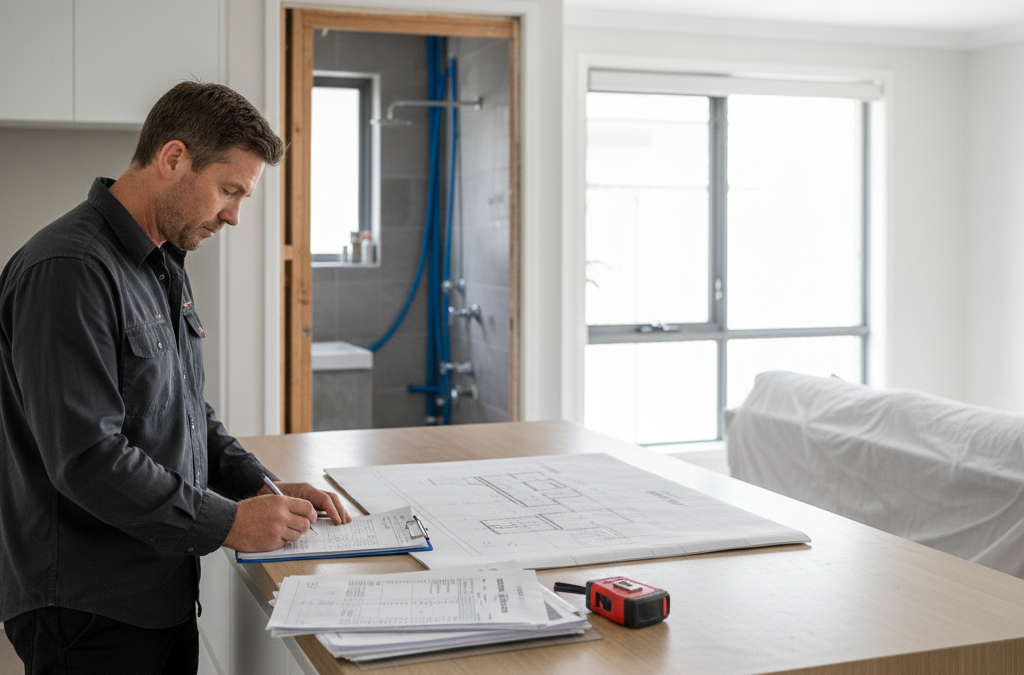
Hiring the right renovation contractor in Sydney can save you thousands of dollars and months of stress on your bathroom project. The difference between a smooth, on-budget renovation and a costly disaster often comes down to the decisions you make before any work begins.
Whether you are a first-time renovator, a homeowner upgrading a dated bathroom, or a property investor maximising rental returns, knowing how to evaluate contractors, compare quotes, and avoid common traps puts you in control. Sydney’s renovation market is competitive, and not every contractor operates with the same level of transparency or skill.
This guide walks you through everything from checking licences and understanding pricing to spotting red flags and managing the build process. You will finish with a clear framework for hiring a contractor who delivers quality work, honest communication, and a bathroom renovation that stays on budget.
What to Look for When Hiring Renovation Contractors in Sydney
Finding a qualified renovation contractor starts with knowing what separates a professional operator from someone who will cut corners. In Sydney, bathroom renovations involve waterproofing, plumbing, electrical, and tiling work that must meet strict building codes. The contractor you hire needs to manage all of these trades while keeping your project on track and within budget.
Three non-negotiable factors should guide your shortlist: proper licensing, relevant experience, and transparent pricing.
Licences and Insurance Requirements in NSW
Every renovation contractor performing work valued over $5,000 in NSW must hold a valid licence issued by NSW Fair Trading. For bathroom renovations, this typically means a general building licence or a specialist trade licence depending on the scope.
Before signing anything, ask for the contractor’s licence number and verify it online through the NSW Fair Trading licence check tool. Confirm the licence covers the type of work you need. A tiler’s licence does not cover structural changes or plumbing modifications.
Insurance is equally important. Your contractor should carry public liability insurance (minimum $5 million is standard in Sydney) and workers’ compensation insurance if they employ staff. Without these, you could be personally liable for injuries or property damage that occur on your site.
Request copies of both policies. A reputable contractor will provide them without hesitation.
Experience with Bathroom-Specific Renovations
Bathroom renovations are among the most complex residential projects. They involve waterproofing membranes, drainage falls, wet-area compliance, ventilation, and coordination between plumbers, electricians, tilers, and carpenters. A contractor who primarily builds decks or does kitchen fit-outs may not have the specific expertise your bathroom requires.
Ask how many bathroom renovations the contractor has completed in the past 12 months. Request photos of recent projects, ideally at different stages of the build, not just the finished result. A contractor who can show you waterproofing installation, substrate preparation, and tiling in progress understands the process from the ground up.
If your project involves structural changes, such as moving walls, relocating plumbing, or converting a bathtub to a walk-in shower, confirm the contractor has handled similar scopes. Complexity matters. A standard cosmetic refresh is a different job from a full gut-and-rebuild.
Transparent Pricing and Detailed Quoting
A professional renovation contractor provides a written quote that breaks down every cost line by line. You should see separate figures for demolition, waterproofing, plumbing, electrical, tiling, fixtures, cabinetry, painting, and project management.
Vague quotes that lump everything into a single figure are a warning sign. Without a detailed breakdown, you cannot compare quotes accurately, and you have no way to identify where costs might escalate during the build.
Look for quotes that specify whether prices are fixed or estimated. Provisional sums and allowances are common for items like tiles, tapware, and vanities where your final selection affects the price. A good contractor will explain exactly what is included in the allowance and what happens if you choose something above or below that figure.
The most reliable contractors in Sydney will also outline what is excluded from the quote. Asbestos removal, council approvals, and unexpected structural repairs are common exclusions that catch homeowners off guard if they are not discussed upfront.
How Much Do Renovation Contractors Charge in Sydney?
Understanding typical costs helps you evaluate whether a quote is reasonable, inflated, or suspiciously low. Bathroom renovation pricing in Sydney varies significantly based on the size of the room, the quality of materials, the complexity of the work, and the contractor’s overheads.
As a general guide, most standard bathroom renovations in Sydney fall between $15,000 and $35,000 for a mid-range finish. High-end renovations with premium fixtures, custom joinery, and designer tiles can exceed $50,000 or more.
Typical Labour Costs for Bathroom Renovations
Labour is the largest single expense in most bathroom renovations, typically accounting for 40% to 60% of the total project cost. In Sydney, you are paying for multiple licensed tradespeople who each bring specialised skills.
Here is a general breakdown of labour costs you can expect:
| Trade | Typical Cost Range (Sydney) |
| Plumber | $2,000 to $5,000 |
| Electrician | $1,000 to $3,000 |
| Tiler | $2,500 to $6,000 |
| Waterproofer | $1,000 to $2,500 |
| Carpenter/Builder | $2,000 to $5,000 |
| Painter | $500 to $1,500 |
| Demolition | $1,000 to $2,500 |
These figures vary based on the scope of work, the condition of the existing bathroom, and whether the contractor manages all trades in-house or subcontracts them out. In-house teams often deliver tighter coordination and fewer scheduling delays.
Material and Fitting Allowances
Materials and fittings make up the second largest portion of your renovation budget. The range here is enormous because your choices directly determine the cost.
Budget-level floor and wall tiles start around $30 to $50 per square metre, while mid-range options sit between $60 and $120 per square metre. Premium or imported tiles can exceed $200 per square metre.
For fixtures and fittings, expect these approximate ranges:
| Item | Budget Range | Mid-Range | Premium |
| Vanity (supply) | $400 to $800 | $800 to $2,000 | $2,000+ |
| Toilet | $250 to $500 | $500 to $1,000 | $1,000+ |
| Shower screen | $400 to $800 | $800 to $1,500 | $1,500+ |
| Tapware set | $200 to $500 | $500 to $1,200 | $1,200+ |
| Bathtub | $500 to $1,000 | $1,000 to $3,000 | $3,000+ |
A good contractor will provide a material allowance within the quote and let you select products within that budget. If you upgrade beyond the allowance, the difference is added to your final invoice.
What Drives Price Differences Between Contractors
Not all quotes for the same bathroom renovation will be equal, and the cheapest option is rarely the best value. Several factors explain why one contractor quotes $18,000 and another quotes $30,000 for what appears to be the same job.
Scope inclusions are the biggest variable. One quote might include waterproofing certification, waste removal, and site protection. Another might exclude all three. Always compare what is included, not just the bottom-line figure.
Business overheads also play a role. A contractor with a dedicated project manager, proper insurance, warranty coverage, and a permanent team will charge more than a sole trader working with casual subcontractors. That higher cost often translates to better coordination, fewer mistakes, and stronger accountability.
Material quality specified in the quote matters too. A contractor quoting with builder-grade fixtures and basic tiles will come in lower than one quoting with mid-range products. Make sure you are comparing like for like.
Finally, demand and availability affect pricing. Sydney’s renovation market fluctuates seasonally. Contractors with full schedules may quote higher because they can afford to be selective. That is not necessarily a bad sign. It often indicates they are in demand for good reason.
Where to Find Reliable Renovation Contractors in Sydney
Knowing what to look for is only useful if you know where to look. Sydney has thousands of renovation contractors, and the quality varies dramatically. A structured search process helps you build a shortlist of contractors worth interviewing.
Referrals, Reviews, and Online Directories
Personal referrals remain the most reliable starting point. Ask friends, family, or colleagues who have recently completed a bathroom renovation in Sydney. A first-hand recommendation from someone you trust carries more weight than any online review.
If referrals do not produce enough options, online platforms can help you expand your search. Google Business reviews, Houzz, Hipages, and ServiceSeeking all list renovation contractors in Sydney with client ratings and project photos. Focus on contractors with a consistent track record of positive reviews over several years, not just a handful of five-star ratings.
Industry associations also provide vetted directories. The Master Builders Association of NSW and the Housing Industry Association (HIA) both maintain member directories where you can search by location and specialisation.
Checking Past Work and Client References
Once you have a shortlist of three to five contractors, ask each one for references from recent bathroom renovation clients. A confident contractor will provide contact details for past clients who are happy to speak about their experience.
When you contact references, ask specific questions. Was the project completed on time? Were there any unexpected cost increases? How did the contractor handle problems or changes during the build? Would they hire the same contractor again?
If possible, visit a completed project in person. Photos can be misleading. Seeing the quality of tiling, grouting, fixture installation, and finishing details up close gives you a much clearer picture of the contractor’s workmanship.
Questions to Ask Before Signing a Renovation Contract
The interview stage is where you separate professional contractors from those who are disorganised, evasive, or unprepared. Asking the right questions before you sign anything protects your budget, your timeline, and your legal rights.
Scope of Work and Inclusions
Ask the contractor to walk you through the quote line by line. Every item of work should be listed, from demolition and waste removal through to final cleaning and handover. If something is not written in the contract, assume it is not included.
Clarify who supplies materials. Some contractors include material supply in their quote. Others expect you to purchase tiles, fixtures, and fittings separately. Both approaches work, but you need to know which model you are operating under so there are no surprises.
Ask whether the quote covers all necessary compliance work, including waterproofing certification, plumbing compliance certificates, and electrical certificates of compliance. These are legal requirements in NSW and should be part of any professional renovation contract.
Payment Schedules and Deposit Terms
NSW law limits the deposit a contractor can request before work begins. For residential building work under $20,000, the maximum deposit is 10%. For work over $20,000, the maximum is 10% or $20,000, whichever is less. Any contractor asking for more than this is either uninformed or operating outside the law.
A fair payment schedule ties payments to completed milestones, not calendar dates. A typical structure might look like this:
| Milestone | Payment |
| Contract signing (deposit) | 10% |
| Demolition and rough-in complete | 20% |
| Waterproofing and tiling complete | 30% |
| Fixtures and fit-off complete | 30% |
| Final inspection and handover | 10% |
Never pay the full amount before the work is finished. Retaining a final payment of 5% to 10% until you are satisfied with the completed work gives you leverage to ensure defects are rectified.
Timeline, Delays, and Communication Expectations
Ask for a realistic project timeline with start and completion dates written into the contract. Most standard bathroom renovations in Sydney take between two and four weeks depending on the scope. Full gut-and-rebuild projects with structural changes may take six weeks or longer.
Discuss how the contractor handles delays. Weather, material supply issues, and unexpected site conditions can all push timelines out. A professional contractor will communicate delays promptly and provide revised completion estimates.
Agree on a communication method and frequency before work starts. Weekly progress updates, whether by phone, email, or a project management app, keep you informed without requiring you to be on site every day.
Common Mistakes When Hiring Renovation Contractors
Even well-intentioned homeowners make avoidable errors during the hiring process. These mistakes often lead to budget blowouts, substandard work, or disputes that could have been prevented with better preparation.
Choosing the Cheapest Quote Without Comparing Scope
The lowest quote is appealing, but it frequently omits items that other contractors have included. A quote that is significantly cheaper than the rest usually means something has been left out, whether it is waterproofing certification, waste removal, site protection, or quality materials.
Compare quotes on a like-for-like basis. Create a simple spreadsheet listing every line item and check which contractors have included each one. The cheapest quote often becomes the most expensive once you add back the missing items.
Skipping Written Contracts and Agreements
Verbal agreements offer no protection if something goes wrong. NSW law requires a written contract for any residential building work over $5,000. The contract should include the full scope of work, total price, payment schedule, start and completion dates, and warranty terms.
NSW Fair Trading provides a standard home building contract that covers the minimum legal requirements. If your contractor uses their own contract, have it reviewed before signing. Pay particular attention to variation clauses, which govern how changes to the scope or price are handled during the build.
Ignoring Hidden Costs and Provisional Allowances
Hidden costs are the most common source of budget blowouts in bathroom renovations. Asbestos in walls or flooring, rotting timber framing, outdated plumbing that does not meet current code, and inadequate drainage falls can all add thousands to your final bill.
A thorough contractor will flag potential risks during the quoting process and include provisional allowances for items that cannot be confirmed until demolition is complete. If your quote contains no provisional sums and no mention of potential additional costs, that is not a sign of a cheaper job. It is a sign of an incomplete quote.
Ask your contractor directly: “What could go wrong that would increase the cost?” A professional will give you an honest answer. Someone who guarantees no surprises is either inexperienced or not being truthful.
How to Budget for a Bathroom Renovation Before Hiring a Contractor
Your budget should be established before you start contacting contractors, not after. Walking into the quoting process without a clear spending limit leads to scope creep, emotional decision-making, and overspending on features that do not add proportional value.
Setting a Realistic Budget Range
Start by researching typical costs for your type of renovation. A cosmetic refresh (new tiles, fixtures, and paint without moving plumbing or walls) costs significantly less than a full structural renovation.
For Sydney, use these general benchmarks as a starting point:
| Renovation Type | Typical Budget Range |
| Cosmetic refresh | $8,000 to $15,000 |
| Standard mid-range renovation | $15,000 to $35,000 |
| High-end full renovation | $35,000 to $55,000 |
| Luxury or custom build | $55,000+ |
Set your budget as a range, not a fixed number. A range of $20,000 to $25,000 gives you flexibility to make trade-offs during the selection process without feeling locked into a figure that may not reflect reality once quotes come in.
Prioritising Value-Adding Upgrades
Not every upgrade delivers the same return. If you are renovating to increase property value, focus your budget on elements that buyers and tenants notice most.
High-impact upgrades include quality tiling, modern tapware, a well-designed vanity, and good lighting. These elements define the look and feel of the bathroom and are the first things people notice.
Lower-impact upgrades include heated towel rails, underfloor heating, and smart mirrors. These are nice to have but rarely justify their cost from a resale or rental perspective unless the rest of the bathroom is already at a high standard.
If your budget is tight, spend more on waterproofing and substrate preparation. These invisible elements protect the longevity of your renovation. Cutting costs on waterproofing to afford a more expensive vanity is a false economy that can lead to water damage, mould, and costly repairs within a few years.
Building a Contingency for Unexpected Expenses
Every renovation budget should include a contingency of 10% to 15% of the total project cost. This buffer covers unforeseen issues that only become apparent once demolition begins.
Common unexpected expenses in Sydney bathroom renovations include:
- Asbestos removal (common in homes built before 1990)
- Rotting or termite-damaged timber framing
- Non-compliant plumbing or electrical wiring
- Inadequate waterproofing from previous renovations
- Structural issues behind walls or under floors
If you complete the renovation without using the contingency, that money stays in your pocket. If you skip the contingency and problems arise, you will either need to find additional funds under pressure or compromise on finishes to stay within budget.
Red Flags to Watch for During the Hiring Process
Not every contractor who presents well is worth hiring. Some warning signs are subtle, while others are obvious if you know what to look for. Trust your instincts, but also verify the facts.
No Written Quote or Vague Inclusions
A contractor who provides a verbal estimate or a one-page quote with minimal detail is not operating professionally. You need a written document that specifies every element of the work, the materials to be used, the timeline, and the total cost.
If a contractor resists putting details in writing, that is a clear signal to move on. Written documentation protects both parties. A contractor who avoids it is either disorganised or deliberately leaving room to increase costs later.
Pressure to Pay Large Deposits Upfront
As outlined earlier, NSW law caps deposits at 10% for residential building work. Any contractor requesting 30%, 50%, or full payment before starting work is violating the law and putting your money at risk.
Legitimate contractors have the cash flow and supplier relationships to begin work with a standard deposit. If a contractor cannot start without a large upfront payment, it may indicate financial instability or poor business management.
No Licence Number or Proof of Insurance
If a contractor cannot provide a licence number on the spot, do not proceed. Checking takes less than two minutes on the NSW Fair Trading website. There is no acceptable reason for a professional contractor to be unable to provide this information immediately.
The same applies to insurance. If a contractor claims to have insurance but cannot produce a certificate of currency, treat it as if they are uninsured. The risk to you is too significant to take on faith.
What to Expect After Hiring a Renovation Contractor
Once you have signed the contract and paid the deposit, the build phase begins. Knowing what to expect helps you stay informed without micromanaging the process.
Project Coordination and Scheduling
Your contractor should provide a project schedule outlining when each trade will be on site and what work will be completed each week. Bathroom renovations follow a logical sequence: demolition, plumbing and electrical rough-in, waterproofing, tiling, fixture installation, and finishing.
A well-organised contractor coordinates trades so there is minimal downtime between stages. Delays between trades are one of the most common reasons renovations run over schedule. Ask your contractor how they manage trade scheduling and what happens if a subcontractor is unavailable on the planned date.
On-Site Communication and Progress Updates
You should receive regular updates throughout the build. The frequency depends on the project length, but weekly updates are standard for most bathroom renovations. Updates should cover what was completed, what is planned for the coming week, and any issues that have arisen.
Good communication also means the contractor contacts you promptly when decisions are needed. Tile selections, fixture placements, and minor design adjustments often come up during the build. A contractor who makes these decisions without consulting you is overstepping. One who waits days to ask is wasting time.
If you visit the site during the build, respect the work zone. Ask questions, but avoid directing tradespeople. All instructions should go through your main contractor to prevent confusion and conflicting directions.
Final Inspection and Defect Rectification
Before making the final payment, conduct a thorough inspection of the completed work. Check tiling alignment, grout consistency, fixture operation, drainage, paint finish, and silicone sealing. Open and close every door, drawer, and cabinet. Run every tap and flush the toilet. Test the shower for water pressure and drainage speed.
Create a written defect list of anything that does not meet the agreed standard. Common defects include chipped tiles, uneven grout lines, loose fixtures, paint touch-ups, and silicone that has not been applied cleanly.
Your contractor should rectify all defects within a reasonable timeframe, typically one to two weeks. Only release the final payment once all defects have been addressed to your satisfaction.
Under NSW law, residential building work carries a statutory warranty period. Structural defects are covered for six years and non-structural defects for two years from the completion date. Make sure your contractor provides a written warranty that meets or exceeds these minimums.
Conclusion
Hiring the right renovation contractor in Sydney requires preparation, clear communication, and a willingness to verify credentials before committing your budget. From checking licences and comparing detailed quotes to setting realistic budgets and knowing what red flags to avoid, every step in the process protects your investment.
The difference between a stressful renovation and a successful one almost always comes down to the contractor you choose. Prioritise transparency, relevant experience, and documented agreements over price alone, and your bathroom renovation will deliver lasting value.
At Sydney Home Renovation, we combine honest pricing, skilled workmanship, and clear project communication to help homeowners renovate with confidence. Contact us today to discuss your bathroom renovation and receive a detailed, no-obligation quote.
Frequently Asked Questions
How do I check if a renovation contractor is licensed in NSW?
Visit the NSW Fair Trading website and use the online licence check tool. Enter the contractor’s name or licence number to verify their credentials, licence type, and whether any disciplinary actions have been recorded.
What is a fair deposit to pay a renovation contractor in Sydney?
NSW law limits deposits to 10% of the contract price for residential work over $20,000. For contracts under $20,000, the cap is also 10%. Never pay more than this before work begins.
How long does a typical bathroom renovation take in Sydney?
Most standard bathroom renovations take two to four weeks from demolition to completion. Full structural renovations involving wall removal, plumbing relocation, or custom joinery may take four to six weeks or longer.
Should I get multiple quotes before hiring a contractor?
Yes. Obtain at least three detailed quotes and compare them on a line-by-line basis. Focus on what each quote includes and excludes rather than comparing only the total price.
What hidden costs should I budget for in a bathroom renovation?
Common hidden costs include asbestos removal, rotting timber framing, non-compliant plumbing or wiring, and inadequate existing waterproofing. Set aside a contingency of 10% to 15% of your total budget to cover these potential issues.
Do renovation contractors in Sydney provide warranties on their work?
Yes. Under NSW law, contractors must provide a statutory warranty covering structural defects for six years and non-structural defects for two years. Many reputable contractors offer additional warranty coverage beyond these minimums.
What is the difference between a fixed-price quote and a cost-plus contract?
A fixed-price quote locks in the total cost for the agreed scope of work. A cost-plus contract charges you for actual labour and material costs plus a margin. Fixed-price contracts offer more budget certainty for homeowners.
Can I live in my home during a bathroom renovation?
In most cases, yes. If you have a second bathroom, the disruption is manageable. If the bathroom being renovated is your only one, discuss temporary arrangements with your contractor before work begins.
What qualifications should a bathroom renovation contractor have?
At minimum, they should hold a current NSW building licence, carry public liability insurance, and have workers’ compensation coverage if they employ staff. Experience specifically in bathroom renovations and waterproofing compliance is essential.
How do I handle disputes with a renovation contractor in NSW?
Start by raising the issue directly with your contractor in writing. If the dispute cannot be resolved, you can lodge a complaint with NSW Fair Trading, which offers a free mediation service for residential building disputes.