
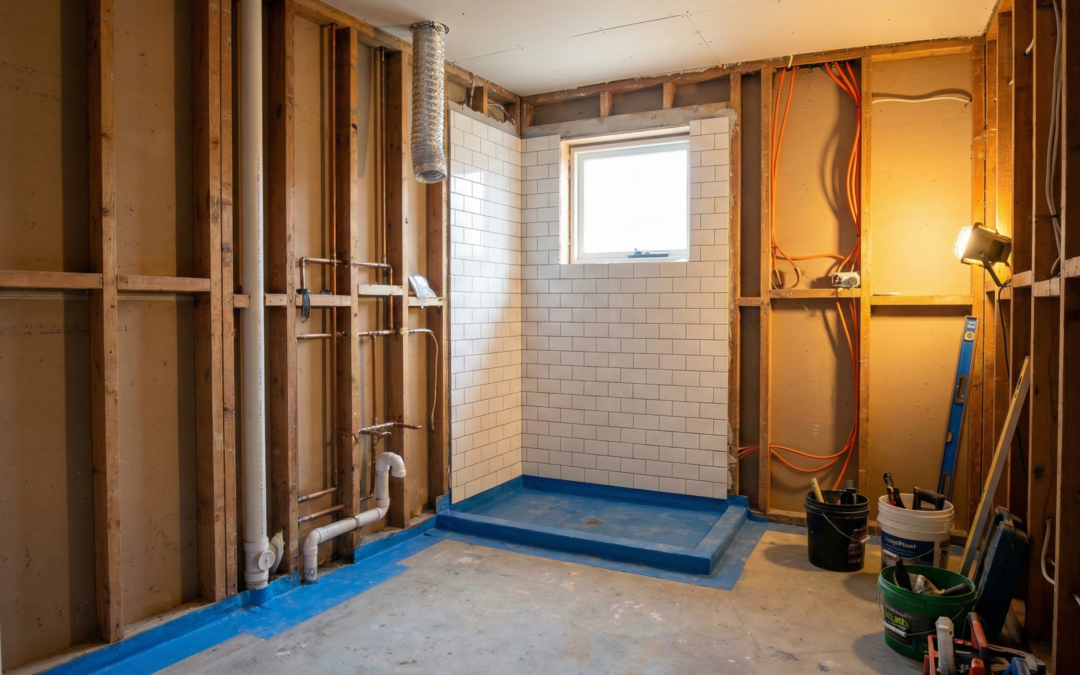
The bathroom consistently ranks as the hardest room to renovate in any Australian home. This compact space packs more complexity per square metre than any other room—combining plumbing, electrical, waterproofing, ventilation, and structural work into a single project that demands precise coordination.
Understanding why certain rooms present greater renovation challenges helps you budget accurately and avoid costly surprises. Whether you’re planning a simple refresh or complete gut renovation, knowing what you’re up against shapes every decision from contractor selection to timeline expectations.
This guide breaks down exactly what makes bathroom renovations so demanding, compares difficulty levels across different rooms, and gives you practical strategies to navigate the most challenging renovation projects successfully.
Why Bathrooms Top the Difficulty Rankings
Bathrooms earn their reputation as renovation nightmares through a perfect storm of technical requirements. Every trade must work in sequence, and mistakes in one area cascade through the entire project.
The average bathroom measures just 5-8 square metres, yet requires input from plumbers, electricians, waterproofers, tilers, carpenters, and painters. Compare this to a bedroom renovation where you might only need a painter and perhaps an electrician for new outlets.
The Waterproofing Challenge
Waterproofing represents the single most critical—and most frequently botched—element of bathroom renovations. Australian Standards require specific membrane applications to wet areas, with failures potentially causing structural damage worth tens of thousands in repairs.
The waterproofing process demands:
- Complete removal of existing flooring and wall surfaces
- Proper substrate preparation and priming
- Multiple membrane coats with specific drying times
- Bond breaker installation at corners and joints
- Mandatory inspection before tiling can commence
Skip any step, and you’re looking at potential water damage to framing, subfloors, and adjacent rooms. Insurance claims for waterproofing failures remain among the most common—and most expensive—in residential construction.
Plumbing Complexity and Cost
Moving a toilet even 30 centimetres can add thousands to your renovation budget. Bathroom plumbing involves supply lines, waste pipes, and venting systems that must comply with strict regulations.
Common plumbing challenges include:
Relocating fixtures requires cutting into concrete slabs or modifying floor joists. Older homes often have galvanised pipes that need complete replacement. Waste pipe falls must maintain specific gradients for proper drainage. Venting requirements can necessitate roof penetrations.
Licensed plumbers in Sydney typically charge between $80-120 per hour, with bathroom rough-ins alone costing $3,000-8,000 depending on complexity and fixture count.
Electrical Requirements in Wet Areas
Bathroom electrical work carries additional safety requirements that increase both cost and complexity. All circuits must include residual current devices, and specific zones dictate what fixtures can be installed where.
Exhaust fans require ducting to external walls or roof spaces. Heated towel rails need dedicated circuits. Lighting placement must account for IP ratings and zone restrictions. These requirements mean even simple electrical updates often require rewiring rather than modification.
Kitchen Renovations: A Close Second
Kitchens rival bathrooms in renovation difficulty, though for slightly different reasons. The combination of plumbing, electrical, gas fitting, and cabinetry creates a complex coordination challenge.
Why Kitchens Present Unique Challenges
Kitchen renovations typically cost more than bathrooms due to sheer scale and the expense of cabinetry and appliances. A mid-range kitchen renovation in Sydney runs $25,000-45,000, while high-end projects easily exceed $80,000.
The difficulty factors include:
Gas line modifications require licensed gas fitters and compliance certificates. Rangehood ducting often needs structural modifications. Electrical loads for modern appliances frequently exceed existing circuit capacity. Plumbing for dishwashers, sinks, and refrigerator ice makers adds complexity.
The Cabinetry Coordination Problem
Custom cabinetry requires precise measurements taken after demolition but before other trades complete their work. This creates scheduling pressure—measure too early and dimensions may change; measure too late and you’ll delay the entire project.
Lead times for quality cabinetry range from 4-8 weeks, meaning any measurement delays push your completion date significantly. Budget kitchens using flat-pack options reduce this pressure but introduce assembly complexity.
Comparing Renovation Difficulty Across Rooms
Understanding relative difficulty helps you prioritise projects and set realistic expectations. Each room type presents distinct challenges based on the trades involved and technical requirements.
High Difficulty Rooms
Bathrooms demand the most diverse trade coordination with the highest consequence for errors. Waterproofing failures, plumbing mistakes, and electrical issues all carry significant repair costs and safety implications.
Kitchens match bathrooms in trade complexity while adding the coordination challenge of cabinetry timing and appliance installation. The higher material costs also increase financial risk.
Laundries share many bathroom challenges—waterproofing, plumbing, and electrical requirements—though typically in a simpler configuration. Expect 60-70% of bathroom complexity.
Medium Difficulty Rooms
Living areas with structural changes become complex when walls come down. Load-bearing wall removal requires engineering certification, temporary supports, and often steel beam installation. Without structural work, these rooms rate as low difficulty.
Home offices requiring dedicated electrical circuits, data cabling, and climate control fall into medium difficulty. The work itself isn’t complex, but coordinating multiple trades for a small space creates scheduling challenges.
Lower Difficulty Rooms
Bedrooms typically require only cosmetic updates—painting, flooring, and perhaps lighting changes. Unless you’re adding ensuites or walk-in robes with electrical requirements, bedroom renovations remain straightforward.
Living rooms without structural modifications involve primarily cosmetic work. New flooring, paint, and lighting updates can often be completed in days rather than weeks.
Hidden Costs That Make Hard Renovations Harder
The rooms that rank as most difficult also harbour the most potential for budget blowouts. Understanding where hidden costs emerge helps you build adequate contingencies.
Asbestos Discovery
Homes built before 1990 may contain asbestos in wall linings, floor tiles, or pipe insulation. Testing costs $50-150 per sample, while removal adds $50-100 per square metre for bonded materials and significantly more for friable asbestos.
Bathroom and kitchen renovations frequently uncover asbestos because these rooms underwent material changes during the high-asbestos era. Budget a minimum $2,000-5,000 contingency for potential asbestos issues in pre-1990 homes.
Structural Surprises
Removing wall and floor coverings often reveals problems invisible during planning. Common discoveries include:
Water damage to framing from previous leaks requires timber replacement before new work can proceed. Subfloor deterioration in bathrooms may necessitate complete floor reconstruction. Non-compliant previous work must be rectified before inspections will pass.
These discoveries typically add 10-25% to project costs, which is why experienced renovators recommend contingencies of at least 15-20% for bathroom and kitchen projects.
Compliance Upgrades
Older homes rarely meet current building codes. Renovating triggers requirements to bring affected areas up to standard, even when the original work was compliant at construction.
Electrical switchboard upgrades commonly accompany bathroom renovations when existing capacity proves insufficient. Plumbing modifications may require backflow prevention devices. Ventilation requirements have increased significantly, often necessitating larger or additional exhaust systems.
Strategies for Managing Difficult Renovations
Successful completion of challenging renovation projects requires specific approaches that differ from simpler cosmetic updates.
Trade Coordination Is Everything
The sequence of trades in bathroom renovations follows a strict order that cannot be shortcut:
Demolition must complete before plumbing rough-in. Plumbing rough-in precedes electrical rough-in. Both must pass inspection before waterproofing. Waterproofing requires inspection before tiling. Tiling must cure before fixture installation.
Missing any step or proceeding out of sequence creates rework costs and delays. Professional project management becomes valuable precisely because this coordination is complex.
Realistic Timeline Planning
Bathroom renovations typically require 3-6 weeks for completion, though this extends significantly for complex projects or when discoveries require additional work.
Key timeline factors include:
Waterproofing membrane curing requires minimum 72 hours between coats and before tiling. Custom vanity and shower screen lead times range from 2-6 weeks. Inspection booking delays vary by council but commonly add 3-5 business days per inspection. Tile adhesive and grout curing adds 24-48 hours before grouting and sealing.
Budget Structure for Complex Projects
Structure your budget to account for the realities of difficult renovations:
Allocate 40-50% to labour costs, recognising that trade-intensive projects carry higher labour ratios. Reserve 15-20% as contingency specifically for discoveries and compliance issues. Include 5-10% for project management, whether professional or your own time valued appropriately.
This structure acknowledges that the hardest rooms to renovate are hard precisely because they require more skilled labour and carry more uncertainty than simpler projects.
When Professional Management Makes Sense
DIY project management works well for simple renovations but becomes risky for complex bathroom and kitchen projects. The coordination requirements and consequence of errors justify professional involvement.
Signs You Need Professional Help
Consider engaging a builder or project manager when your renovation involves:
Multiple trade coordination across plumbing, electrical, and waterproofing. Structural modifications requiring engineering input. Tight timelines where delays carry significant costs. Limited personal availability to manage daily site requirements.
The cost of professional management—typically 10-15% of project value—often pays for itself through avoided mistakes, better trade pricing, and faster completion.
Choosing the Right Professional
For bathroom and kitchen renovations, look for contractors with specific wet-area experience. General builders may lack the specialised knowledge these projects demand.
Verify current licenses through NSW Fair Trading. Request references specifically for bathroom or kitchen projects. Confirm insurance coverage including warranty insurance for projects over $20,000. Review their approach to waterproofing and compliance—this reveals their understanding of what makes these projects difficult.
Making Informed Renovation Decisions
Understanding that bathrooms represent the hardest room to renovate shapes how you approach the entire project. This knowledge isn’t meant to discourage renovation but to ensure you enter the process with realistic expectations.
The complexity of bathroom renovations stems from legitimate technical requirements that protect your home and health. Waterproofing prevents structural damage. Electrical safety requirements prevent injury. Plumbing compliance ensures proper function for decades.
At Sydney Home Renovation, we specialise in navigating exactly these challenges. Our team coordinates the multiple trades, manages inspections, and handles the discoveries that make bathroom renovations demanding—so you get the results you want without the stress of managing complexity yourself.
Ready to tackle your bathroom renovation with confidence? Contact us for a detailed consultation that addresses your specific project challenges and provides transparent pricing for the work ahead.
Frequently Asked Questions
How much should I budget for a bathroom renovation in Sydney?
Budget $15,000-25,000 for a basic bathroom renovation and $25,000-45,000 for mid-range projects in Sydney. High-end renovations with premium fixtures and custom features typically exceed $50,000. Always include a 15-20% contingency for unexpected discoveries.
Why do bathroom renovations take so long?
Bathroom renovations require sequential trade work with mandatory curing and inspection times between stages. Waterproofing alone needs 72+ hours curing time, and each inspection adds scheduling delays. A straightforward bathroom typically takes 3-4 weeks minimum.
Can I renovate my bathroom without council approval?
Most bathroom renovations don’t require development approval if you’re not changing the building footprint or external appearance. However, all plumbing and electrical work requires licensed tradespeople and compliance certificates. Waterproofing must meet Australian Standards regardless of approval requirements.
What’s the most expensive part of a bathroom renovation?
Labour typically represents 40-50% of bathroom renovation costs due to the multiple trades required. Among materials, tiling and waterproofing combined often exceed fixture costs. Custom vanities and frameless shower screens also contribute significantly to budgets.
Should I renovate my bathroom or kitchen first?
Prioritise based on condition and impact. Bathrooms with waterproofing failures or plumbing issues should take priority to prevent structural damage. If both rooms function adequately, kitchens typically deliver better lifestyle improvement and resale value for the investment.
How do I find reliable bathroom renovation contractors?
Verify licenses through NSW Fair Trading and request references specifically for bathroom projects. Ask about their waterproofing process and who performs inspections. Quality contractors welcome these questions—those who deflect or provide vague answers warrant caution.
What mistakes should I avoid in a bathroom renovation?
The costliest mistakes include inadequate waterproofing, insufficient ventilation, and unrealistic budgets without contingency. Avoid choosing fixtures before confirming they fit your space, and never skip the waterproofing inspection to save time—failures cost far more than delays.