A well-executed bathroom renovation can increase your Sydney property’s value by 50-70% of the renovation cost, with mid-range upgrades typically delivering the strongest returns. This makes bathrooms one of the most reliable rooms to renovate when preparing a home for sale or building long-term equity.
For homeowners and property investors weighing renovation decisions, understanding exactly how bathroom improvements translate to property value is essential. The difference between a profitable renovation and an overcapitalised project often comes down to strategic choices about scope, materials, and timing.
This guide breaks down the real ROI figures for Sydney bathroom renovations, identifies which upgrades deliver maximum value, and provides practical frameworks for budgeting your project to achieve the best possible return.
How Much Value Does a Bathroom Renovation Add to Your Home?
Bathroom renovations consistently rank among the top value-adding home improvements in Australia. The actual return depends on several factors including renovation quality, property type, location, and current market conditions.
In Sydney’s competitive property market, buyers place significant weight on bathroom condition. A dated or poorly maintained bathroom can reduce buyer interest and sale price, while a modern, functional bathroom creates immediate positive impressions during inspections.
The key is understanding realistic return expectations rather than assuming every dollar spent automatically increases property value by the same amount.
Average ROI for Bathroom Renovations in Sydney
According to Archistar’s property renovation analysis, bathroom renovations in Australia typically return 50-70% of the investment in added property value. For a $25,000 mid-range bathroom renovation, this translates to approximately $12,500-$17,500 in increased property value.
Sydney properties often see returns at the higher end of this range due to strong buyer demand and elevated property prices. In high-demand suburbs, a quality bathroom renovation can occasionally return close to 100% of costs, particularly when upgrading severely outdated spaces.
CoreLogic research indicates that properties with recently renovated bathrooms sell faster and attract more competitive offers than comparable homes with original bathrooms. This reduced time on market represents additional value beyond the direct price increase.
Mid-Range vs High-End Renovation Returns
Mid-range bathroom renovations typically deliver better percentage returns than luxury upgrades. A $20,000-$35,000 renovation focusing on quality fixtures, modern tiling, and improved layout generally outperforms a $60,000+ high-end renovation in terms of ROI percentage.
High-end renovations make sense for premium properties where buyers expect luxury finishes. In a $3 million+ Sydney home, a basic bathroom renovation would appear inconsistent with the property’s positioning.
For most Sydney properties valued between $1-2 million, mid-range renovations hit the sweet spot. Quality materials and professional workmanship create buyer appeal without overcapitalising relative to the property’s overall value.
| Renovation Level | Typical Cost | Expected Value Add | ROI Range |
| Basic refresh | $8,000-$15,000 | $5,000-$10,000 | 55-70% |
| Mid-range | $20,000-$35,000 | $12,000-$24,000 | 60-70% |
| High-end | $45,000-$80,000 | $25,000-$50,000 | 50-65% |
| Luxury | $80,000+ | $40,000-$60,000 | 45-55% |
What Bathroom Upgrades Add the Most Value?
Not all bathroom improvements deliver equal returns. Strategic upgrade selection separates profitable renovations from projects that consume budget without proportional value increase.
Buyers evaluate bathrooms on functionality, aesthetics, and perceived maintenance requirements. Upgrades addressing all three areas create the strongest value proposition.
High-Impact Upgrades That Buyers Notice
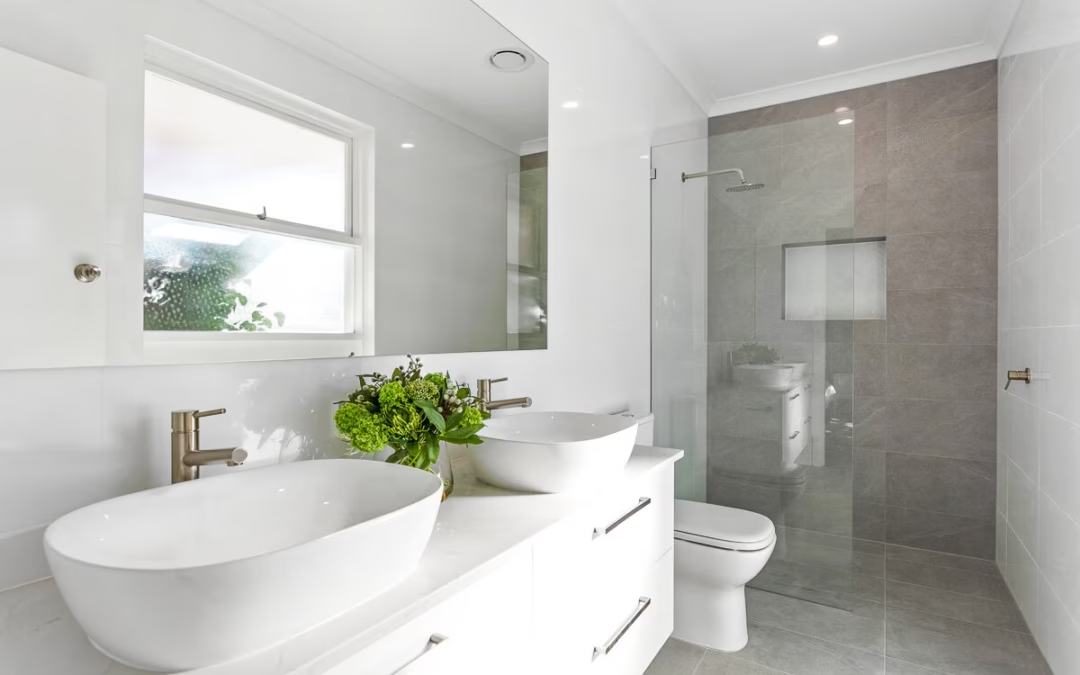
Modern vanity and storage consistently ranks as a top value-adding upgrade. Buyers immediately notice dated vanities, and a quality replacement with adequate storage transforms bathroom perception. Budget $1,500-$4,000 for a mid-range vanity that delivers strong returns.
Updated tapware and fixtures create a modern impression at relatively low cost. Replacing old chrome or brass fixtures with contemporary matte black or brushed nickel finishes costs $500-$1,500 but significantly updates the bathroom’s appearance.
Quality tiling forms the visual foundation of any bathroom. Large-format floor tiles and well-executed wall tiling signal quality renovation. Budget $80-$150 per square metre installed for mid-range tiles that appeal to broad buyer preferences.
Improved lighting transforms bathroom ambiance and functionality. Replacing single overhead lights with layered lighting including vanity lighting costs $500-$1,200 but dramatically improves the space.
Frameless shower screens replace dated framed or curtain alternatives, creating a more spacious, modern appearance. Expect to invest $800-$2,000 for quality frameless installation.
Functional Improvements vs Cosmetic Changes
Functional upgrades often deliver stronger long-term value than purely cosmetic changes. Buyers recognise improvements that enhance daily usability and reduce future maintenance requirements.
Waterproofing and drainage improvements protect the property and provide peace of mind. While not visually exciting, proper waterproofing prevents costly future damage and represents genuine value to informed buyers.
Ventilation upgrades including quality exhaust fans prevent moisture damage and mould issues. A $300-$600 exhaust fan upgrade protects the entire renovation investment.
Plumbing updates replacing old galvanised or copper pipes with modern fittings eliminate future maintenance concerns. When walls are already open during renovation, this represents cost-effective future-proofing.
Layout improvements that enhance flow and functionality can transform unusable spaces. Moving a toilet position or reconfiguring a cramped layout costs more but creates genuine usability improvements buyers value.
Upgrades to Avoid for Resale Value
Certain upgrades consume budget without delivering proportional returns, particularly for properties positioned at mid-market price points.
Overly personalised design choices including bold tile colours, unusual fixtures, or highly specific aesthetic themes limit buyer appeal. Neutral, timeless selections appeal to broader audiences.
Spa baths and oversized tubs rarely return their cost. Most buyers prefer functional showers, and large tubs consume valuable floor space in Sydney’s typically compact bathrooms.
Excessive technology including automated systems, integrated speakers, or complex smart features appeals to limited buyer segments while adding cost and potential maintenance concerns.
Premium materials beyond property positioning waste budget. Marble benchtops in a $900,000 apartment overcapitalise relative to buyer expectations for that price point.
Does Bathroom Renovation Increase Value More Than Other Renovations?
Understanding how bathroom renovations compare to other improvement options helps prioritise limited renovation budgets for maximum overall return.
Different renovations serve different purposes. Some maximise resale value, others improve liveability, and the optimal choice depends on your specific goals and timeline.
Bathroom vs Kitchen Renovation ROI
Kitchen renovations typically deliver similar or slightly higher returns than bathrooms, with HIA research suggesting kitchen updates return 60-80% of costs in added value.
However, kitchen renovations cost significantly more. A mid-range kitchen renovation runs $25,000-$50,000 compared to $20,000-$35,000 for a comparable bathroom upgrade. The higher absolute cost means greater financial risk if the renovation doesn’t achieve expected returns.
For properties with one acceptable kitchen but multiple dated bathrooms, bathroom renovations often represent better value. Upgrading the main bathroom and ensuite for combined $45,000 may deliver stronger returns than a single $45,000 kitchen renovation.
Properties with severely outdated kitchens should prioritise kitchen renovation. Buyers consistently rank kitchen condition as the most important factor in purchase decisions, and a poor kitchen can overshadow other property strengths.
Bathroom vs Outdoor and Living Area Upgrades
Outdoor improvements including decking, landscaping, and alfresco areas deliver variable returns depending on property type and buyer demographics.
For family-oriented properties in suburban Sydney, outdoor living improvements can return 40-60% of costs while significantly enhancing liveability. These improvements particularly suit owner-occupiers planning to enjoy the property before eventual sale.
Living area updates including flooring, painting, and lighting typically cost less than bathroom renovations and deliver solid returns. A $10,000 flooring and painting refresh might return $7,000-$8,000 in value while transforming overall property presentation.
The strategic approach combines multiple targeted improvements rather than concentrating entire budget in one area. A bathroom renovation paired with fresh paint and updated flooring often outperforms a single high-end bathroom renovation at equivalent total cost.
How Sydney Property Market Conditions Affect Renovation Returns
Local market dynamics significantly influence renovation returns. Sydney’s diverse suburbs have varying buyer expectations and price sensitivities that affect optimal renovation strategies.
Understanding your specific market context helps calibrate renovation scope and budget to achieve maximum returns.
Buyer Expectations in Sydney Suburbs
Premium suburbs including Mosman, Woollahra, and Cremorne have buyers expecting high-quality finishes. Renovations in these areas should use quality materials and professional design to meet market expectations. Cutting corners creates negative impressions that reduce returns.
Mid-market suburbs including Marrickville, Dulwich Hill, and Cronulla attract buyers seeking value and quality without luxury pricing. Mid-range renovations with smart material selections deliver optimal returns in these markets.
Entry-level suburbs and investment-focused areas prioritise functionality and presentation over premium finishes. Clean, modern, and well-maintained bathrooms satisfy buyer requirements without demanding luxury materials.
Domain research indicates Sydney buyers increasingly prioritise move-in ready properties, particularly in competitive market conditions. Properties requiring immediate renovation work face price discounts exceeding typical renovation costs.
Investment Property vs Owner-Occupier Considerations
Investment property renovations should focus on durability, tenant appeal, and maintenance minimisation. Luxury finishes that tenants may damage represent poor investment decisions.
For investment properties, prioritise:
- Durable, easily cleaned surfaces
- Quality waterproofing preventing future damage
- Neutral finishes appealing to broad tenant demographics
- Low-maintenance fixtures reducing ongoing costs
Owner-occupiers can justify personal preference investments that may not maximise resale returns. If you plan to enjoy the property for 5+ years, incorporating preferred features delivers lifestyle value beyond pure financial return.
Properties purchased for renovation and quick resale should focus exclusively on market-appealing improvements with proven returns. Personal preferences should not influence renovation decisions in flip scenarios.
How to Maximise Property Value Through Smart Bathroom Renovation
Strategic planning transforms bathroom renovations from uncertain investments into reliable value-adding projects. The difference between profitable and unprofitable renovations often comes down to planning decisions made before construction begins.
Budget Allocation for Maximum Return
The general guideline suggests spending 1-2% of property value on bathroom renovation for optimal returns. For a $1.5 million Sydney property, this indicates a $15,000-$30,000 bathroom budget.
Within your budget, prioritise spending on:
- Waterproofing and structural work (non-negotiable foundation)
- Tiling (largest visual impact)
- Vanity and storage (daily functionality)
- Fixtures and tapware (quality perception)
- Lighting (ambiance and functionality)
Avoid allocating excessive budget to single items while neglecting others. A $5,000 vanity paired with cheap tiling creates inconsistent quality perception that reduces overall impact.
Build 10-15% contingency into your budget for unexpected issues. Older Sydney properties frequently reveal hidden problems including water damage, outdated plumbing, or structural issues once walls are opened.
Timing Your Renovation Before Sale
Renovating 6-12 months before planned sale allows time to address any issues while ensuring the bathroom presents as fresh and new during inspections.
Renovating immediately before listing risks incomplete work, rushed decisions, or visible construction stress during the critical sales period.
Renovating too far in advance means the bathroom shows wear before sale. Bathrooms renovated 3+ years before sale may require touch-ups to present optimally.
Market timing also matters. Renovating during slower construction periods (typically winter) may secure better contractor availability and pricing compared to peak spring renovation season.
Working With Renovation Professionals
Professional renovation contractors deliver several advantages over DIY approaches for value-adding renovations:
Quality assurance ensures work meets standards buyers and building inspectors expect. Poor workmanship creates negative impressions and potential compliance issues.
Warranty protection provides recourse if problems emerge. Professional contractors carry insurance and provide workmanship warranties protecting your investment.
Project coordination manages the multiple trades required for bathroom renovation. Coordinating plumbers, electricians, tilers, and other specialists requires experience and relationships.
Realistic budgeting from experienced contractors prevents cost blowouts. Professionals identify potential issues during quoting rather than discovering them mid-project.
Compliance management ensures work meets building codes and regulations. Non-compliant work can create legal issues during property sale and may require costly rectification.
Conclusion
Bathroom renovations represent one of the most reliable value-adding improvements for Sydney properties, typically returning 50-70% of renovation costs in increased property value. Strategic upgrade selection focusing on quality tiling, modern vanities, updated fixtures, and proper waterproofing delivers the strongest returns while avoiding overcapitalisation risks.
Success depends on matching renovation scope to property positioning, understanding local buyer expectations, and maintaining realistic return expectations. Mid-range renovations generally outperform both minimal refreshes and luxury upgrades in terms of percentage returns for most Sydney properties.
We help Sydney homeowners and property investors plan and execute bathroom renovations that maximise value while staying on budget. Contact Sydney Home Renovation for transparent pricing guidance and professional renovation delivery that protects your investment.
Frequently Asked Questions
How much does a bathroom renovation cost in Sydney?
Sydney bathroom renovations typically cost $15,000-$35,000 for mid-range projects and $40,000-$80,000 for high-end renovations. Costs vary based on bathroom size, fixture quality, structural changes required, and current material prices. Budget an additional 10-15% contingency for unexpected issues.
Is it worth renovating a bathroom before selling?
Yes, bathroom renovation before selling typically delivers positive returns when executed strategically. Properties with updated bathrooms sell faster and attract stronger offers. Focus on mid-range improvements that appeal to broad buyer preferences rather than highly personalised or luxury upgrades.
What is the average ROI on a bathroom renovation in Australia?
Australian bathroom renovations typically return 50-70% of costs in added property value. Sydney properties often achieve returns at the higher end due to strong buyer demand. Mid-range renovations generally deliver better percentage returns than either basic refreshes or luxury upgrades.
Do buyers prefer modern or classic bathroom designs?
Most Sydney buyers prefer modern bathroom designs with clean lines, neutral colours, and contemporary fixtures. However, classic designs executed with quality materials also appeal to many buyers. Avoid highly trendy or personalised designs that may date quickly or limit buyer appeal.
How long does a bathroom renovation take?
Standard bathroom renovations take 2-4 weeks for straightforward projects and 4-8 weeks for complex renovations involving layout changes or structural work. Timeline depends on scope, material availability, and contractor scheduling. Allow additional time for design decisions and council approvals if required.
Should I renovate one bathroom or multiple bathrooms?
For properties with multiple dated bathrooms, renovating the main bathroom typically delivers the strongest returns. If budget allows, upgrading both main bathroom and ensuite creates broader appeal. Prioritise bathrooms buyers will inspect most closely rather than spreading budget too thin across all bathrooms.
Can a DIY bathroom renovation add value?
DIY bathroom renovations can add value if executed to professional standards, but poor workmanship often reduces rather than increases property value. Waterproofing, plumbing, and electrical work require licensed professionals in NSW. Consider professional renovation for value-adding projects where quality directly impacts returns.