Restoring an old building can cost 20-50% more than new construction, with hidden structural issues, heritage compliance hurdles, and material sourcing challenges that catch even experienced renovators off guard. These projects demand specialised trades, extended timelines, and flexible budgets that many homeowners underestimate at the outset.
Understanding these disadvantages upfront isn’t about discouraging restoration—it’s about entering the process with realistic expectations. Whether you’re considering a heritage home purchase or planning to restore a character property, knowing the pitfalls helps you budget accurately and avoid costly surprises.
This guide breaks down the major disadvantages of old building restoration, from financial burdens and structural complications to regulatory obstacles and ongoing maintenance demands.
High Costs and Budget Overruns
Old building restoration consistently exceeds initial budget estimates, making financial planning one of the most significant challenges property owners face.
Unexpected Structural Repairs
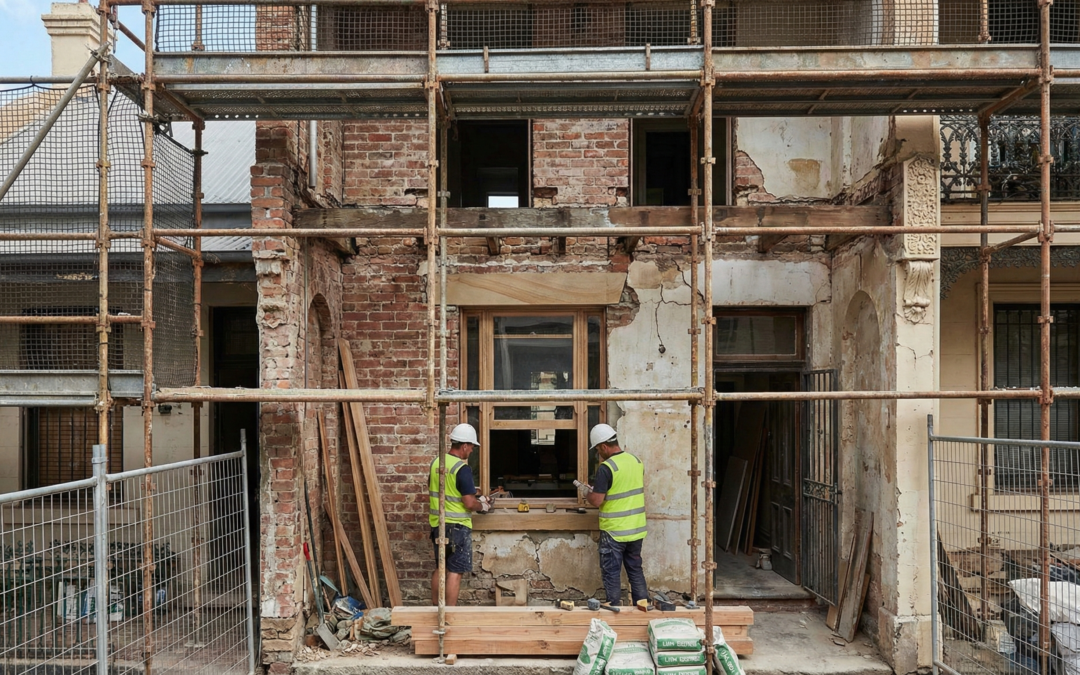
What appears as a straightforward cosmetic update often reveals deeper problems once walls are opened. Termite damage, rotting timber frames, crumbling mortar, and corroded steel reinforcement hide behind plaster and cladding for decades. These discoveries typically occur mid-project when stopping isn’t practical.
Foundation issues present particular challenges in older Sydney properties. Settlement cracks, inadequate footings for modern loads, and moisture intrusion through deteriorated damp courses require engineering assessments and substantial remediation work. A foundation repair alone can add $30,000-$100,000 to project costs depending on severity and access constraints.
Specialised Labour Expenses
Heritage restoration demands tradespeople with specific skills that command premium rates. Stonemasons, heritage plasterers, leadlight specialists, and timber craftsmen trained in traditional techniques are increasingly rare. Their expertise comes at two to three times standard trade rates, and availability often extends project timelines.
Finding contractors who understand lime mortar versus cement, traditional joinery methods, or period-appropriate finishes limits your options. Many general builders lack experience with pre-war construction methods, leading to inappropriate repairs that cause further damage or fail heritage compliance requirements.
Premium Material Sourcing
Matching original materials proves both difficult and expensive. Period-correct timber species, handmade bricks, pressed metal ceilings, and heritage hardware often require salvage sourcing or custom manufacturing. Imported materials face shipping delays and premium pricing.
Reclaimed materials carry their own risks—hidden damage, inconsistent quality, and limited quantities that may not cover your full requirements. Custom reproduction items like heritage windows or decorative mouldings require specialist fabrication with lead times measured in months rather than weeks.
Structural and Safety Challenges
Older buildings present inherent structural limitations that modern construction standards have long since addressed.
Outdated Construction Methods
Pre-war buildings used construction techniques now considered inadequate or unsafe. Unreinforced masonry, inadequate bracing, and load-bearing walls where modern designs use steel frames create complications for any modification work.
Asbestos remains prevalent in buildings constructed before 1990, appearing in fibro sheeting, insulation, floor tiles, and pipe lagging. Professional removal adds significant cost and requires licensed contractors, proper containment, and certified disposal. SafeWork NSW mandates specific handling procedures that extend project timelines and budgets.
Lead paint on surfaces throughout older homes requires careful management during renovation. Sanding or disturbing lead paint creates hazardous dust requiring containment, protective equipment, and proper disposal protocols.
Foundation and Load-Bearing Issues
Original foundations often lack the capacity for modern additions or altered load paths. Adding a second storey, removing internal walls, or installing heavy fixtures like stone benchtops may require foundation underpinning or structural reinforcement.
Differential settlement over decades creates uneven floors, cracked walls, and doors that no longer close properly. While cosmetic fixes address symptoms, underlying foundation movement requires engineering solutions that can exceed $50,000 for comprehensive remediation.
Compliance with Modern Building Codes
Bringing older buildings to current standards often requires substantial upgrades beyond the original restoration scope. Electrical systems need complete replacement to meet current safety requirements. Plumbing may require full re-piping due to corroded galvanised steel or outdated materials.
Fire safety requirements including smoke alarms, emergency egress, and fire-rated construction add compliance costs. Accessibility requirements under the Building Code of Australia may apply to certain property types, requiring ramps, wider doorways, or accessible bathroom facilities.
Heritage and Regulatory Restrictions
Properties with heritage listing or located in conservation areas face additional layers of approval and restriction.
Heritage Listing Limitations
Heritage-listed buildings operate under strict controls governing what changes are permissible. Exterior modifications, window replacements, roofing materials, and even paint colours may require heritage approval before work commences. These restrictions apply regardless of whether changes would improve the building’s functionality or energy efficiency.
Interior heritage listings extend controls to internal features including fireplaces, ceiling roses, joinery, and original floor finishes. Removing or altering these elements—even damaged ones—requires formal approval that may be denied.
The approval process itself adds time and cost. Heritage impact statements, conservation management plans, and specialist heritage consultant reports become prerequisites for development applications.
Council Approval Delays
Development applications for heritage properties undergo additional scrutiny, extending approval timeframes significantly. Standard residential DAs in Sydney typically take 40-60 days; heritage-affected applications often extend to 90-120 days or longer.
Council heritage advisors may request design modifications, additional documentation, or specialist reports before granting approval. Each revision cycle adds weeks to the timeline. Appeals against conditions or refusals extend delays further while adding legal costs.
Restrictions on Modern Upgrades
Energy efficiency improvements that would be straightforward in modern homes face heritage obstacles. Double-glazed windows may be prohibited if they alter the building’s appearance. Solar panels visible from the street often require heritage approval and may be refused.
Insulation installation in heritage buildings requires methods that don’t damage original fabric or alter external appearance. Air conditioning units, modern exhaust systems, and contemporary fixtures may all require heritage consideration before installation.
Extended Project Timelines
Restoration projects consistently take longer than equivalent new construction, with multiple factors contributing to delays.
Discovery-Driven Scope Changes
Unlike new builds where the full scope is known upfront, restoration projects reveal their true extent progressively. Each demolition phase may uncover additional problems requiring assessment, redesign, and additional approvals.
A bathroom renovation that exposes rotted floor joists, inadequate waterproofing, and asbestos-containing materials transforms from a four-week project into a three-month undertaking. These discoveries cannot be anticipated accurately, making realistic scheduling nearly impossible.
Trade Availability Constraints
Specialist heritage trades operate with limited capacity and high demand. Booking a heritage stonemason or traditional plasterer may require waiting months for availability. Coordinating multiple specialist trades around each other’s schedules adds further complexity.
General trades working on heritage projects often require additional time to work carefully around original features, use traditional methods, or accommodate heritage requirements that wouldn’t apply to standard construction.
Weather and Seasonal Factors
Older buildings often lack the weather protection of modern construction sites. Work on exposed heritage roofing, external masonry, or lime-based renders depends on suitable weather conditions. Sydney’s wet seasons can halt exterior work for extended periods.
Traditional materials like lime mortar require specific temperature and humidity conditions for proper curing. Working outside these parameters risks material failure and the need for costly rework.
Ongoing Maintenance Demands
Restored heritage buildings require more intensive ongoing maintenance than modern construction.
Higher Long-Term Upkeep Costs
Original materials and traditional construction methods demand regular attention to remain in good condition. Timber windows require repainting every 5-7 years. Lime mortar joints need periodic repointing. Cast iron guttering and downpipes require rust treatment and eventual replacement.
These maintenance cycles cost more than equivalent modern materials. Aluminium windows need minimal maintenance; timber sash windows need regular attention. Colorbond roofing lasts decades with little care; slate or terracotta tiles require ongoing inspection and replacement of damaged units.
Difficulty Finding Replacement Parts
As original fixtures age and fail, finding compatible replacements becomes increasingly difficult. Heritage door hardware, period light fittings, and original bathroom fixtures may no longer be manufactured. Salvage sources offer limited and unpredictable supply.
Custom reproduction of heritage elements carries significant cost and lead time. A single heritage door handle reproduced to match existing fixtures may cost hundreds of dollars and take weeks to manufacture.
Energy Inefficiency Concerns
Older buildings typically perform poorly by modern energy efficiency standards. Single-glazed windows, minimal insulation, and draughty construction result in higher heating and cooling costs. Heritage restrictions may limit the efficiency upgrades you can implement.
Solid masonry walls lack cavity space for insulation. Original timber floors over ventilated subfloors lose heat readily. Addressing these inefficiencies within heritage constraints requires creative solutions that add cost without achieving modern performance standards.
Limited Design Flexibility
Restoration inherently constrains design options compared to new construction.
Preserving Original Character
The fundamental purpose of restoration—maintaining original character—limits contemporary design interventions. Open-plan layouts may be impossible where heritage-significant walls must remain. Modern kitchen and bathroom configurations must work within existing room dimensions and window placements.
Ceiling heights, room proportions, and circulation patterns reflect the era of original construction. Adapting these spaces for contemporary living requires compromise between heritage preservation and modern functionality.
Structural Modification Constraints
Load-bearing masonry walls, heritage-significant timber framing, and original structural elements cannot be removed or modified freely. Creating larger openings, removing walls, or altering floor levels requires engineering solutions that work within heritage constraints.
Steel beams, new footings, and structural reinforcement add cost while remaining concealed within the heritage fabric. The engineering complexity of modifying old structures exceeds that of designing new ones.
Integration of Modern Systems
Running new electrical, plumbing, data, and HVAC systems through heritage buildings requires careful planning to avoid damaging original fabric. Surface-mounted conduits may be prohibited on heritage-significant walls. Concealed routing requires careful chase cutting and making good that matches original finishes.
Bathroom and kitchen locations may be constrained by existing drainage runs that cannot be easily modified. Wet area waterproofing in heritage buildings requires methods compatible with original construction that may not meet modern warranty requirements.
Conclusion
Restoring old buildings demands realistic expectations about costs, timelines, and ongoing commitments that exceed standard renovation projects. Hidden structural issues, heritage compliance requirements, specialist trade dependencies, and premium material costs combine to make these projects significantly more challenging than new construction or modern renovations.
At Sydney Home Renovation, we help property owners navigate heritage restoration complexities with transparent cost planning and experienced project management. Our team understands both the rewards and realities of working with older buildings.
Contact us to discuss your restoration project and receive honest guidance on budgeting, timelines, and practical approaches to preserving your property’s character while meeting your functional needs.
Frequently Asked Questions
How much more expensive is restoring an old building compared to new construction?
Heritage restoration typically costs 20-50% more than equivalent new construction, with some complex projects exceeding this range. Hidden structural repairs, specialist trades, and premium materials drive costs beyond initial estimates. Budget contingencies of 20-30% are essential for restoration projects.
Can I make modern upgrades to a heritage-listed property?
Modern upgrades are possible but require heritage approval and must respect the building’s significance. Some modifications like double-glazed windows or visible solar panels may be refused. Internal changes to non-significant areas typically face fewer restrictions than alterations affecting heritage-listed features.
How long does a typical old building restoration take?
Restoration projects commonly take two to three times longer than equivalent new construction. A project estimated at six months may extend to 12-18 months due to discovery-driven scope changes, heritage approvals, and specialist trade availability. Realistic scheduling should account for significant contingency time.
What hidden issues are commonly found during old building restoration?
Common discoveries include termite damage, asbestos-containing materials, lead paint, inadequate foundations, rotted timber framing, corroded plumbing, and outdated electrical systems. These issues hide behind intact surfaces and only become apparent once demolition or investigation work begins.
Are there any financial incentives for restoring heritage buildings?
Some councils offer heritage grants or rate reductions for listed properties. The Australian Government’s heritage programs occasionally provide funding for significant buildings. However, these incentives rarely offset the additional costs of heritage compliance and typically apply only to properties with formal heritage listing.
What happens if I renovate a heritage property without approval?
Unapproved work on heritage properties can result in stop-work orders, fines, and mandatory reinstatement of original features at the owner’s expense. Councils actively enforce heritage provisions, and neighbours or heritage groups may report non-compliant work. The financial and legal consequences typically far exceed the cost of proper approval.
Should I get a heritage assessment before buying an old property?
A pre-purchase heritage assessment is highly recommended for any property built before 1950 or located in a heritage conservation area. This assessment identifies heritage constraints, likely approval requirements, and potential restoration costs before you commit to purchase. The assessment cost is minimal compared to discovering restrictions after settlement.