
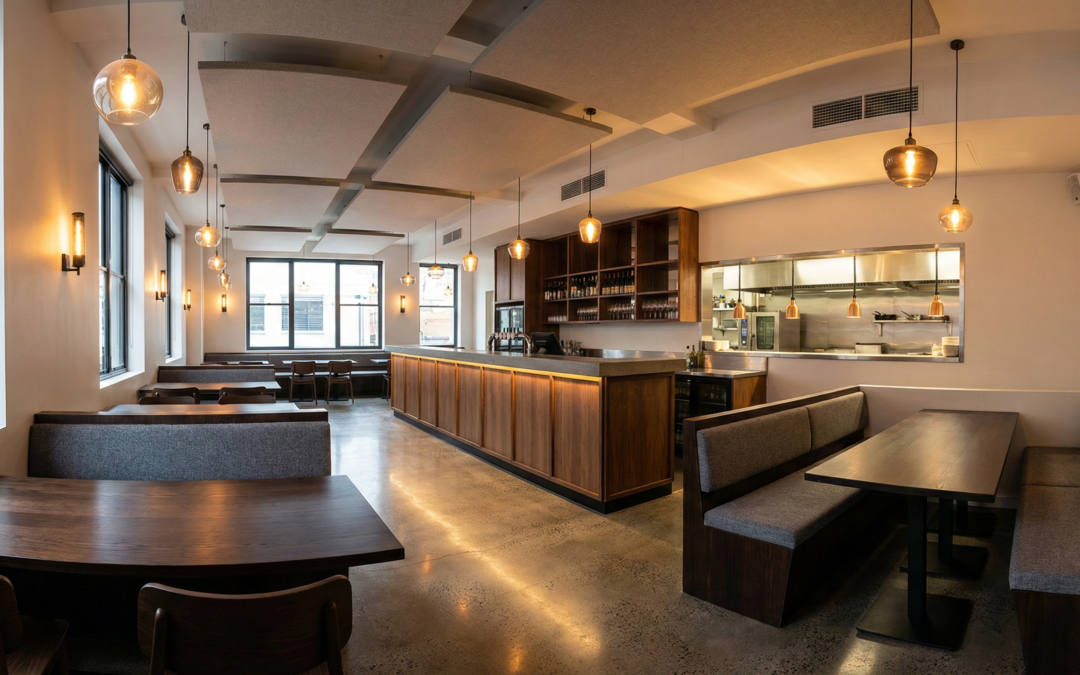
A full restaurant renovation in Sydney typically costs between $2,500 and $6,000 per square metre, with total project budgets ranging from $150,000 for small venues to over $1 million for large-scale transformations. Understanding these numbers upfront is the difference between a successful relaunch and a costly disaster.
Whether you’re refreshing a tired dining room or gutting an entire commercial kitchen, this guide breaks down every cost, timeline, and compliance requirement you need to plan your Sydney restaurant renovation with confidence. We’ve translated complex construction budgeting into practical, actionable guidance.
You’ll find detailed cost breakdowns by venue size, labour and equipment pricing, council approval processes, and proven strategies to maximise your renovation investment while avoiding the hidden expenses that catch most hospitality owners off guard.
What Is a Restaurant Renovation?
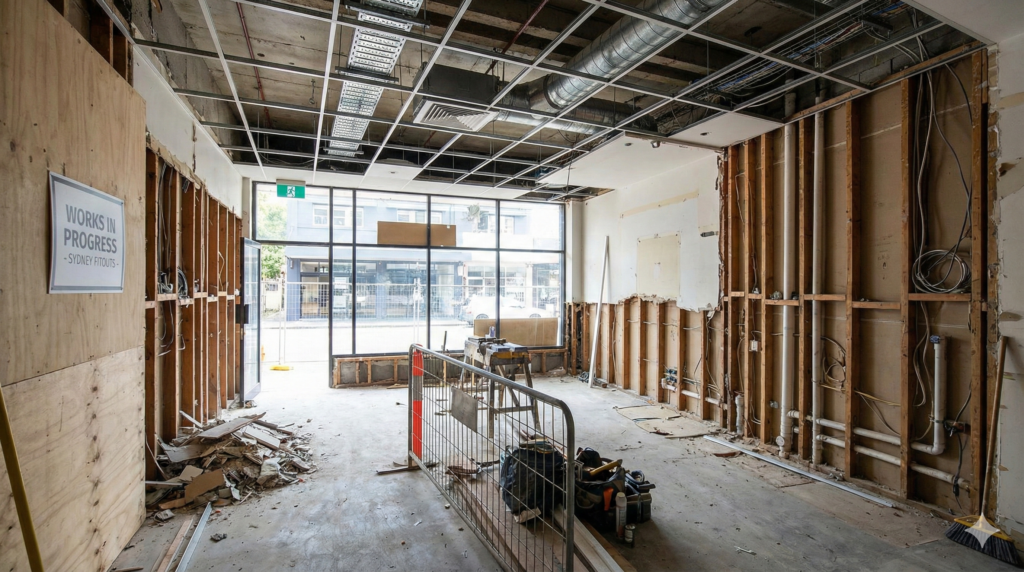
A restaurant renovation involves modifying, upgrading, or completely transforming an existing food service venue to improve functionality, aesthetics, compliance, or operational efficiency. Unlike building from scratch, renovations work within existing structural constraints while addressing specific business objectives.
The scope varies dramatically based on your goals. Some owners need a quick visual refresh to stay competitive. Others require complete kitchen overhauls to meet modern food safety standards or expand service capacity. Understanding what type of renovation you actually need prevents overspending on unnecessary work and underspending on critical upgrades.
Restaurant renovations in Sydney carry unique considerations. Heritage building restrictions, strict council food premises requirements, and high labour costs all influence project planning. Getting clarity on your renovation type early shapes every budget decision that follows.
Types of Restaurant Renovations
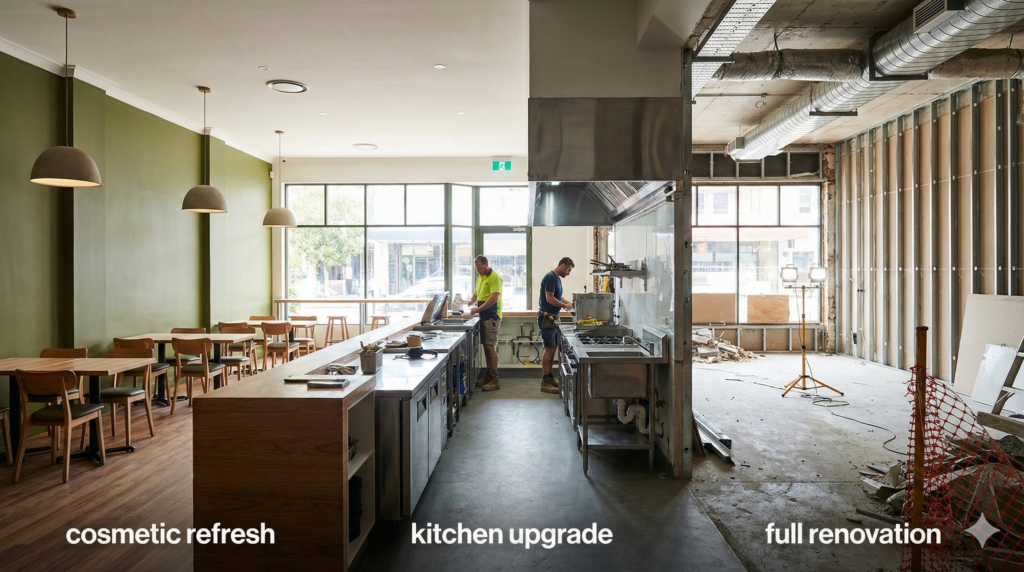
Full Gut Renovation
A full gut renovation strips the venue back to its shell and rebuilds everything from scratch. This approach suits premises with outdated infrastructure, significant structural issues, or complete concept changes. Expect to replace all mechanical, electrical, and plumbing systems alongside new kitchen equipment and interior fitout.
Full gut renovations typically cost $4,000 to $6,000+ per square metre in Sydney. The timeline extends to 4-8 months depending on council approvals and structural complexity. While expensive, this approach eliminates inherited problems and creates exactly the venue you envision.
Cosmetic Refresh
A cosmetic refresh updates the visual appearance without touching structural elements or major systems. This includes repainting, new furniture, updated lighting, fresh signage, and minor fixture replacements. The kitchen and back-of-house remain largely unchanged.
Budget $800 to $1,500 per square metre for a quality cosmetic refresh. Most projects complete within 2-4 weeks, often with minimal trading disruption. This option works well for venues with solid infrastructure that simply look dated.
Kitchen-Only Renovation
Kitchen-only renovations focus exclusively on the commercial cooking area. This might involve new equipment installation, improved ventilation systems, workflow reconfiguration, or compliance upgrades. The dining area remains untouched.
Commercial kitchen renovations range from $50,000 to $300,000+ depending on equipment grade and scope. These projects require careful coordination with food safety authorities and often need council approval for ventilation changes.
Front-of-House Upgrade
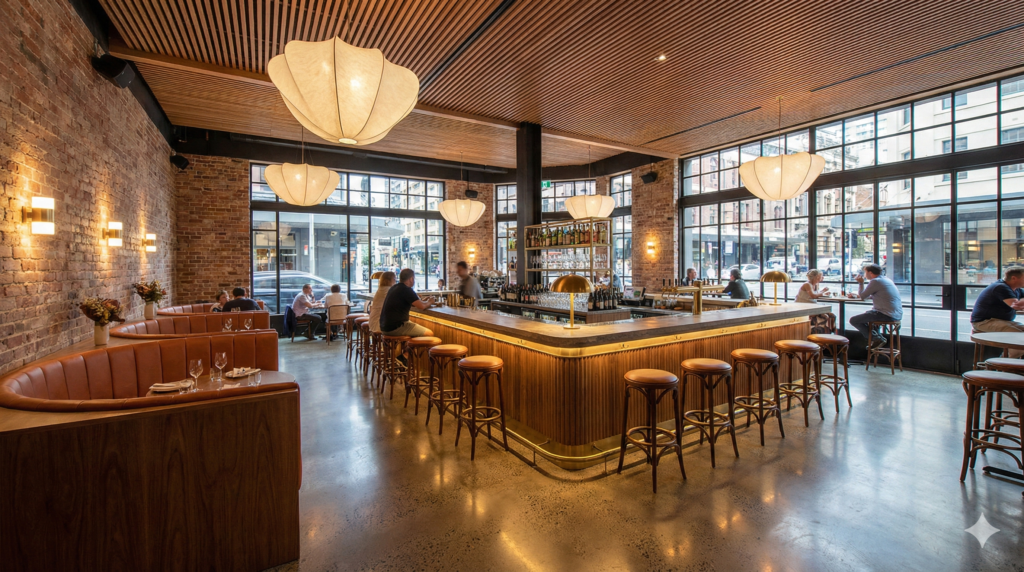
Front-of-house upgrades transform the customer-facing areas while leaving the kitchen operational. This includes new flooring, seating, bar installations, lighting design, and acoustic improvements. Many restaurants choose this approach to refresh their brand without disrupting kitchen operations.
Expect to invest $1,500 to $3,500 per square metre for comprehensive front-of-house work. Projects typically run 3-6 weeks with strategic scheduling to minimise closure periods.
Restaurant Renovation vs Fitout: Key Differences
The terms “renovation” and “fitout” often get used interchangeably, but they represent distinct project types with different cost structures and approval requirements.
A fitout typically refers to finishing a raw or previously unoccupied commercial space. You’re starting with a blank shell and installing everything needed for restaurant operations. Fitouts often involve new tenancies where base building services exist but the space lacks any hospitality infrastructure.
A renovation modifies an existing operational restaurant. You’re working around or replacing existing systems, dealing with demolition waste, and potentially discovering hidden issues behind walls. Renovations frequently cost more per square metre than fitouts due to demolition requirements and the complexity of integrating new work with existing structures.
Understanding this distinction matters for budgeting. Renovation quotes should include demolition, waste removal, and contingency for unexpected discoveries. Fitout quotes assume a clean starting point.
How Much Does a Restaurant Renovation Cost in Sydney?
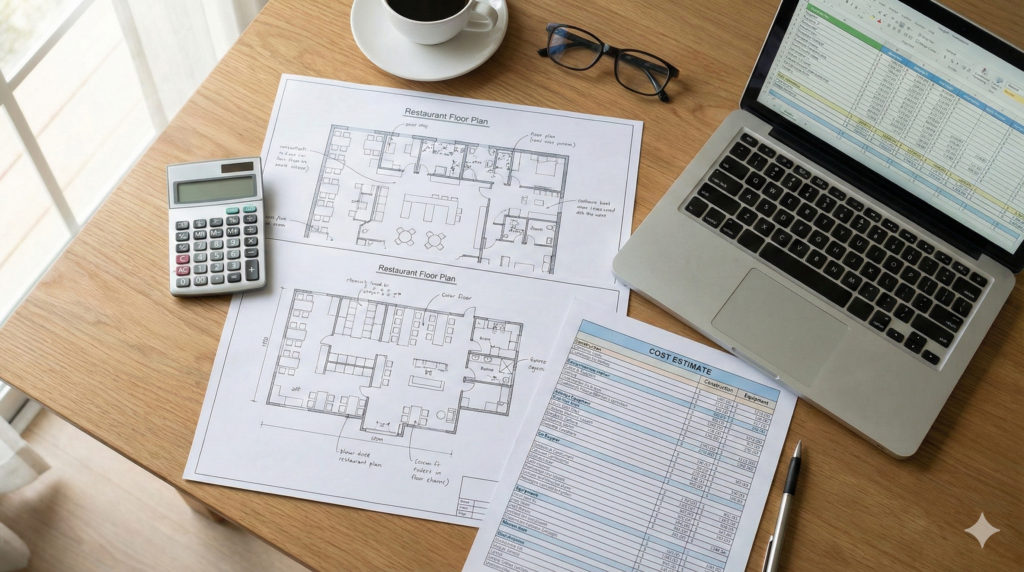
Sydney restaurant renovation costs vary significantly based on venue size, scope of work, and finish quality. Having realistic budget expectations from the start prevents the financial stress that derails many hospitality projects.
The Sydney market commands premium pricing compared to other Australian cities. Higher labour rates, expensive commercial rents during construction, and stringent council requirements all contribute to elevated costs. Planning for Sydney-specific pricing ensures your budget reflects reality.
Average Restaurant Renovation Costs by Size
Small Venue (Under 80sqm)
Small restaurant renovations in Sydney typically range from $150,000 to $350,000 for comprehensive work. The lower end covers cosmetic updates with minor kitchen improvements. The upper end includes full fitout replacement with quality commercial equipment.
Small venues benefit from faster project timelines but face challenges with tight working spaces. Tradespeople work less efficiently in cramped conditions, and material deliveries require careful coordination. Per-square-metre costs often run higher than larger venues due to these inefficiencies.
Medium Venue (80-150sqm)
Medium-sized restaurant renovations generally cost $300,000 to $700,000 in Sydney. This size represents the sweet spot for many hospitality concepts, offering enough space for efficient kitchen operations and comfortable dining capacity.
Projects at this scale achieve better economies of scale on materials and labour. You’ll have more flexibility in staging work to potentially maintain partial operations during construction.
Large Venue (150sqm+)
Large restaurant renovations start around $500,000 and frequently exceed $1 million for high-end fitouts. Venues over 200sqm with full commercial kitchens, bars, and premium finishes can reach $1.5 million or more.
Larger projects require more sophisticated project management and longer timelines. However, the per-square-metre cost typically decreases as fixed costs spread across greater floor area.
Cost Per Square Metre Breakdown
Sydney restaurant renovation costs per square metre break down across several tiers:
| Renovation Level | Cost Per Square Metre | Typical Inclusions |
| Basic Refresh | $800 – $1,500 | Paint, basic lighting, furniture replacement |
| Standard Renovation | $2,000 – $3,500 | New flooring, joinery, lighting design, minor kitchen updates |
| Comprehensive Renovation | $3,500 – $5,000 | Full fitout replacement, quality equipment, custom joinery |
| Premium Renovation | $5,000 – $7,000+ | High-end finishes, top-tier equipment, architectural features |
These figures include labour, materials, and standard compliance costs. They exclude major structural work, heritage considerations, and significant kitchen equipment upgrades, which add substantially to total project costs.
Budget vs Mid-Range vs High-End Renovation Costs
Budget Renovation ($800-$1,800/sqm)
Budget renovations prioritise essential improvements while controlling costs. You’ll use standard materials, off-the-shelf fixtures, and basic commercial equipment. The focus stays on functionality and compliance rather than design statements.
Budget approaches work well for quick-service restaurants, cafes, and venues where operational efficiency matters more than ambiance. Expect laminate surfaces, vinyl flooring, and standard lighting packages.
Mid-Range Renovation ($2,000-$4,000/sqm)
Mid-range renovations balance quality with value. You’ll access better materials, custom joinery options, and commercial-grade equipment from reputable manufacturers. Design input from professionals creates cohesive, attractive spaces without excessive spending.
Most successful Sydney restaurants fall into this category. The investment supports a quality dining experience while maintaining reasonable payback periods on renovation costs.
High-End Renovation ($4,500-$7,000+/sqm)
High-end renovations create destination dining experiences. Premium materials like natural stone, custom metalwork, and designer lighting define these projects. Kitchen equipment comes from top-tier manufacturers with extended warranties and superior performance.
Fine dining establishments, hotel restaurants, and concept-driven venues typically require this investment level. The higher costs reflect both material quality and the detailed craftsmanship needed for flawless execution.
Sydney-Specific Pricing Factors
Several factors make Sydney restaurant renovations more expensive than other markets:
Labour Costs: Sydney tradesperson rates run 15-25% higher than Melbourne and significantly above regional areas. Electricians, plumbers, and specialist commercial kitchen installers command premium rates due to strong demand.
Commercial Rent During Construction: Unlike residential projects, you’re likely paying rent throughout construction. A 3-month renovation on a $15,000/month lease adds $45,000 to your effective project cost.
Council Fees and Timelines: Sydney council approval processes involve substantial fees and can extend timelines. Development application fees, food premises registration, and various certifications add thousands to project budgets.
Access and Logistics: CBD and inner-city locations face parking restrictions, limited delivery windows, and difficult site access. These constraints increase labour time and material handling costs.
Heritage Overlays: Many Sydney suburbs have heritage conservation areas affecting renovation options. Heritage consultants, sympathetic materials, and approval delays all add costs.
Restaurant Renovation Cost Breakdown
Understanding where your money goes helps you make informed decisions about priorities and trade-offs. This detailed breakdown covers every major cost category in a typical Sydney restaurant renovation.
Labour Costs
Labour typically represents 35-45% of total restaurant renovation costs in Sydney. The complexity of commercial hospitality work requires multiple specialist trades working in coordination.
Project Management
Professional project management costs $5,000 to $25,000 depending on project scale and duration. This covers scheduling, contractor coordination, quality control, and client communication. On larger projects, dedicated project managers prevent costly delays and miscommunication.
Some renovation contractors include project management in their overall pricing. Others charge separately. Clarify this in your quotes to enable accurate comparisons.
Builders and Carpenters
General building work and carpentry typically runs $70 to $95 per hour in Sydney. Custom joinery, bar construction, and structural modifications fall under this category. Expect carpentry to represent a significant portion of your labour budget, especially for venues with extensive built-in seating or custom features.
Electricians
Commercial electrical work costs $80 to $120 per hour for licensed electricians. Restaurant renovations require substantial electrical upgrades for kitchen equipment, lighting systems, and point-of-sale infrastructure. Budget $15,000 to $50,000 for electrical work on medium-sized venues.
Three-phase power installation, if not already present, adds $5,000 to $15,000 depending on distance from the main supply.
Plumbers
Licensed plumbers charge $80 to $110 per hour in Sydney. Commercial kitchen plumbing involves grease traps, multiple sink stations, dishwasher connections, and gas fitting. Expect plumbing costs of $10,000 to $40,000 for comprehensive kitchen renovations.
Relocating plumbing fixtures significantly increases costs due to concrete cutting and drainage modifications.
HVAC Specialists
Heating, ventilation, and air conditioning work costs $90 to $130 per hour for commercial specialists. Restaurant HVAC requirements include kitchen exhaust systems, make-up air units, and dining area climate control.
Commercial kitchen ventilation systems alone cost $20,000 to $80,000 installed, depending on kitchen size and cooking equipment.
Painters and Finishers
Commercial painting runs $35 to $55 per square metre for walls and ceilings. Specialty finishes, feature walls, and detailed work increase costs. Budget $8,000 to $25,000 for painting in medium-sized venues.
Commercial Kitchen Equipment Costs
Kitchen equipment often represents the single largest line item in restaurant renovations. Quality commercial equipment ensures reliable operations and meets food safety requirements.
Cooking Equipment
Commercial cooking equipment costs vary dramatically based on cuisine type and service volume:
| Equipment | Budget Range | Mid-Range | Premium |
| Commercial range (6 burner) | $3,000 – $6,000 | $6,000 – $12,000 | $12,000 – $25,000 |
| Combi oven | $8,000 – $15,000 | $15,000 – $30,000 | $30,000 – $60,000 |
| Commercial fryer (double) | $2,000 – $4,000 | $4,000 – $8,000 | $8,000 – $15,000 |
| Charcoal grill | $5,000 – $10,000 | $10,000 – $20,000 | $20,000 – $40,000 |
| Salamander/broiler | $1,500 – $3,000 | $3,000 – $6,000 | $6,000 – $12,000 |
A complete cooking line for a mid-sized restaurant typically costs $40,000 to $120,000 depending on cuisine complexity and equipment grade.
Refrigeration
Commercial refrigeration represents a substantial investment:
- Walk-in coolroom: $8,000 to $25,000 installed
- Walk-in freezer: $12,000 to $35,000 installed
- Undercounter refrigeration: $2,000 to $6,000 per unit
- Display refrigeration: $3,000 to $15,000 depending on size
Budget $25,000 to $80,000 for comprehensive refrigeration in medium-sized venues.
Ventilation and Exhaust Systems
Commercial kitchen ventilation is non-negotiable for compliance and staff comfort. Costs include:
- Exhaust canopy: $5,000 to $20,000 depending on length
- Exhaust fan and ductwork: $8,000 to $25,000
- Make-up air system: $10,000 to $30,000
- Fire suppression system: $5,000 to $15,000
Complete ventilation systems typically cost $30,000 to $80,000 installed for medium commercial kitchens.
Dishwashing Stations
Commercial dishwashing equipment ranges from:
- Undercounter dishwasher: $3,000 to $8,000
- Pass-through dishwasher: $8,000 to $20,000
- Conveyor dishwasher: $25,000 to $60,000
- Pre-rinse stations and sinks: $2,000 to $6,000
Include adequate benching, drainage, and hot water capacity in your dishwashing area budget.
Fitout and Interior Costs
The dining area fitout creates the customer experience that drives repeat business and positive reviews.
Flooring
Commercial flooring options and costs per square metre:
| Flooring Type | Cost Per Sqm (Installed) | Best For |
| Commercial vinyl | $60 – $100 | High-traffic, budget-conscious |
| Polished concrete | $80 – $150 | Industrial, modern concepts |
| Ceramic/porcelain tile | $100 – $200 | Versatile, durable |
| Timber/engineered wood | $150 – $300 | Warm, upscale dining |
| Natural stone | $250 – $500+ | Premium, fine dining |
For a 100sqm dining area, flooring costs range from $6,000 to $50,000 depending on material selection.
Walls and Ceilings
Wall and ceiling treatments include:
- Plasterboard and paint: $40 to $70/sqm
- Feature wall treatments: $100 to $300/sqm
- Acoustic panels: $150 to $400/sqm
- Suspended ceilings: $80 to $150/sqm
- Exposed ceiling treatment: $50 to $120/sqm
Budget $15,000 to $50,000 for walls and ceilings in medium venues.
Lighting
Restaurant lighting significantly impacts ambiance and should receive careful attention:
- Pendant lights: $200 to $2,000 each
- Downlights: $50 to $200 each installed
- Feature lighting: $500 to $5,000 per fixture
- LED strip lighting: $50 to $150 per linear metre
- Lighting control systems: $2,000 to $10,000
Complete lighting packages typically cost $15,000 to $60,000 for medium restaurants.
Furniture and Fixtures
Restaurant furniture costs add up quickly:
- Dining chairs: $150 to $800 each
- Tables: $300 to $1,500 each
- Booth seating: $800 to $3,000 per linear metre
- Bar stools: $200 to $1,000 each
- Host station: $1,500 to $5,000
Furnishing a 60-seat restaurant typically costs $30,000 to $100,000 depending on quality level.
Bar and Counter Installations
Custom bar and counter work represents significant investment:
- Basic bar installation: $15,000 to $30,000
- Mid-range bar with features: $30,000 to $60,000
- Premium custom bar: $60,000 to $150,000+
- Service counter/pass: $5,000 to $20,000
Include refrigeration, sinks, and equipment in bar budgets.
Compliance and Certification Costs
Sydney’s regulatory environment requires substantial investment in compliance and approvals.
Council Approvals
Development application fees vary by council and project scope:
- DA lodgement fees: $1,000 to $5,000
- Assessment fees: $2,000 to $10,000
- Modification applications: $500 to $2,000
- Pre-DA meetings: $500 to $1,500
Complying development certificates offer faster approval for qualifying projects at $2,000 to $5,000.
Building Certifications
Building certification costs include:
- Construction certificate: $2,000 to $6,000
- Occupation certificate: $1,500 to $4,000
- Inspection fees: $500 to $2,000
- Compliance reports: $1,000 to $3,000
Fire Safety Compliance
Fire safety requirements add significant costs:
- Fire engineering report: $3,000 to $10,000
- Fire detection system: $5,000 to $20,000
- Emergency lighting: $2,000 to $8,000
- Exit signage: $1,000 to $3,000
- Fire extinguishers and blankets: $500 to $1,500
- Annual fire safety statement: $500 to $1,500
Health and Food Safety Requirements
Food premises compliance costs include:
- Food premises registration: $300 to $800 annually
- Food safety supervisor certification: $150 to $300
- Food safety plan development: $500 to $2,000
- Pre-opening health inspection: Included in registration
- Ongoing compliance audits: $200 to $500 per inspection
Design and Professional Fees
Professional design services improve outcomes and can prevent costly mistakes.
Interior Designer
Restaurant interior design fees typically structure as:
- Concept design: $5,000 to $15,000
- Full design documentation: $15,000 to $50,000
- Percentage of project cost: 8-15% of fitout budget
Quality interior design pays for itself through efficient space planning and avoiding expensive changes during construction.
Architect
Architectural services become necessary for structural changes or complex approvals:
- Feasibility assessment: $2,000 to $5,000
- DA documentation: $8,000 to $25,000
- Construction documentation: $15,000 to $40,000
- Contract administration: $5,000 to $15,000
Architects typically charge 10-15% of construction cost for full services.
Kitchen Consultant
Commercial kitchen consultants optimise workflow and equipment selection:
- Kitchen design: $3,000 to $10,000
- Equipment specification: $2,000 to $5,000
- Project coordination: $3,000 to $8,000
Kitchen consultants often save their fees through better equipment choices and avoiding workflow problems.
Factors That Affect Restaurant Renovation Costs

Multiple variables influence your final renovation cost. Understanding these factors helps you anticipate expenses and make informed trade-offs.
Location and Site Conditions
Your venue’s location significantly impacts renovation costs. CBD locations face parking restrictions, limited delivery windows, and difficult access that increase labour time. Ground-floor tenancies with street access cost less to renovate than basement or upper-level spaces requiring material hoisting.
Existing site conditions matter enormously. A well-maintained space with modern services costs less to renovate than a neglected building with outdated infrastructure. Inspect thoroughly before committing to a lease or purchase.
Scope of Work and Structural Changes
The extent of structural modifications dramatically affects costs. Moving walls, creating new openings, or modifying floor levels requires engineering input, council approval, and specialist contractors.
Non-structural renovations that work within existing layouts cost significantly less. Wherever possible, design around existing structural elements rather than modifying them.
Material and Finish Quality
Material selection creates the biggest variable in renovation budgets. The difference between budget and premium finishes can double or triple fitout costs.
Focus premium materials on high-impact, high-visibility areas. Customers notice bar tops, feature walls, and flooring. They rarely notice ceiling materials or back-of-house finishes. Allocate your budget accordingly.
Kitchen Complexity and Equipment Grade
Kitchen requirements vary dramatically by cuisine type. A simple cafe kitchen costs a fraction of a full commercial kitchen for fine dining or high-volume service.
Equipment grade affects both upfront costs and long-term reliability. Premium equipment from manufacturers like Rational, Miele, or Hoshizaki costs more but offers better performance, energy efficiency, and longevity. Consider total cost of ownership, not just purchase price.
Compliance Requirements and Council Regulations
Different Sydney councils have varying requirements and processing times. Some councils process applications quickly with reasonable fees. Others involve lengthy delays and substantial costs.
Research your specific council’s requirements early. Engage with council planning staff before finalising designs to identify potential issues.
Timeline and Project Urgency
Rushed timelines increase costs. Contractors charge premiums for accelerated schedules, and mistakes become more likely under time pressure.
Plan realistic timelines that allow for proper sequencing of trades. A well-planned 12-week project typically costs less than a rushed 8-week project attempting the same scope.
Heritage Building Considerations
Heritage-listed buildings or properties in heritage conservation areas face additional requirements. Heritage consultants, sympathetic materials, and approval processes add 15-30% to renovation costs.
Heritage restrictions limit material choices and may require retention of original features. Factor these constraints into design and budgeting from the outset.
Hidden Costs in Restaurant Renovations
Hidden costs catch many restaurant owners off guard. Anticipating these expenses prevents budget blowouts and project stress.
Unexpected Structural Issues
Opening walls and ceilings often reveals problems invisible during initial inspections. Common discoveries include:
- Inadequate structural support requiring reinforcement
- Water damage and associated repairs
- Non-compliant previous work requiring rectification
- Pest damage to timber framing
Budget for the unexpected. Older buildings carry higher risk of hidden issues.
Asbestos Removal and Hazardous Materials
Buildings constructed before 1990 may contain asbestos in various materials. Asbestos removal requires licensed contractors and proper disposal:
- Asbestos testing: $200 to $500 per sample
- Removal costs: $50 to $150 per square metre
- Clearance certificates: $300 to $800
Lead paint in older buildings also requires specialist removal. Never attempt DIY removal of hazardous materials.
Utility Upgrades and Power Supply
Existing electrical and gas supplies often prove inadequate for commercial kitchen requirements. Upgrades may include:
- Electrical switchboard upgrade: $3,000 to $10,000
- Three-phase power installation: $5,000 to $15,000
- Gas main upgrade: $2,000 to $8,000
- Water supply upgrade: $1,500 to $5,000
Request utility capacity information before signing leases. Inadequate supply can add tens of thousands to project costs.
Permit Delays and Council Fees
Council approval delays extend project timelines and increase holding costs. Each month of delay adds rent, loan interest, and lost revenue to your effective project cost.
Additional council fees often arise during projects:
- Modification applications for design changes
- Additional inspection fees
- Extended assessment fees for complex applications
- Contribution levies for certain development types
Temporary Closure and Lost Revenue
Most restaurant renovations require closure periods. Calculate the true cost of closure:
- Lost revenue during construction
- Ongoing fixed costs (rent, insurance, loan payments)
- Staff retention costs or rehiring expenses
- Marketing costs for reopening
A 3-month closure for a restaurant generating $50,000 monthly revenue represents $150,000 in lost sales plus ongoing fixed costs.
Contingency Budget Recommendations
Every restaurant renovation budget should include contingency funds for unexpected costs. Recommended contingency percentages:
| Building Age/Condition | Recommended Contingency |
| New building (< 10 years) | 10-15% |
| Modern building (10-30 years) | 15-20% |
| Older building (30-50 years) | 20-25% |
| Heritage building (50+ years) | 25-30% |
A $400,000 renovation in an older building should include $80,000 to $100,000 contingency. This isn’t pessimism; it’s realistic planning based on industry experience.
Restaurant Renovation Timeline: What to Expect
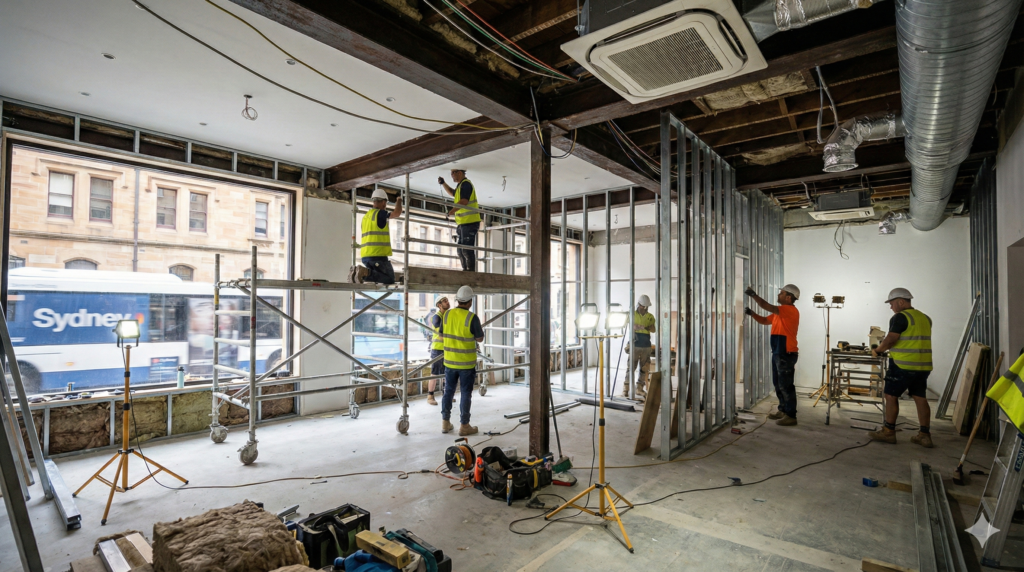
Understanding typical timelines helps you plan operations, staffing, and cash flow around your renovation project.
Planning and Design Phase
The planning phase typically takes 4 to 12 weeks depending on project complexity:
Weeks 1-2: Initial concept development, budget establishment, and contractor shortlisting.
Weeks 3-6: Design development with your interior designer or architect. This includes space planning, material selection, and equipment specification.
Weeks 7-10: Design documentation and engineering input. Detailed drawings prepared for council submission and contractor pricing.
Weeks 10-12: Final design refinements, contractor selection, and contract negotiation.
Rushing this phase leads to expensive changes during construction. Invest adequate time in planning.
Approvals and Permits Phase
Council approval timelines vary significantly:
Complying Development: 10-20 business days for straightforward projects meeting predetermined standards.
Development Application: 40-90+ days depending on council workload and project complexity. Neighbour notification, assessment, and determination all take time.
Construction Certificate: 10-20 business days after DA approval.
Food Premises Approval: Concurrent with building approvals, typically 2-4 weeks.
Allow realistic timeframes for approvals. Optimistic assumptions about council processing create project delays.
Construction and Fitout Phase
Construction duration depends on scope:
Cosmetic Refresh: 2-4 weeks for painting, flooring, and furniture replacement.
Standard Renovation: 6-10 weeks for comprehensive fitout work without major structural changes.
Full Renovation: 12-20 weeks for complete gut renovation including structural modifications.
Complex Projects: 20-30+ weeks for large venues, heritage buildings, or projects with significant structural work.
Construction phases typically sequence as:
- Demolition and strip-out (1-2 weeks)
- Structural work and rough-in trades (2-4 weeks)
- Services installation (2-4 weeks)
- Fitout and finishes (3-6 weeks)
- Equipment installation (1-2 weeks)
- Final finishes and cleaning (1 week)
Final Inspections and Handover
The final phase involves multiple inspections and certifications:
- Building inspection and occupation certificate
- Fire safety certification
- Electrical compliance certificate
- Plumbing compliance certificate
- Food premises inspection
- Liquor licence inspection (if applicable)
Allow 2-4 weeks for final inspections and defect rectification. Inspectors often identify items requiring correction before certificates issue.
Typical Project Durations by Renovation Type
| Renovation Type | Planning | Approvals | Construction | Total |
| Cosmetic refresh | 2-4 weeks | 0-2 weeks | 2-4 weeks | 4-10 weeks |
| Kitchen upgrade | 4-6 weeks | 4-8 weeks | 4-8 weeks | 12-22 weeks |
| Front-of-house | 4-8 weeks | 2-6 weeks | 4-8 weeks | 10-22 weeks |
| Full renovation | 8-12 weeks | 8-16 weeks | 12-20 weeks | 28-48 weeks |
These timelines assume reasonable project management and no major complications. Add buffer time for realistic planning.
How to Plan a Restaurant Renovation Budget
Effective budget planning prevents the financial stress that derails many renovation projects. Follow these principles for realistic budgeting.
Setting Realistic Budget Expectations
Start with honest assessment of your financial capacity. Consider:
- Available cash reserves
- Borrowing capacity and loan terms
- Ongoing operational costs during construction
- Post-renovation working capital needs
Your renovation budget should leave adequate reserves for reopening marketing, initial inventory, and operational cash flow. Spending every dollar on construction creates dangerous financial exposure.
Research comparable projects in your area. Talk to other restaurant owners about their renovation experiences. Industry benchmarks provide reality checks on your budget assumptions.
Prioritising High-Impact Upgrades
Not all renovation spending delivers equal returns. Prioritise investments that directly impact customer experience or operational efficiency:
High Priority:
- Kitchen equipment affecting food quality and speed
- Dining area ambiance (lighting, seating comfort)
- Compliance requirements (non-negotiable)
- Customer-facing finishes
Medium Priority:
- Staff areas and back-of-house efficiency
- Storage optimisation
- Technology infrastructure
Lower Priority:
- Premium finishes in low-visibility areas
- Nice-to-have features without clear ROI
- Over-specification beyond actual needs
Where to Save vs Where to Invest
Invest More:
- Commercial kitchen equipment from reputable manufacturers
- Quality flooring in high-traffic areas
- Professional lighting design
- Comfortable seating
- Ventilation and climate control
Save Where Possible:
- Back-of-house finishes
- Storage area materials
- Standard fixtures in non-public areas
- Off-the-shelf items where custom isn’t necessary
The goal isn’t minimising spending but maximising value. Cheap equipment that fails costs more than quality equipment that lasts.
Getting Accurate Quotes from Contractors
Accurate quotes require detailed information. Provide contractors with:
- Complete design documentation
- Material specifications
- Equipment schedules
- Timeline requirements
- Site access information
Request itemised quotes breaking down labour, materials, and equipment. Lump-sum quotes hide important details and make comparisons difficult.
Get at least three quotes from qualified contractors. Significant price variations warrant investigation. The cheapest quote often indicates missing scope or unrealistic assumptions.
Building a Contingency Fund
Your contingency fund should be:
- Separate from your main construction budget
- Accessible but not easily spent
- Sized appropriately for building age and condition
- Protected from scope creep
Treat contingency as insurance, not available budget. Only access it for genuine unexpected costs, not upgrades or additions that weren’t in the original scope.
Sydney Council Requirements for Restaurant Renovations
Navigating Sydney’s regulatory environment requires understanding multiple approval pathways and compliance requirements.
Development Applications (DA) and Complying Development
Development Applications suit complex projects involving:
- Change of use
- Significant structural alterations
- Heritage considerations
- Neighbour impact concerns
DA processing takes 40-90+ days and involves public notification, assessment against planning controls, and formal determination. Costs include lodgement fees, assessment fees, and often consultant reports.
Complying Development offers faster approval for projects meeting predetermined standards. Benefits include:
- Faster processing (10-20 business days)
- No neighbour notification
- Certainty of approval if standards met
- Lower overall costs
Not all projects qualify for complying development. Consult with a private certifier or council planner to determine the appropriate pathway.
Food Premises Approval Process
All Sydney restaurants require food premises registration with their local council. The approval process involves:
- Application submission with floor plans showing food preparation areas, equipment layout, and hand washing facilities.
- Plan assessment by council environmental health officers reviewing compliance with Food Standards Code requirements.
- Pre-opening inspection confirming the built premises matches approved plans and meets food safety standards.
- Registration allowing legal operation as a food business.
Registration fees vary by council, typically $300 to $800 annually. Maintain registration through ongoing compliance and periodic inspections.
Building Code of Australia (BCA) Compliance
The Building Code of Australia sets minimum standards for:
- Structural adequacy
- Fire safety
- Access and egress
- Accessibility
- Health and amenity
- Energy efficiency
Restaurant renovations must comply with BCA requirements for Class 6 buildings (shops and restaurants). Key considerations include:
- Fire separation between tenancies
- Emergency exit requirements
- Accessible toilet facilities
- Ventilation standards
- Structural capacity for equipment loads
A building certifier assesses BCA compliance and issues construction and occupation certificates.
Fire Safety and Accessibility Standards
Fire Safety Requirements:
- Fire detection and alarm systems
- Emergency lighting and exit signs
- Fire extinguishers and blankets
- Fire separation to required standards
- Annual fire safety statements
Larger venues may require:
- Sprinkler systems
- Smoke hazard management
- Fire engineering solutions
Accessibility Standards:
The Disability Discrimination Act and BCA require accessible design including:
- Accessible entry paths
- Accessible toilet facilities
- Circulation space for wheelchair users
- Appropriate signage and wayfinding
Accessibility requirements apply to new work and significant renovations. Consult with an access consultant for complex projects.
Liquor Licence Considerations
Renovations affecting licensed premises require notification to Liquor & Gaming NSW. Significant changes may require licence modification:
- Changes to licensed area boundaries
- Alterations affecting patron capacity
- New outdoor areas
- Changes to trading hours
Submit plans to Liquor & Gaming NSW before commencing work affecting licensed areas. Unapproved changes can jeopardise your licence.
Restaurant Renovation Checklist
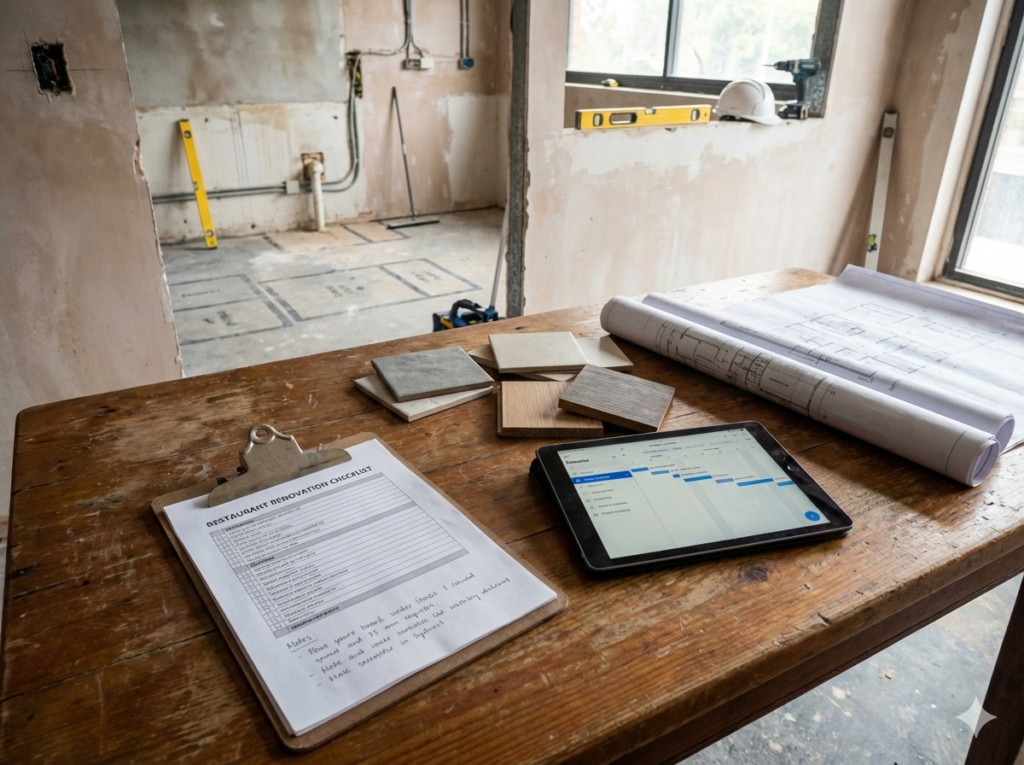
Use these checklists to ensure nothing falls through the cracks during your renovation project.
Pre-Renovation Planning Checklist
Financial Planning:
- Establish total available budget including contingency
- Secure financing or confirm cash availability
- Calculate ongoing costs during construction
- Plan post-renovation working capital
Design and Documentation:
- Engage interior designer or architect
- Complete concept design and approve direction
- Finalise detailed design documentation
- Specify all materials and equipment
- Obtain engineering reports if required
Approvals:
- Determine approval pathway (DA or CDC)
- Lodge development application or CDC
- Apply for food premises approval
- Notify Liquor & Gaming NSW if licensed
- Obtain construction certificate
Contractor Selection:
- Shortlist qualified contractors
- Obtain detailed quotes
- Check references and past work
- Review and negotiate contracts
- Confirm insurance and licensing
Operational Planning:
- Plan closure period and communicate to customers
- Arrange staff during construction
- Organise equipment storage if required
- Plan inventory management
During Construction Checklist
Project Management:
- Hold regular site meetings
- Monitor progress against schedule
- Review and approve variations in writing
- Document all changes and decisions
- Maintain photo records of progress
Quality Control:
- Inspect work at key stages
- Verify materials match specifications
- Check equipment installation against plans
- Address defects promptly
Financial Management:
- Process progress payments per contract terms
- Track variations and additional costs
- Monitor contingency usage
- Maintain payment records
Compliance:
- Schedule required inspections
- Address inspection findings promptly
- Maintain compliance documentation
- Coordinate with council as required
Post-Renovation Completion Checklist
Certifications and Approvals:
- Obtain occupation certificate
- Complete fire safety certification
- Receive electrical compliance certificate
- Obtain plumbing compliance certificate
- Pass food premises inspection
- Update liquor licence if required
Defects and Completion:
- Conduct thorough defect inspection
- Document all defects in writing
- Set deadline for defect rectification
- Verify defect completion
- Release final payment
Operational Readiness:
- Deep clean entire premises
- Test all equipment and systems
- Train staff on new equipment
- Update operational procedures
- Prepare for reopening
Documentation:
- Collect all warranties and manuals
- Obtain as-built drawings
- File compliance certificates
- Update insurance for new fit-out value
- Archive project documentation
How to Choose a Restaurant Renovation Contractor in Sydney

Selecting the right contractor significantly impacts project success. Commercial hospitality renovation requires specific expertise beyond general building work.
Questions to Ask Before Hiring
Experience and Capability:
- How many restaurant renovations have you completed in the past two years?
- Can you provide references from similar projects?
- Do you have experience with council approvals in this area?
- What is your team’s experience with commercial kitchens?
Project Management:
- Who will manage my project day-to-day?
- How do you handle scheduling and coordination?
- What is your communication process during construction?
- How do you manage variations and changes?
Financial:
- Is your quote fixed price or estimate?
- What payment terms do you require?
- How do you handle unexpected costs?
- What warranties do you provide?
Practical:
- What is your realistic timeline for this project?
- How do you minimise disruption to neighbouring businesses?
- What insurance coverage do you carry?
- Are you licensed for commercial building work?
What to Look for in a Commercial Renovation Specialist
Essential Qualifications:
- Current builder’s licence appropriate for commercial work
- Adequate public liability insurance (minimum $10 million)
- Workers compensation insurance
- Demonstrated commercial hospitality experience
Positive Indicators:
- Portfolio of completed restaurant projects
- Positive references from hospitality clients
- Understanding of food premises requirements
- Established relationships with commercial trades
- Clear communication and professional presentation
- Detailed, itemised quotations
Value-Added Capabilities:
- In-house project management
- Design-build capability
- Council approval experience
- Equipment procurement relationships
Red Flags to Avoid
Warning Signs:
- Reluctance to provide references
- Significantly lower quotes than competitors
- Pressure to sign quickly
- Vague or incomplete quotations
- Poor communication during quoting process
- No physical business address
- Requests for large upfront payments
Serious Concerns:
- Unlicensed or inadequately insured
- History of disputes or complaints
- Inability to explain their process
- No experience with commercial hospitality
- Unwillingness to provide written contracts
Trust your instincts. If something feels wrong during the selection process, it will likely be worse during construction.
Understanding Quotes and Contracts
Quote Components: A comprehensive quote should itemise:
- Demolition and site preparation
- Structural work
- Mechanical services (HVAC, plumbing, electrical)
- Fitout and finishes
- Equipment supply and installation
- Project management
- Compliance and certification costs
- Exclusions clearly stated
Contract Essentials: Your contract should include:
- Detailed scope of work
- Fixed price or clear variation process
- Payment schedule tied to milestones
- Start and completion dates
- Delay provisions and penalties
- Defect liability period
- Dispute resolution process
- Insurance requirements
Payment Structure: Typical payment schedules:
- Deposit: 10-15% on contract signing
- Progress payments: Monthly based on completed work
- Retention: 5-10% held until defect rectification
- Final payment: On practical completion
Never pay ahead of work completed. Progress payments should reflect actual progress, not calendar dates.
Restaurant Renovation Ideas and Trends for 2026
Current design trends reflect changing customer expectations and operational requirements. Consider these directions for your renovation.
Open Kitchen Concepts
Open kitchens continue gaining popularity, offering transparency and theatre. Customers enjoy watching food preparation, and the format builds trust in food handling practices.
Design considerations for open kitchens:
- Noise management through acoustic treatment
- Ventilation systems that prevent cooking odours reaching diners
- Attractive equipment and organised workstations
- Adequate lighting for both function and presentation
- Clear sightlines without compromising workflow
Open kitchens require higher standards of cleanliness and organisation. Factor ongoing operational requirements into your decision.
Sustainable and Eco-Friendly Materials
Sustainability influences customer choices and operational costs. Consider:
Materials:
- Recycled and reclaimed timber
- Low-VOC paints and finishes
- Sustainable flooring options
- Locally sourced materials reducing transport impact
Operations:
- Energy-efficient lighting (LED throughout)
- Water-saving fixtures
- Efficient HVAC systems
- Waste reduction infrastructure
Sustainable choices often cost more upfront but reduce operating costs and appeal to environmentally conscious customers.
Flexible Seating and Multi-Use Spaces
Post-pandemic dining preferences favour flexibility. Design for multiple configurations:
- Moveable furniture allowing layout changes
- Spaces that work for intimate dining and larger groups
- Private dining options for events
- Outdoor seating integration
Flexibility extends venue utility and revenue potential. A space that hosts breakfast service, lunch crowds, evening dining, and private events maximises return on your renovation investment.
Technology Integration
Technology increasingly shapes restaurant operations and customer experience:
Customer-Facing:
- Digital menu displays
- QR code ordering systems
- Contactless payment throughout
- Charging stations at tables
Operational:
- Kitchen display systems
- Inventory management integration
- Reservation system infrastructure
- Security and monitoring systems
Plan technology infrastructure during renovation. Running cables and installing systems during construction costs far less than retrofitting later.
Biophilic Design Elements
Biophilic design incorporates natural elements to create welcoming, comfortable spaces:
- Living plant walls and greenery
- Natural materials (timber, stone, natural fibres)
- Natural light maximisation
- Water features
- Organic shapes and patterns
Plants require ongoing maintenance. Consider maintenance requirements and costs when incorporating living elements.
Restaurant Renovation Mistakes to Avoid
Learn from others’ expensive mistakes. These common errors derail budgets and timelines.
Underestimating the Budget
The most common renovation mistake is inadequate budgeting. Owners frequently:
- Base budgets on best-case scenarios
- Ignore contingency requirements
- Forget soft costs (design, approvals, fees)
- Underestimate equipment costs
- Fail to account for closure period costs
Build your budget from detailed estimates, not hopeful assumptions. Add contingency appropriate to your building’s age and condition.
Ignoring Compliance Requirements
Compliance shortcuts create serious problems:
- Work stopped by council inspectors
- Expensive rectification of non-compliant work
- Delays obtaining occupation certificates
- Ongoing compliance issues affecting operations
- Potential fines and legal liability
Understand requirements before starting. Engage professionals who know commercial hospitality compliance.
Poor Kitchen Workflow Design
Kitchen design directly impacts operational efficiency and staff satisfaction. Common workflow mistakes:
- Inadequate space between workstations
- Poor positioning of equipment relative to workflow
- Insufficient storage creating clutter
- Inadequate ventilation causing discomfort
- Bottlenecks at critical points (pass, dishwash)
Engage a commercial kitchen consultant. Their fees save far more through improved efficiency and avoided problems.
Choosing Style Over Function
Aesthetic choices that compromise function create ongoing operational problems:
- Beautiful but uncomfortable seating
- Dramatic lighting that’s inadequate for service
- Flooring that’s slippery when wet
- Acoustic nightmares from hard surfaces
- Impractical materials requiring excessive maintenance
Balance form and function. The most successful restaurants look great AND work brilliantly.
Not Planning for Future Growth
Short-term thinking limits future options:
- Electrical capacity inadequate for equipment additions
- Kitchen layout that can’t accommodate menu expansion
- Seating configuration that can’t flex for different services
- Technology infrastructure that’s already outdated
Consider where your business might be in five years. Build flexibility into your renovation where practical.
Financing Your Restaurant Renovation
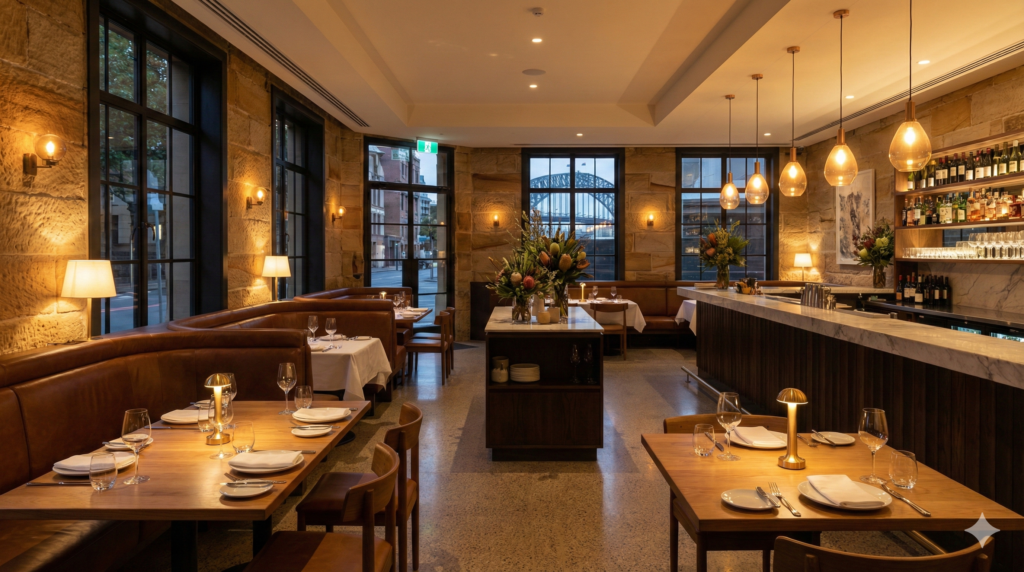
Most restaurant renovations require external financing. Understanding your options helps secure appropriate funding.
Business Loans and Equipment Finance
Business Loans: Traditional business loans suit comprehensive renovations. Consider:
- Secured vs unsecured options
- Fixed vs variable interest rates
- Loan terms matching your payback period
- Establishment fees and ongoing costs
Banks assess hospitality loans carefully. Prepare detailed business plans, financial projections, and demonstrate industry experience.
Equipment Finance: Equipment finance specifically funds commercial kitchen equipment:
- Equipment serves as security
- Often easier approval than general business loans
- Terms typically 3-7 years
- May include maintenance packages
Equipment finance preserves working capital for other renovation costs.
Chattel Mortgage: Chattel mortgages suit equipment purchases where you want ownership and tax benefits:
- You own the equipment from purchase
- Interest and depreciation tax deductible
- Balloon payments can reduce monthly costs
- Suits profitable businesses wanting tax efficiency
Renovation Grants for Hospitality Businesses
Government grants occasionally support hospitality business development:
State Government Programs: NSW periodically offers small business grants supporting:
- Energy efficiency upgrades
- Accessibility improvements
- Regional business development
- Industry-specific initiatives
Local Council Grants: Some Sydney councils offer:
- Facade improvement programs
- Outdoor dining infrastructure support
- Heritage building assistance
- Main street revitalisation funding
Grant availability changes frequently. Check Business NSW and your local council for current programs.
Staged Renovation Approaches
Staging renovations across multiple phases offers financial and operational benefits:
Benefits:
- Spread costs over time
- Maintain partial operations during work
- Learn from each phase before proceeding
- Adjust plans based on business performance
Staging Strategies:
- Kitchen first, then front-of-house
- Cosmetic refresh now, major work later
- Section-by-section renovation maintaining trading
- Equipment upgrades phased over multiple years
Staged approaches require careful planning to avoid rework and ensure each phase delivers standalone value.
ROI of Restaurant Renovation: Is It Worth It?
Renovation represents significant investment. Understanding potential returns helps justify expenditure and prioritise spending.
How Renovation Impacts Revenue
Well-executed renovations typically increase revenue through:
Increased Capacity:
- More covers per service
- Faster table turnover
- Extended trading hours
- New revenue streams (private dining, events)
Higher Spend:
- Premium positioning supporting higher prices
- Improved bar and beverage sales
- Better customer experience encouraging add-ons
Customer Acquisition:
- Renewed interest and media coverage
- Social media appeal driving visits
- Competitive positioning in the market
Industry data suggests successful renovations can increase revenue 15-40% in the first year post-renovation, though results vary significantly based on execution and market conditions.
Customer Experience and Brand Perception
Renovation impacts how customers perceive your business:
Immediate Effects:
- Fresh, modern appearance signals quality
- Comfortable environment encourages longer stays
- Instagram-worthy spaces generate free marketing
- Improved ambiance supports premium pricing
Long-Term Benefits:
- Stronger brand positioning
- Customer loyalty through improved experience
- Staff pride improving service quality
- Competitive differentiation
Customer perception directly influences willingness to pay. A tired venue struggles to command premium prices regardless of food quality.
Operational Efficiency Gains
Renovation can significantly improve operational efficiency:
Kitchen Efficiency:
- Better workflow reducing service times
- Modern equipment improving consistency
- Adequate storage reducing waste
- Improved ventilation enhancing staff comfort
Front-of-House Efficiency:
- Optimised floor plan improving service flow
- Better POS positioning speeding transactions
- Improved storage reducing clutter
- Enhanced lighting supporting service
Efficiency gains compound over time. A kitchen that produces 20% more covers per hour generates substantial additional revenue annually.
Property Value Considerations
For property owners, renovation affects asset value:
Leasehold Improvements:
- Generally don’t increase property value
- May improve lease terms or renewal options
- Consider lease length vs renovation investment
Freehold Properties:
- Quality fitout increases property value
- Modern compliance reduces buyer concerns
- Turnkey operations command premiums
Align renovation investment with your property situation. Extensive investment in short-term leases rarely makes financial sense.
Conclusion
Restaurant renovation in Sydney requires careful planning, realistic budgeting, and thorough understanding of compliance requirements. From initial concept through final inspection, every decision impacts your project’s success and your business’s future.
The investment ranges from $150,000 for small cosmetic refreshes to over $1 million for comprehensive large-venue transformations. Understanding where costs arise, what factors influence pricing, and how to avoid common mistakes positions you for a successful outcome.
At Sydney Home Renovation, we bring the same detailed cost planning and project management expertise to commercial hospitality projects that we deliver for residential clients. Contact our team to discuss your restaurant renovation and receive a detailed, transparent quote tailored to your specific requirements.
Frequently Asked Questions About Restaurant Renovation
How long does a restaurant renovation take in Sydney?
Most restaurant renovations take 3 to 8 months from initial planning through completion. Simple cosmetic refreshes can complete in 4-8 weeks, while comprehensive renovations involving council approvals typically require 6-12 months. Timeline depends on scope, approval pathway, and building complexity.
Can I renovate my restaurant while staying open?
Partial operation during renovation is possible with careful planning. Strategies include renovating in sections, working during closed hours, or maintaining takeaway service while dining areas are under construction. Full kitchen renovations typically require complete closure for at least 2-4 weeks.
Do I need council approval for a restaurant renovation?
Most restaurant renovations require some form of council approval. Minor cosmetic work may be exempt, but changes to layout, kitchen equipment, or building services typically need either a Development Application or Complying Development Certificate. Food premises registration updates are required for any changes affecting food preparation areas.
What is the minimum budget for a restaurant renovation?
A basic cosmetic refresh for a small venue starts around $50,000 to $80,000. Comprehensive renovations including kitchen work typically require minimum $150,000 to $200,000 for small venues. Attempting renovation with inadequate budget leads to compromised outcomes and potential compliance issues.
How do I minimise disruption during renovation?
Minimise disruption through detailed planning, clear communication with neighbours and customers, strategic scheduling of noisy work, and maintaining clean, safe site conditions. Consider staging work to maintain partial operations, and plan reopening marketing to rebuild momentum quickly.
What permits do I need for a commercial kitchen renovation?
Commercial kitchen renovations typically require a Development Application or Complying Development Certificate, Construction Certificate, updated food premises registration, and various compliance certificates (electrical, plumbing, fire safety). Ventilation changes often require specific council approval. Engage professionals familiar with commercial hospitality requirements.
How much contingency should I include in my restaurant renovation budget?
Include 15-25% contingency depending on building age and condition. Older buildings and heritage properties warrant higher contingency (20-30%) due to increased likelihood of hidden issues. Never treat contingency as available budget for upgrades or additions.