
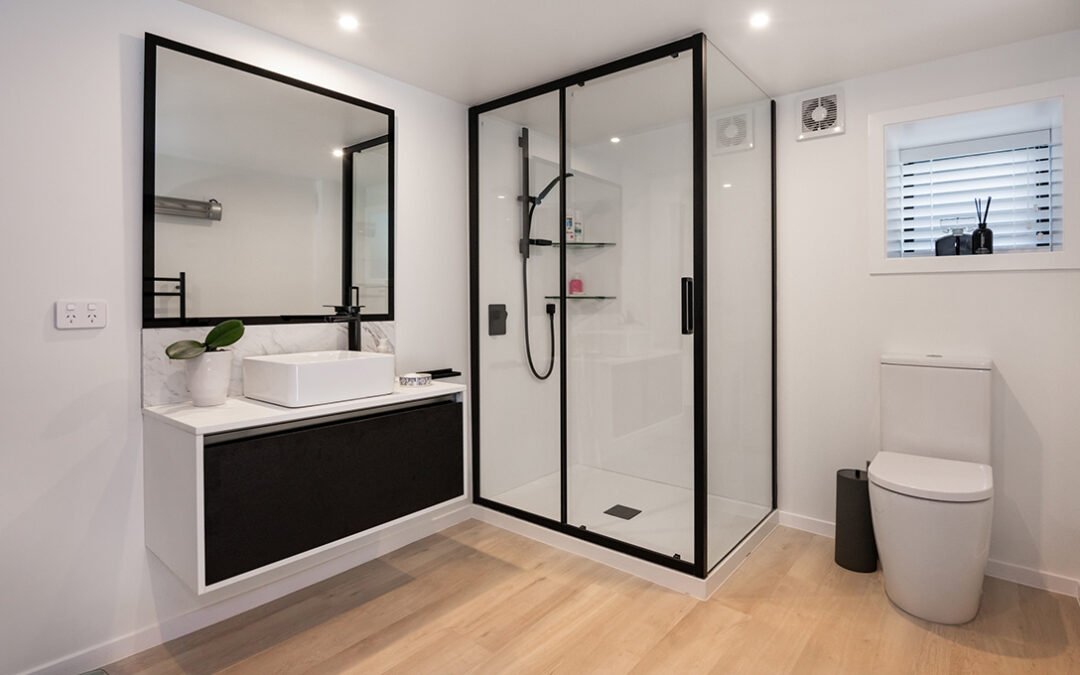
Yes, you can renovate a bathroom for $5,000 in Sydney—but it requires strategic planning, realistic expectations, and careful prioritisation. At this budget level, you’re typically looking at a cosmetic refresh or partial renovation rather than a complete overhaul, with most of your investment going toward labour costs (plumbers, tilers, electricians) and essential materials like tiles, waterproofing, and basic fixtures.
This budget works best for small bathrooms (2-3m²) where you keep the existing layout, avoid structural changes, and focus on high-impact upgrades like new tiles, a fresh vanity, updated tapware, and improved lighting. Understanding exactly where your money goes—and where corners can’t be cut—is essential to completing your renovation on budget without compromising quality or compliance.
In this guide, we’ll break down realistic cost allocations, reveal common budget traps, show you what’s achievable at the $5,000 mark, and help you prioritise spending to maximise both functionality and long-term value in your Sydney bathroom renovation.
What Can $5,000 Actually Cover in a Bathroom Renovation?
A $5,000 bathroom renovation budget in Sydney sits firmly in the cosmetic refresh to light renovation category—not a full-scale transformation. Understanding this distinction upfront prevents disappointment and helps you allocate funds where they’ll deliver the most impact. The reality is that bathroom renovations in Sydney typically cost between $15,000 and $25,000 for a complete renovation, meaning $5,000 represents roughly 20-33% of an average project budget.
Basic Cosmetic Updates vs. Full Renovations
Cosmetic updates focus on surface-level improvements without touching plumbing, electrical, or structural elements. At the $5,000 level, you’re refreshing what’s visible—new paint, updated fixtures, modern tapware, perhaps new tiles over existing surfaces if conditions allow. Full renovations, by contrast, involve gutting the space, relocating fixtures, upgrading plumbing and electrical systems, installing new waterproofing, and rebuilding from the substrate up.
The key differentiator is whether you’re keeping the existing layout. Moving a toilet, relocating a shower, or shifting plumbing lines immediately escalates costs due to additional labour, materials, and compliance requirements. According to industry data, relocating plumbing fixtures can add $2,000-$5,000 alone to your project—potentially consuming your entire budget before you’ve installed a single tile.
With $5,000, you’re working within the existing footprint, which means your toilet stays where it is, your shower remains in its current position, and your vanity occupies the same wall. This constraint isn’t necessarily limiting—many bathrooms benefit more from updated finishes and fixtures than from layout changes.
Labour Costs: The Biggest Budget Factor
Labour typically consumes 50-60% of a bathroom renovation budget, regardless of total project size. For a $5,000 renovation, expect to allocate $2,500-$3,000 to skilled trades: licensed plumbers, qualified tilers, and certified electricians. Sydney’s construction labour rates average $80-$120 per hour for plumbers, $60-$90 per hour for tilers, and $85-$110 per hour for electricians.
A small bathroom retile might require 2-3 days of tiler labour (16-24 hours at $60-$90/hour = $960-$2,160), while basic plumbing fixture replacement could take 4-6 hours ($320-$720). Electrical work for new lighting or an exhaust fan adds another 3-5 hours ($255-$550). These costs accumulate quickly, leaving limited budget for materials and fixtures.
The labour-to-materials ratio is why DIY approaches appeal to budget-conscious renovators—but proceed cautiously. Plumbing and electrical work legally require licensed professionals in NSW, and improper waterproofing can lead to structural damage costing tens of thousands to rectify. Tiling, while technically DIY-able, demands skill and precision that most homeowners lack, potentially resulting in costly mistakes.
Material and Fixture Allowances Within $5,000
After labour costs, you’re working with approximately $2,000-$2,500 for all materials, fixtures, and fittings. This budget must cover tiles (floor and wall), waterproofing membranes, adhesives and grout, vanity unit, toilet (if replacing), tapware, shower fixtures, lighting, exhaust fan, paint, and miscellaneous supplies.
Budget-friendly porcelain tiles cost $25-$45 per square metre, and a small 3m² bathroom might need 8-10m² of wall tiles plus 3m² of floor tiles (accounting for wastage), totaling $275-$585 for tiles alone. Waterproofing materials add $150-$300, adhesive and grout another $100-$150.
Fixtures represent another significant expense. A basic vanity unit costs $300-$600, a budget toilet $200-$400, tapware $100-$250, and a simple shower mixer $150-$300. You’re looking at $750-$1,550 for essential fixtures before considering lighting ($80-$200), exhaust fan ($100-$250), or any decorative elements.
The mathematics are tight. Every upgrade decision—choosing $60/m² tiles instead of $35/m², selecting a $800 vanity over a $400 option—directly impacts what else you can afford. This budget demands disciplined prioritisation and willingness to accept builder-grade finishes in some areas to achieve quality where it matters most.
Breaking Down a $5,000 Bathroom Renovation Budget
Understanding exactly where each dollar goes transforms abstract budgeting into actionable planning. A realistic $5,000 bathroom renovation budget in Sydney breaks down into four primary categories: labour, materials, fixtures and fittings, and hidden costs. Each category has non-negotiable minimums and strategic flexibility points.
Labour Costs: Plumbers, Tilers, and Electricians
Plumbing labour: $800-$1,200 covers disconnecting and reconnecting existing fixtures, replacing tapware and shower mixers, installing a new toilet (if required), and ensuring all connections meet code. This assumes you’re not relocating any fixtures—moving a toilet or shower immediately doubles or triples plumbing costs due to pipe rerouting, additional materials, and increased labour hours.
Licensed plumbers in Sydney charge $80-$120 per hour with typical bathroom fixture work requiring 8-12 hours. Some plumbers offer fixed-price packages for standard bathroom work, which can provide cost certainty. Always verify licensing (check NSW Fair Trading) and request itemised quotes separating labour from materials.
Tiling labour: $1,000-$1,500 represents the largest single labour expense for most $5,000 renovations. This covers surface preparation, waterproofing membrane installation, tile laying (walls and floor), grouting, and sealing. Professional tilers charge $45-$90 per square metre for labour, with small bathrooms (under 5m²) often commanding higher per-square-metre rates due to minimum job charges.
A 3m² bathroom with 10m² of wall tiling and 3m² of floor tiling (13m² total) at $60/m² labour equals $780—but expect quotes closer to $1,000-$1,200 once you factor in waterproofing, cutting, and detail work around fixtures. Quality tiling is worth the investment; poor installation leads to cracked tiles, water penetration, and expensive repairs.
Electrical labour: $300-$500 covers installing new lighting fixtures, relocating or upgrading the exhaust fan, adding power points (if needed), and ensuring all work complies with AS/NZS 3000 wiring standards. Electricians charge $85-$110 per hour with most bathroom electrical work requiring 3-5 hours.
Simple fixture replacement (swapping an old light for a new one) sits at the lower end; adding new circuits, installing heat lamps, or upgrading to LED downlights pushes toward the upper range. All electrical work requires a licensed electrician and compliance certification—non-negotiable in NSW.
Materials: Tiles, Waterproofing, and Fixtures
Tiles: $400-$700 for a small bathroom depends heavily on your selection. Budget porcelain tiles start at $25-$35 per square metre, mid-range options run $40-$60/m², and premium tiles exceed $80/m². For 13m² of coverage (including 10% wastage), budget tiles cost $325-$455, mid-range $520-$780.
Consider tile size strategically—larger format tiles (300x600mm or 600x600mm) require fewer cuts and less labour than smaller mosaics, potentially reducing installation costs. Rectified tiles with minimal grout lines create a more expensive appearance without the price tag. Stick to readily available stock lines rather than special orders to avoid extended lead times and premium pricing.
Waterproofing: $200-$350 includes membrane materials, primers, sealants, and reinforcing tape for corners and penetrations. This is not an area to economise—failed waterproofing causes structural damage, mould growth, and renovation costs far exceeding your original budget. Australian Standards AS 3740 mandates waterproofing in wet areas, and compliance is verified during building inspections.
Quality waterproofing systems from manufacturers like Ardex, Mapei, or Davco cost more upfront but provide reliable long-term protection. Your tiler should apply multiple coats, properly seal all penetrations (pipes, drains, fixtures), and extend coverage to required heights (1800mm around showers, 150mm beyond shower zones).
Adhesive, grout, and supplies: $150-$250 covers tile adhesive, grout (epoxy or cementitious), movement joints, cleaning materials, and miscellaneous supplies. Epoxy grout costs 3-4 times more than standard cementitious grout but offers superior stain resistance and durability—worth considering for floor areas and shower zones despite the premium.
Fittings and Fixtures: Toilet, Vanity, and Tapware
Vanity unit: $300-$600 represents a significant fixture investment. Budget wall-hung vanities start around $300-$400, floor-standing units $400-$600, with prices varying by size, material, and included basin. Flat-pack options reduce costs but require assembly time and skill.
Consider vanity size carefully—a 600mm vanity suits small bathrooms, 750mm provides more storage, and 900mm+ units dominate the space. Wall-hung vanities create a sense of spaciousness and simplify floor cleaning but require solid wall mounting and concealed plumbing. Floor-standing units offer easier installation and more storage but consume floor space.
Toilet suite: $200-$400 for a basic close-coupled model with soft-close seat. Budget toilets from major brands like Caroma or Stylus start around $200-$250, mid-range models with better flushing systems and water efficiency run $300-$400. Wall-faced or in-wall cistern toilets cost significantly more ($600-$1,200+) and require additional installation labour.
Water efficiency matters—look for 4-star WELS (Water Efficiency Labelling and Standards) rated toilets with dual-flush systems (3L/4.5L). The water savings over the toilet’s lifespan offset any modest price premium, and many Sydney water utilities offer rebates for high-efficiency fixtures.
Tapware and shower fixtures: $250-$500 combined covers basin mixer, shower mixer/rail, and potentially a new showerhead. Budget chrome tapware starts at $80-$120 per piece, mid-range brushed nickel or matte black finishes run $150-$250 per piece. Matching finishes across all fixtures creates visual cohesion without requiring premium products.
Shower mixers range from basic exposed mixers ($100-$200) to concealed mixers with separate volume and temperature controls ($250-$400+). For a $5,000 budget, exposed mixers make financial sense—they’re easier to install (less wall penetration), simpler to maintain, and deliver equivalent functionality at lower cost.
Hidden Costs: Permits, Waste Removal, and Contingency
Building permits and compliance: $150-$300 depending on scope. Minor renovations not involving structural changes or plumbing relocation may not require formal development approval, but plumbing and electrical work still needs compliance certification. NSW Fair Trading requires licensed tradespersons to issue compliance certificates for their work—factor these administrative costs into your budget.
Some councils require owner-builder permits if you’re doing any work yourself, and strata properties need body corporate approval before commencing renovations. Research requirements early; discovering you need permits mid-project causes delays and potential fines.
Waste removal: $200-$400 covers skip bin hire or waste disposal fees. A 2-3m³ skip bin suitable for a small bathroom renovation costs $180-$280 for a week’s hire in Sydney. Alternatively, trailer hire and tip fees run $100-$150 for multiple trips. Don’t underestimate waste volume—removing old tiles, vanity, toilet, and construction debris generates more waste than expected.
Proper disposal matters—asbestos-containing materials (common in pre-1990s bathrooms) require licensed removal and disposal, adding $500-$2,000+ to your budget. Asbestos testing costs $100-$200 and is essential before disturbing any materials in older homes.
Contingency: $250-$500 (5-10% of budget) protects against unexpected issues. Renovation contingencies aren’t optional pessimism—they’re financial prudence. Common surprises include deteriorated substrate requiring replacement, outdated plumbing needing upgrading to meet current code, electrical wiring requiring rewiring, or water damage behind walls.
Industry best practice recommends 10-20% contingency for renovations, but at the $5,000 budget level, even 5-10% ($250-$500) provides breathing room for minor issues without derailing the entire project. Without contingency, any unexpected cost forces compromise on planned finishes or incomplete work.
What You Can Realistically Achieve for $5,000 in Sydney
Setting realistic expectations prevents disappointment and helps you plan a renovation that delivers maximum value within budget constraints. A $5,000 bathroom renovation in Sydney achieves different outcomes depending on bathroom size, existing condition, and your priorities. Here’s what’s genuinely achievable.
Small Bathroom Refresh (2-3m²)
A 2-3m² bathroom—typical in apartments, ensuites, or older terrace houses—represents the sweet spot for $5,000 renovations. At this size, you can achieve a comprehensive cosmetic transformation that dramatically improves appearance and functionality without structural changes.
Realistic scope includes:
- Complete retiling of floor and walls (10-13m² total coverage)
- New vanity unit with basin and mixer tap
- Replacement toilet suite (if existing is dated or inefficient)
- Updated shower mixer and rail
- New lighting (LED downlights or vanity lights)
- Upgraded exhaust fan
- Fresh paint on ceiling
- New mirror and accessories
What this delivers: A bathroom that looks and feels completely renewed. New tiles eliminate grout staining and dated patterns, modern fixtures improve water efficiency and usability, better lighting enhances functionality and ambiance, and cohesive finishes create a polished appearance.
Small bathroom renovations in Sydney average $10,000-$15,000 for full renovations, so achieving a quality refresh at $5,000 requires disciplined material selection and keeping the existing layout. You’re not moving plumbing, not relocating fixtures, not changing the shower size—but you’re transforming everything visible.
Budget allocation example:
- Labour (tiling, plumbing, electrical): $2,800
- Tiles and waterproofing: $600
- Vanity, toilet, tapware: $900
- Lighting and exhaust fan: $250
- Paint and supplies: $150
- Waste removal: $200
- Contingency: $100
This leaves minimal buffer, emphasising why material selection and scope discipline matter. Choosing $45/m² tiles instead of $35/m² adds $130—money that could cover your contingency or upgrade your tapware.
Partial Renovation: Keeping Existing Layout
Partial renovations focus investment on high-impact areas while leaving functional elements untouched. This approach maximises visible improvement per dollar spent and works well when some existing fixtures remain in good condition.
Strategic partial renovation scenarios:
Scenario 1: Retile and refresh fixtures Keep existing toilet and vanity (if in good condition), invest in complete retiling, new tapware, updated lighting, and fresh paint. This works when your toilet and vanity are relatively modern (less than 10 years old), function properly, and match your desired aesthetic.
Budget allocation: 60% labour and materials for tiling, 25% new tapware and fixtures, 15% lighting and finishing touches. You achieve a dramatically updated appearance while preserving functional elements that don’t require replacement.
Scenario 2: Update fixtures, keep existing tiles If your tiles are neutral, in good condition, and not dated, invest in new vanity, toilet, tapware, lighting, and accessories while keeping existing tiling. This approach works in bathrooms with classic white or neutral tiles that remain timeless.
Budget allocation: 40% new vanity and toilet, 30% quality tapware and shower fixtures, 20% lighting and electrical upgrades, 10% accessories and finishing. You modernise functionality and fixtures without the labour-intensive and expensive tiling process.
Scenario 3: Focus on wet area only Concentrate all investment on the shower zone—complete retile, new shower mixer and rail, upgraded showerhead, glass screen (if budget allows), waterproofing. Leave toilet, vanity, and floor tiles unchanged.
This creates a luxury shower experience in an otherwise basic bathroom and works well when the shower is the primary concern (dated tiles, poor water pressure, inadequate waterproofing). Budget allocation: 70% shower zone renovation, 30% complementary updates (lighting, paint, accessories) to maintain cohesion.
What Gets Sacrificed at This Budget Level
Understanding what $5,000 won’t cover prevents scope creep and budget blowouts. Here’s what typically gets sacrificed or compromised at this budget level:
Layout changes: Moving toilets, relocating showers, or changing the bathroom footprint isn’t feasible. Plumbing relocation alone costs $2,000-$5,000, consuming most or all of your budget before other work begins.
Premium finishes: Designer tiles, stone benchtops, frameless glass shower screens, high-end tapware, and luxury fixtures exceed budget constraints. You’re selecting builder-grade to mid-range products, not premium brands or custom elements.
Structural modifications: Removing walls, adding windows, installing skylights, or addressing structural issues isn’t possible. If your bathroom has water damage, rotted framing, or structural concerns, remediation costs exceed a $5,000 budget.
Heated floors: Electric underfloor heating adds $800-$1,500 in materials plus additional installation labour—a luxury that doesn’t fit this budget level.
Custom joinery: Built-in storage, custom vanities, or bespoke cabinetry costs significantly more than off-the-shelf options. You’re working with standard-sized, mass-produced fixtures.
Complete accessibility modifications: While you can install grab rails or a handheld shower, comprehensive accessibility renovations (curbless shower, wider doorways, reinforced walls for future grab rails) require additional budget.
High-end waterproofing systems: While you must waterproof to code, premium systems with extended warranties or advanced features (crack-bridging membranes, vapour barriers) cost more than budget allows.
The key is accepting these limitations upfront rather than discovering them mid-project. A well-executed $5,000 renovation with appropriate scope delivers better outcomes than an overly ambitious $5,000 project that runs out of money before completion.
Where to Prioritise Your $5,000 Budget
Strategic prioritisation transforms a limited budget into maximum impact. Not all bathroom elements deliver equal value—some upgrades dramatically improve daily experience and long-term durability, while others offer minimal functional benefit. Here’s where to focus your $5,000 for optimal results.
High-Impact, Low-Cost Upgrades
Certain improvements deliver disproportionate visual and functional impact relative to their cost. Prioritising these elements maximises perceived value and renovation satisfaction.
Lighting upgrades ($150-$300): Replacing dated lighting with modern LED downlights or vanity lights transforms bathroom ambiance and functionality. LED lighting costs 75% less to operate than halogen and lasts 15-25 years versus 1-2 years for traditional bulbs. Three LED downlights ($30-$50 each) plus installation ($150-$200) creates dramatic improvement for minimal investment.
Position lighting strategically—downlights over the shower and toilet, dedicated vanity lighting to eliminate shadows for grooming tasks, and consider dimmer switches ($40-$80 installed) for ambiance control. Good lighting makes budget tiles look expensive and poor lighting makes expensive tiles look cheap.
Tapware and accessories ($200-$400): Updated taps, shower fixtures, towel rails, toilet roll holders, and robe hooks in matching finishes create visual cohesion. Coordinated tapware in brushed nickel or matte black costs only marginally more than basic chrome but delivers a designer appearance.
This is where finish consistency matters more than individual product quality. A $120 basin mixer, $180 shower mixer, and $80 in matching accessories (all in brushed nickel) creates a more polished result than mixing $150 chrome taps with $200 matte black shower fixtures.
Paint and grout refresh ($100-$200): Fresh ceiling paint and clean grout lines revitalise existing elements. If keeping existing tiles, professional grout cleaning and resealing ($150-$250 for a small bathroom) removes years of staining and discolouration. Alternatively, grout paint ($30-$50) updates grout colour without regrouting.
Ceiling paint in bathroom-specific formulations (mould-resistant, moisture-tolerant) prevents future issues and costs $40-$60 per 4L tin—enough for multiple coats in a small bathroom. This minor investment makes everything else look cleaner and newer.
Mirror upgrade ($80-$200): Replacing a small, dated mirror with a larger, modern option (or adding a backlit mirror) enhances functionality and creates the illusion of space. Large frameless mirrors start at $80-$120, while backlit LED mirrors run $150-$300.
In small bathrooms, mirrors are space multipliers—a wall-to-wall mirror above the vanity makes the room feel significantly larger without consuming floor area or budget.
When to Invest in Quality vs. When to Save
Not all bathroom elements warrant equal investment. Some components demand quality for durability and compliance; others function identically regardless of price point.
Invest in quality:
Waterproofing ($200-$350): This is non-negotiable. Failed waterproofing causes structural damage costing $10,000-$50,000+ to remediate, far exceeding any savings from budget products. Use reputable waterproofing systems (Ardex, Mapei, Davco), ensure proper application by qualified tilers, and don’t compromise on coverage or coat thickness.
Tiling labour ($1,000-$1,500): Professional tiling installation ensures proper substrate preparation, correct adhesive selection, appropriate waterproofing integration, and quality finishing. Poor tiling leads to cracked tiles, water penetration, lippage (uneven tile surfaces), and grout failure—all requiring expensive rectification.
Plumbing fixtures and installation ($800-$1,200): Licensed plumbers ensure code compliance, proper sealing, correct pipe sizing, and leak-free connections. Plumbing failures cause water damage, mould growth, and expensive emergency repairs. This isn’t an area for DIY experimentation or unlicensed “cheap” labour.
Toilet quality ($250-$400 vs. $150-$200): Mid-range toilets offer better flushing systems, quieter operation, more durable components, and superior water efficiency compared to bottom-tier models. A quality toilet lasts 20-30 years—the $100-$150 price difference equals $3-$7 annually over its lifespan.
Save strategically:
Tile selection ($25-$45/m² vs. $60-$100/m²): Budget porcelain tiles from major manufacturers (Beaumont, Tile Warehouse, Amber) offer identical durability and water resistance to premium tiles. The difference is aesthetics, not performance. Porcelain tiles are rated for water absorption, slip resistance, and durability regardless of price—a $30/m² tile performs identically to a $80/m² tile in functional terms.
Choose larger format tiles (300x600mm or 600x600mm) in neutral colours for timeless appeal and easier installation. Avoid trendy patterns or colours that date quickly—classic white subway tiles or neutral stone-look porcelain remain stylish indefinitely.
Vanity selection ($300-$450 vs. $600-$1,000+): Budget vanities from Bunnings, IKEA, or online retailers offer adequate functionality and reasonable aesthetics. The primary differences are materials (laminate vs. timber veneer), drawer mechanisms (basic runners vs. soft-close), and basin quality (vitreous china vs. ceramic).
For a $5,000 budget, a $350 flat-pack vanity with soft-close drawers and a ceramic basin delivers 90% of the functionality of a $800 custom unit. Invest saved funds in quality tapware or better tiles instead.
Accessories and hardware ($50-$100 vs. $200-$400): Towel rails, toilet roll holders, and robe hooks from budget ranges function identically to premium options. A $15 chrome towel rail holds towels as effectively as a $60 designer version. Match finishes to your tapware for cohesion, but don’t overspend on accessories.
Showerheads ($30-$60 vs. $150-$300+): Water flow and pressure matter more than showerhead price. Australian regulations limit showerhead flow to 9L/minute, so expensive “rain shower” heads don’t deliver more water—just different spray patterns. A quality $50 showerhead with adjustable settings provides excellent performance without premium pricing.
DIY vs. Professional Work: Cost-Benefit Analysis
DIY work reduces labour costs but demands time, skill, and tools. Understanding what you can safely DIY versus what requires professionals prevents costly mistakes.
Safe DIY tasks:
Demolition and removal ($0 vs. $300-$500 professional): Removing old vanities, mirrors, accessories, and non-structural elements saves $300-$500 in labour. Requires basic tools (screwdriver, adjustable wrench, pry bar) and care to avoid damaging plumbing connections or walls.
Caution: Don’t remove tiles yourself if asbestos is possible (pre-1990s construction). Asbestos removal requires licensed professionals and improper handling creates serious health risks.
Painting ($0 vs. $200-$400 professional): Ceiling and trim painting requires only basic skills, painter’s tape, rollers, and bathroom-grade paint. Two coats in a small bathroom takes 3-4 hours and saves $200-$400 in professional painting costs.
Accessory installation ($0 vs. $100-$200 professional): Installing towel rails, toilet roll holders, mirrors, and shelving requires a drill, appropriate wall anchors, and basic measuring skills. Save $100-$200 by handling these finishing touches yourself.
Assembly ($0 vs. $150-$300 professional): Flat-pack vanity assembly saves $150-$300 in professional assembly fees. Requires patience, basic tools, and careful attention to instructions, but most homeowners can successfully assemble standard vanities.
Requires professionals (legally or practically):
Plumbing (legally required): NSW regulations require licensed plumbers for all plumbing work involving water supply or drainage. Unlicensed plumbing work is illegal, voids insurance coverage, and creates liability for water damage. Don’t attempt DIY plumbing to save $800-$1,200—the risk far exceeds the savings.
Electrical (legally required): All electrical work requires licensed electricians in NSW. DIY electrical work is illegal and dangerous, creating electrocution risks and fire hazards. Professional electrical work ($300-$500) includes compliance certification and insurance protection.
Tiling (practically required): While not legally restricted, tiling demands significant skill, specialised tools (tile cutter, notched trowels, spacers, levels), and experience. Poor tiling results in uneven surfaces, cracked tiles, water penetration, and grout failure—often costing more to rectify than professional installation would have cost initially.
Waterproofing (practically required): Waterproofing application requires understanding of substrate preparation, membrane compatibility, proper coverage, and integration with tiling. Failed waterproofing causes structural damage costing tens of thousands to repair. The $200-$350 saved by DIY waterproofing isn’t worth the risk of $20,000+ in water damage remediation.
Cost-benefit calculation:
DIY demolition, painting, and accessory installation saves approximately $600-$1,100 in labour costs. This represents 12-22% of your $5,000 budget—significant savings that can upgrade materials or fixtures. However, attempting DIY plumbing, electrical, or tiling risks project failure, code violations, and expensive rectification.
The optimal approach: DIY the safe, low-skill tasks; hire licensed professionals for plumbing, electrical, and tiling; and invest saved labour costs in better materials or fixtures.
Common Budget Blowouts and How to Avoid Them
Bathroom renovations exceed initial budgets by 20-40% on average, with unexpected issues, scope changes, and underestimated costs driving overruns. Understanding common blowout causes helps you plan defensively and protect your $5,000 budget.
Structural Issues and Water Damage
Hidden damage behind walls, under floors, or within framing represents the most common and expensive budget surprise. You don’t discover these issues until demolition exposes them—and by then, you’re committed to addressing them.
Common hidden issues:
Water damage and rot ($500-$2,000+ remediation): Leaking showers, failed waterproofing, or plumbing leaks cause timber framing rot, substrate deterioration, and mould growth. Approximately 30% of bathroom renovations uncover water damage requiring remediation before proceeding.
Rotted timber framing requires replacement before tiling—you can’t tile over compromised structure. Remediation involves removing damaged timber, treating surrounding areas for mould, installing new framing, and ensuring proper waterproofing. This adds $500-$2,000+ depending on damage extent.
Asbestos-containing materials ($500-$2,000+ removal): Homes built before 1990 commonly contain asbestos in bathroom materials—fibro sheeting, vinyl flooring, textured coatings. Asbestos removal requires licensed professionals and specialised disposal, costing $500-$2,000+ for a small bathroom.
Test before disturbing any materials in pre-1990s bathrooms. Asbestos testing costs $100-$200 and prevents exposure risks and illegal disposal. If asbestos is present, factor removal into your budget or adjust scope to avoid disturbing asbestos-containing materials.
Outdated plumbing requiring replacement ($800-$2,000+): Old galvanised steel pipes, deteriorated copper, or non-compliant plumbing may require replacement to meet current code. Plumbers won’t connect new fixtures to failing plumbing—it creates liability and violates standards.
Plumbing replacement adds $800-$2,000+ depending on extent, consuming significant budget. This is why pre-renovation plumbing inspections by licensed plumbers ($150-$300) provide value—they identify issues before you’re committed to the project.
Prevention strategies:
Pre-renovation inspections ($200-$400): Hire a licensed plumber and building inspector to assess your bathroom before finalising scope. They identify water damage, structural concerns, plumbing issues, and code compliance problems. This $200-$400 investment prevents $2,000-$5,000+ in surprise costs.
Contingency budget (5-10%): Allocate $250-$500 for unexpected issues. This isn’t pessimism—it’s financial prudence. If you don’t need contingency funds, redirect them to upgrades or future maintenance. If you do need them, you avoid project delays or incomplete work.
Scope flexibility: Plan “nice-to-have” elements you can eliminate if unexpected costs arise. Perhaps you planned to replace the toilet but can defer it if water damage remediation consumes contingency funds. Flexibility prevents budget paralysis when issues emerge.
Scope Creep: When “Just One More Thing” Adds Up
Scope creep—the gradual expansion of project scope beyond original plans—kills budgets through accumulated small additions. Each individual upgrade seems minor, but collectively they exceed available funds.
Common scope creep examples:
Tile upgrades ($200-$400 overage): You planned $35/m² tiles but discover $55/m² tiles you prefer. The $20/m² difference across 13m² equals $260—plus additional grout costs for different tile sizes. Suddenly you’re $300 over budget on tiles alone.
Fixture upgrades ($300-$600 overage): The $350 vanity seems basic compared to the $650 option with soft-close drawers and stone-look top. The $180 shower mixer looks plain next to the $380 model with handheld attachment. These “small” upgrades add $300-$600 collectively.
Additional work ($500-$1,000+ overage): While renovating, you notice the hallway outside needs painting, the door could use replacement, or the exhaust fan should vent externally instead of into the roof cavity. Each addition seems logical but expands scope beyond original budget.
Prevention strategies:
Detailed scope document: Write down exactly what’s included before starting. Specify tile type and price, fixture models and costs, work boundaries, and exclusions. When tempted to upgrade, refer to this document and calculate the true cost impact.
Selection before commencement: Choose all tiles, fixtures, and finishes before work begins. Visit showrooms, compare options, and make final decisions with prices confirmed. Last-minute changes during renovation always cost more due to timing pressures and limited alternatives.
“One in, one out” rule: If you want to upgrade one element, identify what you’ll downgrade to compensate. Want $55/m² tiles instead of $35/m²? Choose a $300 vanity instead of $450, or eliminate the toilet replacement. This forces conscious trade-offs rather than budget-blind additions.
Partner agreement: If renovating with a partner, agree on scope and budget together before starting. Mid-project disagreements about upgrades create tension and budget overruns. Unified decision-making prevents scope creep driven by differing expectations.
Underestimating Labour and Timeline Costs
Labour costs surprise many first-time renovators, both in total expense and in how quickly hours accumulate. Understanding realistic labour requirements prevents budget shortfalls.
Common underestimates:
Tiling complexity ($300-$600 additional): You estimated 16 hours of tiling labour but didn’t account for intricate cuts around fixtures, waterfall edges on the vanity, or feature tile installation. Complex layouts, small tiles, or detailed work increases labour hours by 25-50%.
Multiple trade coordination ($200-$400 additional): Trades don’t work simultaneously—plumbers rough in before tiling, electricians return after tiling for fixture installation, tilers need access without other trades present. Coordination gaps and return visits add labour costs beyond initial estimates.
Preparation and finishing ($300-$500 additional): Quotes often cover primary work (tiling, plumbing, electrical) but underestimate preparation (substrate repair, waterproofing) and finishing (grouting, sealing, cleaning, touch-ups). These “minor” tasks add 15-25% to labour hours.
Timeline extensions ($0-$500+ additional): Longer project timelines increase costs through extended tool hire, additional waste removal, or accommodation disruption (if it’s your only bathroom). A project estimated at 5 days that extends to 8-10 days accumulates unexpected expenses.
Prevention strategies:
Detailed quotes with hourly breakdowns: Request itemised quotes showing hours estimated for each task. This reveals whether quotes include preparation, finishing, and coordination time or only primary work. Compare quotes on hours, not just total price.
Fixed-price contracts where possible: Some trades offer fixed-price packages for standard bathroom work. While potentially costing 10-15% more than hourly rates, fixed pricing provides cost certainty and transfers timeline risk to the contractor.
Realistic timelines: A small bathroom renovation takes 7-14 days typically, not 3-5 days. Rushing creates mistakes, and compressed timelines often cost more due to overtime rates or premium pricing for urgent work. Plan for realistic timelines and avoid scheduling pressure.
Payment schedules tied to milestones: Structure payments around completed milestones (demolition complete, waterproofing approved, tiling finished) rather than time-based schedules. This ensures you’re paying for completed work, not elapsed time, and provides leverage if timeline extends.
Alternatives If $5,000 Isn’t Enough
Sometimes $5,000 genuinely isn’t sufficient for your bathroom renovation needs. Rather than compromising quality or leaving work incomplete, consider these alternatives that align budget with realistic outcomes.
Staged Renovation Approach
Staged renovations spread costs across multiple timeframes, allowing you to complete quality work within available budget rather than rushing inferior work to meet artificial deadlines.
Stage 1: Essential updates ($5,000): Focus on critical elements—waterproofing and tiling the shower zone, replacing a failing toilet, updating dangerous electrical fixtures, or addressing water damage. This stage prioritises safety, compliance, and preventing further deterioration.
Complete work properly with quality materials and professional installation. A well-executed shower renovation with proper waterproofing, quality tiles, and professional installation delivers years of reliable service and prevents expensive water damage.
Stage 2: Cosmetic improvements ($2,000-$3,000, 6-12 months later): Once you’ve saved additional funds, complete cosmetic updates—new vanity, updated tapware, improved lighting, fresh paint, and accessories. These elements enhance appearance and functionality without the urgency of Stage 1’s critical repairs.
Staging allows you to upgrade materials or fixtures beyond what $5,000 permits. Perhaps you install a $600 vanity in Stage 2 instead of settling for a $300 option in a rushed single-stage renovation.
Stage 3: Finishing touches ($1,000-$2,000, 12-18 months later): Final improvements might include heated towel rails, upgraded mirrors, additional storage, or decorative elements. These luxury additions complete the renovation without compromising essential work quality.
Staging benefits:
- Quality work within available budget at each stage
- Time to research products and compare prices between stages
- Ability to live with Stage 1 results before committing to Stage 2 decisions
- Spreading costs across multiple budget periods reduces financial strain
- Avoiding debt or high-interest financing for renovation work
Staging considerations:
- Ensure Stage 1 work is complete and functional—don’t leave half-finished projects
- Plan stages logically to avoid rework (complete all tiling before installing the final vanity)
- Protect completed work during subsequent stages
- Accept living with a partially renovated bathroom between stages
Financing Options for Bathroom Renovations
If staged renovation isn’t suitable and you need comprehensive work completed now, financing options provide access to larger budgets with structured repayment.
Personal loans ($5,000-$30,000): Unsecured personal loans for renovations typically offer $5,000-$30,000 with 3-7 year terms and interest rates of 6-12% depending on credit history. A $10,000 loan at 8% over 5 years costs approximately $203/month with $2,180 total interest paid.
Personal loans provide lump-sum funding for complete renovations without using home equity. Approval is faster than home equity loans (days vs. weeks), and there’s no property valuation required. However, interest rates are higher than secured loans, and loan amounts are limited compared to home equity options.
Home equity loans or lines of credit ($10,000-$100,000+): If you have home equity, home equity loans or lines of credit offer lower interest rates (4-7%) and larger amounts. A $15,000 home equity loan at 5.5% over 5 years costs approximately $286/month with $2,160 total interest.
Home equity options suit larger renovations or multiple projects (bathroom plus kitchen, for example). Interest rates are lower due to property security, and interest may be tax-deductible if the property is investment property. However, approval takes longer, requires property valuation, and uses your home as security.
Credit cards ($5,000-$15,000): Credit cards offer immediate access to funds but carry high interest rates (12-22%+) if balances aren’t paid quickly. Only suitable if you can repay within 6-12 months to minimise interest costs.
Some credit cards offer interest-free periods (12-24 months) on purchases, potentially providing cost-free financing if you repay before the interest-free period ends. Calculate required monthly payments to clear the balance before interest applies—a $8,000 renovation on a 18-month interest-free card requires $445/month to avoid interest charges.
Government schemes and rebates: Some NSW government programs offer rebates or low-interest loans for specific renovations:
- Seniors and pensioners may access low-interest loans for essential home modifications
- Energy-efficient upgrades (water-saving fixtures, LED lighting) may qualify for rebates
- Accessibility modifications might access NDIS funding or other support programs
Research available programs before finalising financing—a $500-$1,000 rebate effectively reduces your financing requirement.
Financing considerations:
- Total cost including interest—a $10,000 renovation financed at 8% over 5 years actually costs $12,180
- Monthly payment affordability—ensure payments fit comfortably within your budget
- Loan term impact—longer terms reduce monthly payments but increase total interest paid
- Early repayment options—choose loans allowing extra payments without penalties
- Comparison shopping—interest rates vary significantly between lenders
When to Save More vs. Start Small
Deciding whether to proceed with a limited budget or save for a more comprehensive renovation depends on your bathroom’s condition, your timeline flexibility, and your priorities.
Proceed with $5,000 if:
Bathroom is functional but dated: If your bathroom works properly but looks tired, a $5,000 cosmetic refresh delivers significant improvement. New tiles, updated fixtures, and modern lighting transform appearance without requiring comprehensive renovation.
You have specific high-priority needs: Perhaps your shower leaks and requires waterproofing and retiling, but the toilet and vanity are fine. Focusing $5,000 on the critical issue makes sense rather than waiting to save for a full renovation you don’t need.
You’re preparing to sell: Bathroom renovations return 60-80% of costs in increased property value when selling. A $5,000 refresh before listing may increase sale price by $3,000-$4,000 and improve buyer appeal, making it worthwhile even with limited budget.
Timeline is constrained: If you need the bathroom functional by a specific date (new tenant moving in, family visiting, personal deadline), completing achievable work within $5,000 beats waiting indefinitely to save more.
Save more if:
Bathroom has structural or safety issues: Water damage, failing waterproofing, dangerous electrical work, or plumbing problems require comprehensive remediation. Attempting cosmetic updates over structural issues wastes money and doesn’t address underlying problems. Save $10,000-$15,000 for proper remediation and renovation.
Layout changes are essential: If your bathroom layout doesn’t function for your needs (toilet in wrong location, shower too small, inadequate storage), cosmetic updates won’t solve the problem. Save for a renovation that includes layout modifications ($15,000-$25,000+).
You want quality finishes throughout: If you’re unwilling to accept builder-grade tiles, budget fixtures, and basic finishes, save until you can afford the quality level you want. A delayed renovation with quality materials you love beats a rushed renovation with compromises you regret.
Current bathroom is functional: If your bathroom works adequately despite being dated, there’s no urgency to renovate immediately. Save $8,000-$12,000 over 12-18 months for a more comprehensive renovation that achieves your complete vision rather than settling for partial improvements.
Decision framework:
Ask yourself:
- Is my bathroom safe and functional, or are there urgent issues?
- Will a $5,000 renovation deliver meaningful improvement, or just superficial changes?
- Can I achieve my priority goals within $5,000, or will I be disappointed?
- Am I willing to accept budget-grade materials and limited scope?
- Is my timeline flexible enough to save more?
If urgent issues exist or $5,000 achieves your priorities, proceed. If you’re compromising significantly or addressing symptoms rather than causes, saving more delivers better long-term outcomes.
Conclusion
A $5,000 bathroom renovation in Sydney is achievable—but success demands realistic expectations, strategic prioritisation, and disciplined scope management. You’re working within a cosmetic refresh budget, not a full renovation budget, which means keeping existing layouts, accepting builder-grade materials in some areas, and focusing investment where it delivers maximum impact: quality waterproofing, professional tiling installation, and updated fixtures that improve daily functionality.
The mathematics are straightforward—labour consumes 50-60% of your budget, leaving $2,000-$2,500 for all materials, fixtures, and contingencies. Every upgrade decision creates trade-offs, and understanding where to invest in quality (waterproofing, tiling labour, plumbing) versus where to save strategically (tile selection, vanity choice, accessories) determines whether your $5,000 delivers a bathroom you’ll love for years or a compromised result you’ll regret. Common budget blowouts—hidden water damage, scope creep, underestimated labour—can be prevented through pre-renovation inspections, detailed planning, and maintaining 5-10% contingency funds.
If $5,000 isn’t sufficient for your needs, staged renovations or appropriate financing provide pathways to quality outcomes without compromising essential work. Sydney Home Renovation specialises in transparent budget planning and honest cost guidance that helps homeowners and investors make informed decisions, prioritise value-adding upgrades, and complete bathroom renovations that stay on budget, on schedule, and built for long-term durability—whether you’re working with $5,000 or $25,000.
Frequently Asked Questions
Can you fully renovate a small bathroom for $5,000 in Sydney?
You can achieve a comprehensive cosmetic refresh of a small bathroom (2-3m²) for $5,000 in Sydney, including complete retiling, new fixtures, updated lighting, and fresh finishes—but only if you keep the existing layout and avoid relocating plumbing or making structural changes. A true “full renovation” involving layout modifications, plumbing relocation, or structural work typically requires $10,000-$15,000 minimum.
What is the average cost of a bathroom renovation in Sydney?
The average bathroom renovation in Sydney costs $15,000-$25,000 for a standard-sized bathroom (4-6m²) with mid-range finishes, including complete retiling, new fixtures, updated plumbing and electrical, and professional installation. Small bathrooms (2-3m²) average $10,000-$15,000, while large bathrooms or ensuites with premium finishes can exceed $30,000-$40,000.
What are the biggest cost drivers in a bathroom renovation?
Labour represents the largest cost driver, consuming 50-60% of total budgets—professional tiling installation alone costs $1,000-$1,500 for small bathrooms, while plumbing and electrical work adds another $1,100-$1,700. The second major driver is scope decisions: relocating plumbing fixtures adds $2,000-$5,000, layout changes require additional labour and materials, and premium finishes (stone benchtops, frameless glass, designer tiles) can double material costs compared to builder-grade alternatives.
Can I save money by doing some of the work myself?
You can safely DIY demolition, painting, accessory installation, and vanity assembly, saving approximately $600-$1,100 in labour costs—but plumbing and electrical work legally require licensed professionals in NSW, and tiling demands significant skill that most homeowners lack. Unlicensed plumbing or electrical work is illegal, voids insurance, and creates liability for water damage or safety issues, while poor DIY tiling often costs more to rectify than professional installation would have cost initially.
How long does a $5,000 bathroom renovation take?
A small bathroom cosmetic refresh typically takes 7-14 days from demolition to completion, including demolition (1 day), waterproofing and substrate preparation (1-2 days), tiling installation (2-4 days), plumbing and electrical work (1-2 days), grouting and sealing (1 day), and finishing touches (1-2 days). Timeline varies based on bathroom size, scope complexity, trade availability, and whether any unexpected issues emerge during demolition.
What should I prioritise if my budget is limited?
Prioritise quality waterproofing and professional tiling installation first—these elements prevent expensive water damage and ensure long-term durability. Next, invest in functional fixtures (toilet, tapware, shower mixer) that improve daily usability and water efficiency. Save strategically on tile selection (choose budget porcelain over premium options), vanity choice (select quality flat-pack over custom joinery), and accessories, redirecting saved funds toward better lighting, which dramatically improves bathroom ambiance and functionality for minimal cost.
Are there hidden costs I should budget for?
Yes—building permits and compliance certificates ($150-$300), waste removal and skip bin hire ($200-$400), and contingency for unexpected issues ($250-$500) add $600-$1,200 to your base renovation costs. Approximately 30% of bathroom renovations uncover hidden water damage requiring remediation ($500-$2,000+), and pre-1990s homes may contain asbestos requiring licensed removal ($500-$2,000+), making contingency budgets essential rather than optional.
Is it better to renovate in stages or all at once?
Staged renovations suit limited budgets by allowing quality work within available funds at each stage—complete critical work (waterproofing, shower renovation, safety issues) in Stage 1 with $5,000, then add cosmetic improvements (vanity, tapware, lighting) in Stage 2 when you’ve saved additional funds. All-at-once renovations suit situations where you have sufficient budget upfront, need the bathroom functional by a specific deadline, or want to minimise total project duration and trade coordination complexity.
What’s the minimum budget for a quality bathroom renovation?
For a quality small bathroom renovation (2-3m²) with professional installation, proper waterproofing, mid-range materials, and new fixtures, budget $8,000-$12,000 minimum in Sydney. This allows $4,000-$6,000 for labour, $2,500-$4,000 for materials and fixtures, and $1,500-$2,000 for contingency and hidden costs—delivering a renovation that’s properly executed, code-compliant, and built for long-term durability without compromising essential elements.
How can I get an accurate quote for my bathroom renovation?
Request detailed, itemised quotes from at least three licensed contractors, specifying exact scope (which fixtures are being replaced, tile coverage areas, electrical work required), preferred materials and finishes, and timeline expectations. Provide photos and measurements, ask for hourly breakdowns showing labour allocation for each task, verify licensing and insurance, check references from recent similar projects, and ensure quotes include waterproofing, waste removal, and compliance certification—not just primary installation work.