
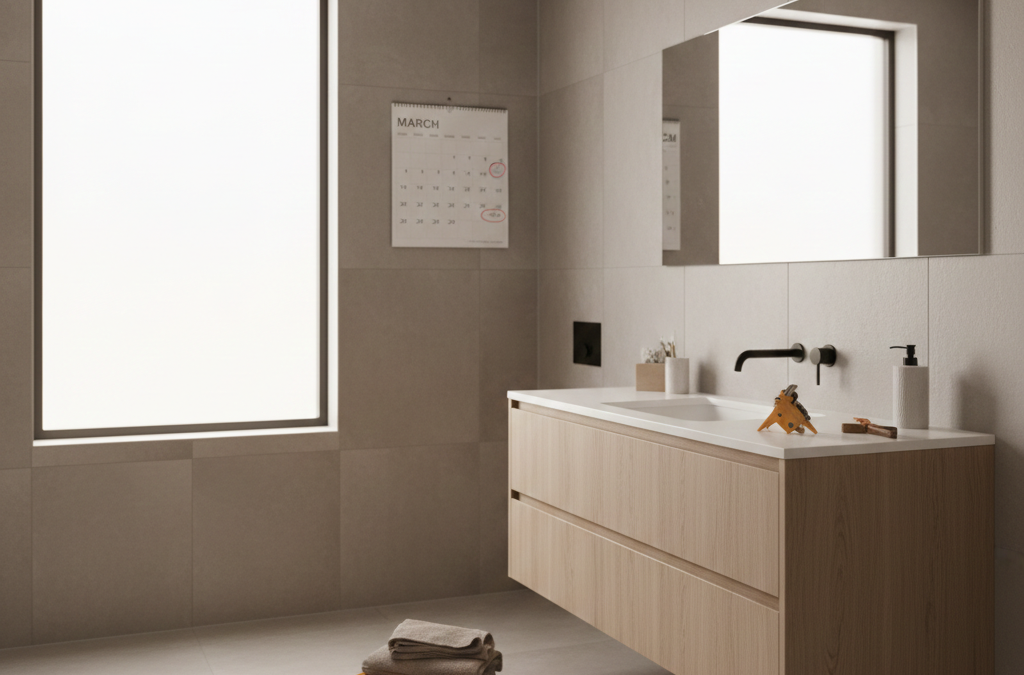
The best time to renovate your bathroom in Sydney is autumn, specifically March through May, when contractor availability peaks and material costs stabilise. This window offers mild weather conditions, shorter wait times for qualified tradespeople, and better pricing before the summer rush begins.
Timing your bathroom renovation strategically can save thousands of dollars and weeks of unnecessary delays. Whether you’re a homeowner upgrading for comfort, a first-time renovator learning the ropes, or a property investor maximising returns, understanding when to start makes all the difference.
This guide breaks down seasonal advantages, personal timing factors, warning signs that demand immediate action, and the common mistakes Sydney homeowners make when scheduling renovations.
Why Timing Matters for Your Bathroom Renovation
Choosing when to renovate isn’t just about convenience. It directly impacts your budget, project timeline, and the quality of work you receive. Poor timing leads to inflated quotes, rushed workmanship, and frustrating delays.
How Seasonal Demand Affects Contractor Availability
Sydney’s renovation industry follows predictable demand cycles. During peak periods, experienced bathroom renovation contractors book out months in advance. You’re left choosing between waiting or settling for less qualified tradespeople.
Off-peak seasons flip this dynamic entirely. Contractors actively seek projects to fill their schedules. This means faster response times, more flexibility with start dates, and greater attention to your specific requirements.
Housing Industry Association data shows residential renovation activity in NSW peaks between October and February. Planning outside this window gives you access to the best contractors when they’re not overwhelmed with competing projects.
The Connection Between Timing and Renovation Costs
Material prices fluctuate throughout the year. Tiles, vanities, and fixtures often see price increases before peak renovation season as suppliers anticipate demand. Ordering during quieter months can reduce material costs by 10-15% on average.
Labour costs follow similar patterns. When contractors have full schedules, they charge premium rates. During slower periods, you may negotiate better pricing or receive value-added services at no extra charge.
Waterproofing and plumbing work also benefits from stable weather conditions. Extreme heat or unexpected rain can delay curing times and complicate installations, adding days to your timeline.
Best Seasons to Renovate Your Bathroom in Sydney
Sydney’s climate creates distinct advantages and challenges for each season. Understanding these patterns helps you choose the optimal window for your specific situation.
Autumn (March to May): The Optimal Window
Autumn consistently ranks as the best time for bathroom renovations in Sydney. The summer rush has ended, contractors have cleared their backlogs, and the weather remains mild and predictable.
Key advantages of autumn renovations:
- Contractor availability reaches its highest point
- Material suppliers offer competitive pricing to move inventory
- Moderate temperatures ensure proper adhesive and waterproofing curing
- Natural light remains strong for detailed finishing work
- Projects typically complete before winter weather arrives
March and April offer the sweet spot. You avoid the tail end of summer holidays while giving yourself buffer time before June’s cooler, wetter conditions.
Winter (June to August): Budget-Friendly Opportunities
Winter presents genuine cost-saving opportunities for flexible homeowners. Many contractors reduce rates to maintain workflow during the slowest period of the year.
However, winter renovations require careful planning. Shorter daylight hours limit working time. Cold temperatures can extend curing periods for grout, silicone, and waterproofing membranes. Wet weather may delay deliveries or outdoor-related work.
Winter works best when:
- Your bathroom has good ventilation and heating
- You can accommodate slightly longer timelines
- Budget savings outweigh convenience factors
- You’re renovating a secondary bathroom, not your only one
Property investors often target winter renovations to prepare rental properties for the spring leasing season.
Spring (September to November): Balanced Conditions
Spring offers pleasant working conditions and reasonable contractor availability. It’s a solid middle-ground option, though demand begins climbing toward summer.
Early spring (September) still captures some off-peak benefits. By November, the pre-Christmas rush intensifies, and contractors prioritise completing existing projects over starting new ones.
Spring considerations:
- Book contractors by July to secure September start dates
- Order custom materials early to avoid supply chain delays
- Expect moderate pricing, neither peak nor off-peak rates
- Weather remains unpredictable, so build flexibility into your schedule
Summer (December to February): Peak Season Challenges
Summer is the most challenging time to renovate in Sydney. Holiday closures, extreme heat, and maximum demand create a perfect storm of delays and inflated costs.
Most suppliers close between Christmas and mid-January. Contractors either take holidays or charge premium rates for working through the break. Temperatures exceeding 35°C can compromise adhesive performance and make working conditions uncomfortable.
If you must renovate in summer:
- Book contractors by September at the latest
- Expect to pay 15-25% more than off-peak rates
- Order all materials before December to avoid holiday delays
- Schedule work for early morning to avoid afternoon heat
- Accept that timelines will likely extend beyond initial estimates
Personal and Financial Timing Considerations
Beyond seasonal factors, your personal circumstances significantly influence the right time to renovate. Aligning the project with your financial situation and lifestyle minimises stress and maximises outcomes.
Aligning Renovations with Your Budget Cycle
Bathroom renovations require substantial upfront investment. Timing your project to coincide with strong cash flow periods reduces financial pressure and allows for better decision-making.
Consider these financial timing strategies:
- Tax refund season (July-October): Many homeowners use tax returns to fund renovations
- End of financial year: Some contractors offer discounts to close out their books
- Post-bonus periods: If your income includes annual bonuses, plan accordingly
- After paying down other debts: Renovating with minimal financial stress leads to better choices
Avoid starting renovations during periods of financial uncertainty. Rushed decisions to cut costs often result in poor material choices or incomplete work that costs more to fix later.
Planning Around Family Schedules and Lifestyle
A bathroom renovation disrupts daily routines. If you have only one bathroom, timing becomes critical. School holidays, work-from-home periods, and family events all factor into the equation.
Practical scheduling tips:
- Renovate secondary bathrooms first if possible
- Plan around school terms to minimise morning chaos
- Avoid major family events or holidays during the project
- Consider temporary accommodation for extensive renovations
- Communicate clearly with all household members about timelines
Families with young children often find school term periods easier, as routines are already established. Empty nesters have more flexibility and can take advantage of off-peak pricing.
Property Investment Timing for Maximum ROI
Property investors face different timing considerations. Renovation decisions should align with tenancy cycles, market conditions, and tax planning strategies.
Investment property timing factors:
- Between tenancies: Minimise rental income loss by renovating during vacancy periods
- Before selling: Complete renovations 4-6 weeks before listing to maximise presentation
- Pre-settlement: New purchases offer ideal renovation windows before moving in
- Depreciation timing: Consult your accountant about optimal timing for tax benefits
CoreLogic research indicates that well-executed bathroom renovations in Sydney can return 60-80% of costs in added property value. Timing the renovation to coincide with strong market conditions amplifies this return.
Signs Your Bathroom Needs Renovation Now
Sometimes timing isn’t about optimisation. It’s about necessity. Certain warning signs indicate your bathroom requires immediate attention, regardless of season or convenience.
Structural and Waterproofing Warning Signs
Water damage doesn’t wait for convenient timing. These signs demand prompt action to prevent escalating repair costs:
- Soft or spongy flooring: Indicates moisture penetration beneath tiles
- Mould growth on walls or ceiling: Suggests ventilation failure or water ingress
- Cracked or missing grout: Allows water to penetrate behind tiles
- Peeling paint or bubbling wallpaper: Signs of moisture trapped in walls
- Musty odours that persist: Often indicates hidden mould or water damage
- Water stains on ceilings below: Confirms active leaking requiring immediate repair
Delaying repairs when waterproofing has failed typically doubles or triples eventual costs. What starts as a simple renovation becomes structural remediation.
Functional Problems That Indicate Urgency
Beyond structural concerns, functional failures affect daily life and signal systems nearing end-of-life:
- Persistent drainage issues: Slow drains or frequent blockages suggest pipe problems
- Inconsistent water pressure: May indicate corroding pipes or failing fixtures
- Toilet instability: Rocking toilets can break wax seals and cause leaks
- Tap leaks that worsen: Small drips become significant water waste over time
- Exhaust fan failure: Leads to moisture buildup and eventual mould problems
Addressing functional problems promptly often allows targeted repairs rather than full renovations. However, if multiple systems fail simultaneously, comprehensive renovation becomes more cost-effective.
Aesthetic and Value-Based Triggers
Not all renovation triggers involve emergencies. Sometimes the timing aligns with life changes or property goals:
- Preparing to sell: Updated bathrooms significantly impact buyer perception
- Accessibility needs: Ageing in place may require grab rails, walk-in showers, or wider doorways
- Growing family: Additional storage, double vanities, or separate toilet areas
- Lifestyle upgrades: Spa-like features, heated floors, or smart technology integration
- Outdated aesthetics: Styles from the 1980s or 1990s date properties significantly
When aesthetic updates drive the decision, you have flexibility to time the project optimally. Use this advantage to secure better pricing and contractor availability.
How to Prepare for Your Bathroom Renovation Timeline
Proper preparation separates smooth renovations from stressful disasters. Starting early gives you control over timing rather than reacting to circumstances.
Setting a Realistic Project Schedule
Most bathroom renovations in Sydney take 2-4 weeks for standard projects and 4-8 weeks for extensive remodels. However, the total timeline from decision to completion spans much longer.
Realistic timeline breakdown:
| Phase | Duration | Activities |
| Planning | 4-8 weeks | Design decisions, quotes, contractor selection |
| Pre-construction | 2-4 weeks | Permits, material ordering, scheduling |
| Demolition | 2-3 days | Removal of existing fixtures and surfaces |
| Rough-in | 3-5 days | Plumbing, electrical, waterproofing |
| Installation | 5-10 days | Tiling, fixtures, cabinetry, finishing |
| Final touches | 2-3 days | Painting, accessories, cleaning, inspection |
Building buffer time into each phase prevents cascading delays. A realistic schedule accounts for unexpected discoveries, material delays, and weather interruptions.
Booking Contractors and Ordering Materials in Advance
The most common timing mistake is underestimating lead times. Quality contractors book 6-12 weeks in advance during busy periods. Custom vanities, imported tiles, and specialty fixtures can take 8-16 weeks to arrive.
Advance booking checklist:
- Contact contractors 3-4 months before your preferred start date
- Order custom or imported materials 4-6 months ahead
- Confirm fixture availability before finalising designs
- Request written timelines from all suppliers
- Establish backup options for critical materials
Early booking also provides leverage. Contractors appreciate clients who plan ahead and often prioritise these projects over last-minute requests.
Creating a Contingency Plan for Delays
Even perfectly planned renovations encounter unexpected challenges. Hidden water damage, asbestos discovery, or supply chain disruptions can extend timelines significantly.
Contingency planning essentials:
- Budget buffer: Reserve 10-15% of total budget for unexpected costs
- Time buffer: Add 1-2 weeks to quoted completion dates
- Alternative bathroom access: Arrange backup facilities if needed
- Material alternatives: Identify acceptable substitutes for key items
- Communication plan: Establish how and when contractors will update you
Discussing potential delays upfront with your contractor sets realistic expectations. Experienced professionals will outline common issues and their typical impact on timelines.
Common Timing Mistakes Sydney Homeowners Make
Learning from others’ mistakes saves time, money, and frustration. These errors appear repeatedly in bathroom renovation projects across Sydney.
Waiting Until Peak Season to Start
The most expensive mistake is deciding to renovate in October and expecting to start in November. By then, quality contractors have full schedules through February.
Consequences of peak-season delays:
- Settling for less experienced contractors
- Paying premium rates for available tradespeople
- Extended wait times pushing projects into the new year
- Rushed work as contractors juggle multiple jobs
- Limited material choices as popular items sell out
Planning 6-8 months ahead eliminates this problem entirely. Even if you’re not ready to commit, initial consultations and quotes cost nothing and provide valuable timeline information.
Underestimating Lead Times for Materials
Homeowners often finalise designs without confirming material availability. That perfect Italian tile or custom vanity might have a 12-week lead time that derails your entire schedule.
Material timing realities:
- Standard Australian tiles: 1-2 weeks
- Imported tiles: 8-16 weeks
- Stock vanities: 1-3 weeks
- Custom vanities: 6-10 weeks
- Specialty fixtures: 4-12 weeks
- Custom shower screens: 3-6 weeks
Confirm availability and lead times before finalising any design element. Flexibility on materials often saves weeks of waiting.
Rushing Decisions Without Proper Planning
Pressure to start quickly leads to poor decisions that haunt projects throughout completion. Changing tile selections mid-project, for example, can add weeks and thousands of dollars.
Signs of rushed planning:
- Accepting the first quote without comparison
- Choosing materials from photos without seeing samples
- Skipping detailed written contracts
- Not visiting completed projects by your chosen contractor
- Finalising designs before understanding full costs
Taking 4-8 weeks for thorough planning typically saves more time than it costs. Decisions made calmly and with full information rarely require expensive changes later.
Conclusion
Timing your bathroom renovation strategically transforms the entire experience. Autumn remains the optimal window for Sydney homeowners, offering the best combination of contractor availability, material pricing, and working conditions. However, personal circumstances, budget cycles, and property goals all influence your ideal timing.
Understanding seasonal patterns, recognising urgent warning signs, and avoiding common scheduling mistakes puts you in control of your renovation journey. Proper preparation, including early contractor booking and realistic timeline planning, prevents the stress and cost overruns that plague poorly timed projects.
We help Sydney homeowners and property investors plan and execute bathroom renovations with confidence. Contact Sydney Home Renovation today to discuss your project timeline and secure your preferred start date before peak season demand begins.
Frequently Asked Questions
What month is cheapest to renovate a bathroom?
June and July typically offer the lowest renovation costs in Sydney. Contractor demand drops during winter, leading to more competitive pricing and greater flexibility on scheduling. Material suppliers also clear inventory during this period, creating opportunities for discounts on quality products.
How far in advance should I book a bathroom renovation?
Book your contractor 3-4 months before your preferred start date for standard projects. During peak season (October to February), extend this to 6 months or more. Custom materials may require ordering 4-6 months ahead, so factor this into your overall planning timeline.
Is it better to renovate in winter or summer in Sydney?
Winter offers better value through lower costs and improved contractor availability. Summer provides longer daylight hours but comes with premium pricing, holiday delays, and extreme heat challenges. For most homeowners, autumn strikes the ideal balance between conditions and cost.
How long does a typical bathroom renovation take?
Standard bathroom renovations take 2-4 weeks of active construction. However, the complete process from initial planning to final completion typically spans 3-5 months when including design decisions, contractor selection, and material ordering phases.
Should I renovate before selling my property?
Yes, if your bathroom is dated or damaged. Updated bathrooms significantly influence buyer perception and can return 60-80% of renovation costs in added property value. Complete renovations 4-6 weeks before listing to allow time for photography and marketing preparation.
Can I renovate my bathroom while living in the house?
Yes, most homeowners remain in their homes during bathroom renovations. If renovating your only bathroom, arrange temporary access to facilities at a neighbour’s home, gym, or workplace. Discuss daily schedules with your contractor to minimise disruption to morning and evening routines.
What delays should I expect during a bathroom renovation?
Common delays include material shipping issues, hidden water damage discovery, weather impacts on deliveries, and scheduling conflicts between trades. Building a 1-2 week buffer into your timeline and maintaining 10-15% budget contingency accommodates most unexpected situations without major disruption.