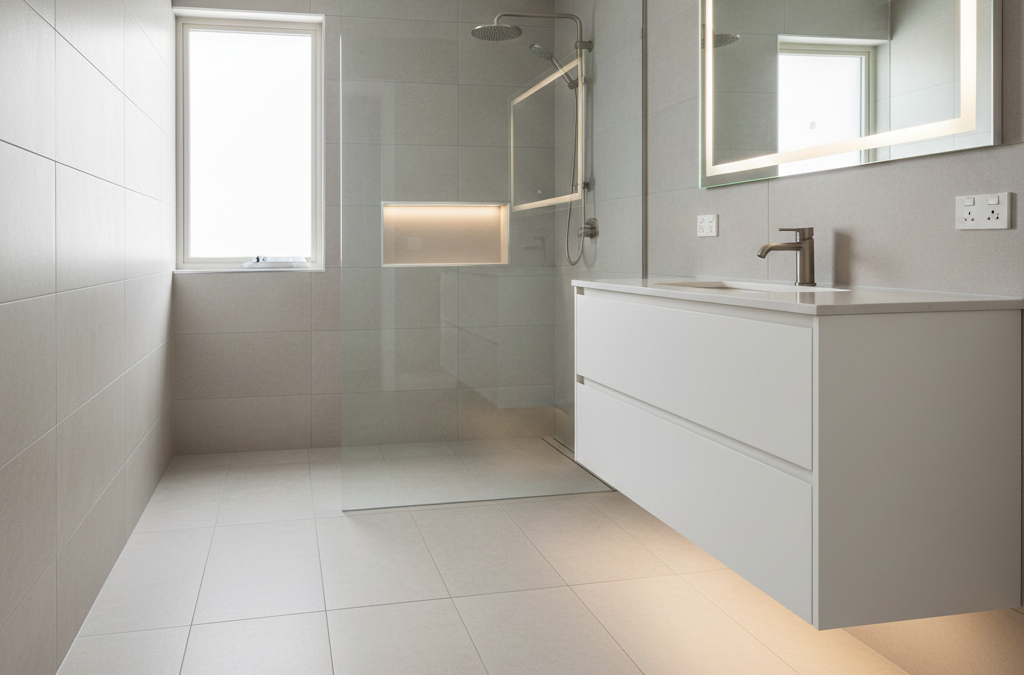
Choosing the right bathroom flooring means balancing waterproofing, slip resistance, durability, and budget—while ensuring your selection adds long-term value to your Sydney home. Bathroom floors endure constant moisture exposure, temperature fluctuations, and heavy foot traffic, making material choice critical to renovation success and ongoing maintenance costs.
Poor flooring decisions lead to water damage, safety hazards, premature replacement, and unexpected repair expenses that derail renovation budgets.
This guide compares porcelain, vinyl, natural stone, timber, and concrete options with transparent Sydney pricing, slip ratings, waterproofing requirements, and practical selection criteria to help you choose flooring that performs, lasts, and fits your budget.
Why Bathroom Flooring Choice Matters
Bathroom flooring operates in one of the most demanding environments in residential construction. Unlike living areas or bedrooms, bathroom floors face continuous moisture exposure, direct water contact, temperature variations from hot showers, and cleaning chemical exposure. The flooring material you select directly impacts safety, maintenance costs, renovation longevity, and property value.
Moisture and Water Exposure Challenges
Bathrooms generate significant moisture through showers, baths, basin use, and humidity. Australian Building Codes Board standards require proper waterproofing in wet areas, but flooring material selection determines how well surfaces resist water penetration, staining, and structural degradation over time.
Non-waterproof materials absorb moisture, leading to swelling, warping, mould growth, and substrate damage. Even water-resistant materials require proper installation, sealing, and maintenance to prevent moisture-related failures. Porcelain and ceramic tiles offer inherent water resistance, while natural stone requires regular sealing. Vinyl provides waterproof performance when correctly installed, but timber and bamboo present significant moisture vulnerability even in water-resistant formulations.
Grout lines in tiled installations create additional moisture entry points. Epoxy grout outperforms cement-based alternatives in water resistance but costs more upfront. Proper waterproofing membranes beneath all bathroom flooring prevent water reaching structural elements, but surface material choice determines daily moisture management and cleaning requirements.
Safety and Slip Resistance Requirements
Wet bathroom floors create serious slip hazards. Standards Australia AS 4586 establishes slip resistance classifications using P-ratings, with P4 and P5 ratings recommended for wet barefoot areas like showers and bathroom floors. Smooth polished tiles, glossy natural stone, and certain vinyl finishes fail to provide adequate slip resistance when wet.
Textured tiles, matte finishes, and smaller tile formats with increased grout lines improve traction. Natural stone with honed or flamed finishes offers better slip resistance than polished surfaces. Vinyl flooring varies significantly—embossed textures provide grip, while smooth sheet vinyl becomes dangerously slippery.
Slip resistance directly impacts insurance, liability, and safety for families with children, elderly residents, or mobility-impaired occupants. Choosing flooring with appropriate P-ratings prevents accidents and potential legal exposure for investment properties. Testing certifications should be verified before purchase, as marketing claims don’t always align with independent testing results.
Long-Term Durability and Maintenance Costs
Initial material and installation costs represent only part of bathroom flooring expenses. Maintenance requirements, replacement frequency, and repair costs significantly impact total ownership expenses over 10-20 years.
Porcelain tiles last 20+ years with minimal maintenance beyond grout cleaning and occasional resealing. Natural stone requires annual sealing, specialized cleaning products, and professional restoration every 5-10 years. Vinyl flooring lasts 10-15 years but shows wear patterns in high-traffic areas and requires full replacement rather than repair. Timber and bamboo need regular sealing, careful moisture management, and typically require replacement within 10 years in bathroom environments.
Grout maintenance represents ongoing costs for tiled installations. Cement grout requires annual sealing and eventual replacement due to staining and deterioration. Epoxy grout eliminates sealing requirements but costs $15-25 per square metre more than standard grout during installation.
Damage repair costs vary dramatically by material. Cracked tiles can be individually replaced if spares were retained. Damaged vinyl sections often require full room replacement due to colour matching difficulties. Stone chips and scratches need professional restoration. Understanding these long-term cost implications helps prioritize initial investment in durable, low-maintenance materials that reduce lifetime expenses.
Top Bathroom Flooring Options: Material Comparison
Bathroom flooring materials differ significantly in water resistance, durability, installation complexity, maintenance requirements, and cost. Understanding each option’s performance characteristics, limitations, and pricing helps match materials to specific bathroom types, usage patterns, and budget constraints.
Porcelain and Ceramic Tiles
Porcelain and ceramic tiles dominate bathroom flooring due to proven water resistance, durability, design versatility, and established installation practices. Both materials consist of fired clay, but porcelain uses finer clay fired at higher temperatures, creating denser, less porous tiles with superior water resistance and durability.
Cost Range and Installation Considerations
Ceramic tiles cost $25-80 per square metre for materials, while porcelain ranges $40-150 per square metre depending on size, finish, and quality. Large-format tiles (600x600mm, 800x800mm) cost more than standard sizes but reduce grout lines and create contemporary aesthetics.
Professional installation costs $45-85 per square metre in Sydney, varying with tile size, pattern complexity, and substrate preparation requirements. Large-format tiles require perfectly level substrates and specialized installation techniques, increasing labour costs. Intricate patterns, mosaics, and feature layouts add $15-30 per square metre to installation pricing.
Total installed costs for ceramic tiles range $70-165 per square metre, while porcelain installations cost $85-235 per square metre. These figures include waterproofing membranes, adhesive, grout, and labour but exclude substrate repairs, floor levelling, or existing flooring removal.
Water Resistance and Durability
Porcelain tiles achieve water absorption rates below 0.5%, making them effectively waterproof and suitable for all bathroom applications including shower floors. Ceramic tiles absorb 3-10% water, requiring proper sealing and waterproofing membranes but performing adequately for general bathroom flooring outside direct shower areas.
Both materials resist staining, chemical damage, and wear when properly installed. Porcelain’s density provides superior scratch resistance and durability under heavy use. Glazed surfaces on both materials offer additional stain protection and easier cleaning, though glaze can chip or crack under impact.
Grout represents the primary water penetration risk in tiled installations. Cement-based grout absorbs water and stains without regular sealing. Epoxy grout eliminates these issues but costs $15-25 per square metre more and requires skilled application. Grout line width and frequency impact water resistance—larger tiles with fewer grout lines reduce moisture entry points.
Design Flexibility and Aesthetic Options
Tiles offer unmatched design versatility through size variations, colours, patterns, textures, and finishes. Timber-look porcelain planks provide wood aesthetics with tile durability. Marble-look porcelain delivers luxury stone appearance without maintenance requirements. Concrete-look tiles create industrial aesthetics at lower cost than polished concrete.
Texture options range from polished and glossy to matte, textured, and slip-resistant finishes. Smaller mosaics create visual interest and improve slip resistance through increased grout lines. Large-format tiles minimize grout maintenance and create seamless modern appearances.
Colour permanence ensures tiles won’t fade, discolour, or change appearance over time. This consistency supports long-term design cohesion and simplifies future renovations or repairs when matching existing tiles.
Vinyl Flooring (Sheet and Luxury Vinyl Plank)
Vinyl flooring has evolved from basic sheet vinyl to sophisticated luxury vinyl plank (LVP) and luxury vinyl tile (LVT) products that replicate timber, stone, and ceramic appearances while providing waterproof performance and budget-friendly installation.
Budget-Friendly Installation Costs
Sheet vinyl costs $20-50 per square metre for materials, while luxury vinyl plank ranges $35-90 per square metre depending on thickness, wear layer, and design quality. Commercial-grade vinyl with enhanced wear layers costs more but provides better durability and longer warranties.
Installation costs $25-45 per square metre for sheet vinyl and $30-55 per square metre for LVP, significantly lower than tile installation. Click-lock LVP systems enable DIY installation for skilled homeowners, potentially eliminating labour costs entirely.
Total installed costs range $45-95 per square metre for sheet vinyl and $65-145 per square metre for luxury vinyl plank. These prices include adhesive, underlayment (if required), and labour but exclude substrate preparation, moisture barriers, or existing flooring removal.
Waterproof Performance and Maintenance
Quality vinyl flooring provides 100% waterproof performance when properly installed with sealed seams and edges. Sheet vinyl offers seamless installation in smaller bathrooms, eliminating water penetration points. LVP requires careful seam sealing and perimeter caulking to prevent water reaching substrates.
Vinyl resists staining, requires no sealing, and cleans easily with standard household products. Unlike timber or stone, vinyl doesn’t require specialized maintenance or professional restoration. Surface wear layers protect against scratches, scuffs, and daily wear, with thicker wear layers (0.5mm+) providing better long-term durability.
However, vinyl shows wear patterns in high-traffic areas over time. Sharp objects can puncture or tear vinyl surfaces. Heavy furniture creates permanent indentations. Colour and pattern exist only in surface layers—deep scratches or cuts expose base material and cannot be repaired, requiring section or full room replacement.
Style Varieties and Realistic Finishes
Modern vinyl flooring replicates timber, stone, concrete, and tile appearances with impressive realism. Embossed textures match visual patterns, creating authentic tactile experiences. Timber-look vinyl planks feature grain patterns, knots, and colour variations mimicking natural wood.
Stone-look vinyl tiles replicate marble, travertine, slate, and granite with realistic veining and texture. Concrete-look vinyl delivers industrial aesthetics without cold, hard surfaces. Geometric patterns, encaustic tile designs, and contemporary formats provide diverse aesthetic options.
However, vinyl cannot fully replicate natural material depth, variation, and authenticity. Close inspection reveals pattern repetition and artificial appearance. Resale buyers and design-conscious homeowners may perceive vinyl as budget compromise rather than premium finish, potentially impacting property value in high-end renovations.
Natural Stone (Marble, Granite, Travertine)
Natural stone delivers luxury aesthetics, unique character, and premium positioning but requires higher investment, specialized installation, and ongoing maintenance. Marble, granite, travertine, limestone, and slate each offer distinct appearances and performance characteristics.
Premium Pricing and Installation Complexity
Natural stone materials cost $80-300+ per square metre depending on stone type, origin, finish, and availability. Marble and granite command premium pricing. Travertine and limestone offer mid-range options. Slate provides budget-friendly stone aesthetics.
Installation requires specialized skills, precise cutting, and careful handling. Labour costs $65-120 per square metre in Sydney, reflecting complexity and expertise requirements. Stone weight necessitates structurally sound substrates. Uneven stone thickness requires skilled levelling during installation.
Total installed costs range $145-420+ per square metre, positioning natural stone as premium bathroom flooring choice. These prices include waterproofing, adhesive, grout, sealing, and labour but exclude substrate reinforcement, levelling compounds, or existing flooring removal.
Sealing Requirements and Ongoing Care
Natural stone is porous and absorbs water, oils, and staining agents without proper sealing. Initial sealing during installation and annual resealing maintain water resistance and stain protection. Sealing costs $8-15 per square metre professionally or requires DIY time and material investment.
Stone-specific cleaning products prevent damage from acidic or abrasive cleaners. Marble etches from acidic substances like vinegar, citrus, or harsh bathroom cleaners. Travertine’s natural pitting traps dirt and requires regular deep cleaning. Granite offers better stain and etch resistance but still requires sealing.
Professional restoration every 5-10 years addresses scratches, etching, and wear. Honing or polishing costs $40-80 per square metre, representing significant ongoing expense. These maintenance requirements demand owner commitment and increase lifetime costs substantially above tile or vinyl alternatives.
Luxury Aesthetic and Property Value Impact
Natural stone provides unmatched luxury appearance, unique character, and premium positioning. No two stone pieces are identical—natural variation creates one-of-a-kind installations. Marble’s veining, granite’s depth, and travertine’s texture deliver visual richness synthetic materials cannot replicate.
Stone flooring signals quality, investment, and attention to detail. In prestige properties and high-end renovations, natural stone enhances perceived value and appeals to discerning buyers. Domain research indicates premium finishes including natural stone can add 3-5% to property values in Sydney’s upper-tier markets.
However, stone’s maintenance requirements and potential for damage may deter some buyers. Etched marble, stained travertine, or poorly maintained stone can negatively impact property presentation. Stone works best in ensuite bathrooms and powder rooms with lower traffic and moisture exposure than main family bathrooms.
Engineered Timber and Bamboo
Timber and bamboo bring warmth, natural beauty, and contemporary appeal to bathroom design but present significant moisture management challenges. Engineered timber and bamboo products offer better moisture resistance than solid timber but still require careful consideration for bathroom applications.
Water-Resistant vs Waterproof Distinctions
No timber or bamboo product is truly waterproof. “Water-resistant” engineered timber withstands occasional moisture exposure and humidity better than solid timber but fails under prolonged water contact or standing water. Surface water must be wiped immediately. Spills, splashes, and humidity require active management.
Engineered timber construction—thin timber veneer over plywood or HDF core—reduces expansion and contraction compared to solid timber. Some products feature water-resistant core materials and enhanced surface finishes. However, edges, seams, and any surface penetration expose vulnerable core materials to moisture damage.
Bamboo’s natural density provides better moisture resistance than many timber species, but bamboo flooring still swells, warps, and deteriorates under bathroom moisture conditions. Strand-woven bamboo offers maximum density and moisture resistance within bamboo products but remains unsuitable for wet areas.
Installation Limitations in Wet Zones
Building codes and manufacturer warranties typically exclude timber and bamboo from wet areas including shower zones and areas within 1 metre of baths and showers. Installation in these zones voids warranties and creates liability issues.
Timber and bamboo may be considered for powder rooms, ensuite dressing areas, or bathroom zones separated from direct water exposure. Even in these applications, proper waterproofing membranes beneath flooring, adequate ventilation, and immediate water cleanup remain essential.
Floating floor installations with click-lock systems allow easier replacement if moisture damage occurs but provide less water protection than fully adhered installations. Gaps at perimeters and between planks create water entry points. Silicone sealing around perimeters helps but doesn’t eliminate moisture risks.
Cost-Benefit Analysis for Bathroom Use
Engineered timber costs $45-120 per square metre for materials and $35-65 per square metre for installation, totalling $80-185 per square metre installed. Bamboo ranges $40-95 per square metre for materials with similar installation costs.
These prices align with mid-range porcelain or luxury vinyl but deliver inferior moisture performance, higher maintenance requirements, and shorter lifespan in bathroom environments. Timber requires regular sealing, careful cleaning with timber-specific products, and immediate water cleanup.
Expected lifespan in bathroom applications rarely exceeds 10 years even with diligent maintenance. Moisture damage, warping, and finish deterioration typically necessitate replacement. Porcelain tiles or quality vinyl provide better value, performance, and longevity for bathroom flooring investment.
Timber works best in powder rooms with minimal moisture exposure or ensuite dressing areas separated from wet zones. Main bathrooms, family bathrooms, and wet rooms should utilize truly waterproof materials.
Concrete and Polished Concrete
Concrete flooring delivers industrial aesthetics, seamless surfaces, and contemporary appeal. Polished concrete, decorative overlays, and stained concrete create unique custom finishes but require specialized installation and proper sealing for bathroom applications.
Modern Industrial Appeal
Polished concrete provides minimalist, industrial-chic aesthetics popular in contemporary bathroom design. Seamless surfaces eliminate grout lines and create visual continuity. Concrete accepts stains, dyes, and decorative treatments for customized colours and effects.
Exposed aggregate finishes reveal decorative stones within concrete. Burnished concrete creates smooth, matte surfaces. High-gloss polished finishes deliver reflective, sophisticated appearances. Concrete pairs well with modern fixtures, frameless glass, and minimalist design approaches.
Concrete’s thermal mass supports underfloor heating efficiency. The material absorbs, stores, and radiates heat effectively, creating comfortable bathroom environments and reducing heating costs.
Sealing and Waterproofing Essentials
Concrete is porous and absorbs water without proper sealing. Penetrating sealers protect against water absorption while maintaining natural appearance. Topical sealers create surface barriers with varying sheen levels but require reapplication every 2-3 years.
Waterproofing membranes beneath concrete prevent water reaching structural elements. Surface sealing alone doesn’t satisfy building code waterproofing requirements. Proper drainage, falls to waste points, and wet area compliance remain essential regardless of flooring material.
Concrete cracks over time due to building movement, settlement, and thermal expansion. Control joints manage cracking but create visual lines in finished surfaces. Crack repair and resealing represent ongoing maintenance requirements.
Installation and Finishing Costs
Polished concrete costs $80-180 per square metre depending on finish level, decorative treatments, and surface preparation requirements. Basic grinding and sealing costs less than high-gloss polishing with decorative aggregates or staining.
Concrete overlays over existing substrates cost $90-200 per square metre, providing concrete aesthetics without full slab replacement. Overlays allow concrete finishes in upper-level bathrooms where structural weight limits full concrete slabs.
Installation requires specialized equipment, skills, and multi-stage processes including grinding, polishing, sealing, and curing. DIY installation is impractical for most homeowners. Lead times extend beyond standard flooring installations due to curing and multi-stage finishing requirements.
Total costs align with premium porcelain or natural stone but deliver unique aesthetics unavailable in other materials. Concrete suits contemporary design preferences and open-plan bathroom layouts where seamless flooring transitions between spaces create visual continuity.
Key Selection Criteria for Bathroom Flooring
Selecting appropriate bathroom flooring requires evaluating multiple performance criteria beyond aesthetics and budget. Water resistance, slip ratings, heating compatibility, maintenance requirements, and cost allocation all influence long-term satisfaction and renovation success.
Water Resistance and Waterproofing Standards
Australian Building Code AS 3740 mandates waterproofing in bathroom wet areas including shower zones, bath surrounds, and areas within specified distances of water sources. Waterproofing membranes beneath all bathroom flooring prevent water reaching structural elements, but surface material selection determines daily moisture management.
Truly waterproof materials—porcelain tiles, quality vinyl—resist water penetration indefinitely when properly installed. Water-resistant materials—ceramic tiles, sealed natural stone—withstand moisture exposure but require maintenance and eventual replacement. Non-waterproof materials—timber, bamboo, unsealed concrete—fail in bathroom environments despite marketing claims of water resistance.
Grout, seams, and penetrations create water entry points even with waterproof surface materials. Epoxy grout, sealed seams, and proper installation details prevent water infiltration. Waterproofing extends 150mm up walls in shower areas and 100mm in other wet areas per building codes.
Substrate waterproofing using sheet membranes or liquid-applied systems provides essential protection regardless of surface material. This represents non-negotiable renovation requirement, not optional upgrade. Waterproofing costs $35-65 per square metre professionally applied and prevents catastrophic water damage, structural issues, and mould growth.
Slip Resistance Ratings (P-Ratings Explained)
AS 4586 slip resistance standards classify flooring using P-ratings from P0 (no slip resistance) to P5 (maximum slip resistance). Wet barefoot areas including bathroom floors and shower bases require P4 or P5 ratings for safety.
P-ratings derive from ramp testing measuring angles at which test subjects slip on wet surfaces. P4 ratings indicate slip resistance at angles above 35 degrees. P5 ratings exceed 45 degrees. Higher ratings provide better traction when wet but often feature rougher textures that complicate cleaning.
Polished tiles, glossy stone, and smooth vinyl typically achieve only P0-P2 ratings—dangerously slippery when wet. Textured tiles, matte finishes, and embossed vinyl reach P3-P4 ratings suitable for bathroom floors. Heavily textured or anti-slip tiles achieve P5 ratings ideal for shower floors.
Manufacturer specifications should include independent P-rating testing results, not just marketing claims. Ratings apply to specific products and finishes—different colours or finishes of the same tile line may have different slip ratings. Verify ratings before purchase, especially for shower floor applications.
Slip resistance and aesthetics sometimes conflict. High-gloss polished finishes deliver visual appeal but poor slip resistance. Matte and textured finishes provide safety but less dramatic visual impact. Balancing these factors requires prioritizing safety in wet areas while using decorative finishes in lower-risk zones.
Underfloor Heating Compatibility
Underfloor heating provides comfortable, energy-efficient bathroom warming. Not all flooring materials suit underfloor heating systems. Thermal conductivity, expansion characteristics, and thickness affect heating performance and system compatibility.
Porcelain and ceramic tiles offer excellent thermal conductivity, efficiently transferring heat from systems to room air. Tile’s dimensional stability prevents expansion issues. Stone similarly conducts heat well and suits underfloor heating. Maximum tile thickness of 10-12mm optimizes heat transfer.
Vinyl flooring compatibility depends on product specifications. Some vinyl products suit underfloor heating while others don’t. Heat can cause vinyl expansion, contraction, or off-gassing. Manufacturer approval for underfloor heating use is essential. Vinyl’s insulating properties reduce heating efficiency compared to tile or stone.
Timber and bamboo generally don’t suit underfloor heating in bathrooms. Heat exacerbates moisture-related expansion and contraction. Engineered timber handles temperature variations better than solid timber but still presents risks. Manufacturer warranties typically exclude underfloor heating applications.
Concrete works excellently with underfloor heating. Concrete’s thermal mass stores heat and radiates warmth efficiently. Polished concrete over hydronic or electric heating systems creates comfortable, energy-efficient bathroom environments.
Underfloor heating installation adds $80-150 per square metre to renovation costs but provides long-term comfort and energy efficiency. Heating system choice (electric vs hydronic) affects costs and performance. Flooring material selection should consider heating compatibility during planning stages.
Grout and Sealing Maintenance Requirements
Grout maintenance represents significant ongoing cost and effort in tiled bathrooms. Cement-based grout absorbs water, stains, and harbours mould without regular sealing. Annual sealing costs $5-10 per square metre professionally or requires DIY time investment.
Grout discolouration, staining, and deterioration occur over 5-10 years even with proper maintenance. Grout replacement costs $25-45 per square metre, involving grout removal, cleaning, regrouting, and sealing. This expense recurs throughout bathroom lifespan.
Epoxy grout eliminates sealing requirements, resists staining, and lasts significantly longer than cement grout. Initial cost premium of $15-25 per square metre pays back through eliminated maintenance and longer lifespan. Epoxy grout suits high-use bathrooms and investment properties where maintenance access is limited.
Grout line width and frequency impact maintenance. Larger tiles with wider grout lines (5mm+) clean easier than small mosaics with numerous narrow grout lines. Rectified tiles with minimal grout lines (2-3mm) reduce grout surface area and maintenance requirements.
Natural stone sealing requires annual reapplication costing $8-15 per square metre professionally. Stone-specific cleaning products prevent damage and maintain appearance. Professional restoration every 5-10 years addresses wear and maintains finish quality.
Vinyl and concrete require minimal maintenance beyond regular cleaning. Vinyl needs no sealing. Concrete requires resealing every 2-3 years costing $8-12 per square metre. These materials suit time-poor homeowners and investment properties.
Budget Allocation: Material vs Labour Costs
Bathroom flooring budgets should allocate funds across materials, labour, preparation, waterproofing, and contingencies. Understanding cost distribution helps prioritize spending and avoid budget overruns.
Material costs typically represent 35-50% of total flooring expenses. Budget tiles at $25-40 per square metre allow more investment in skilled labour and proper installation. Premium materials at $100-200+ per square metre require corresponding labour expertise, increasing total costs.
Labour costs range $45-120 per square metre depending on material complexity, installation difficulty, and tradesperson expertise. Large-format tiles, intricate patterns, and natural stone require premium labour rates. Sheet vinyl and standard-format tiles cost less to install.
Substrate preparation including floor levelling, repairs, and waterproofing adds $40-80 per square metre. These costs are non-negotiable for quality outcomes. Skipping preparation causes installation failures, uneven surfaces, and waterproofing breaches.
Existing flooring removal and disposal costs $15-30 per square metre depending on material type and disposal requirements. Asbestos-containing materials require licensed removal at significantly higher costs.
Contingency allowances of 10-15% accommodate unexpected substrate issues, material wastage, and scope changes. Bathroom renovations frequently uncover hidden problems during demolition. Adequate contingency prevents budget crises and project delays.
Total bathroom flooring budgets in Sydney typically range:
- Budget: $70-120 per square metre (vinyl or ceramic tiles)
- Mid-range: $120-200 per square metre (porcelain tiles or quality vinyl)
- Premium: $200-400+ per square metre (natural stone or polished concrete)
These figures include all materials, labour, preparation, and waterproofing for complete installation.
Cost Breakdown: What to Expect in Sydney
Sydney bathroom flooring costs reflect material pricing, skilled labour rates, compliance requirements, and market conditions. Understanding detailed cost components helps create accurate budgets and avoid unexpected expenses.
Material Costs Per Square Metre
Material pricing varies significantly by product type, quality, size, and supplier:
Ceramic Tiles: $25-80 per square metre
- Budget: $25-40 (standard sizes, basic colours)
- Mid-range: $40-60 (larger formats, better quality)
- Premium: $60-80 (designer ranges, specialty finishes)
Porcelain Tiles: $40-150 per square metre
- Budget: $40-65 (standard porcelain, basic designs)
- Mid-range: $65-100 (large formats, timber/stone looks)
- Premium: $100-150 (designer tiles, specialty finishes)
Vinyl Flooring: $20-90 per square metre
- Sheet vinyl: $20-50
- Luxury vinyl plank: $35-70
- Commercial-grade vinyl: $50-90
Natural Stone: $80-300+ per square metre
- Travertine/limestone: $80-150
- Granite: $100-200
- Marble: $150-300+
Engineered Timber: $45-120 per square metre
- Budget engineered: $45-70
- Mid-range: $70-95
- Premium: $95-120
Bamboo: $40-95 per square metre
Polished Concrete: $80-180 per square metre (materials and finishing)
Material costs exclude adhesive, grout, sealers, and installation supplies adding $8-15 per square metre.
Labour and Installation Pricing
Sydney labour rates for bathroom flooring installation:
Tiling (ceramic/porcelain): $45-85 per square metre
- Standard installation: $45-60
- Large-format tiles: $60-75
- Complex patterns: $70-85
Natural Stone Installation: $65-120 per square metre
- Reflects specialized skills and handling requirements
Vinyl Installation: $25-55 per square metre
- Sheet vinyl: $25-40
- Luxury vinyl plank: $30-55
Timber/Bamboo Installation: $35-65 per square metre
Polished Concrete: Included in material costs (specialized contractors)
Labour costs vary by:
- Tradesperson experience and reputation
- Project size (larger areas cost less per square metre)
- Access and working conditions
- Timeline and scheduling
- Location within Sydney
Premium tradespeople charge higher rates but deliver better quality, fewer callbacks, and warranty backing. Budget labour often creates problems requiring expensive rectification.
Waterproofing and Substrate Preparation
Waterproofing represents essential cost component regardless of flooring material:
Waterproofing Membranes: $35-65 per square metre installed
- Sheet membranes: $35-50
- Liquid-applied systems: $45-65
- Includes labour, materials, and compliance certification
Substrate Preparation: $15-45 per square metre
- Minor repairs and cleaning: $15-25
- Levelling compounds: $25-35
- Significant repairs: $35-45+
Floor Levelling: $25-50 per square metre
- Required for large-format tiles and vinyl
- Prevents lippage and installation failures
Moisture Barriers: $8-15 per square metre
- Required under vinyl in some applications
Substrate condition significantly impacts preparation costs. Older bathrooms often require extensive repairs. New construction or recent renovations need minimal preparation.
Waterproofing must comply with AS 3740 standards and receive certification. Non-compliant waterproofing voids insurance, creates liability, and causes expensive failures. This cost cannot be reduced or eliminated.
Hidden Costs: Removal, Disposal, and Repairs
Budget planning must include often-overlooked expenses:
Existing Flooring Removal: $15-30 per square metre
- Tile removal: $20-30
- Vinyl removal: $15-25
- Timber removal: $15-20
Disposal Fees: $5-12 per square metre
- General waste: $5-8
- Heavy materials (tiles, concrete): $8-12
- Asbestos removal: $50-150+ per square metre (licensed removal required)
Substrate Repairs: $20-80+ per square metre
- Minor repairs: $20-35
- Moderate damage: $35-60
- Significant structural issues: $60-80+
Plumbing Adjustments: $150-400 per fixture
- Toilet flange height adjustment: $150-250
- Vanity plumbing modifications: $200-350
- Shower waste relocation: $300-400+
Door Trimming: $80-150 per door
- Required when new flooring increases floor height
Transition Strips: $25-60 per linear metre
- Between flooring types or rooms
Grout and Sealers: $8-20 per square metre
- Epoxy grout: $15-25
- Standard grout: $8-12
- Stone sealing: $8-15
Contingency (10-15%): Essential for unexpected issues
A typical 5 square metre bathroom flooring renovation budget:
Mid-range porcelain tile example:
- Materials (porcelain tiles): $400 ($80/m²)
- Adhesive and grout: $60 ($12/m²)
- Labour (installation): $325 ($65/m²)
- Waterproofing: $250 ($50/m²)
- Substrate preparation: $150 ($30/m²)
- Existing tile removal: $125 ($25/m²)
- Disposal: $40 ($8/m²)
- Plumbing adjustments: $200
- Door trimming: $100
- Contingency (10%): $165
Total: $1,815 ($363 per square metre)
This realistic budget includes all necessary components for compliant, quality installation.
Best Flooring for Different Bathroom Types
Bathroom type, usage patterns, and moisture exposure levels influence optimal flooring selection. Matching materials to specific bathroom applications maximizes performance, longevity, and value.
Ensuite Bathrooms
Ensuite bathrooms typically serve two adults with moderate daily use. Lower traffic and controlled usage patterns allow broader material choices including premium options.
Recommended Materials:
- Porcelain tiles: Durability, water resistance, design flexibility
- Natural stone: Luxury aesthetics, premium positioning
- Large-format tiles: Minimal grout lines, contemporary appearance
Budget Allocation: Ensuites justify higher per-square-metre investment due to smaller size and personal use. Premium materials create spa-like environments and enhance master bedroom appeal.
Design Considerations:
- Heated floors for comfort
- Coordinated tile selections between floor and walls
- Seamless shower integration
- Premium finishes matching bedroom quality
Cost Expectations: $200-400+ per square metre for premium porcelain or natural stone with underfloor heating.
Main Family Bathrooms
Family bathrooms endure heavy traffic, multiple daily users, and varied usage patterns. Children, guests, and daily routines demand durable, safe, low-maintenance flooring.
Recommended Materials:
- Porcelain tiles: Best durability-to-cost ratio
- Quality vinyl plank: Budget-friendly, waterproof, comfortable
- Textured tiles: Slip resistance for safety
Budget Allocation: Balance durability and cost. Mid-range materials with quality installation outperform premium materials poorly installed.
Design Considerations:
- P4+ slip resistance ratings essential
- Easy-clean surfaces for busy families
- Durable finishes resisting wear
- Timeless designs avoiding dated trends
Cost Expectations: $120-200 per square metre for porcelain tiles or quality vinyl with proper waterproofing.
Powder Rooms and Guest Bathrooms
Powder rooms and guest bathrooms receive light, intermittent use with minimal moisture exposure. Lower performance demands allow decorative material choices.
Recommended Materials:
- Decorative tiles: Statement designs, patterns, colours
- Luxury vinyl: Timber or stone looks without maintenance
- Engineered timber: Warmth and character (if moisture-controlled)
Budget Allocation: Smaller spaces allow splurge materials creating impact without major expense. Feature tiles or premium finishes enhance guest impressions.
Design Considerations:
- Bold designs and colours
- Coordinated with adjacent living spaces
- Statement flooring as design feature
- Less focus on extreme durability
Cost Expectations: $150-300+ per square metre for designer tiles or premium vinyl in small spaces.
Wet Rooms and Walk-In Showers
Wet rooms and walk-in showers experience constant water exposure requiring maximum waterproofing and slip resistance.
Recommended Materials:
- Small-format porcelain tiles: Better slip resistance through grout lines
- Textured porcelain: P5 slip ratings
- Mosaic tiles: Maximum slip resistance, design flexibility
Budget Allocation: Prioritize waterproofing, drainage, and slip resistance over aesthetics. Proper installation prevents expensive water damage.
Design Considerations:
- P5 slip resistance mandatory
- Proper falls to drainage (minimum 1:100)
- Seamless waterproofing integration
- Epoxy grout for water resistance
Cost Expectations: $180-300+ per square metre including enhanced waterproofing, drainage, and slip-resistant materials.
Common Mistakes to Avoid When Choosing Bathroom Flooring
Bathroom flooring mistakes create safety hazards, water damage, premature failure, and expensive rectification. Understanding common errors helps avoid costly problems.
Ignoring Slip Resistance in Wet Areas
Polished tiles, glossy stone, and smooth vinyl become dangerously slippery when wet. Many homeowners prioritize aesthetics over safety, selecting beautiful but hazardous materials.
Consequences:
- Slip and fall injuries
- Liability issues in rental properties
- Insurance complications
- Expensive replacement to meet safety standards
Solution: Verify P-ratings before purchase. Specify P4+ rated materials for bathroom floors and P5 for shower areas. Test samples when wet. Prioritize safety over appearance.
Underestimating Waterproofing Requirements
Skipping waterproofing, using inadequate systems, or hiring unqualified installers causes catastrophic water damage. Waterproofing represents non-negotiable requirement, not optional upgrade.
Consequences:
- Structural water damage
- Mould growth and health issues
- Insurance claim denials
- Complete bathroom rebuild costs ($15,000-40,000+)
Solution: Engage licensed waterproofers. Ensure AS 3740 compliance. Obtain waterproofing certificates. Never compromise on waterproofing quality or coverage.
Choosing Style Over Functionality
Trendy materials, fashionable colours, or Instagram-worthy designs that don’t suit bathroom environments create regret and replacement expenses.
Consequences:
- Premature material failure
- Excessive maintenance requirements
- Dated appearance requiring early renovation
- Poor resale appeal
Solution: Prioritize performance, durability, and timeless design. Trends change—choose materials lasting 15-20 years. Consider resale buyers’ preferences, not just personal taste.
Skipping Professional Installation for Complex Materials
DIY installation or hiring cheap, inexperienced tradespeople for complex materials like large-format tiles, natural stone, or polished concrete causes expensive failures.
Consequences:
- Lippage (uneven tile surfaces)
- Cracked tiles from improper substrate
- Waterproofing breaches
- Voided material warranties
- Complete reinstallation costs
Solution: Match tradesperson expertise to material complexity. Verify credentials, insurance, and references. Premium materials demand premium installation. False economy on labour creates expensive problems.
How to Maximise ROI on Bathroom Flooring
Bathroom flooring represents significant renovation investment. Strategic material selection, quality installation, and design choices maximize return on investment through durability, appeal, and property value enhancement.
Prioritising Durability Over Trends
Durable materials lasting 15-20+ years provide better value than trendy options requiring replacement within 5-10 years. Initial cost differences diminish when comparing lifecycle costs.
High-Durability Choices:
- Porcelain tiles (20+ year lifespan)
- Quality natural stone with maintenance (20+ years)
- Commercial-grade vinyl (12-15 years)
Lower-Durability Options:
- Residential vinyl (8-12 years)
- Timber in bathrooms (5-10 years)
- Trend-driven designs (dated within 5 years)
ROI Impact: Durable flooring eliminates replacement costs during ownership. Future buyers value quality materials requiring no immediate updates. Maintenance costs decrease with durable, low-maintenance materials.
Selecting Timeless Designs for Resale Value
Neutral colours, classic patterns, and versatile styles appeal to broader buyer demographics. Personal taste shouldn’t override market appeal in investment properties or homes likely to sell within 10 years.
Timeless Choices:
- Neutral greys, whites, beiges
- Subway tiles and classic formats
- Natural stone looks
- Timber-look porcelain in neutral tones
Risky Choices:
- Bold colours and patterns
- Trendy geometric designs
- Ultra-modern or highly specific styles
- Anything “Instagram-worthy” but impractical
ROI Impact: Domain data indicates neutral, quality bathroom finishes contribute 2-4% to property values in Sydney markets. Polarizing designs limit buyer appeal and negotiating power.
Balancing Quality and Budget Constraints
Maximum ROI comes from strategic investment—quality materials in visible areas, budget-conscious choices in less critical applications, and excellent installation throughout.
Strategic Allocation:
- Invest in quality floor tiles (high visibility, heavy use)
- Budget on wall tiles above eye level (lower visibility)
- Prioritize waterproofing and installation quality
- Choose mid-range materials with premium installation over premium materials with budget installation
ROI Impact: Well-installed mid-range materials outperform poorly installed premium materials. Quality installation prevents failures, callbacks, and rectification costs. Strategic budgeting maximizes visible impact while controlling total costs.
Conclusion
Bathroom flooring selection balances waterproofing, slip resistance, durability, maintenance, aesthetics, and budget across diverse material options. Porcelain tiles deliver proven performance and design versatility. Vinyl offers budget-friendly waterproof solutions. Natural stone provides luxury positioning. Each material suits specific applications, usage patterns, and investment levels.
Proper waterproofing, substrate preparation, and skilled installation matter more than material choice. Compliance with Australian standards, verified slip ratings, and realistic maintenance expectations prevent expensive failures. Strategic material selection matching bathroom type, usage intensity, and ownership timeline maximizes renovation value and long-term satisfaction.
Sydney Home Renovation delivers transparent bathroom flooring guidance, accurate cost planning, and skilled installation ensuring your flooring choice performs beautifully for decades. Our construction expertise and honest pricing help you select materials matching your needs, budget, and property goals—creating bathrooms that combine safety, durability, and lasting value.
Frequently Asked Questions
What is the most waterproof flooring for bathrooms?
Porcelain tiles and quality vinyl flooring provide the best waterproof performance. Porcelain absorbs less than 0.5% water, making it effectively waterproof when properly installed with waterproofing membranes and sealed grout. Luxury vinyl plank offers 100% waterproof performance with proper seam sealing.
How much does bathroom flooring cost in Sydney?
Sydney bathroom flooring costs range $70-400+ per square metre installed depending on material choice. Budget vinyl or ceramic tiles cost $70-120 per square metre. Mid-range porcelain runs $120-200 per square metre. Premium natural stone or polished concrete costs $200-400+ per square metre including waterproofing, preparation, and installation.
Can you use timber flooring in a bathroom?
Timber flooring is not recommended for bathrooms due to moisture vulnerability. Even water-resistant engineered timber fails under bathroom conditions and voids warranties in wet areas. Timber may work in powder rooms with minimal moisture, but porcelain timber-look tiles provide wood aesthetics with waterproof performance.
What is the best non-slip flooring for bathrooms?
Textured porcelain tiles with P4 or P5 slip resistance ratings provide the best non-slip performance for bathrooms. Small-format tiles increase grout lines for better traction. Matte finishes outperform polished surfaces. Verify independent P-rating testing results before purchase—shower floors require P5 ratings for safety.
Do I need to waterproof under bathroom floor tiles?
Yes, waterproofing beneath bathroom floor tiles is mandatory under Australian Building Code AS 3740. Waterproofing membranes prevent water reaching structural elements regardless of surface material. Proper waterproofing costs $35-65 per square metre and prevents catastrophic water damage, mould growth, and structural issues.
Is vinyl flooring a good choice for bathrooms?
Quality vinyl flooring works well in bathrooms, offering waterproof performance, budget-friendly pricing, and easy maintenance. Luxury vinyl plank costs $65-145 per square metre installed and replicates timber or stone appearances. Ensure proper seam sealing and verify manufacturer approval for bathroom use. Vinyl suits budget-conscious renovations and rental properties.
How long does bathroom flooring installation take?
Bathroom flooring installation typically takes 3-7 days depending on size, material, and preparation requirements. Waterproofing requires 24-48 hours curing. Tile installation takes 1-2 days with 24 hours for adhesive curing before grouting. Grout needs 24-72 hours curing before use. Polished concrete requires 5-7 days for multi-stage finishing.
What flooring works best with underfloor heating?
Porcelain and ceramic tiles work best with underfloor heating due to excellent thermal conductivity and dimensional stability. Natural stone also performs well. Maximum tile thickness of 10-12mm optimizes heat transfer. Some vinyl products suit underfloor heating—verify manufacturer specifications. Timber and bamboo generally don’t suit heated bathroom floors.
Should I choose large or small tiles for a bathroom?
Large-format tiles (600x600mm or larger) create contemporary aesthetics, minimize grout lines, and reduce maintenance but require perfectly level substrates and skilled installation. Small tiles provide better slip resistance through increased grout lines and suit traditional designs. Choose based on bathroom size, style preferences, and budget—larger tiles cost more to install.
What are the maintenance requirements for natural stone bathroom floors?
Natural stone requires annual sealing costing $8-15 per square metre, stone-specific cleaning products, and professional restoration every 5-10 years at $40-80 per square metre. Marble etches from acidic cleaners. Travertine’s natural pitting traps dirt. Immediate spill cleanup prevents staining. Stone demands ongoing maintenance commitment and increases lifetime costs significantly above porcelain alternatives.