
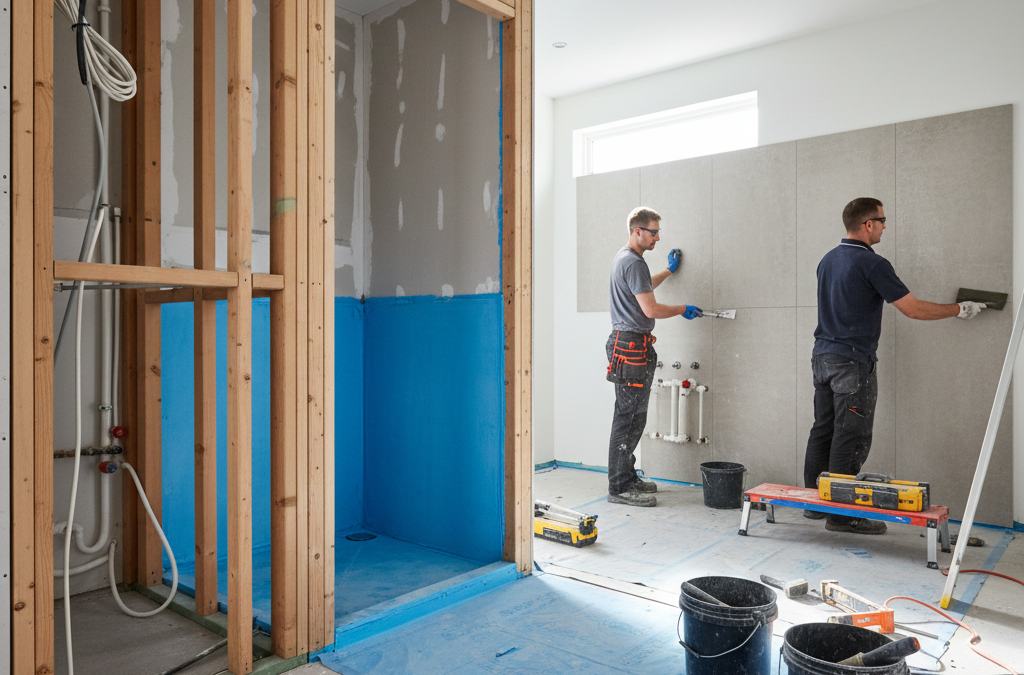
The correct bathroom renovation order follows 10 sequential steps: planning, permits, demolition, rough-in plumbing and electrical, structural work, waterproofing, tiling, cabinetry, fixture installation, and final inspection. Skipping steps or working out of sequence leads to costly rework, compliance failures, and project delays.
For Sydney homeowners, understanding this sequence is essential. Each trade depends on the previous one completing their work correctly. Waterproofing must happen before tiling. Plumbing rough-in must precede wall sheeting. Getting the order wrong can add weeks to your timeline and thousands to your budget.
This guide walks you through every stage of a bathroom renovation in the exact order professional contractors follow. You’ll learn what happens at each step, why the sequence matters, and how to avoid the mistakes that derail renovations across Sydney every week.
What Is the Correct Order for a Bathroom Renovation?
A bathroom renovation follows a strict sequence that ensures each trade can complete their work without obstruction or rework. This order exists because building codes, material curing times, and trade dependencies all dictate when specific tasks must occur.
The standard bathroom renovation order in Australia is:
- Planning and design
- Permits and approvals
- Demolition and strip-out
- Rough-in plumbing and electrical
- Structural work and framing
- Waterproofing
- Tiling and floor finishes
- Cabinetry and vanity installation
- Fixture and fitting installation
- Final inspection and handover
Why Sequence Matters in Bathroom Renovations
Every step in a bathroom renovation builds on the previous one. Waterproofing cannot be applied until plumbing rough-in is complete and inspected. Tiles cannot be laid until waterproofing has cured and been certified. Fixtures cannot be installed until tiling is finished.
Breaking this sequence creates compounding problems. If you tile before waterproofing certification, an inspector may require you to remove tiles for re-inspection. If you install a vanity before wall tiling is complete, you’ll have visible tile cuts and potential water ingress points.
Professional contractors in Sydney follow this order because it minimises callbacks, ensures compliance, and protects both the homeowner and the builder from liability.
Overview of the 10-Step Renovation Process
The renovation process divides into three phases. The first phase covers preparation: planning, permits, and demolition. The second phase handles infrastructure: plumbing, electrical, structural work, and waterproofing. The third phase focuses on finishes: tiling, cabinetry, fixtures, and final inspection.
Each phase must be substantially complete before the next begins. Overlapping phases without proper coordination leads to trade conflicts, damaged work, and schedule blowouts.
Step 1 – Planning and Design
Planning is the foundation of every successful bathroom renovation. This step determines your budget, timeline, layout, and material selections before any physical work begins.
Rushing through planning is the single most common cause of budget overruns. Homeowners who skip detailed planning often make expensive changes mid-renovation when they realise their original choices don’t work.
Setting Your Renovation Goals and Budget
Start by defining what you want to achieve. Are you updating a dated bathroom for personal enjoyment? Preparing a property for sale? Adding value for rental return? Your goals directly influence your budget allocation.
A standard bathroom renovation in Sydney typically costs between $15,000 and $35,000 for a complete renovation of a standard-sized bathroom. High-end renovations with premium fixtures and custom finishes can exceed $50,000.
Break your budget into categories:
- Labour (typically 40-50% of total cost)
- Tiles and waterproofing (15-20%)
- Fixtures and fittings (15-25%)
- Cabinetry and vanity (10-15%)
- Contingency (10-15%)
The contingency allowance is non-negotiable. Hidden issues like water damage, asbestos, or outdated plumbing frequently emerge during demolition.
Measuring Your Bathroom and Creating a Layout
Accurate measurements are essential before selecting fixtures or finalising designs. Measure the room dimensions, door swing clearance, window positions, and existing plumbing locations.
Consider traffic flow and clearances. Australian standards recommend minimum clearances of 600mm in front of toilets and basins. Shower enclosures should be at least 900mm x 900mm for comfortable use.
If you’re relocating plumbing fixtures, factor in the additional cost. Moving a toilet more than 300mm from its current position often requires significant floor work and additional plumbing labour.
Selecting Fixtures, Fittings, and Finishes
Choose your fixtures, tiles, and fittings during the planning phase—not during construction. Late selections cause delays when items are out of stock or have extended lead times.
Create a complete selections list including:
- Toilet (back-to-wall, wall-hung, or close-coupled)
- Basin and vanity
- Shower base or wet area floor waste
- Tapware (basin, shower, bath if applicable)
- Tiles (floor, wall, feature)
- Shower screen
- Mirror and lighting
- Accessories (towel rails, toilet roll holder, hooks)
Confirm stock availability and delivery timeframes for all items before demolition begins.
Step 2 – Obtaining Permits and Approvals
Not every bathroom renovation requires council approval, but all bathroom renovations in Sydney require licensed tradespeople for plumbing and electrical work.
Sydney Council Requirements for Bathroom Renovations
In NSW, bathroom renovations that don’t alter the building’s footprint or structure typically qualify as exempt development—meaning no development application (DA) is required.
However, you may need approval if your renovation involves:
- Structural changes to load-bearing walls
- Changes to the building envelope
- Work in heritage-listed properties
- Alterations affecting fire safety systems
Check with your local council or a private certifier if you’re unsure. The cost of a compliance certificate is far less than the cost of rectifying unapproved work.
When You Need a Certified Plumber or Electrician
All plumbing work in NSW must be performed by a licensed plumber who holds a Certificate of Compliance (COC). This includes:
- Moving or installing water supply lines
- Relocating or installing drainage
- Installing fixtures (toilets, basins, showers)
- Hot water connections
All electrical work must be performed by a licensed electrician who provides a Certificate of Compliance Electrical Work (CCEW). This covers:
- New lighting installations
- Exhaust fan wiring
- Heated towel rail connections
- Power point installations
Keep these certificates. They’re required for insurance claims and property sales.
Step 3 – Demolition and Strip-Out
Demolition marks the start of physical work. This step removes all existing fixtures, tiles, and fittings to expose the substrate for inspection and new work.
Removing Old Fixtures, Tiles, and Fittings
Demolition follows a specific sequence:
- Disconnect and remove fixtures (toilet, basin, vanity, shower screen)
- Remove tapware and accessories
- Strip wall tiles
- Remove floor tiles
- Remove damaged or deteriorated wall sheeting
- Inspect substrate for water damage, mould, or structural issues
Professional demolition typically takes 1-2 days for a standard bathroom. The timeframe extends if asbestos is present or if significant water damage is discovered.
Waste Disposal and Skip Bin Considerations
Bathroom demolition generates substantial waste. A standard bathroom strip-out produces approximately 1-2 cubic metres of debris including tiles, cement sheite, fixtures, and packaging.
Most Sydney renovators use skip bins ranging from 2m³ to 4m³. Costs vary by location and bin size, typically ranging from $250 to $450 for a 3m³ bin with a 7-day hire.
If your home was built before 1990, test for asbestos before demolition. Asbestos-containing materials require licensed removal and separate disposal, adding $1,500 to $5,000 to your project depending on the extent.
Protecting Adjacent Areas During Demolition
Demolition creates dust that travels throughout the home. Professional contractors install dust barriers using plastic sheeting and seal doorways to contain debris.
Floor protection in hallways and adjacent rooms prevents damage from foot traffic and equipment movement. Temporary coverings over carpet and timber floors are standard practice.
Step 4 – Rough-In Plumbing and Electrical
Rough-in work installs the infrastructure that sits behind walls and under floors. This step must be completed and inspected before walls are closed up.
Relocating or Installing New Plumbing Lines
The plumber installs or relocates:
- Hot and cold water supply lines
- Drainage pipes and connections
- Shower waste positioning
- Toilet waste connection
- Basin waste positioning
Copper or PEX piping is standard for water supply. PVC is used for drainage. All connections must comply with the Plumbing Code of Australia and local council requirements.
If you’re relocating fixtures, this is the most labour-intensive plumbing phase. Moving a shower from one wall to another requires new drainage runs, potentially involving floor cutting and concrete work.
Electrical Wiring for Lighting, Exhaust Fans, and Heated Towel Rails
The electrician installs wiring for:
- Ceiling lights and downlights
- Exhaust fan (mandatory in bathrooms without windows)
- Heated towel rail
- Shaver power points (must be installed outside wet zones)
- Underfloor heating (if specified)
All bathroom electrical work must comply with AS/NZS 3000 (Wiring Rules), which defines electrical safety zones in wet areas. Power points cannot be installed within Zone 1 (directly above baths and showers).
Inspection and Compliance Sign-Off
Before walls are closed, rough-in work requires inspection. The plumber provides a compliance certificate for plumbing rough-in. The electrician provides certification for electrical rough-in.
These inspections verify that work meets code requirements before it becomes inaccessible. Never allow wall sheeting to proceed without these sign-offs.
Step 5 – Structural Work and Framing
With rough-in complete, structural work prepares the walls and floors for waterproofing and tiling.
Wall Repairs, Stud Work, and Niche Installation
This phase addresses:
- Repairing or replacing damaged wall framing
- Installing additional studs for wall-hung fixtures
- Building shower niches for recessed storage
- Installing blocking for grab rails or accessories
Wall-hung toilets and vanities require reinforced framing to support their weight. A standard wall-hung toilet needs blocking rated for 400kg of load.
Shower niches should be framed during this phase, not cut into finished walls later. Proper framing ensures the niche can be waterproofed correctly.
Installing Cement Sheeting and Moisture Barriers
Standard plasterboard is not suitable for wet areas. Bathrooms require water-resistant wall sheeting such as:
- Fibre cement sheet (Villaboard or similar)
- Water-resistant plasterboard (for areas outside direct wet zones)
The Australian Standard AS 3740 defines wet areas requiring water-resistant materials. Shower walls, bath surrounds, and areas within 1.5m of a shower or bath require appropriate sheeting.
Cement sheeting is fixed to studs with corrosion-resistant screws. Joints are taped and set to create a smooth substrate for waterproofing.
Step 6 – Waterproofing
Waterproofing is the most critical step in any bathroom renovation. Failures here cause structural damage, mould growth, and expensive rectification work.
Australian Standards for Bathroom Waterproofing
Bathroom waterproofing in Australia must comply with AS 3740-2021 (Waterproofing of domestic wet areas). This standard specifies:
- Which areas must be waterproofed
- Minimum membrane thickness
- Required overlap at joints
- Inspection and certification requirements
In NSW, waterproofing is mandatory certification work. A licensed waterproofer must complete the work and provide a certificate of compliance before tiling proceeds.
Waterproofing Wet Areas: Shower, Floor, and Walls
Mandatory waterproofing areas include:
- Shower floor and walls: Full floor plus walls to 1800mm height (or full height if ceiling-mounted shower)
- Bathroom floor: Entire floor area
- Bath hob: Top and sides of bath surrounds
- Around floor wastes: Minimum 100mm radius
The waterproofing membrane is typically a liquid-applied product that cures to form a continuous barrier. Two coats are standard, with the second coat applied perpendicular to the first.
Critical areas receive additional treatment:
- Internal corners: Reinforced with fabric tape embedded in membrane
- Floor-wall junctions: Bond breaker and fabric tape
- Penetrations: Puddle flanges at floor wastes, sealed pipe penetrations
Waterproofing Inspection and Certification
After application and curing (typically 24-48 hours), the waterproofing must be inspected. The inspector checks:
- Membrane continuity and coverage
- Minimum dry film thickness
- Correct treatment of corners and penetrations
- Flood testing (filling the shower base to verify no leaks)
Only after certification can tiling proceed. Tiling over uncertified waterproofing voids your warranty and may breach building regulations.
Step 7 – Tiling and Floor Finishes
Tiling transforms the bathroom’s appearance and provides the durable, water-resistant surface for daily use.
Choosing Tiles: Porcelain, Ceramic, and Natural Stone
Tile selection affects both aesthetics and maintenance:
Porcelain tiles are dense, low-porosity, and highly durable. They’re suitable for floors and walls, including wet areas. Porcelain is the most common choice for Sydney bathroom renovations.
Ceramic tiles are lighter and easier to cut but more porous than porcelain. They’re suitable for walls and low-traffic floors. Ceramic is typically more affordable than porcelain.
Natural stone (marble, travertine, limestone) offers unique aesthetics but requires sealing and more maintenance. Stone is porous and can stain without proper care.
For shower floors, select tiles with adequate slip resistance. The AS 4586 standard rates slip resistance from R9 (low) to R13 (high). Shower floors should be minimum R10, preferably R11.
Tile Installation Sequence: Floors vs Walls
Professional tilers follow a specific sequence:
- Wall tiles first (in most cases): Starting from the second row up, using a batten for level
- Floor tiles second: Working from the back of the room toward the door
- Bottom row of wall tiles last: Cut to meet floor tiles with minimal grout line
This sequence ensures clean transitions and hides cut edges. The bottom wall tile row covers any minor floor tile irregularities.
In showers, floor tiles are laid with a fall toward the waste. The standard fall is 1:60 (approximately 17mm per metre). Insufficient fall causes pooling water.
Grouting, Sealing, and Finishing Touches
After tiles are set and adhesive has cured (minimum 24 hours), grouting fills the joints. Grout colour significantly impacts the final appearance—lighter grouts show dirt more readily.
Silicone sealant (not grout) is used at:
- Wall-floor junctions
- Internal corners
- Around fixtures and penetrations
These areas experience movement and require flexible sealant rather than rigid grout. Colour-matched silicone maintains a consistent appearance.
Step 8 – Cabinetry and Vanity Installation
With tiling complete, cabinetry installation adds storage and defines the bathroom’s functional layout.
Wall-Hung vs Floor-Mounted Vanities
Wall-hung vanities mount directly to the wall, leaving floor space visible beneath. Benefits include:
- Easier floor cleaning
- Visual spaciousness in small bathrooms
- Modern aesthetic
Wall-hung installation requires reinforced framing (installed during Step 5). The vanity must be level and securely fixed to handle daily use.
Floor-mounted vanities sit on the floor and are generally easier to install. They offer:
- More storage capacity
- Simpler installation
- Traditional appearance
Floor-mounted units should be shimmed level and sealed at the floor junction to prevent water ingress.
Custom Cabinetry and Storage Solutions
Standard vanity sizes don’t suit every bathroom. Custom cabinetry addresses:
- Non-standard room dimensions
- Specific storage requirements
- Integrated laundry hampers or appliance housing
- Matching existing home joinery
Custom cabinetry requires longer lead times—typically 4-6 weeks from measurement to delivery. Order early in the planning phase to avoid installation delays.
Step 9 – Fixture and Fitting Installation
Fixture installation brings the bathroom to functional completion. This step connects all the plumbing and electrical rough-in work to finished products.
Installing Toilets, Basins, and Tapware
The plumber returns to install:
- Toilet: Connected to floor waste, sealed with silicone, and tested for flush and fill
- Basin: Mounted to vanity or wall, connected to water supply and waste
- Tapware: Basin mixers, shower mixers, bath spouts (if applicable)
- Shower: Showerhead, hand shower, and rail installation
All connections are tested for leaks under pressure. The plumber runs each fixture and checks for proper drainage and water flow.
Shower Screens, Mirrors, and Accessories
After plumbing fixtures are installed:
- Shower screens: Measured, fabricated, and installed (typically 1-2 weeks lead time for custom screens)
- Mirrors: Wall-mounted above vanity, often with integrated lighting
- Accessories: Towel rails, toilet roll holders, robe hooks, soap dishes
Accessory placement should be planned during design. Drilling into freshly tiled walls risks cracking tiles if not done carefully.
Connecting Heated Towel Rails and Exhaust Fans
The electrician returns to complete:
- Heated towel rail: Hard-wired connection and timer/switch installation
- Exhaust fan: Final connection and switch installation
- Lighting: Downlight and feature light installation
- Power points: Final fitting and testing
All electrical work receives final certification after completion.
Step 10 – Final Inspection and Handover
The final step ensures everything works correctly and meets the agreed specifications.
Quality Checks and Snagging List
A thorough inspection covers:
- Tiling: Check for chips, cracks, lippage, and grout consistency
- Fixtures: Test all taps, showers, and toilets for proper operation
- Cabinetry: Check door alignment, drawer operation, and finish quality
- Silicone: Inspect all sealant lines for continuity and neatness
- Electrical: Test all lights, switches, and power points
Document any defects on a snagging list. Reputable contractors address snags promptly before final payment.
Final Plumbing and Electrical Certification
The plumber provides a final Certificate of Compliance covering all plumbing work. The electrician provides a Certificate of Compliance Electrical Work for all electrical installations.
These certificates are legal requirements in NSW. Keep them with your property documents—they’re required for:
- Insurance claims
- Property sales
- Future renovation approvals
Cleaning and Client Walkthrough
Professional contractors complete a final clean, removing construction dust, adhesive residue, and protective films from fixtures.
The walkthrough covers:
- Operation of all fixtures and fittings
- Maintenance requirements for tiles, grout, and fixtures
- Warranty information for products and workmanship
- Care instructions for specific materials (natural stone, specialty finishes)
Common Mistakes That Disrupt Bathroom Renovation Order
Understanding common errors helps you avoid them. These mistakes consistently cause delays and cost overruns in Sydney bathroom renovations.
Tiling Before Waterproofing Is Certified
This is the most serious sequencing error. Tiling over uncertified waterproofing means:
- No proof the membrane was correctly applied
- Potential requirement to remove tiles for inspection
- Voided warranties on waterproofing products
- Personal liability if water damage occurs
Always obtain the waterproofing certificate before tiling begins. No exceptions.
Ordering Fixtures Too Late
Fixtures and fittings have variable lead times:
- Standard tapware: 1-2 weeks
- Custom shower screens: 2-3 weeks
- Imported vanities: 4-8 weeks
- Custom cabinetry: 4-6 weeks
Late orders stall the project. Tradespeople can’t install what hasn’t arrived. Order everything during the planning phase and confirm delivery dates before demolition.
Skipping the Planning Phase
Inadequate planning causes mid-project changes. Changes during construction are expensive:
- Moving a toilet after rough-in: $800-$1,500 additional
- Changing tile selection after ordering: Restocking fees plus new order costs
- Altering layout after framing: Demolition and rebuild costs
Invest time in planning. A detailed plan costs nothing but prevents expensive changes.
How Long Does a Bathroom Renovation Take in Sydney?
Timeline expectations help you plan around the disruption of losing bathroom access.
Typical Timeline for Standard Bathroom Renovations
A standard bathroom renovation in Sydney takes 2-4 weeks from demolition to completion. This breaks down approximately as:
| Phase | Duration |
| Demolition | 1-2 days |
| Rough-in plumbing and electrical | 2-3 days |
| Structural work and sheeting | 1-2 days |
| Waterproofing (including curing) | 2-3 days |
| Tiling (including curing) | 3-5 days |
| Cabinetry and fixture installation | 2-3 days |
| Final inspection and handover | 1 day |
These timeframes assume materials are on-site and no unexpected issues arise.
Factors That Extend or Shorten Your Timeline
Factors that extend timelines:
- Asbestos discovery and removal
- Water damage requiring structural repair
- Custom fixture lead times
- Plumbing or electrical relocation
- Weather delays (affecting deliveries)
- Council inspection scheduling
Factors that shorten timelines:
- Simple like-for-like replacements
- No fixture relocation
- Standard fixtures with immediate availability
- Experienced, well-coordinated trade team
Bathroom Renovation Order Checklist
Use this checklist to track your renovation progress:
Planning Phase
- Define renovation goals and budget
- Measure bathroom and create layout
- Select all fixtures, fittings, and tiles
- Confirm stock availability and lead times
- Obtain quotes from licensed contractors
- Check permit requirements
Pre-Construction
- Order all fixtures and materials
- Confirm delivery dates
- Arrange skip bin
- Test for asbestos (pre-1990 homes)
- Set up temporary bathroom arrangements
Construction Phase
- Demolition complete
- Rough-in plumbing complete and certified
- Rough-in electrical complete and certified
- Structural work and sheeting complete
- Waterproofing complete and certified
- Tiling complete
- Cabinetry installed
- Fixtures installed
- Electrical final fit-off complete
Completion
- Final plumbing certificate received
- Final electrical certificate received
- Snagging list completed
- Final clean done
- Client walkthrough complete
- Final payment made
Conclusion
Following the correct bathroom renovation order protects your investment and ensures a compliant, high-quality result. Each step builds on the previous one, and skipping or reordering steps creates problems that cost time and money to fix.
The sequence exists for good reason. Waterproofing must cure before tiling. Rough-in must be inspected before walls close. Fixtures must be ordered before demolition begins. Understanding this order puts you in control of your renovation.
At Sydney Home Renovation, we guide homeowners through every step with transparent communication and professional coordination. Contact us today to discuss your bathroom renovation and receive a detailed scope of work that follows the correct sequence from start to finish.
Frequently Asked Questions
What is the first step in a bathroom renovation?
The first step is planning and design. This includes setting your budget, measuring the space, creating a layout, and selecting all fixtures and finishes. Thorough planning prevents costly changes during construction.
Do I need council approval for a bathroom renovation in Sydney?
Most bathroom renovations in Sydney qualify as exempt development and don’t require council approval. However, you always need licensed plumbers and electricians who provide compliance certificates. Check with your local council if your renovation involves structural changes.
When should waterproofing be done during a bathroom renovation?
Waterproofing happens after rough-in plumbing and electrical work is complete and after wall sheeting is installed. It must be inspected and certified before any tiling begins. This is typically around the middle of the renovation timeline.
Can I live in my house during a bathroom renovation?
Yes, most homeowners stay in their home during a bathroom renovation. You’ll need access to another bathroom or toilet facility. Discuss access arrangements with your contractor, as water and power may be temporarily disconnected during certain phases.
How long does a full bathroom renovation take?
A standard bathroom renovation in Sydney takes 2-4 weeks from demolition to completion. Complex renovations with structural changes or custom fixtures may take 4-6 weeks. The timeline depends on the scope of work and material availability.
What order do tradespeople work in during a bathroom renovation?
The typical trade sequence is: demolition crew, plumber (rough-in), electrician (rough-in), carpenter (framing and sheeting), waterproofer, tiler, cabinetmaker, plumber (final fix), electrician (final fix), and glazier (shower screen). Each trade depends on the previous one completing their work.
What happens if renovation steps are done out of order?
Working out of sequence causes rework, compliance failures, and additional costs. For example, tiling before waterproofing certification may require tile removal for inspection. Installing fixtures before tiling creates poor finish quality. Always follow the correct sequence to avoid these problems.