
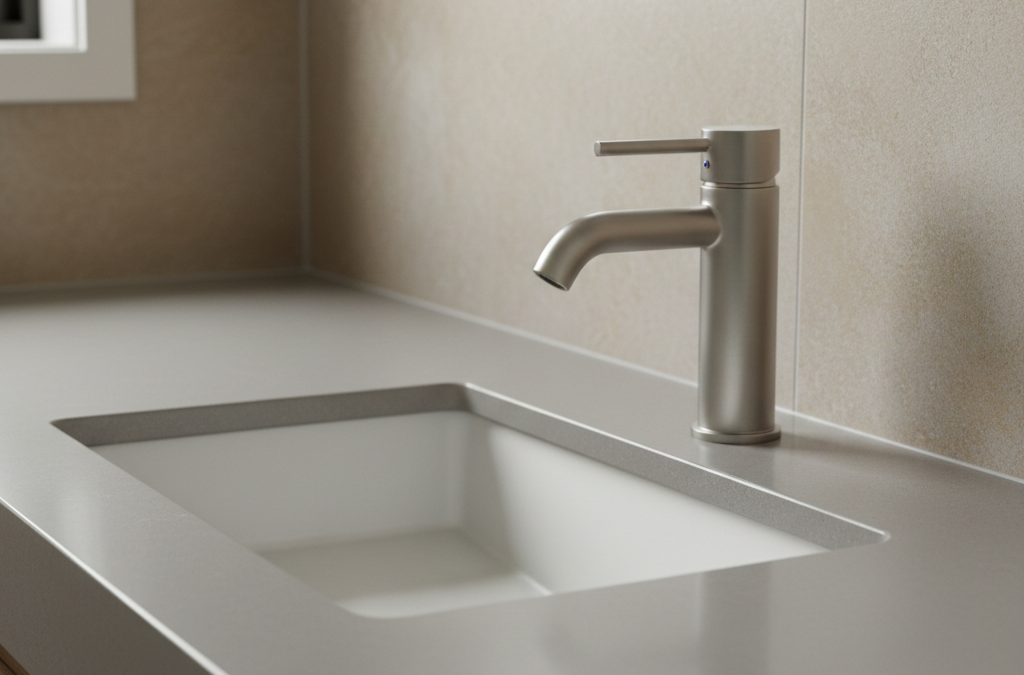
Matte black faucets dominate 2025 bathroom trends, followed closely by brushed nickel, satin brass, and minimalist single-handle designs. Wall-mounted fixtures, touchless technology, and water-efficient WELS-rated options are reshaping Sydney bathrooms, with homeowners prioritizing both aesthetic impact and long-term functionality.
Choosing the right faucet style affects your renovation budget, daily usability, and property value. With fixture costs ranging from $150 for quality entry-level options to $800+ for premium designer pieces, understanding current trends helps you invest wisely.
This guide covers the six dominant faucet styles in 2025, their practical applications, maintenance requirements, budget considerations, and how to select fixtures that complement your bathroom design while maximizing renovation value.
Matte Black Faucets: The Dominant Trend
Matte black faucets have transitioned from trend to staple, commanding 40% of bathroom fixture sales in Australian renovations throughout 2024-2025. This powder-coated finish delivers visual weight and contemporary sophistication that works across design styles from industrial to Scandinavian minimalism.
The finish’s popularity stems from its ability to create focal points without overwhelming smaller bathrooms. Unlike chrome’s reflective surface, matte black absorbs light, making fixtures appear as intentional design elements rather than purely functional hardware. This quality particularly benefits compact Sydney bathrooms where every design choice carries visual weight.
Why Matte Black Continues to Lead
Matte black’s dominance reflects broader design movements toward contrast, texture, and non-reflective surfaces. The finish pairs exceptionally well with white subway tiles, marble countertops, and natural timber vanities—combinations that define modern Australian bathroom aesthetics.
Industry data shows that 68% of renovators under 45 specifically request matte black fixtures, compared to 32% preferring traditional chrome. This generational shift indicates the finish’s staying power beyond temporary trend status.
The finish also conceals minor water spots and fingerprints better than polished alternatives, reducing visible maintenance between cleanings. For busy households and rental properties, this practical advantage supports the aesthetic appeal.
Best Applications for Matte Black Fixtures
Matte black faucets perform best in bathrooms with adequate natural light or well-planned artificial lighting. The dark finish can disappear in poorly lit spaces, losing its intended visual impact.
Ideal applications include:
Feature bathrooms where the faucet serves as a design anchor alongside statement tiles or bold wallpaper. The dark fixture grounds decorative elements without competing for attention.
Monochrome schemes combining black fixtures with white tiles, creating high-contrast spaces that photograph well and maintain visual interest over time.
Mixed-material bathrooms incorporating timber, concrete, or stone. Matte black bridges these natural materials, providing cohesion without introducing additional color complexity.
Minimalist renovations where fixture count is reduced but each piece carries design significance. A wall-mounted matte black faucet can define an entire bathroom’s aesthetic direction.
Maintenance Considerations
Despite marketing claims of “easy-care” finishes, matte black requires specific maintenance approaches. The powder coating resists corrosion effectively but shows water mineral deposits more readily than brushed finishes.
Sydney Water’s mineral content averages 120-180 mg/L hardness, creating visible calcium buildup on dark surfaces within weeks without proper care. Weekly cleaning with pH-neutral cleaners prevents permanent etching that damages the powder coat.
Avoid abrasive cleaners, scouring pads, or acidic solutions that strip the protective coating. Once compromised, the underlying brass or zinc alloy oxidizes, creating permanent discoloration that requires complete fixture replacement.
Quality matte black faucets from established manufacturers include 10-15 year finish warranties, indicating expected longevity with proper maintenance. Budget alternatives often fail within 3-5 years as the coating degrades, making initial investment in quality crucial for long-term value.
Brushed Nickel and Satin Finishes
Brushed nickel maintains strong market presence as the practical alternative to high-maintenance polished chrome and trend-dependent matte black. 35% of Sydney bathroom renovations completed in 2024 featured brushed nickel as the primary fixture finish, reflecting its versatility and proven durability.
The finish’s fine linear texture diffuses light while concealing minor scratches and water spots—a combination that reduces visible maintenance in hard-water areas. This practical advantage explains its continued specification in investment properties and family bathrooms where durability outweighs trend-following.
The Appeal of Brushed Nickel in Modern Bathrooms
Brushed nickel bridges traditional and contemporary design languages, functioning equally well in heritage-style renovations and modern minimalist spaces. The warm metallic tone complements both cool and warm color palettes without the stark contrast of matte black or the clinical appearance of polished chrome.
The finish works particularly well in bathrooms with mixed lighting conditions. Unlike reflective finishes that create glare under direct lighting, brushed nickel’s matte surface maintains consistent appearance across varying light levels throughout the day.
For renovators concerned about long-term style relevance, brushed nickel represents the safest specification. The finish has maintained market presence for over two decades, indicating stability rather than trend volatility. This longevity matters for homeowners planning to remain in properties long-term or investors seeking tenant-neutral specifications.
Satin Brass and Gold Variations
Warm metallic finishes have resurged as designers move away from the cool-toned dominance of the 2010s. Satin brass and brushed gold faucets now appear in 22% of premium bathroom renovations, particularly in heritage properties and luxury apartments where they complement period details.
These finishes differ significantly from the polished brass of previous decades. Modern satin brass features a brushed, low-sheen surface that reads as contemporary rather than dated. The finish pairs exceptionally well with marble, terrazzo, and natural stone—materials experiencing renewed popularity in Australian bathrooms.
Brushed gold offers slightly warmer tones than brass, working well in bathrooms with timber vanities or warm-toned tiles. The finish requires similar maintenance to brushed nickel but commands 15-25% price premiums due to specialized coating processes and limited manufacturer offerings.
Quality matters significantly with warm metallic finishes. Budget alternatives often use thin PVD coatings over brass that wear through within 2-3 years, exposing the base metal. Premium manufacturers apply multiple coating layers with lifetime finish warranties, justifying higher initial costs through extended durability.
Mixing Metals: A Growing Trend
The traditional rule of matching all bathroom metals has dissolved as designers embrace intentional finish mixing. Contemporary bathroom design now commonly combines two or three metal finishes within a single space, creating visual interest and design sophistication.
Successful metal mixing follows specific principles:
Dominant finish comprises 60-70% of visible metal—typically faucets, shower fixtures, and towel rails. This creates visual cohesion while establishing the bathroom’s metallic tone.
Accent finish appears in 20-30% of fixtures—often cabinet hardware, mirror frames, or lighting. This secondary metal provides contrast without creating visual chaos.
Optional third finish limited to 10% or less—perhaps a single statement piece like a freestanding bath filler or decorative accessory.
Common successful combinations include matte black faucets with brushed brass cabinet hardware, or brushed nickel fixtures with matte black shower frames. The key is maintaining consistent finish types—mixing all matte or all brushed finishes rather than combining matte, polished, and brushed surfaces.
Minimalist Single-Handle Designs
Single-handle faucets dominate new installations, representing 78% of bathroom faucet sales in Australia during 2024. This shift from traditional dual-handle designs reflects changing user preferences for simplified operation, water conservation, and streamlined aesthetics.
The single-lever mechanism allows precise temperature and flow control with one hand—a practical advantage when managing children, holding items, or operating with limited mobility. This functionality has transitioned single-handle designs from modern bathrooms into all renovation styles, including traditional and transitional spaces.
Wall-Mounted Faucet Popularity
Wall-mounted faucets have emerged as the defining fixture choice in contemporary bathroom design, appearing in 45% of high-end Sydney renovations completed in 2024-2025. The configuration eliminates deck-mounted hardware, creating clean vanity surfaces and simplified cleaning routines.
The installation positions the faucet spout and handle directly on the wall above the basin, requiring in-wall plumbing rough-in during renovation. This approach works best in full bathroom renovations where wall access is already exposed, rather than cosmetic updates with existing plumbing configurations.
Wall-mounted installations offer several practical advantages:
Vanity flexibility allowing vessel basins, integrated stone tops, or floating timber slabs without drilling for faucet holes. This expands design options and simplifies future vanity replacement.
Easier cleaning with no deck-mounted hardware collecting water, soap residue, or mineral deposits around base plates. The clear vanity surface wipes clean in seconds.
Visual lightness particularly valuable in compact bathrooms where traditional deck-mounted faucets can overwhelm small vanities. The wall-mounted configuration creates perceived space through reduced visual clutter.
Height customization positioning the spout at optimal height for specific basin depths and user preferences, rather than accepting standard deck-mounted heights.
Installation costs run $180-$280 higher than deck-mounted alternatives due to additional plumbing labor and wall preparation. However, the configuration’s design impact and cleaning advantages justify the premium in most contemporary renovations.
Streamlined Basin Mixers
Basin mixers—single-handle faucets with integrated spout and lever—represent the most common faucet configuration in Australian bathrooms. Modern iterations feature progressively simpler forms, eliminating decorative elements in favor of geometric purity.
Current design direction favors cylindrical spouts with minimal taper, flat paddle handles, and reduced overall height. These proportions suit the shallow vessel basins and integrated stone tops that define contemporary vanity design.
Quality basin mixers incorporate ceramic disc cartridges that control water flow and temperature mixing. These cartridges outlast traditional rubber washer mechanisms by 3-4 times, typically providing 15-20 years of drip-free operation before requiring replacement.
Premium models include flow restrictors meeting WELS 5-star or 6-star ratings, reducing water consumption to 4.5-6 liters per minute without noticeably affecting user experience. This efficiency matters in Sydney where water costs average $2.35 per kiloliter, making efficient fixtures financially beneficial over time.
Touchless and Smart Faucet Technology
Touchless faucets have transitioned from commercial applications into residential bathrooms, with 18% of premium renovations now incorporating sensor-activated fixtures. The technology uses infrared sensors to detect hand presence, activating water flow without physical contact.
The hygiene advantages that drove commercial adoption matter less in residential bathrooms than the convenience factor. Touchless operation prevents cross-contamination when handling raw food, cleaning products, or other materials, while also accommodating users with mobility limitations or full hands.
Modern residential touchless faucets address early technology limitations:
Improved sensors with adjustable detection ranges prevent false activation while ensuring reliable response to intentional use.
Manual override options allowing traditional handle operation when sensor batteries deplete or users prefer direct control.
Temperature pre-setting eliminating the trial-and-error of traditional mixing, particularly valuable for children’s bathrooms or elderly users.
Water efficiency with automatic shut-off preventing taps left running, though this matters less in attended residential use than commercial settings.
Installation requires electrical connection—either hardwired or battery-powered. Battery models offer simpler installation but require AA battery replacement every 12-18 months. Hardwired versions need nearby power outlets or in-wall wiring, adding $220-$380 to installation costs.
Touchless faucets command $380-$850 price premiums over equivalent manual models. This investment makes sense in specific applications—children’s bathrooms, accessible design, or ultra-modern aesthetics—but remains unnecessary for most standard bathroom renovations.
Statement Faucets: Bold Architectural Pieces
While minimalism dominates mainstream bathroom design, a counter-trend embraces faucets as sculptural focal points. These statement fixtures prioritize visual impact over understated integration, serving as the bathroom’s defining design element.
Statement faucets work best in bathrooms with otherwise restrained design—simple tiles, neutral colors, and minimal decorative elements. The fixture becomes the room’s jewelry, drawing attention through form, finish, or scale rather than competing with busy surroundings.
Industrial-Style Exposed Pipework
Industrial-aesthetic faucets expose traditionally concealed plumbing components, celebrating mechanical function as design feature. These fixtures typically include visible supply pipes, exposed valve bodies, and utilitarian cross handles or lever controls.
The style originated in converted warehouse and factory spaces where existing exposed plumbing inspired design direction. It has since evolved into a deliberate aesthetic choice in new construction and renovations, particularly in urban apartments and loft-style homes.
Authentic industrial faucets use solid brass construction with minimal plating, allowing natural patina development over time. This living finish appeals to renovators seeking character and uniqueness rather than permanent pristine appearance.
Installation often requires wall-mounting with exposed pipework running from in-wall connections to the faucet body. This configuration works well in bathrooms with brick, concrete, or tile walls where exposed pipes complement rather than conflict with surface materials.
Quality industrial faucets from specialized manufacturers cost $580-$1,200, reflecting solid brass construction and hand-assembled components. Budget alternatives using plated zinc alloy fail quickly, making this style unsuitable for cost-conscious renovations.
Sculptural Waterfall Designs
Waterfall faucets create sheet-flow water delivery through wide, flat spouts rather than traditional aerated streams. The effect is visually dramatic and audibly distinct, transforming routine handwashing into a sensory experience.
Modern waterfall designs range from subtle glass spouts to bold geometric forms in matte black or brushed brass. The most successful installations pair the faucet with vessel basins or integrated stone tops where the waterfall effect remains visible during use.
The design requires higher flow rates than standard faucets to maintain the sheet-flow effect, typically 9-12 liters per minute compared to 6 liters for efficient basin mixers. This increased consumption conflicts with water efficiency goals, making waterfall faucets problematic for environmentally conscious renovations.
Installation considerations include splash management—the sheet flow creates more spray than traditional aerated streams, requiring adequate basin depth and width. Shallow or narrow basins result in water splashing onto vanity surfaces and floors.
Waterfall faucets suit specific applications: powder rooms where water efficiency matters less due to limited use, feature bathrooms prioritizing aesthetics over practicality, or luxury renovations where the sensory experience justifies increased water consumption.
Vintage-Inspired Cross Handles
Traditional cross-handle faucets have returned in updated forms that balance period authenticity with modern performance. These designs suit heritage property renovations, Hampton-style bathrooms, and transitional spaces bridging traditional and contemporary aesthetics.
Modern interpretations improve on historical designs through ceramic disc cartridges replacing rubber washers, lead-free brass construction meeting current standards, and water-efficient aerators maintaining period appearance while reducing flow rates.
The style works particularly well in Sydney’s Federation and Victorian-era homes where bathroom renovations aim to respect original architectural character. Pairing cross-handle faucets with pedestal basins, subway tiles, and traditional fixtures creates cohesive period-appropriate design.
Quality reproduction faucets from heritage specialists cost $420-$780, comparable to premium contemporary designs. The investment makes sense in period properties where appropriate fixtures enhance property value and buyer appeal.
Installation follows standard deck-mounted or wall-mounted configurations, with no special requirements beyond traditional faucet installations. This simplicity makes vintage-inspired fixtures accessible for renovations at all budget levels.
Sustainable and Water-Efficient Options
Water efficiency has transitioned from optional feature to standard expectation in Australian bathroom fixtures. WELS (Water Efficiency Labelling and Standards) regulations mandate efficiency labeling on all bathroom faucets, creating transparent comparison and driving manufacturer innovation toward reduced consumption.
Sydney’s water supply challenges and increasing utility costs make efficient fixtures financially beneficial beyond environmental considerations. A household replacing standard faucets with WELS 5-star or 6-star alternatives saves 15,000-25,000 liters annually, translating to $35-$60 in reduced water and sewerage charges.
WELS-Rated Faucets for Sydney Homes
WELS ratings range from 1-star (least efficient) to 6-star (most efficient), with stars awarded based on flow rate measured in liters per minute. Current bathroom faucet ratings break down as:
6-star rating: 4.5 liters per minute or less 5-star rating: 6 liters per minute or less
4-star rating: 7.5 liters per minute or less 3-star rating: 9 liters per minute or less
Market analysis shows that 62% of faucets sold in Australia now achieve 5-star or 6-star ratings, compared to 31% in 2019. This improvement reflects both regulatory pressure and consumer demand for efficient fixtures.
High-efficiency faucets achieve reduced flow through aerator technology that mixes air with water, maintaining perceived pressure while reducing actual water volume. Quality aerators create consistent, splash-free flow that users cannot distinguish from higher-flow alternatives.
The efficiency investment pays back quickly. A family of four using bathroom faucets 8-12 times daily saves approximately $12-$18 annually per faucet by upgrading from 3-star to 6-star rated fixtures. With typical faucet lifespans of 12-15 years, the cumulative savings exceed $180-$270 per fixture.
Eco-Friendly Materials and Finishes
Beyond water efficiency, sustainable faucet manufacturing addresses material sourcing, production processes, and end-of-life recyclability. Leading manufacturers now offer fixtures with verified environmental credentials:
Lead-free brass meeting NSF/ANSI 372 standards for drinking water safety, eliminating toxic metal leaching into water supplies.
Recycled metal content incorporating 15-30% post-consumer brass and copper, reducing mining impacts and manufacturing energy consumption.
Low-VOC finishes using water-based coating processes rather than solvent-based alternatives, reducing manufacturing emissions and worker exposure.
PEX supply lines replacing copper piping with cross-linked polyethylene that requires 70% less energy to manufacture and install.
These environmental improvements typically add 8-15% to fixture costs but appeal to renovators prioritizing sustainability alongside aesthetics and function. The premium matters most in large-scale renovations where multiple fixtures compound the cost difference.
Certifications to look for include WaterMark approval (mandatory in Australia), WELS rating (efficiency verification), and optional third-party environmental certifications like Cradle to Cradle or Environmental Product Declarations that document full lifecycle impacts.
Long-Term Cost Savings
Water-efficient faucets deliver measurable financial returns through reduced utility consumption, but additional savings emerge from durability and maintenance reduction.
Quality fixtures with ceramic disc cartridges eliminate dripping taps—a common water waste source. Sydney Water estimates that one dripping tap wastes 9,000-20,000 liters annually, costing $21-$47 in unnecessary charges while requiring eventual repair or replacement.
Premium faucets with comprehensive warranties (10-15 years for finishes, lifetime for mechanical components) avoid replacement costs that budget alternatives incur every 4-6 years. A $450 quality faucet lasting 15 years costs $30 annually, while a $180 budget alternative replaced every 5 years costs $36 annually plus installation labor.
Maintenance costs also favor quality fixtures. Budget faucets require washer replacement, cartridge servicing, or complete replacement when leaks develop. Quality ceramic disc mechanisms operate maintenance-free for decades, eliminating service calls and parts costs.
For investment properties, reliable fixtures reduce tenant maintenance requests and emergency plumber callouts. Landlords report that quality bathroom fixtures reduce maintenance costs by $120-$280 annually compared to budget alternatives requiring frequent attention.
Choosing the Right Faucet Style for Your Renovation
Faucet selection balances aesthetic preferences, functional requirements, budget constraints, and long-term value considerations. The decision impacts daily bathroom usability, maintenance requirements, and renovation return on investment.
Successful selection starts with understanding your bathroom’s design direction, user needs, and renovation budget allocation. Faucets represent 8-12% of total bathroom renovation costs, making them significant enough to warrant careful consideration but not so expensive that premium choices break project budgets.
Matching Faucets to Bathroom Design Themes
Faucet style should reinforce rather than conflict with overall bathroom design direction. The fixture serves as a connecting element between tiles, vanity, lighting, and accessories—either creating cohesion or introducing visual discord.
Contemporary minimalist bathrooms suit streamlined single-handle designs in matte black, brushed nickel, or chrome. Wall-mounted configurations enhance the clean aesthetic while simplifying vanity surfaces. Avoid ornate details, traditional cross handles, or decorative elements that conflict with minimalist principles.
Industrial-style bathrooms pair well with exposed pipework faucets, matte black finishes, and utilitarian forms. The fixtures should celebrate mechanical function rather than concealing it. Brushed brass or aged bronze finishes complement exposed brick, concrete, and metal-framed shower screens.
Traditional or Hampton-style bathrooms require cross-handle faucets, polished chrome or brushed nickel finishes, and classical proportions. Modern interpretations of traditional designs work better than authentic antique reproductions, providing period appearance with contemporary performance.
Transitional bathrooms bridging traditional and contemporary styles benefit from simplified traditional forms—single-handle faucets with subtle traditional detailing, brushed finishes rather than polished, and restrained proportions. These fixtures work in both directions, complementing modern or traditional elements.
Coastal or Scandinavian bathrooms suit brushed nickel, matte white, or light brass finishes paired with natural materials. Simple forms without excessive detailing maintain the relaxed, organic aesthetic these styles pursue.
Budget Considerations: Entry to Premium Options
Bathroom faucet pricing spans enormous range, from $95 hardware store specials to $2,400 designer imports. Understanding what drives these price differences helps allocate renovation budgets effectively.
Entry-level faucets ($95-$180) use zinc alloy or thin brass construction with basic chrome or brushed nickel plating. These fixtures suit rental properties, budget renovations, or temporary solutions. Expect 4-6 year lifespans before finish degradation or mechanical failure requires replacement. Limited warranties (1-2 years) reflect manufacturer confidence in longevity.
Mid-range faucets ($220-$420) feature solid brass construction, quality ceramic disc cartridges, and durable finishes with 5-10 year warranties. This category offers the best value for owner-occupied homes, balancing quality, aesthetics, and cost. Expect 12-15 year lifespans with minimal maintenance.
Premium faucets ($480-$850) provide superior finishes, advanced features (touchless operation, temperature memory), and comprehensive warranties (10-15 years finish, lifetime mechanical). These suit luxury renovations, design-focused bathrooms, or situations where the faucet serves as a statement piece.
Designer/luxury faucets ($900-$2,400) offer unique designs, exotic finishes, or prestigious brand names. The premium reflects design innovation, limited production, or brand positioning rather than proportional quality improvements. These make sense in high-end renovations where budget allows and design impact justifies cost.
For most Sydney bathroom renovations, mid-range faucets ($280-$450) deliver optimal value—quality construction, attractive design, and reliable performance without unnecessary premium. Allocate higher budgets to feature bathrooms or primary ensuites, accepting entry-level fixtures in powder rooms or secondary bathrooms with limited use.
Installation Requirements and Professional Fitting
Faucet installation complexity varies significantly based on configuration, existing plumbing, and renovation scope. Understanding installation requirements prevents budget surprises and ensures proper fixture performance.
Deck-mounted faucets represent the simplest installation, requiring only connection to existing hot and cold supply lines beneath the vanity. Licensed plumbers complete standard installations in 45-90 minutes, charging $180-$280 including materials. DIY installation is possible for experienced renovators but risks leaks, damage, or warranty voidance.
Wall-mounted faucets require in-wall plumbing rough-in, adding $280-$480 to installation costs in renovations where wall access requires cutting and patching. New construction or full bathroom renovations absorb this cost within overall plumbing work. The configuration demands precise height and spacing measurements—errors require wall repair and reinstallation.
Touchless faucets need electrical connection, either through nearby outlets or hardwired installation. Battery-powered models simplify installation but require ongoing battery replacement. Hardwired versions add $180-$320 for electrical work unless installed during renovations with existing electrical access.
Waterfall faucets may require supply line upgrades to deliver adequate flow rates for proper sheet-flow effect. Undersized supply lines create weak, inconsistent flow that defeats the design intent.
Professional installation ensures warranty coverage, code compliance, and proper function. Most faucet warranties require licensed plumber installation, voiding coverage for DIY work. The $180-$480 installation cost represents insurance against leaks, water damage, and premature failure—worthwhile protection for fixtures expected to last 12-15 years.
Conclusion
Bathroom faucet trends in 2025 balance bold aesthetics with practical functionality—matte black and brushed finishes dominate, while water efficiency and simplified operation define user expectations. Your choice impacts daily usability, maintenance requirements, and long-term renovation value.
Quality fixtures in appropriate styles deliver 12-15 years of reliable service while supporting your bathroom’s design direction. Whether selecting minimalist wall-mounted designs, statement industrial pieces, or efficient WELS-rated options, prioritize solid construction and finish durability over temporary trend-following.
Sydney Home Renovation specifies quality fixtures that balance style, performance, and budget across all bathroom projects. Our transparent pricing and construction expertise ensure your faucet selection supports both immediate design goals and long-term property value—contact us for detailed fixture recommendations and accurate renovation cost planning.
Frequently Asked Questions
What is the most popular bathroom faucet finish in 2025?
Matte black leads bathroom faucet sales, representing 40% of Australian installations in 2024-2025. Brushed nickel follows at 35%, with satin brass and brushed gold gaining ground in premium renovations. The shift toward matte finishes reflects broader design movements away from reflective surfaces.
Are matte black faucets hard to maintain?
Matte black faucets require weekly cleaning with pH-neutral solutions to prevent mineral deposit buildup. Sydney’s hard water creates visible calcium spots within weeks without proper care. Quality powder-coated finishes resist corrosion effectively but show water marks more readily than brushed alternatives, demanding consistent maintenance routines.
Can I mix different faucet finishes in the same bathroom?
Yes—contemporary design embraces intentional metal mixing using a dominant finish for 60-70% of fixtures, an accent finish for 20-30%, and optional third finish under 10%. Successful combinations maintain consistent finish types (all matte or all brushed) rather than mixing surface textures.
What’s the difference between wall-mounted and deck-mounted faucets?
Wall-mounted faucets install directly on the wall above the basin, requiring in-wall plumbing and adding $280-$480 to installation costs. Deck-mounted faucets attach to the vanity or basin, offering simpler installation and lower costs. Wall-mounting creates cleaner vanity surfaces and expanded design flexibility.
Are smart faucets worth the investment for a bathroom renovation?
Smart touchless faucets suit specific applications—children’s bathrooms, accessible design, or ultra-modern aesthetics—but remain unnecessary for most renovations. The $380-$850 premium over manual models delivers convenience and hygiene benefits that matter most in high-use or specialized situations.
How much should I budget for quality bathroom faucets in Sydney?
Mid-range faucets ($280-$450) deliver optimal value for owner-occupied homes, providing solid brass construction, ceramic disc cartridges, and 5-10 year warranties. Add $180-$280 for professional installation. Premium fixtures ($480-$850) suit luxury renovations, while entry-level options ($95-$180) work for rental properties.
Do I need a plumber to install a new bathroom faucet?
Licensed plumber installation ensures warranty coverage, code compliance, and proper function. Most manufacturers require professional installation to maintain warranty validity. The $180-$480 installation cost prevents leaks, water damage, and premature failure—worthwhile protection for fixtures expected to last 12-15 years.
What are WELS ratings and why do they matter?
WELS (Water Efficiency Labelling and Standards) ratings measure faucet flow rates, with 6-star fixtures using 4.5 liters per minute or less. A family of four saves $12-$18 annually per faucet upgrading from 3-star to 6-star ratings, accumulating $180-$270 over typical 12-15 year faucet lifespans.
Are brushed nickel faucets still in style?
Brushed nickel maintains strong market presence at 35% of Sydney renovations, valued for versatility, durability, and style longevity. The finish bridges traditional and contemporary design, working across varied aesthetics without the trend-dependency of matte black or maintenance demands of polished chrome.
What faucet style adds the most value to a bathroom renovation?
Quality mid-range faucets in timeless finishes (brushed nickel, matte black) deliver optimal renovation value through broad buyer appeal and proven durability. Wall-mounted configurations and water-efficient WELS 5-star or 6-star ratings enhance property value while reducing ongoing operating costs for future owners.