
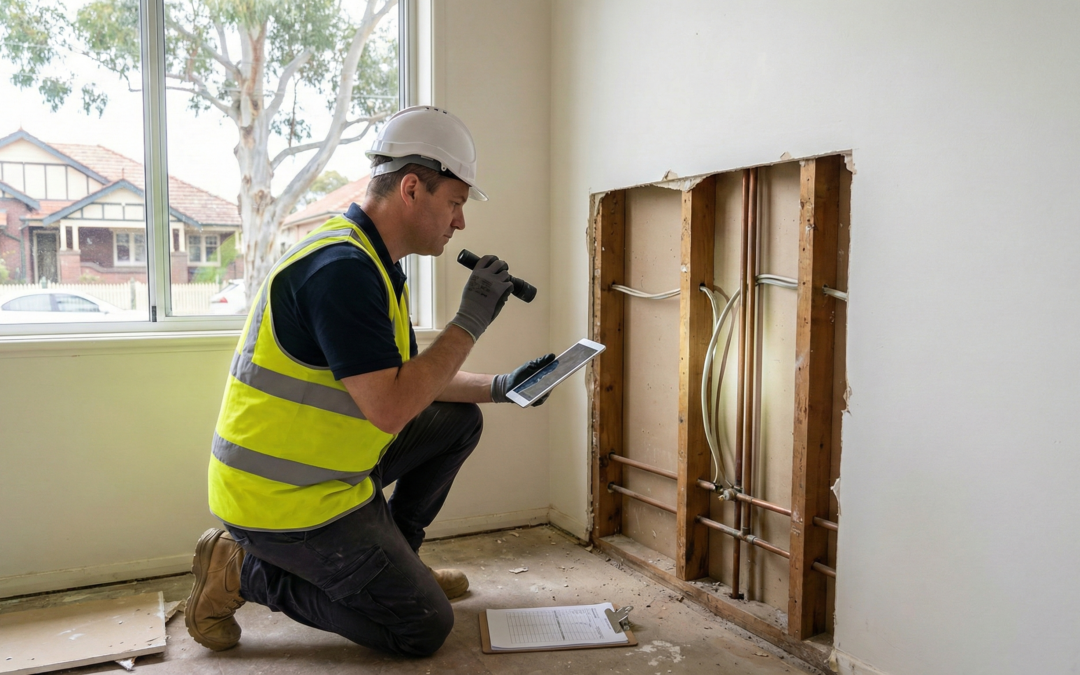
Before starting any renovation, you must assess your home’s structural integrity, foundation condition, load-bearing walls, electrical systems, plumbing infrastructure, and potential hazards like asbestos or termite damage. Many homeowners rush into bathroom or kitchen upgrades without checking what’s behind the walls. This oversight leads to budget blowouts and dangerous surprises mid-project.
A proper structural assessment identifies hidden issues before demolition begins. It reveals whether your renovation plans are feasible within your existing framework.
In this blog, we will explain assessing your home structure before renovating. You’ll learn the exact steps to evaluate your property and avoid costly mistakes.
Understanding the Importance of Pre-Renovation Structural Evaluation
Your home’s structure determines what renovations are possible. A pre-renovation assessment protects your investment and ensures safety compliance.
Why structural evaluation matters:
- Load-bearing walls cannot be removed without engineering solutions
- Hidden water damage may have compromised timber framing
- Older homes often contain asbestos in wet areas built before 1990
- Foundation movement affects bathroom waterproofing requirements
According to the Housing Industry Association (HIA), structural issues account for 23% of renovation cost overruns in Australian homes. The average unexpected structural repair adds $8,000-$15,000 to bathroom renovation budgets.
Sydney homes built before 1970 require particular attention. Many contain galvanised steel pipes that corrode internally. Others have aluminium wiring that poses fire risks during electrical upgrades.
A building inspector can identify these issues in a single visit. The inspection cost of $400-$800 prevents discoveries that halt projects mid-construction.
Identifying Load-Bearing Walls and Structural Components
Load-bearing walls support your roof and upper floors. Removing them without proper engineering causes structural failure.
How to identify load-bearing walls:
- They typically run perpendicular to floor joists
- External walls are almost always load-bearing
- Walls directly below other walls usually carry weight
- Central walls in older homes often support roof structures
The Australian Building Codes Board requires engineering certification for any load-bearing wall modification. A structural engineer’s report costs $500-$1,500 but is mandatory for council approval.
Common structural components in Sydney homes include:
| Component | Function | Renovation Impact |
| Bearer beams | Support floor joists | Cannot be cut or moved |
| Ceiling joists | Hold ceiling and roof | Limit second-storey additions |
| Wall studs | Frame internal walls | May contain services |
| Lintels | Support above openings | Required for new windows/doors |
Your renovation contractor should request structural drawings before quoting. Missing this step leads to mid-project engineering costs.
Evaluating Foundation and Subfloor Conditions
Foundation problems affect every renovation decision. Cracks, movement, and moisture issues must be addressed before cosmetic work begins.
Signs of foundation problems:
- Doors and windows that stick or won’t close properly
- Visible cracks in brickwork wider than 3mm
- Uneven floors with noticeable slopes
- Gaps between walls and ceilings
Sydney’s clay soils cause significant foundation movement. The Geotechnical Society of Australia reports that reactive clay affects 40% of Sydney properties. Seasonal moisture changes cause expansion and contraction.
Subfloor inspection checklist:
- Check for adequate ventilation (minimum 150mm clearance)
- Look for termite damage or activity
- Assess moisture levels in timber bearers
- Verify stump condition in older homes
Bathroom renovations require stable subfloors for waterproofing compliance. Australian Standard AS 3740 mandates specific subfloor conditions before wet area construction.
Foundation repairs range from $2,000 for minor underpinning to $50,000+ for major stabilisation. Discovering these needs during renovation causes significant delays.
Inspecting Electrical Systems and Wiring Safety
Outdated electrical systems create fire hazards and limit renovation options. Your switchboard capacity determines what fixtures you can install.
Critical electrical assessment points:
- Switchboard age and capacity (modern homes need minimum 63-amp supply)
- Presence of safety switches (RCDs) on all circuits
- Wiring type and condition throughout the property
- Earthing system compliance with current standards
Energy Safe Victoria data shows that electrical faults cause 40% of house fires. Homes with pre-1980 wiring face higher risks during renovation disturbance.
Common electrical issues in Sydney homes:
| Issue | Risk Level | Typical Repair Cost |
| Aluminium wiring | High | $8,000-$15,000 |
| Ceramic fuses | Medium | $1,500-$3,000 |
| No safety switches | High | $300-$600 per circuit |
| Undersized switchboard | Medium | $2,000-$4,000 |
Bathroom renovations require dedicated circuits for heated towel rails and exhaust fans. Your electrician must verify capacity before installation begins.
A licensed electrical inspection costs $150-$300. This investment prevents dangerous discoveries during wall demolition.
Assessing Plumbing Infrastructure and Drainage Systems
Plumbing condition directly impacts bathroom renovation feasibility. Old pipes, poor drainage, and inadequate water pressure limit design options.
Key plumbing assessment areas:
- Pipe material and age (copper, PVC, galvanised steel, or polybutylene)
- Water pressure at existing fixtures
- Drainage fall and connection points
- Hot water system capacity and location
Galvanised steel pipes installed before 1970 have a 40-50 year lifespan. Many Sydney homes now exceed this, causing internal corrosion and reduced flow.
Master Plumbers Association research indicates pipe replacement adds $5,000-$12,000 to bathroom renovation costs. This expense is unavoidable when pipes fail inspection.
Drainage considerations:
- Sewer connection depth affects toilet placement options
- Stormwater separation is mandatory in Sydney
- Grease traps may be required for kitchen relocations
- Existing vent stacks limit fixture positioning
Your plumber should conduct a CCTV drain inspection before renovation. This $250-$400 service reveals blockages, root intrusion, and pipe condition.
Water pressure below 200 kPa requires pump installation for modern fixtures. Pressure testing costs approximately $100 and prevents disappointing shower performance.
Detecting Hazardous Materials Including Asbestos
Hazardous materials in older homes create serious health risks. Proper identification and removal must occur before renovation work.
Common hazardous materials in Sydney homes:
- Asbestos in fibro sheeting, floor tiles, and insulation
- Lead paint on surfaces painted before 1970
- Synthetic mineral fibres in ceiling insulation
- Formaldehyde in older particle board products
SafeWork NSW reports that one-third of Australian homes contain asbestos. Properties built between 1945-1987 have the highest likelihood.
Asbestos locations in bathrooms:
| Location | Material Type | Disturbance Risk |
| Wall sheeting | Fibro cement | High during demolition |
| Floor tiles | Vinyl asbestos | Medium if intact |
| Backing boards | Millboard | High when removing fixtures |
| Eaves and ceilings | Fibro cement | Medium to high |
Licensed asbestos testing costs $30-$50 per sample. Professional removal ranges from $1,500 for small areas to $10,000+ for extensive contamination.
Never disturb suspected asbestos yourself. Fibres become airborne during cutting, drilling, or breaking. A single exposure can cause mesothelioma decades later.
Your renovation contractor should request asbestos reports before providing fixed quotes. This protects both parties from unexpected removal costs.
Checking for Termite Damage and Pest Infestation
Termite damage compromises structural timber throughout your home. Undetected infestations cause renovation failures and safety hazards.
CSIRO estimates termites affect 1 in 3 Australian homes during their lifetime. Sydney’s climate provides ideal conditions for subterranean species.
Signs of termite activity:
- Hollow-sounding timber when tapped
- Mud tubes on foundations or walls
- Bubbling or rippling paint surfaces
- Discarded wings near windows or doors
Termite inspection requirements:
- Annual inspections recommended for all Sydney properties
- Pre-renovation inspections are essential before wall removal
- Thermal imaging detects hidden activity
- Moisture meters identify conditions favouring infestation
A comprehensive termite inspection costs $250-$400. Treatment for active infestations ranges from $2,000-$5,000 depending on severity.
Structural timber replacement costs:
| Component | Replacement Cost | Renovation Impact |
| Wall studs | $150-$300 each | Delays wall work |
| Floor joists | $200-$500 each | Affects subfloor |
| Bearer beams | $500-$1,500 each | Major structural work |
| Window frames | $300-$800 each | Extends timeline |
Renovation disturbance can activate dormant termite colonies. Your pest inspector should assess risk before demolition begins.
Reviewing Council Requirements and Heritage Restrictions
Council regulations determine what renovations require approval. Heritage overlays add complexity and cost to structural modifications.
Sydney council approval requirements:
- Development Applications (DA) for structural changes
- Complying Development Certificates (CDC) for simpler work
- Heritage permits for listed properties
- Strata approval for apartment renovations
NSW Planning Portal data shows average DA processing takes 40-60 days. Complex applications involving heritage properties extend to 90-120 days.
Heritage restrictions in Sydney:
- External appearance changes often prohibited
- Original features may require preservation
- Material choices must match existing construction
- Window and door modifications need approval
Properties within Heritage Conservation Areas face additional scrutiny. Even internal renovations may require heritage architect involvement.
Council fees and costs:
| Application Type | Typical Fee | Processing Time |
| CDC (bathroom) | $500-$1,000 | 10-20 days |
| DA (structural) | $1,000-$3,000 | 40-60 days |
| Heritage permit | $500-$2,000 | 60-90 days |
| Strata approval | $200-$500 | 14-30 days |
Your renovation contractor should verify approval requirements before commencing. Unapproved work creates legal liability and resale complications.
Creating a Comprehensive Structural Assessment Report
A formal assessment report documents all findings and recommendations. This document guides renovation planning and contractor briefings.
Essential report components:
- Property details and construction date
- Structural condition summary with photographs
- Identified hazards and remediation requirements
- Services assessment (electrical, plumbing, gas)
- Estimated repair costs and priorities
Building Professionals Board NSW recommends engaging licensed building inspectors for comprehensive assessments. Their reports carry professional indemnity insurance.
Report cost breakdown:
| Assessment Type | Cost Range | Coverage |
| Pre-purchase inspection | $400-$600 | General condition |
| Pre-renovation assessment | $600-$1,000 | Detailed structural |
| Specialist reports | $300-$800 each | Specific systems |
| Engineering assessment | $500-$1,500 | Structural calculations |
Using your assessment report:
- Share with all contractors during quoting
- Reference when comparing renovation proposals
- Include in council application documentation
- Retain for future property sale disclosure
A thorough assessment report prevents quote variations. Contractors can price accurately when they understand existing conditions.
Sydney Home Renovation recommends completing all assessments before finalising renovation budgets. This approach eliminates the surprises that cause cost blowouts.
Conclusion
Assessing your home structure before renovating protects your investment and ensures project success. The inspection costs of $1,500-$3,000 prevent budget blowouts averaging $15,000-$30,000 from hidden issues.
Sydney Home Renovation provides end-to-end bathroom renovation solutions with transparent cost planning. Our team coordinates structural assessments, council approvals, and quality construction. We help homeowners renovate with confidence through honest pricing and clear communication.
Contact Sydney Home Renovation today for a comprehensive pre-renovation assessment. Our expertise ensures your project stays on budget, on schedule, and built for long-term value.
FAQs
How much does a pre-renovation structural assessment cost in Sydney?
A comprehensive pre-renovation assessment costs $600-$1,000 in Sydney. This includes building inspection, basic services review, and hazard identification. Specialist reports for electrical, plumbing, or engineering add $300-$800 each.
Do I need council approval for a bathroom renovation?
Most bathroom renovations require either a CDC or DA approval. Simple like-for-like replacements may be exempt. Structural changes, plumbing relocations, or heritage properties always need formal approval.
How do I know if my home contains asbestos?
Homes built between 1945-1987 likely contain asbestos materials. Professional testing costs $30-$50 per sample. Never attempt to identify or disturb suspected asbestos yourself.
What happens if I find termite damage during renovation?
Termite damage requires professional treatment and timber replacement. Active infestations need elimination before construction continues. Treatment costs $2,000-$5,000 with additional structural repair expenses.
Can I remove a wall in my home without an engineer?
Load-bearing wall removal always requires engineering certification. Non-load-bearing walls may be removed without engineering. A structural engineer’s assessment costs $500-$1,500 and is mandatory for council approval.
How long does a structural assessment take?
A standard pre-renovation assessment takes 2-4 hours on-site. The written report arrives within 3-5 business days. Specialist assessments may require additional appointments.
What should I do if my home has old electrical wiring?
Old wiring requires licensed electrical inspection before renovation. Aluminium wiring and ceramic fuses need replacement for safety. Budget $8,000-$15,000 for complete rewiring of older properties.