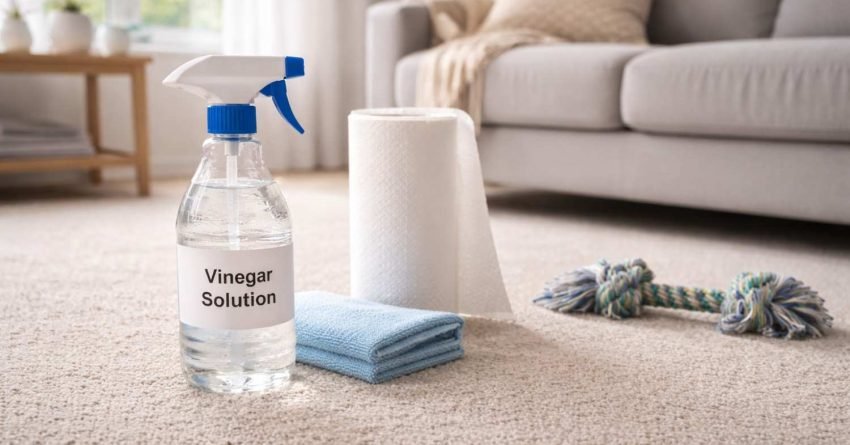
Yes, you can spray diluted vinegar on carpet to deter dogs from peeing in specific spots. A 1:1 mixture of white vinegar and water creates a scent barrier most dogs find unpleasant, discouraging repeat marking behaviour.
This simple household solution addresses one of the most frustrating challenges pet owners face. Dogs return to previous accident spots because residual odour signals that location as an acceptable toilet area.
This guide covers safe application methods, the best vinegar types, carpet compatibility, and when you need additional solutions beyond vinegar alone.
Does Vinegar Actually Stop Dogs From Peeing on Carpet?
Vinegar works as a dog deterrent because of its strong acidic smell. Dogs possess approximately 300 million olfactory receptors compared to roughly 6 million in humans, making vinegar’s sharp scent overwhelming and unpleasant for most dogs.
The deterrent effect relies on scent aversion rather than physical discomfort. When dogs encounter the vinegar smell on carpet, they typically avoid that area for urination because the odour masks their previous scent markers.
How Dogs React to Vinegar Smell
Most dogs will sniff a vinegar-treated area, recoil slightly, and move away. Some dogs show stronger reactions including sneezing, head shaking, or immediate retreat from the room.
Puppies and dogs with less sensitive noses may require stronger concentrations or repeated applications. Older dogs or those with diminished smell may not respond as effectively to vinegar deterrents.
Why Vinegar Works as a Deterrent
Dogs mark territory through urine to communicate with other animals. The ammonia in dog urine creates a distinct scent signature that tells the dog this spot belongs to them.
Vinegar’s acetic acid neutralises ammonia compounds while leaving its own strong scent. This dual action removes the territorial marker and replaces it with an unpleasant smell, breaking the marking cycle.
How to Spray Vinegar on Carpet Safely
Proper application protects your carpet while maximising deterrent effectiveness. Incorrect dilution or application can damage carpet fibres, leave residue, or fail to deter your dog.
The Right Vinegar-to-Water Ratio
Mix equal parts white vinegar and water for standard application. This 1:1 ratio provides sufficient deterrent strength without risking carpet damage or overwhelming household odours.
For stubborn repeat offenders, increase to 2 parts vinegar to 1 part water. Never apply undiluted vinegar directly to carpet as the acidity can bleach or weaken fibres over time.
Add the mixture to a clean spray bottle. Shake well before each use to ensure proper mixing.
Step-by-Step Application Method
- Clean any existing urine from the carpet completely before applying vinegar
- Shake your vinegar solution thoroughly
- Hold the spray bottle 15–20 centimetres from the carpet surface
- Apply a light, even mist across the problem area
- Extend coverage 30 centimetres beyond the stained zone
- Allow the carpet to air dry completely
- Reapply every 24–48 hours until behaviour stops
Avoid saturating the carpet. Excessive moisture can seep into carpet padding, creating mould or mildew problems.
Testing on Hidden Carpet Areas First
Always test vinegar solutions on inconspicuous carpet areas before full application. Apply a small amount to carpet inside a closet, under furniture, or in a corner.
Wait 24 hours and check for discolouration, texture changes, or fibre damage. If the test area shows no adverse effects, proceed with application to visible areas.
What Type of Vinegar Works Best for Dog Deterrent
Not all vinegars perform equally as pet deterrents. The type you choose affects both effectiveness and carpet safety.
White Vinegar vs Apple Cider Vinegar
White distilled vinegar remains the preferred choice for carpet application. Its clear colour eliminates staining risk, and its consistent acidity level (typically 5%) provides reliable deterrent strength.
Apple cider vinegar works as a deterrent but carries staining risk on light-coloured carpets. The amber colour can leave visible marks, particularly on cream, white, or beige carpets.
White vinegar also costs less and is more readily available in larger quantities for ongoing treatment.
Avoiding Vinegars That Stain Carpet
Never use balsamic, red wine, or malt vinegar on carpet. These varieties contain pigments that permanently stain carpet fibres.
Rice vinegar and champagne vinegar are safer alternatives to white vinegar but offer no additional benefits while costing significantly more.
Stick with standard white distilled vinegar from any supermarket for the best combination of effectiveness, safety, and value.
How Long Does Vinegar Smell Last on Carpet
The vinegar scent typically dissipates within 30 minutes to 2 hours after the carpet dries. Humidity levels, ventilation, and carpet type all influence drying and smell duration.
While humans stop noticing the smell relatively quickly, dogs can detect residual vinegar scent for 24–72 hours depending on application strength.
Reapplication Frequency
Apply vinegar solution daily for the first week when addressing established marking behaviour. Reduce to every 2–3 days once your dog shows consistent avoidance of the treated area.
Continue maintenance applications weekly for 2–4 weeks after behaviour stops. This extended period helps ensure the habit is fully broken.
Speeding Up Smell Dissipation
Open windows and doors to increase airflow across treated areas. Ceiling fans or portable fans directed at the carpet accelerate drying and odour dispersal.
Avoid using air fresheners immediately after application. These can interfere with the deterrent effect by masking the vinegar scent your dog needs to smell.
When Vinegar Alone Won’t Stop Dog Peeing
Vinegar addresses scent-based marking behaviour but cannot solve underlying medical or behavioural issues. Recognising when professional help is needed prevents frustration and ensures your dog receives appropriate care.
Medical Reasons Dogs Pee Indoors
Urinary tract infections cause frequent, urgent urination that dogs cannot control. Infected dogs may urinate small amounts frequently, often in unusual locations.
Diabetes, kidney disease, and Cushing’s disease all increase urination frequency and volume. Senior dogs may develop incontinence as bladder muscles weaken with age.
Spayed females sometimes experience hormone-related incontinence that requires veterinary treatment.
Behavioural Issues Requiring Training
Anxiety-related urination occurs when dogs feel stressed, fearful, or overly excited. Separation anxiety commonly triggers indoor accidents when owners leave.
Submissive urination happens when dogs feel intimidated or are greeting people enthusiastically. This behaviour requires confidence-building training rather than deterrents.
Incomplete house training, particularly in rescue dogs or puppies, needs structured training protocols alongside any deterrent methods.
Signs You Need a Veterinarian
Contact your vet if your dog shows any of these symptoms alongside indoor urination:
- Blood in urine
- Straining or pain during urination
- Increased thirst
- Lethargy or appetite changes
- Sudden onset of accidents in previously house-trained dogs
- Urinating very frequently in small amounts
These signs suggest medical issues that vinegar cannot address and may worsen without treatment.
Alternative Natural Deterrents to Use With Vinegar
Combining deterrent methods increases effectiveness, particularly for persistent marking behaviour. These alternatives complement vinegar without creating harmful chemical interactions.
Citrus-Based Solutions
Dogs generally dislike citrus scents including lemon, orange, and grapefruit. Place citrus peels near problem areas or spray diluted lemon juice on carpet.
Mix 1 tablespoon of lemon juice with 500ml of water for a safe carpet spray. Citrus and vinegar can be alternated to prevent your dog becoming desensitised to either scent.
Essential Oils Safe for Dogs
Eucalyptus and peppermint oils deter most dogs when properly diluted. Add 10–15 drops of essential oil to 500ml of water for spray application.
Important: Some essential oils are toxic to dogs. Avoid tea tree, pennyroyal, wintergreen, and pine oils entirely. Never apply essential oils directly to your dog or allow them to ingest treated areas.
Commercial Enzymatic Cleaners
Enzymatic cleaners break down urine proteins at a molecular level, completely eliminating odours that attract dogs back to the same spot. These products work differently from vinegar and address the root cause of repeat marking.
Use enzymatic cleaners for initial stain treatment, then apply vinegar as a deterrent layer. This combination provides both odour elimination and scent aversion.
How to Clean Dog Urine From Carpet Before Applying Vinegar
Applying vinegar over existing urine creates problems. The vinegar may set stains, trap odours in carpet padding, or fail to deter because underlying urine scent remains.
Removing Fresh Urine Stains
Act immediately when you discover fresh accidents. Blot the area with paper towels or clean cloths, pressing firmly to absorb as much liquid as possible.
Work from the outside of the stain toward the centre to prevent spreading. Continue blotting with fresh towels until no more moisture transfers.
Rinse the area with cold water and blot again. Avoid hot water as heat can set protein stains permanently.
Treating Old or Set-In Stains
Dried urine requires rehydration before cleaning. Spray the stained area with plain water and let it sit for 5 minutes.
Apply an enzymatic cleaner according to product directions. These cleaners need time to work, typically 10–15 minutes minimum.
Blot thoroughly and allow to dry completely before applying vinegar deterrent.
Neutralising Odour at the Source
Urine often penetrates carpet backing and padding, leaving odour sources you cannot see. For severe or repeated accidents, consider professional carpet cleaning that addresses padding contamination.
Sprinkle baking soda over cleaned areas and leave overnight to absorb residual odours. Vacuum thoroughly before applying vinegar solution.
Protecting Different Carpet Types From Vinegar Damage
Carpet fibre composition determines vinegar tolerance. Understanding your carpet type prevents costly damage while maintaining deterrent effectiveness.
Wool and Natural Fibre Carpets
Wool carpets require extra caution with acidic solutions. Vinegar can strip natural lanolin oils from wool fibres, causing dullness and increased wear.
Use a weaker solution of 1 part vinegar to 3 parts water on wool carpets. Test thoroughly and limit application frequency to prevent cumulative damage.
Silk, sisal, and jute carpets should avoid vinegar entirely. These natural fibres are highly sensitive to pH changes and moisture.
Synthetic Carpets
Nylon, polyester, and polypropylene carpets tolerate vinegar well at standard dilutions. These fibres resist acid damage and recover quickly from moisture exposure.
Synthetic carpets can handle more frequent vinegar applications without degradation. They also dry faster, reducing mould and mildew risk.
When to Avoid Vinegar Entirely
Do not use vinegar on:
- Carpets with rubber or latex backing (acid degrades these materials)
- Antique or valuable rugs
- Carpets with existing damage or wear
- Recently installed carpet still off-gassing adhesives
For these situations, consult professional carpet cleaners or use commercial pet deterrent products specifically formulated for sensitive materials. If you are planning a home renovation that includes new flooring, choosing pet-resistant materials from the outset is worth considering.
Training Your Dog to Stop Peeing on Carpet
Deterrents work best alongside proper training. Vinegar addresses the symptom while training addresses the underlying behaviour.
Positive Reinforcement Techniques
Reward your dog immediately when they urinate in appropriate locations. Treats, praise, and play create positive associations with outdoor or designated toilet areas.
Timing matters critically. Rewards given more than 3 seconds after the behaviour lose effectiveness. Stay present during toilet breaks to reward instantly.
Never punish accidents after the fact. Dogs cannot connect punishment to past actions and will only learn to fear you, not to change their behaviour.
Establishing a Consistent Routine
Take your dog outside at the same times daily. Most dogs need toilet breaks upon waking, after meals, after play, and before bed.
Puppies need more frequent breaks, typically every 2–3 hours. Senior dogs may also need increased frequency as bladder control diminishes.
Use the same door and route to the same outdoor spot. Consistency helps dogs understand expectations and develop reliable habits.
Managing Accidents Without Punishment
When you catch your dog mid-accident, interrupt calmly with a sharp sound or “outside” command. Immediately take them to the appropriate toilet area.
If they finish outside, reward enthusiastically. If they don’t, simply return inside without punishment.
Clean accidents thoroughly without your dog present. Watching you clean can reinforce attention-seeking behaviour in some dogs.
Conclusion
Spraying diluted vinegar on carpet provides an effective, affordable deterrent for dogs that repeatedly urinate in the same spots. The key lies in proper dilution, thorough cleaning before application, and understanding when vinegar alone cannot solve the problem.
Combining vinegar deterrent with consistent training and ruling out medical issues gives you the best chance of permanently stopping indoor accidents. Most dogs respond within 1–2 weeks when all these elements work together.
We at Sydney Home Renovation understand that pet damage is a common concern during home improvements. Contact our team for advice on pet-friendly flooring options and renovation solutions that accommodate your whole family, including the four-legged members.
Frequently Asked Questions
Is vinegar safe for all carpet types? Vinegar is safe for most synthetic carpets including nylon and polyester. Wool, silk, and natural fibre carpets require weaker dilutions or alternative deterrents. Always test on a hidden area first.
How often should I spray vinegar to deter my dog? Apply daily for the first week, then reduce to every 2–3 days. Continue weekly maintenance applications for 2–4 weeks after the behaviour stops to prevent relapse.
Will vinegar remove the smell of dog urine? Vinegar helps neutralise ammonia odours but works best after thorough cleaning. For complete odour removal, use an enzymatic cleaner first, then apply vinegar as a deterrent layer.
Can I mix vinegar with other cleaning products? Never mix vinegar with bleach as this creates toxic chlorine gas. Vinegar can be used after enzymatic cleaners once the area dries. Avoid mixing with baking soda for cleaning as they neutralise each other.
Does vinegar work for puppies? Puppies may have less sensitive noses and respond less strongly to vinegar. Combine deterrent sprays with frequent toilet breaks and positive reinforcement training for best results with young dogs.
What if my dog keeps peeing in the same spot despite vinegar? Persistent marking despite deterrents suggests incomplete odour removal, medical issues, or behavioural problems. Try enzymatic cleaners, consult your vet, and consider professional training assistance.
Are there risks to using vinegar around pets? Diluted vinegar is generally safe around dogs. Avoid spraying near food bowls, bedding, or directly on pets. Some dogs may have respiratory sensitivity to strong vinegar fumes during application.